
BATS IN YOUR HOME?

Several species of Iberian bats can roost inside houses. They usually use cracks in the roof, although they can also be found in roller-shutter boxes, cracks in walls, attics, chimneys or other cavities in buildings. The most common species are the common pipistrelle (Pipistrellus pipistrellus), the soprano pipistrelle (P. pygmaeus), Kuhl’s pipistrelle (P. kuhlii), the serotine (Cnephaeus serotinus) and the Meridional serotine (Cnephaeus isabellinus). All of them are protected (Bern Convention, Bonn Convention, Habitats Directive, Spanish National Catalogue of Threatened Species; see Legislation) and are relatively common, as they have adapted to life in towns and cities. However, some less common and more threatened species can also be found, such as horseshoe bats (genus Rhinolophus) or Geoffroy’s bat (Myotis emarginatus).
The species found in Spain are quite small, so people who find them often think they are pups and try to pick them up. Bats are not aggressive and do not attack, but as wild animals they may try to bite when we try to catch them. We recommend not handling them and, if it is unavoidable, always wearing gloves. In some cases only a few individuals are found (fewer than ten), while in others there may be a large number forming a breeding colony (several dozen or even hundreds of bats). Maternity colonies usually form in April or May and stay in the roost until August or September. If the number of individuals is small, they do not usually cause any nuisance, apart from the surprise for the residents. If, on the other hand, the number is large, bats may cause noise or smells, or soil an area with guano (which, incidentally, is an excellent natural fertiliser).
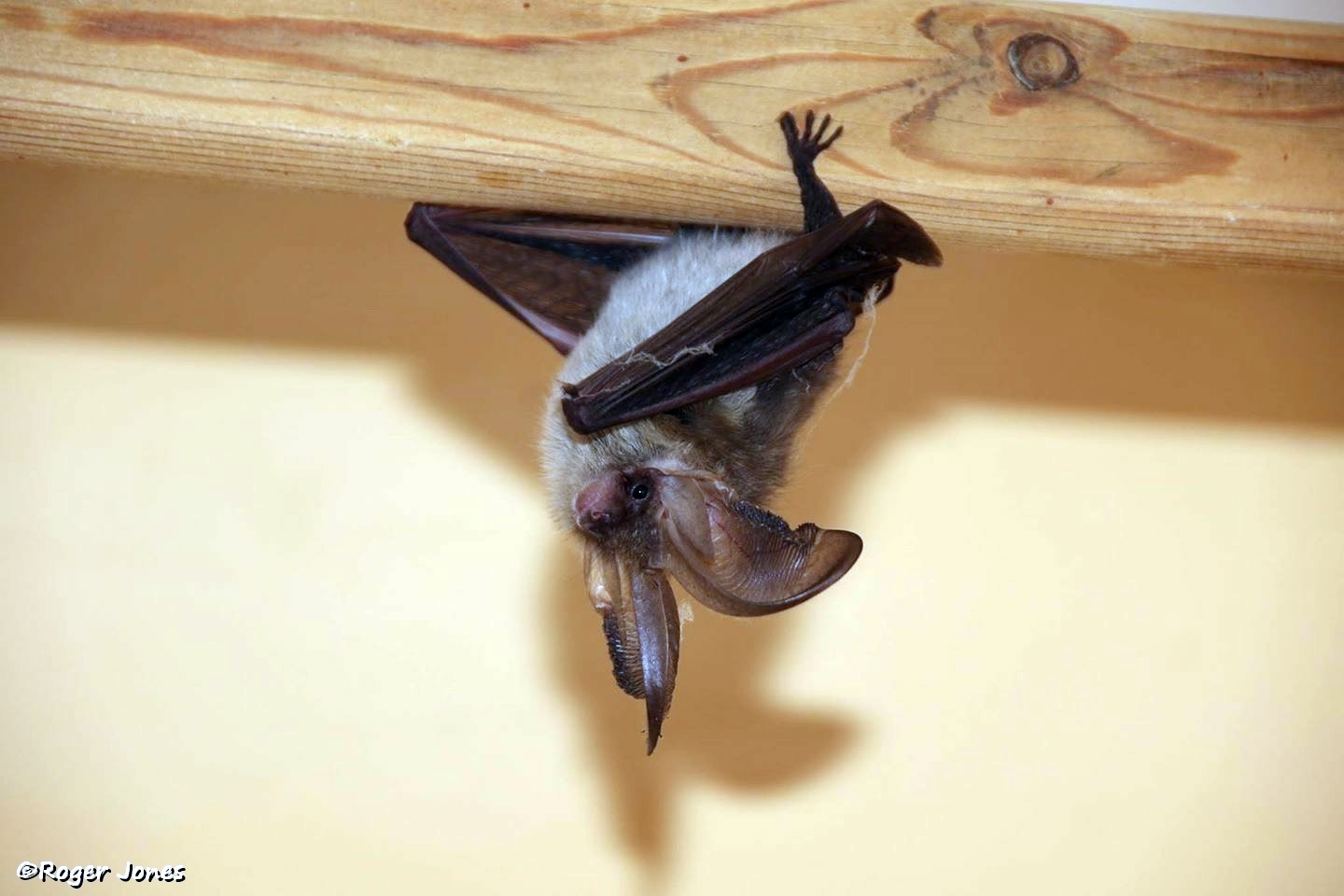
At SECEMU we want to highlight the important services that bats provide to ecosystems and to our own species: as pollinators (of plants as useful as banana plants), seed dispersers and insect controllers, they are essential to our own well-being. It would take millions of euros and tonnes of pesticides to replace their role in controlling pests in maize and rice crops. In addition, bats feed on, among other things, blood-sucking mosquitoes that can transmit diseases to people, thereby reducing the impact of many diseases, such as malaria, and saving many human lives. Bat droppings (guano) are also harmless and can be used as a natural fertiliser for our plants. To find out more about why bats are important, click here.
Many bats share our towns and cities with us, bringing us numerous benefits. It is in our hands to make this coexistence possible so that we all win.
Unfortunately, despite their enormous evolutionary success on every continent, with more than 1,400 species (31 on the Iberian Peninsula), bats are very sensitive to environmental change. Below we therefore offer some advice on what to do if a bat gets into your home or if there is a colony in your house.
Recommendations for the protection of biodiversity that uses buildings for roosting or nesting, by SEO/BirdLife and SECEMU (in Spanish).
Case A: A single bat
In most cases, bats enter houses by mistake, so we should help them get out:
- At night, when it is flying, simply close all the doors of the room and leave the window open so that it can get out.
- If we find the bat during the day, resting on the ceiling or a wall, and it does not appear to be injured, we can catch it using a shoebox or similar (see the sequence of photos below) and then cover it with a piece of card. The box should have small holes for ventilation, and it is also advisable to put a cloth inside so that the bat feels safer, and a small container of water so that it can drink. The box should be kept in a cool, quiet place until the bat is released. At night, we will open the box and leave the bat in a high place (a windowsill will do) so that it can take off. Avoid picking the bat up with bare hands, as it could bite.
If you have found a bat and need help, write to [email protected].

Case B: A colony of bats
In general, if the colony is in the roof or under the eaves of the house, it is very likely that it will not cause any nuisance and we can live with it without any problem. Even so, it is advisable to take certain precautions, such as not touching accumulations of droppings and, if they are very abundant, removing them while wearing a mask to avoid inhaling the dust; if any bat has to be handled, always use gloves.
Only when the nuisance is considerable should the possibility of excluding the bats be considered. In this situation, the regional nature protection authorities should be informed first, so that they are aware of the situation, grant the relevant authorisation and take the necessary measures for their exclusion.
If a large number is observed during spring or summer, it is most likely a breeding colony, made up of adult females and their pups. Pups are usually born in June and cannot fly for the first 3–4 weeks, so they remain inside the building at all times. For this reason, a colony should not be excluded in May, June or July, because even if some individuals are excluded, the females will try to get back in to find their pups. It is safer, more respectful and, above all, more effective to wait until September or October, when the colony has finished breeding. In those months, a piece of plastic can be hung like a curtain or tube (it only needs to extend 10 or 20 cm beyond the crack) in front of the crack the bats use to exit. This plastic will let the bats out but will not allow them back in, ensuring that they leave the roost. After two or three days, we can check the crack at dusk to confirm that no more bats are coming out and, if so, seal it with any material (wood, insulating foam, etc.) that permanently prevents new bats from entering. If the colony uses several cracks to exit, they should be sealed progressively.

Grupo secemu

Grupo secemu

Grupo secemu

Laura-Torrent____
