WHAT TO DO IF YOU FIND A BAT
When we find a bat on the ground or hanging inside our home, it is very important to know whether it is a pup or an adult. Strange as it may seem, adults of the most common bat are no bigger than a thumb. To tell them apart, we need to look at the fur.
At this point, it is essential to remember that bats are wild animals and should therefore never be handled with bare hands: always use gloves or a physical barrier.

Scale of the different possible ages of a bat. Image © Maggie Brown, taken from the Bat Care Guidelines of the Bat Conservation Trust.
-
- If it has no fur or has velvety fur (A, B or C), it is a newborn or very young pup that has fallen from its roost and cannot fly.
Protocol: What to do if you find a bat pup? A guide to returning it to its roost or reuniting it with its mother (in Spanish).
Video tutorial: reuniting a bat pup with its mother.
- If it has no fur or has velvety fur (A, B or C), it is a newborn or very young pup that has fallen from its roost and cannot fly.
-
- The first thing to do is find the roost it fell from. If we can reach it, we will place the pup as close as possible to the roost entrance so that it can get in and rejoin its mother. This option gives the little bat the best chance of survival. See the protocol here.
- If we cannot find the roost or cannot reach it, we will pick the pup up with a towel and keep it warm. If the pup is hydrated and in good condition, we can keep it safe with a heat source until nightfall in order to try to reunite the pup with its mother. Without fur, pups cool down very quickly and, without the warmth they need, end up dying. If they are very exposed, they can also become dehydrated in the heat of the day. See the protocol here.
You can also watch a video tutorial on reuniting a bat pup with its mother here. - If the pup is dehydrated or is not collected by its mother, the most advisable, safe and ethical option is to take it to a wildlife rescue centre or call the nearest one (you can find yours here: Wildlife rescue centres in Spain). If we cannot take it ourselves, we can call the forest rangers of our region, who will collect it (you can find the phone number for the rangers in your region here: Forest and environmental rangers in Spain).

Pup with fur. Image © Raúl León (Raulophis).
- If it has shiny greyish fur that is longer and looks scruffy (like new fur, as in image D or E): in this case it is a slightly older pup that can keep itself warm and may even be making its first flights. Here we will follow the same procedure:
- We will try to return it to its roost. See the protocol here.
- Otherwise, we will pick it up and keep it in a cardboard box with small holes so that it can breathe (smaller than a little finger), and place inside a cloth for it to hide in and a bottle cap with a little water in case it wants to drink.
- We will call the wildlife rescue centre and/or the forest or environmental rangers and wait for instructions.
Protocol: What to do if you find a bat pup? A guide to returning it to its roost or reuniting it with its mother (in Spanish).
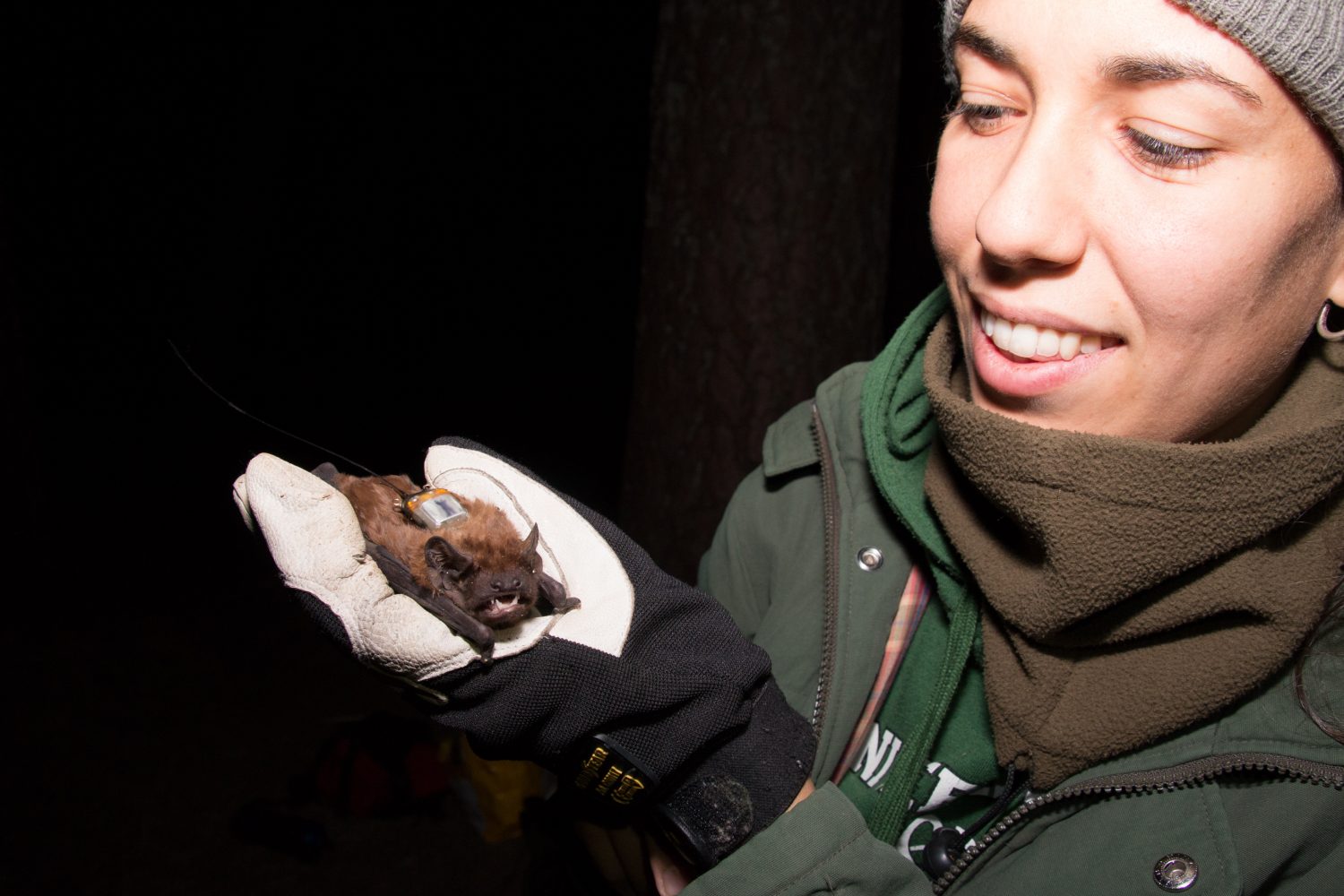
- If it has dense, abundant and long fur (F). In this case, however small the animal may be, it is almost certainly an adult. Remember to pick it up with a cloth and avoid any handling with bare hands (so that it does not bite us when defending itself). Once caught, we will place it in a cardboard box as in the previous case and contact the rescue commission ([email protected]) for advice on whether it can be released that same night or whether it may have an injury that needs treatment:
- In the first case, if the bat has no injuries and behaves normally, we will release it at dusk. We will place the bat on the trunk of a tree without many branches, as the bat will tend to climb up the trunk. Avoid areas exposed to possible predators, such as cats. We need to make sure the bat flies off; if it does not, it means it has a problem with its wings. This may take a while depending on how active the bat is. If it has not flown off after half an hour, we will pick it up again and take it to a wildlife rescue centre. Important! Adult bats can save energy by cooling their bodies, which can make them look dead. We need to check carefully that it is moving.
- If it shows strange behaviour (for example, if we found it on the ground during the day) or has injuries (for example, from a cat attack), we will contact the nearest wildlife rescue centre or the forest and environmental rangers of your region.

Adult. Image © Gail Armstrong, taken from the Bat Care Guidelines of the Bat Conservation Trust.

Bat with a tear in the wing membrane (patagium).

Injury caused by a cat attack.
Contact the Rescue Commission
If in doubt, you can contact the rescue commission by emailing [email protected], answering the following questions and describing your case:
-
-
- Is it a pup or an adult?
- Where was it (town and place)?
- In what circumstances did you find it?
- Is there any blood?
- Are there any red or swollen areas? Is there a lack of symmetry? For example, is the animal dragging a wing or a leg?
- Is the animal’s waist very pronounced? Can you see a heart shape?
- Does the animal look swollen, like a balloon?
- Attach a photo of the animal whenever possible.
-
With this information we can advise you more quickly.
How to hold a bat correctly
We need to be very careful here, especially when handling the wings. When picking a bat up from the floor or ceiling, it is always best to keep the wings folded against the body (in a little ball), so that it is all one bundle. This avoids common problems caused by poor handling. Always gently and with little force. It is better for the animal to fall and escape than to hold it too tightly.

Correct way to hold a bat.

Bones broken by a collision or poor handling. Image © Gail Armstrong, taken from the Bat Care Guidelines of the Bat Conservation Trust.
If you are bitten, as a precaution it is essential to see a doctor to assess the need for post-exposure rabies prophylaxis, and to keep the bat so that it can be tested. You can find more information about bats and viruses at this link. Here we also explain why bats are important, what role they play in the ecosystem and why we should conserve them.
Download here the instructions on what to do if you find a bat (in Spanish).
If you have found a bat and need help, write to [email protected].
Many bats share our towns and cities with us, bringing us numerous benefits. It is in our hands to make this coexistence possible so that we all win.
Recommendations for the protection of biodiversity that uses buildings for roosting or nesting, by SEO/BirdLife and SECEMU (in Spanish).

Grupo secemu

Grupo secemu

Grupo secemu
Laura-Torrent____