BATS AND VIRUSES
Recently, various media outlets have been reporting in an alarmist way on the relationship between bats and viruses such as SARS-CoV-2 or Lloviu filovirus, or on cases of people bitten by bats, with the consequent risk of contracting viruses such as rabies.
In this note we therefore want to explain, briefly but rigorously, the relationship between bats and this issue and, in the case of rabies, how to avoid problems of transmission from animals:
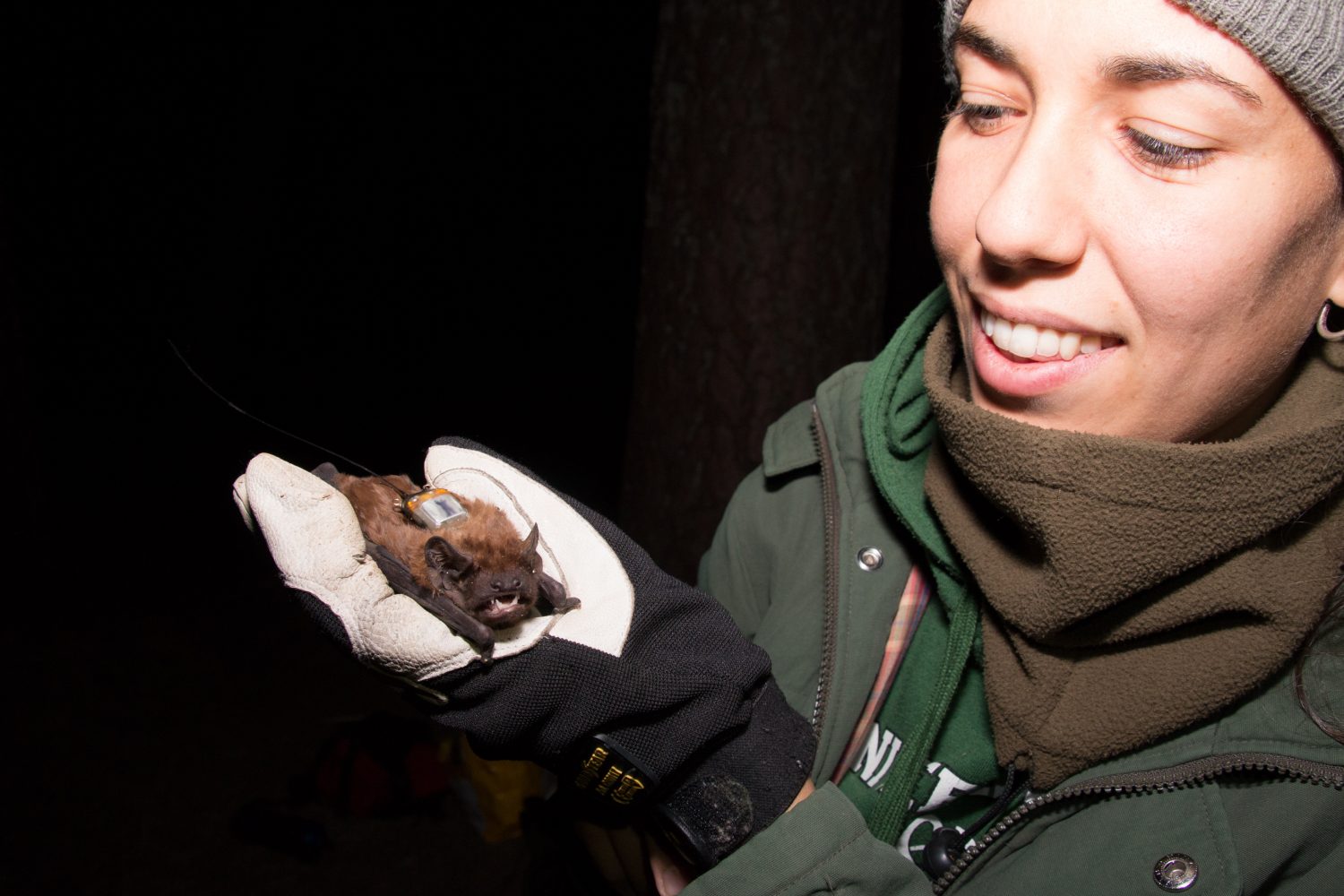
- Bats do not attack humans or other vertebrates anywhere in Europe. They may only try to bite people who pick them up, and their aim is to free themselves, not to attack.
- European bats are small animals (between 5 and 60 grams, less than a thousandth of the weight of an adult person) that feed mainly on insects, so they are very beneficial, naturally controlling the populations of these invertebrates, some of which are pests and others transmit diseases to humans or are a nuisance, like mosquitoes. It would take millions of euros and tonnes of pesticides to replace their role in controlling pests in maize and rice crops. In other parts of the world there are also pollinating bats (of plants as useful as banana plants) and seed-dispersing bats, which play a fundamental role in the ecosystem.
- Some species found in Spain have seen their populations decline in recent decades due to human activity. For this reason, all bats are now protected by law (Bern Convention, Bonn Convention, Habitats Directive, Spanish National Catalogue of Threatened Species; see Legislation).
- Rabies (a disease caused by sixteen different viruses of the lyssavirus group) can be present in and transmitted by all mammals, including bats. Bats have their own lyssaviruses, present only in some species, and infected individuals are rare: far fewer than 1% of healthy bats carry the virus, but this proportion may be higher in individuals with behavioural changes that make them more accessible to the public. The rabies these bats could potentially transmit has nothing to do with the well-known terrestrial rabies (dogs, foxes, etc.), since the latter is caused by the rabies virus, which does not infect European bats. As with humans, it is extremely rare for other terrestrial mammals to be infected by the lyssaviruses of European bats. In fact, no dog has ever been found infected by these viruses. Spain is free of terrestrial rabies, although there is a risk of importation from nearby endemic areas. Maintaining our status as a country free of terrestrial rabies depends mainly on us being responsible and vaccinating our pets, and on taking them to the vet before travelling abroad with them, in order to comply with the relevant regulations.
- As for Lloviu filovirus, Schreibers’ bent-winged bat (Miniopterus schreibersii) appears to be its natural host. On exceptional occasions, Lloviu filovirus causes mass mortality events in this same species; the circumstances, in addition to infection, that trigger these events are currently unknown. This virus has only been isolated from samples of infected bats using cell lines derived from Miniopterus schreibersii. Attempts with cell lines of other origins have been unsuccessful. Lloviu filovirus obtained at high concentrations by isolation in bat cell culture or by reverse genetics is able to infect “in vitro” cells of other mammal species, including human cells. Lloviu filovirus has never been found infecting any animal other than Miniopterus schreibersii. Other bat species in close contact with M. schreibersii colonies affected by mass mortality have neither suffered mortality nor shown any trace of the virus when tested. None of the people who handled M. schreibersii carcasses during the original mortality event in 2002 became ill or showed any symptoms of disease. Furthermore, no antibodies against the virus have been found in 22 people with a history of exposure to Miniopterus schreibersii. Therefore, to date there is no evidence that Lloviu filovirus can be transmitted by bats to humans, or that it poses a threat to public health. Any claim to that effect is speculative and is therefore admissible only as a hypothesis.
- In the last 30 years, only one person has died of rabies transmitted by bats in the whole of Europe. There have been no victims in Spain. In the event of a bite by any animal with rabies, there is a treatment to prevent the disease from developing, which is completely effective and safe. This is in no way exceptional or alarming, as similar incidents occur almost every year, so the appropriate procedures are in place. Whenever this has happened, the treatment has been applied and rabies has never been contracted. In the human case we referred to, these preventive procedures were not followed.
- To date, the source of the COVID-19 pandemic remains unknown. To date, it has by no means been established that bats were the source of the pandemic. The discovery of SARS-like coronaviruses in pangolins suggests that this group of viruses is not exclusive to bats and that their range of natural hosts may be wider than previously thought. The successful adaptation of SARS-CoV-2 to humans would support this possibility. Whatever the origin, neither bats nor any other animal now play any role in the course of the epidemic, which is based exclusively on person-to-person transmission. Regardless of the source of this pandemic, the illegal trade and sale of wild animal species without health controls are clear causal factors. In order to prevent future pandemics, the international community should step up its fight against this scourge to health and biodiversity with real determination.
- Because of the pandemic, SECEMU, with the support of the Bat Conservation Trust (BCT) in the United Kingdom, launched the campaign #DontBlameBats to dispel the widespread myths and fears about bats that threaten the conservation of these species. Find out more here; below you can also watch the animation about the initiative.


To avoid rabies transmission, it is advisable not to pick up wild or unknown animals, including dogs or bats, which avoids the risk of bites. Only specialists should handle bats, and always with gloves. In the event of a bite, always see a doctor for safety reasons, so that they can assess the risk and, if indicated, prescribe preventive treatment. In short, the risk of contracting rabies from bats is very low and very easy to eliminate: simply avoid picking them up with your hands.
Finally, it should be made clear that bats live alongside us, as they always have, with very beneficial effects (they rid us of many harmful insects), and some of their populations are threatened (some even close to extinction), which is why SECEMU works for their conservation. We therefore ask anyone who has questions or any kind of conflict with bats to contact us or the environmental authority of their region.
Find more information here on bats, rabies, coronavirus and Lloviu filovirus.
- Note on bats infected with European bat lyssavirus type 1 (EBLV-1) (in Spanish).
- Bat rabies, public health and European bat conservation: Racey, P. A., Hutson, A. M., & Lina, P. H. C. (2013). Bat rabies, public health and European bat conservation. Zoonoses and public health, 60(1), 58-68.
- Update on how bats relate to the outbreak of COVID-19.
- Bats, the other victims of SARS-CoV-2.
- Bats are not guilty of the coronavirus.
- On the alleged danger of Lloviu filovirus to human health.
- Is Lloviu filovirus a threat to global health? (in Spanish)

Grupo secemu

Grupo secemu

Grupo secemu
Laura-Torrent____