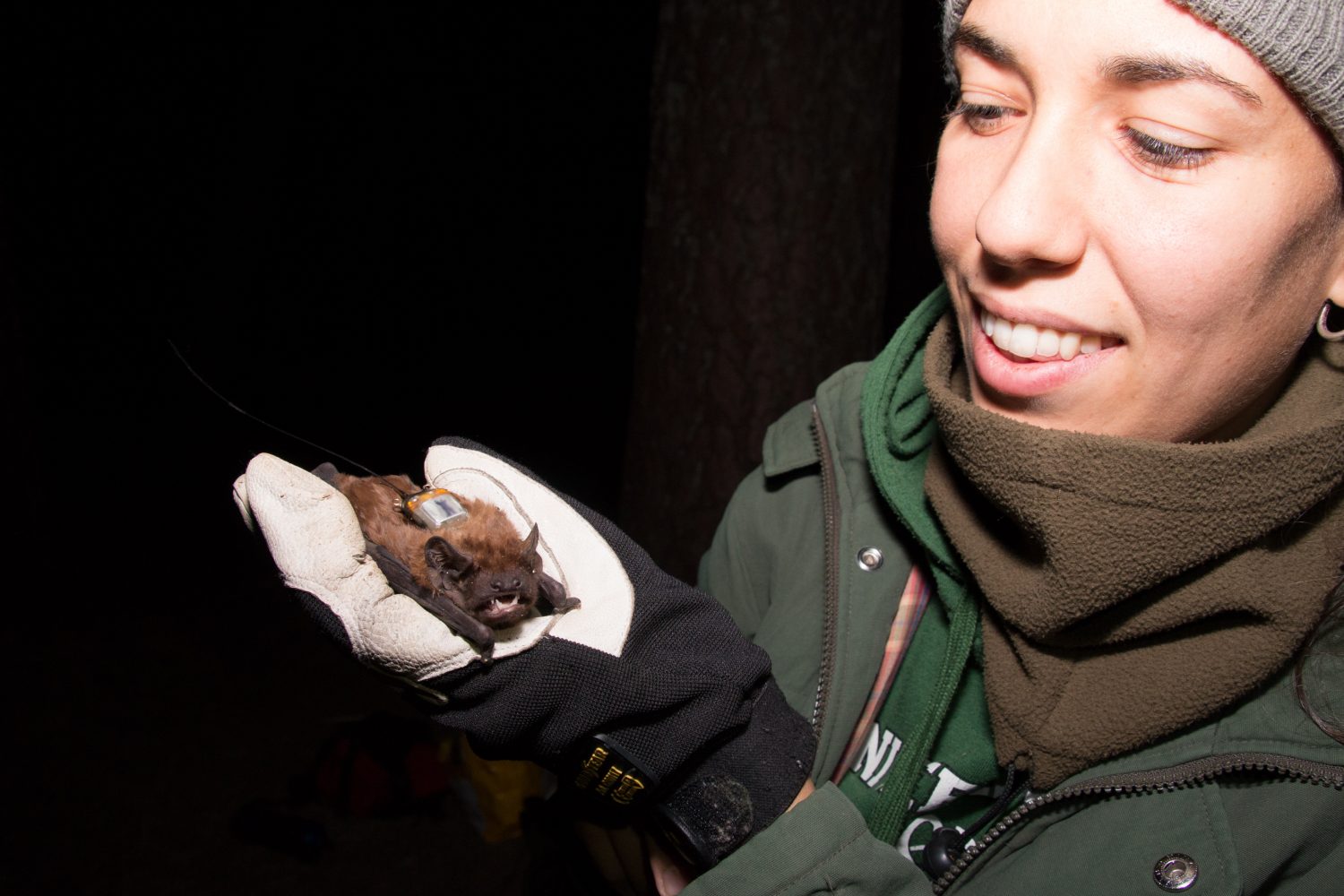
BAT BOXES
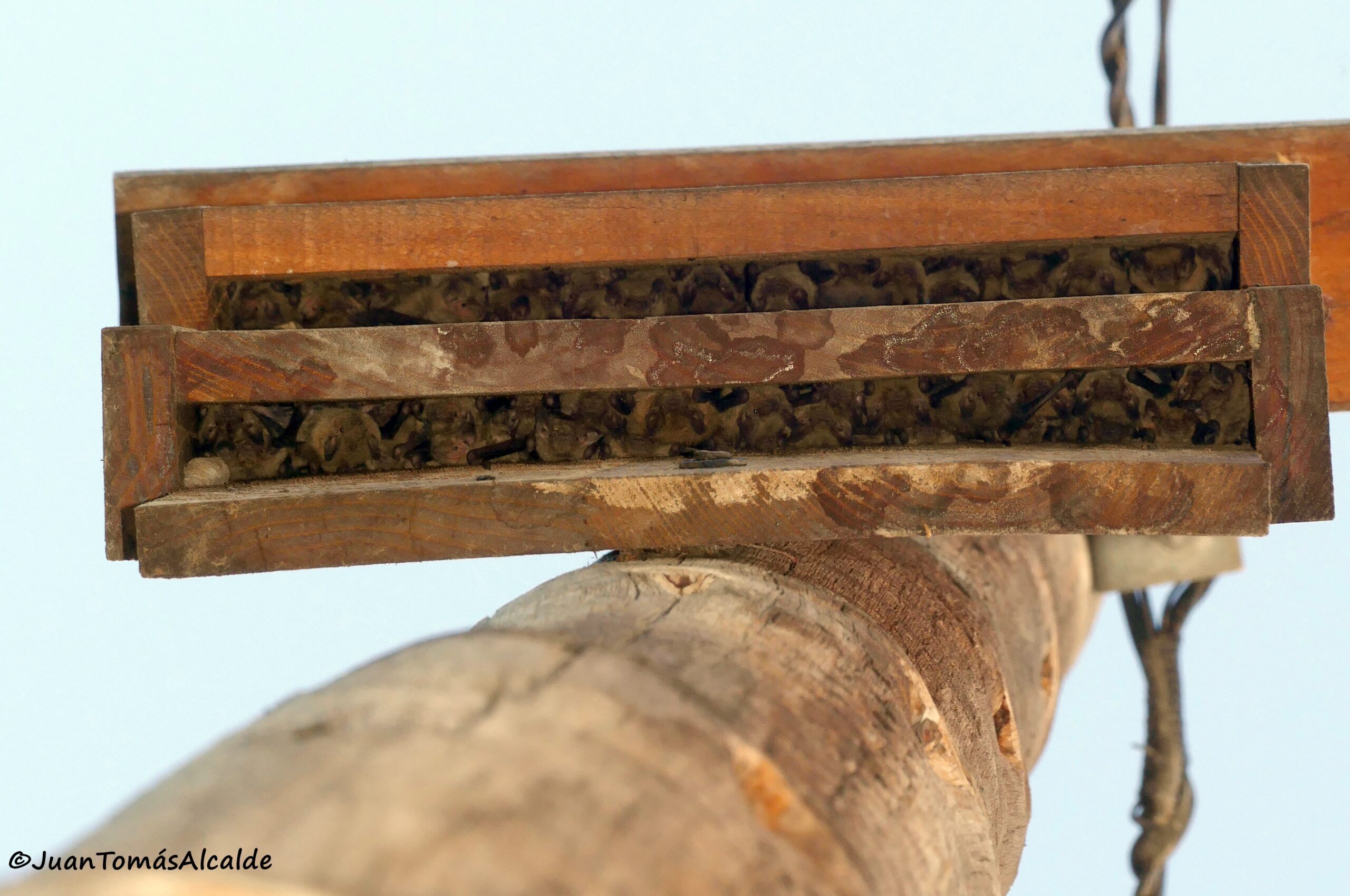
Bat boxes are a measure intended to provide artificial roosts for tree-dwelling and crevice-dwelling bats when an area lacks natural roosts. These boxes are not useful for cave-dwelling species.
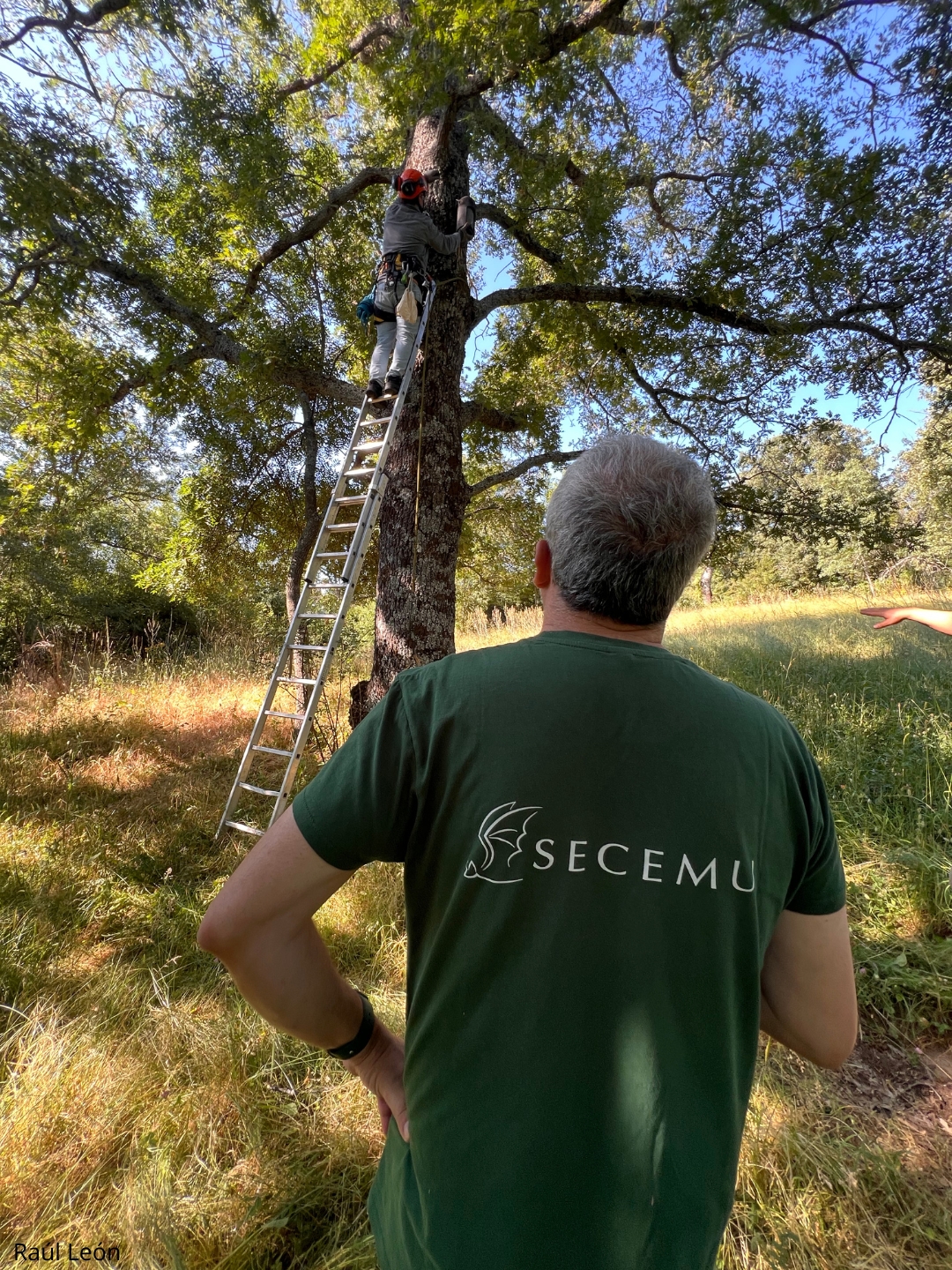
In any case, this is a one-off measure and should be considered temporary. Boxes should not replace natural roosts, but only provide a quick and effective alternative while natural conditions are restored so that bats have trees with holes and cracks; if roost trees are felled, we cannot wait 200 years for other trees to grow old enough to shelter bats inside them. It is therefore recommended to conserve and encourage old, dead standing trees, as they are ideal roosts for tree-dwelling species and offer a greater variety of roosts than artificial boxes.
These roosts are very suitable in certain circumstances and encourage the presence of bats in disturbed areas where natural roosts have previously been removed; however, they do not always work, as sometimes there is no demand for them. This may be due to the presence of many natural holes and cracks, or to a shortage of bats in the area for other reasons (degraded habitat, scarcity of prey, etc.).
“It is better for a bat expert to assess beforehand whether these roosts are needed, as well as how many, which models and where to install them.”
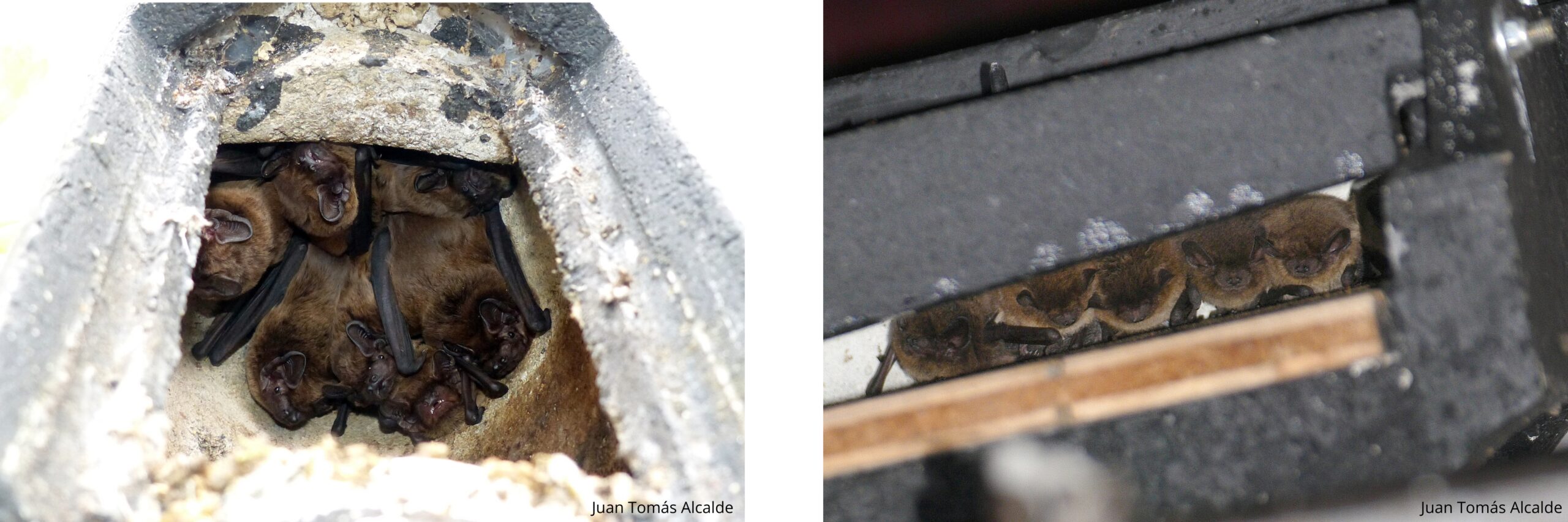
Occupation of bat boxes
Several factors can influence whether bat boxes are occupied:
- Differences between species: each bat species has its own requirements, so different species prefer different box models.
- Differences between sexes: males are generally solitary for most of the year and gregarious in winter. Females are usually gregarious, especially in summer and winter; in autumn, males and females come together to form harems and mate.
- Differences between seasons: each species has different roost preferences depending on the time of year: spring = transition period or colony formation; summer = breeding; winter = hibernation; autumn = mating. In the latter period, males are territorial, so each male occupies a different box. On top of this, many migratory individuals of some tree-dwelling species (Nyctalus noctula, Nyctalus leisleri, Pipistrellus nathusii) arrive in the Iberian Peninsula from central Europe. They spend the autumn and winter in the Peninsula and return to their breeding areas at the start of spring.

These differences may explain why some boxes are successful at a certain time of year or in a certain area, while at other times or places the same boxes are not occupied.
“Before putting up boxes in a place, it is recommended to get to know the area and the bat species that live there (and their phenology), so that we can anticipate the most suitable box model or models and the times when they are most likely to be successful.”

If you are considering putting up bat boxes, you may find the following links useful:
- Plans to build your own bat box (in Spanish).
- Video tutorial on how to make a bat box, by ANSE (in Spanish).
- Tips for putting up bat boxes.
- Experiences and results.
- Bat boxes: recommendations for their correct installation and checking. Experiences.
- Recommendations for the protection of biodiversity that uses buildings for roosting or nesting, by SEO/BirdLife and SECEMU (in Spanish).

Grupo secemu

Grupo secemu

Grupo secemu
Laura-Torrent____