BATlas: BAT MONITORING AND ATLAS
1. About the project
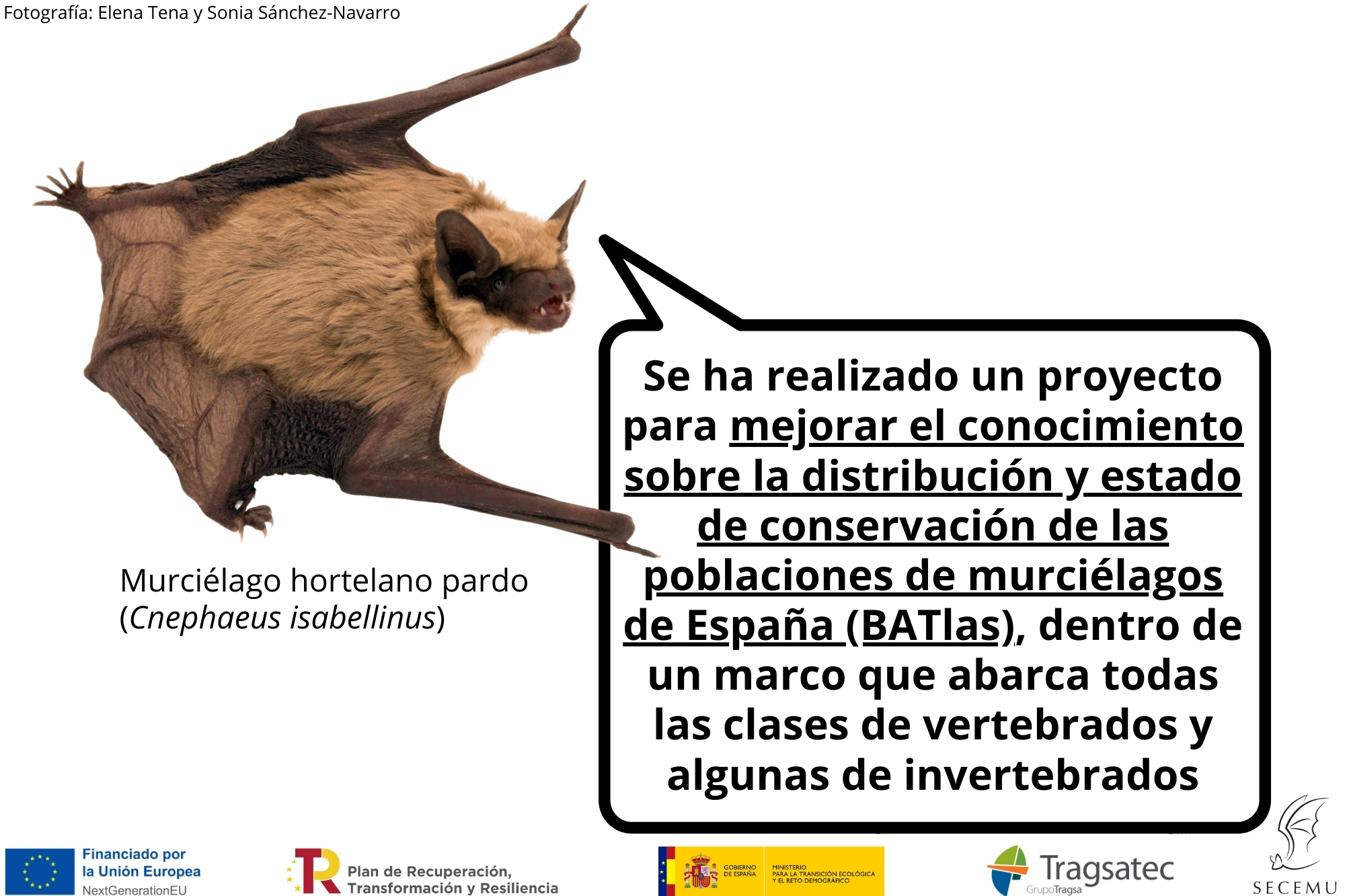
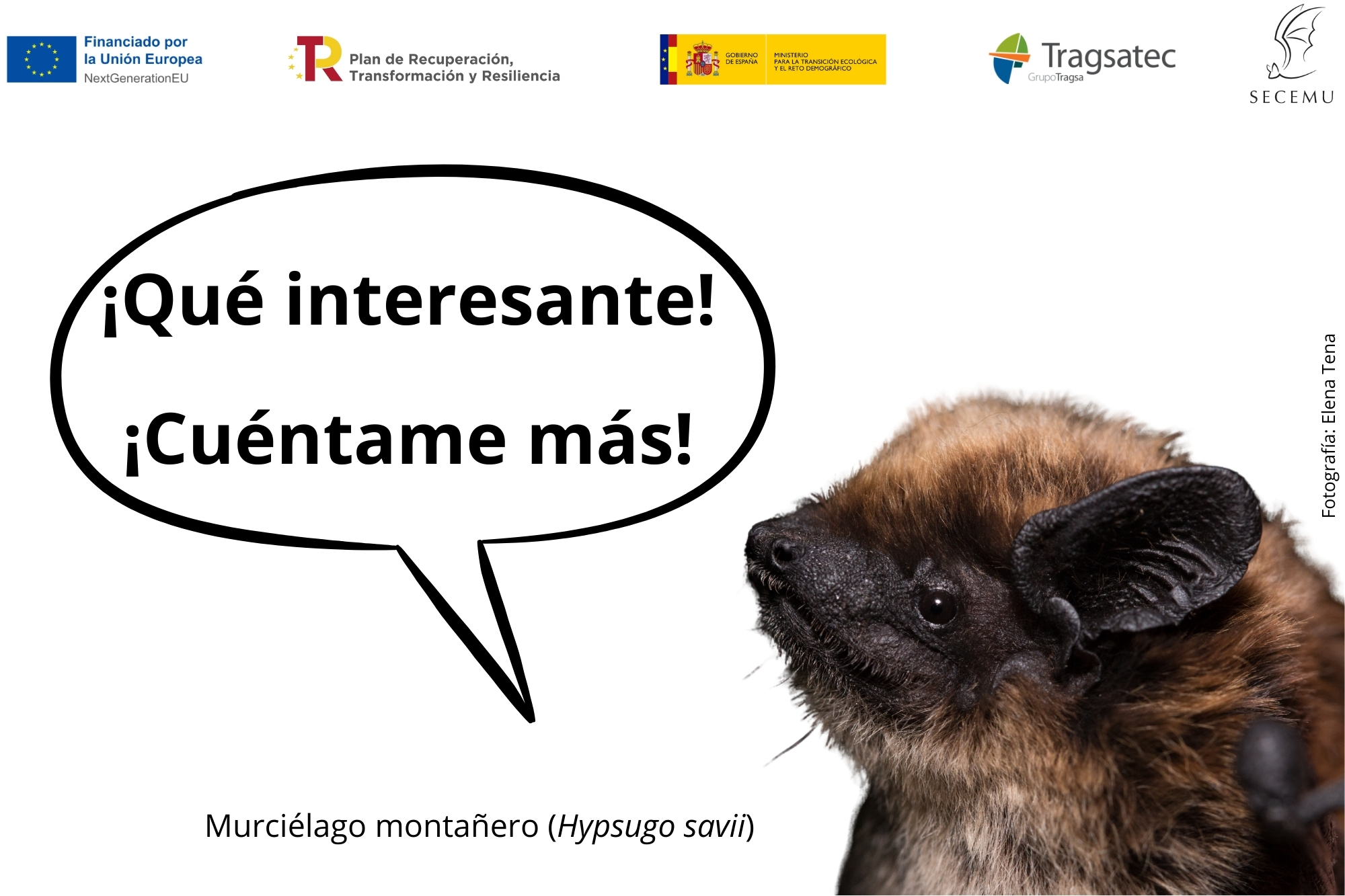
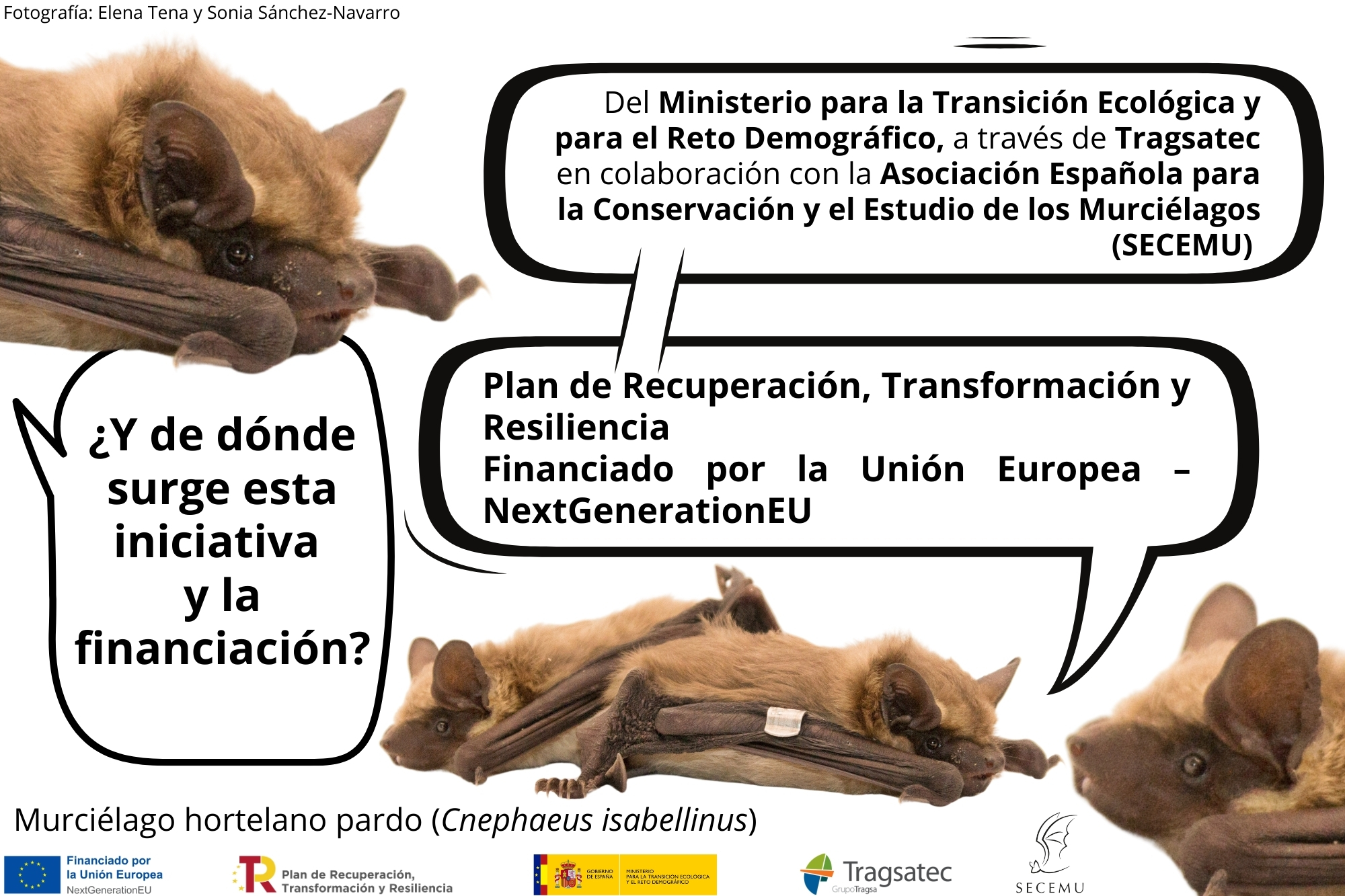
At the initiative of the Ministry for the Ecological Transition and the Demographic Challenge (MITECO), and through Tecnologías y Servicios Agrarios, S. A. (TRAGSATEC), in collaboration with the Spanish Association for the Conservation and Research of Bats (SECEMU), the BATlas project was carried out to improve current knowledge of the distribution and status of the populations of all bat species in Spain. The work began in summer 2023 and ended in April 2026.
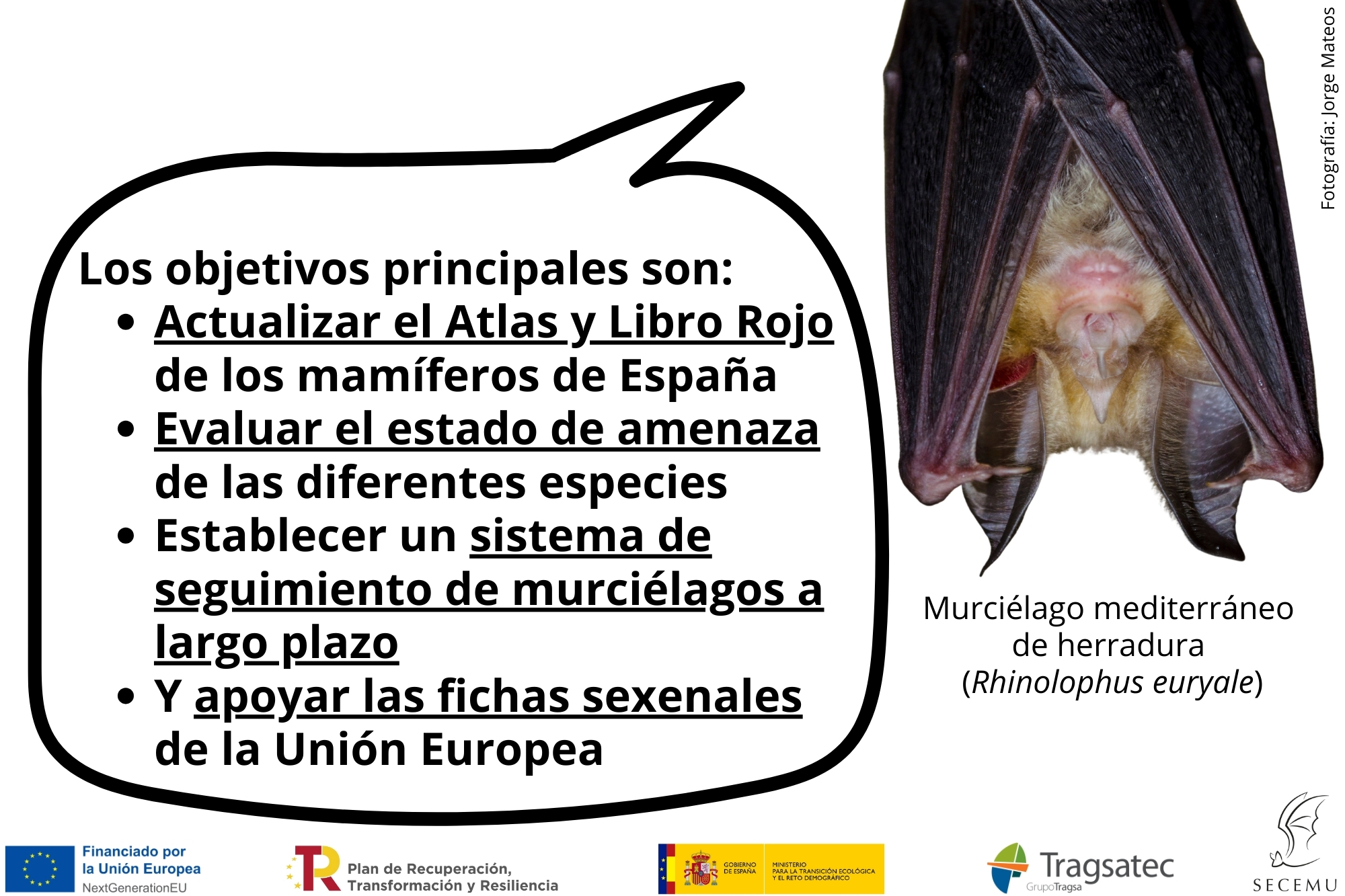
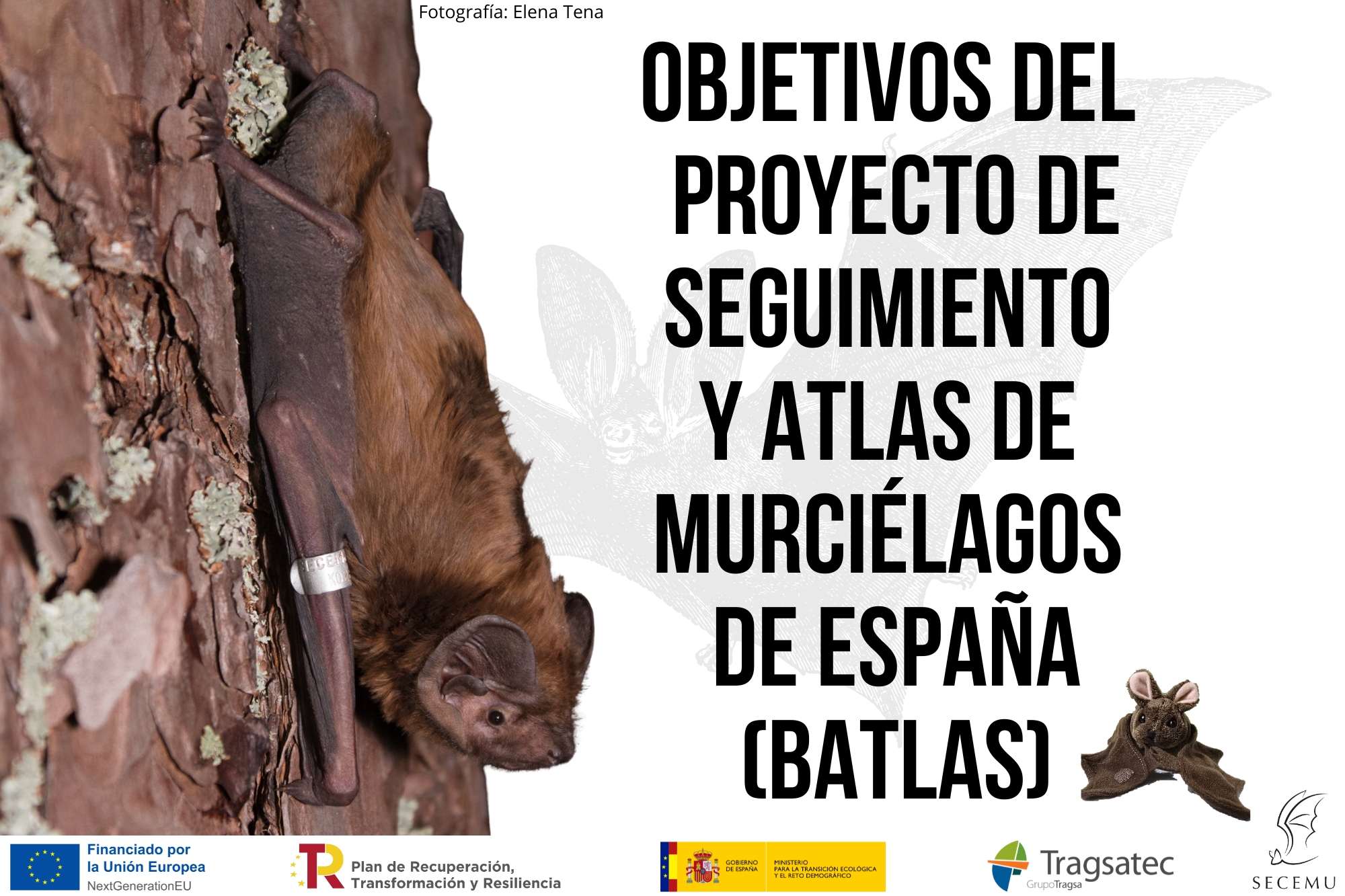
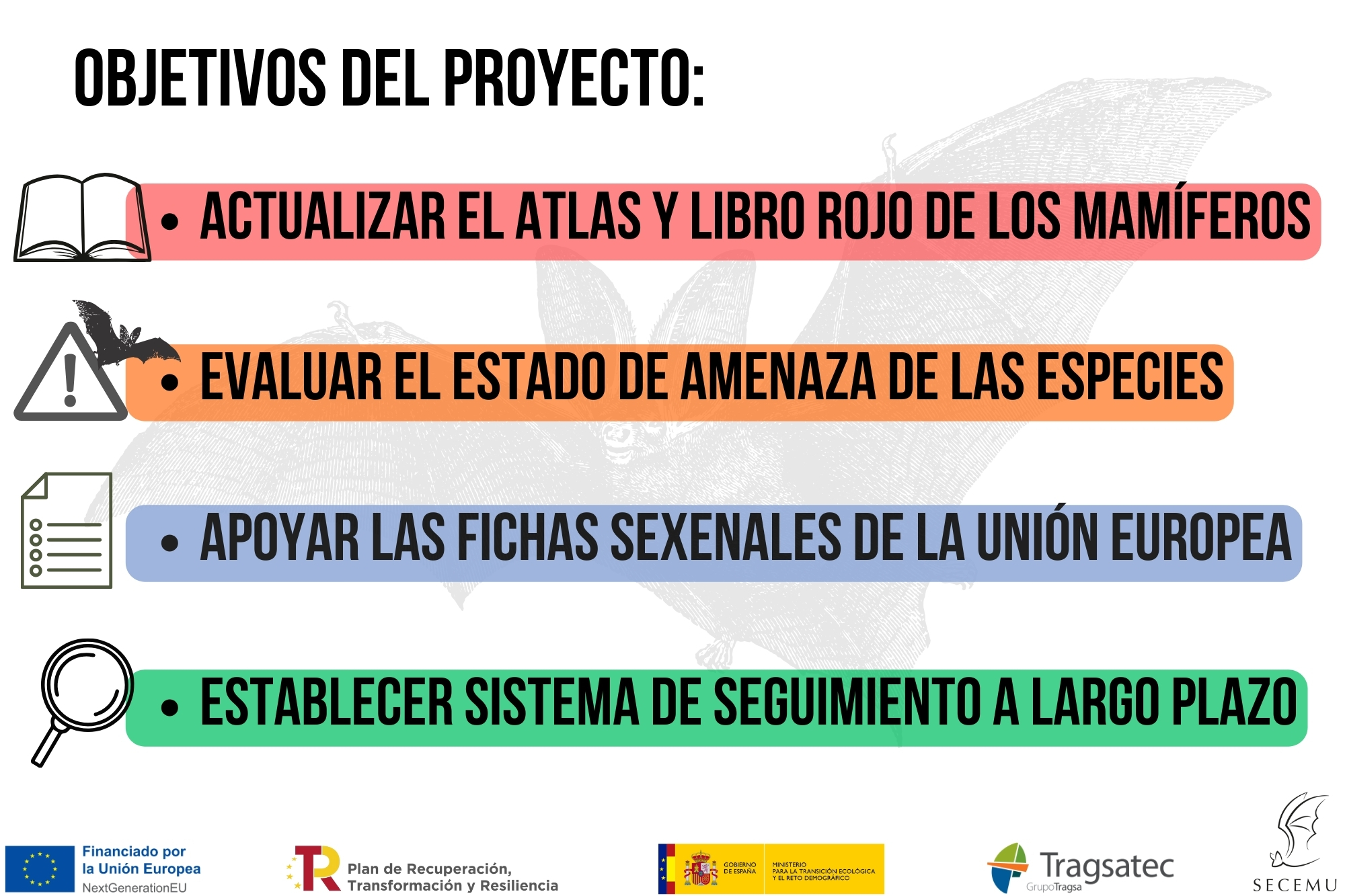
The project’s main objectives are:
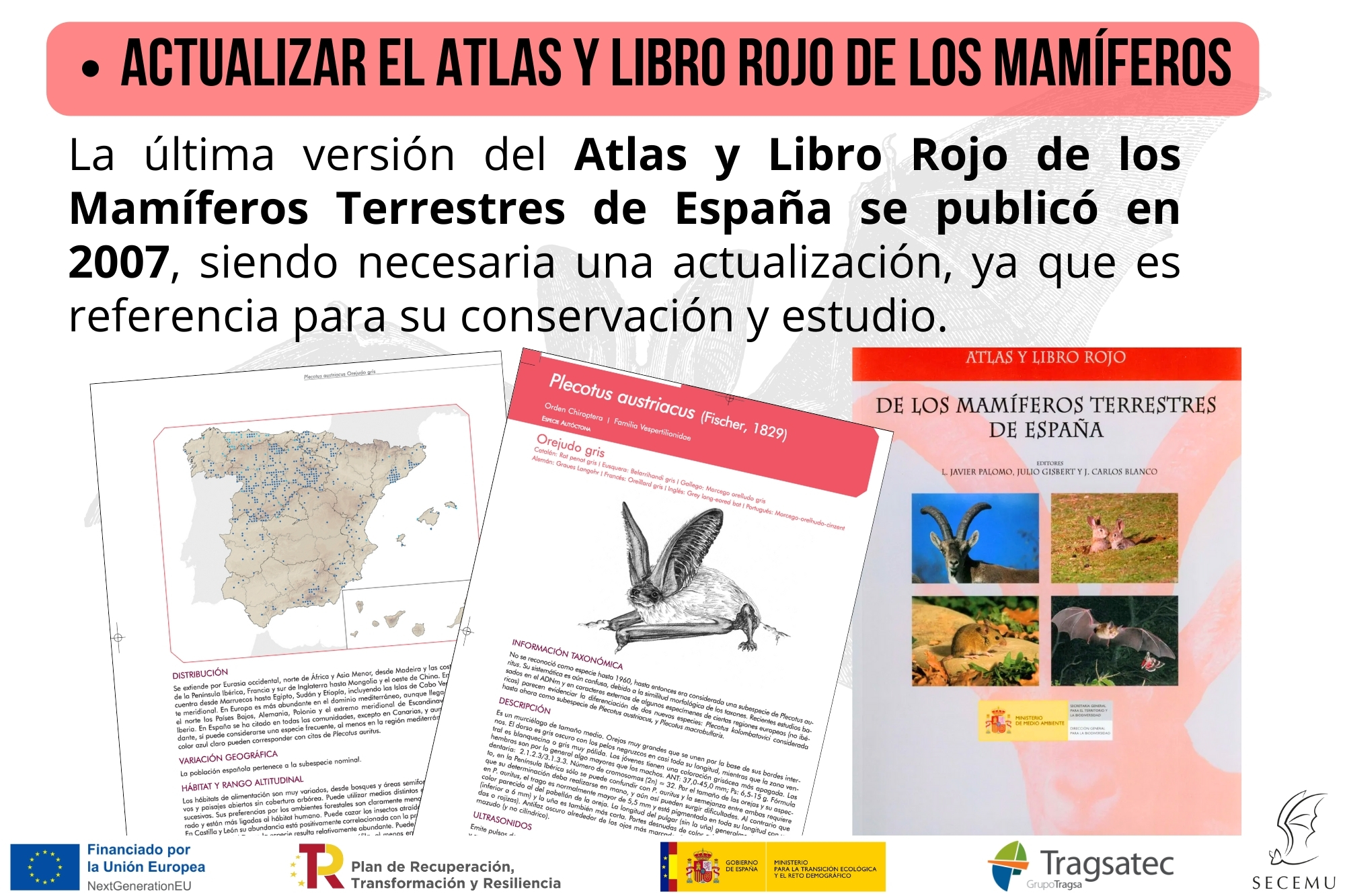
- Update the Atlas and Red Book of bat species in Spain: The latest version of the Atlas and Red Book of the Terrestrial Mammals of Spain was published in 2007 and needed updating, as it is the reference for the conservation and study of this group of vertebrates.
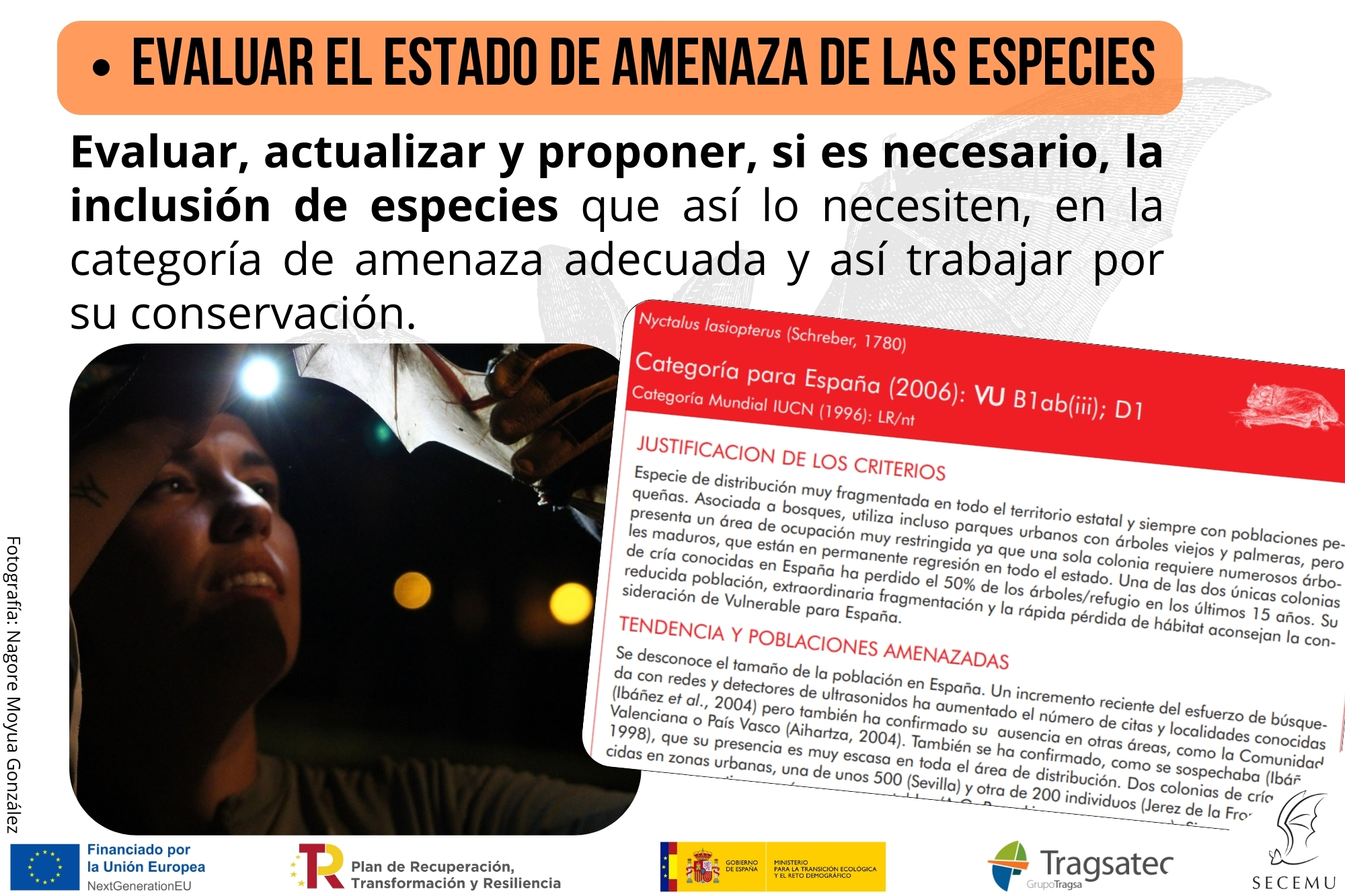
- Assess and update the threat status of the species: Where necessary, their inclusion will be proposed in the List of Wild Species under Special Protection (LESRPE) or a change in their category in the Spanish Catalogue of Threatened Species (CEEA).
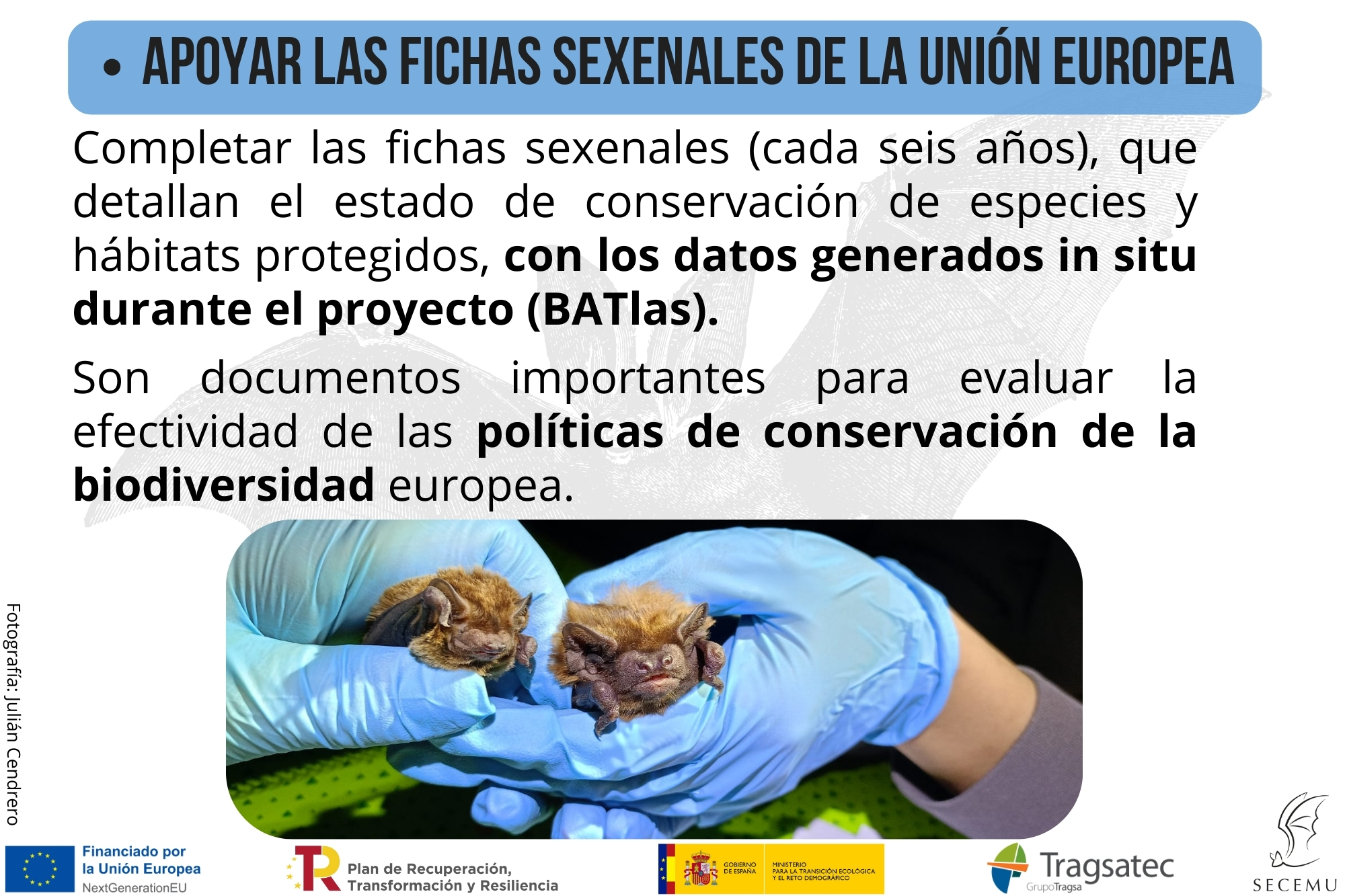
- Support the six-yearly reports to the European Union on the bat species present in Spain: The data gathered in the field during the project feed into the six-yearly reports, which detail the conservation status of the species.
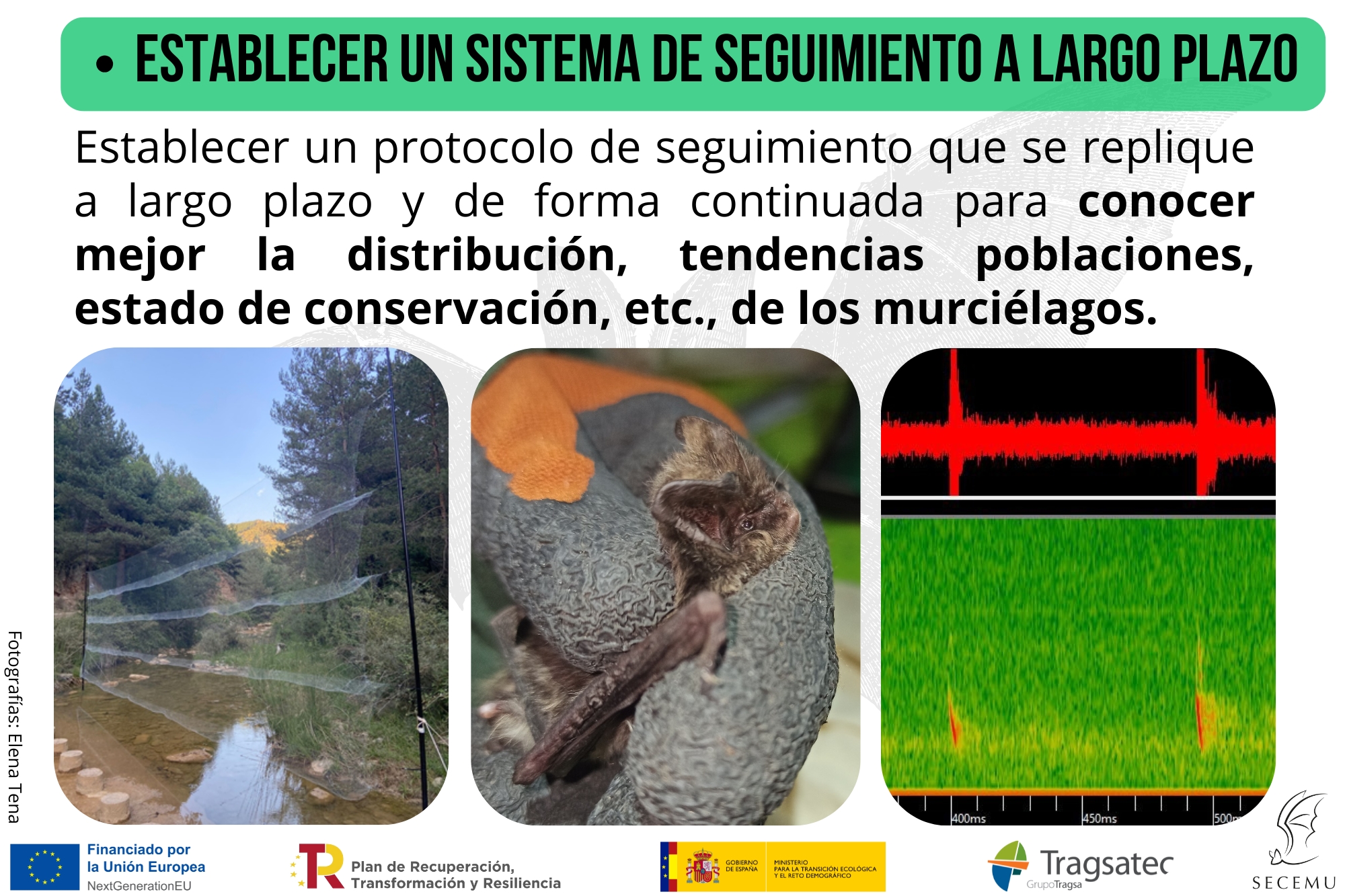
- Propose a long-term bat monitoring scheme: Design and recommend a standardised monitoring protocol, to be repeated continuously over the long term, to broaden and improve knowledge of the distribution, population trends, conservation status, etc., of the bats of Spain.
All these tasks have been supported by different working groups:
- Scientific committee: Advised on preparing protocols to standardise fieldwork, ensured quality in data validation and provided scientific support in analysing and projecting the results.
- Regional informants: In each autonomous community, regional specialists with extensive knowledge of the area collaborated to manage and organise fieldwork properly among the community’s collaborators, validating and advising on both the data collected in the field and the data compiled.
- Coordination committee: Led every phase of the project, from fieldwork design to the management, analysis and validation of the database and mapping. It was also responsible for reviewing the Atlas and Red Book species accounts, editing the chapters and the complex administrative, technical and logistical management required to coordinate such a large team.
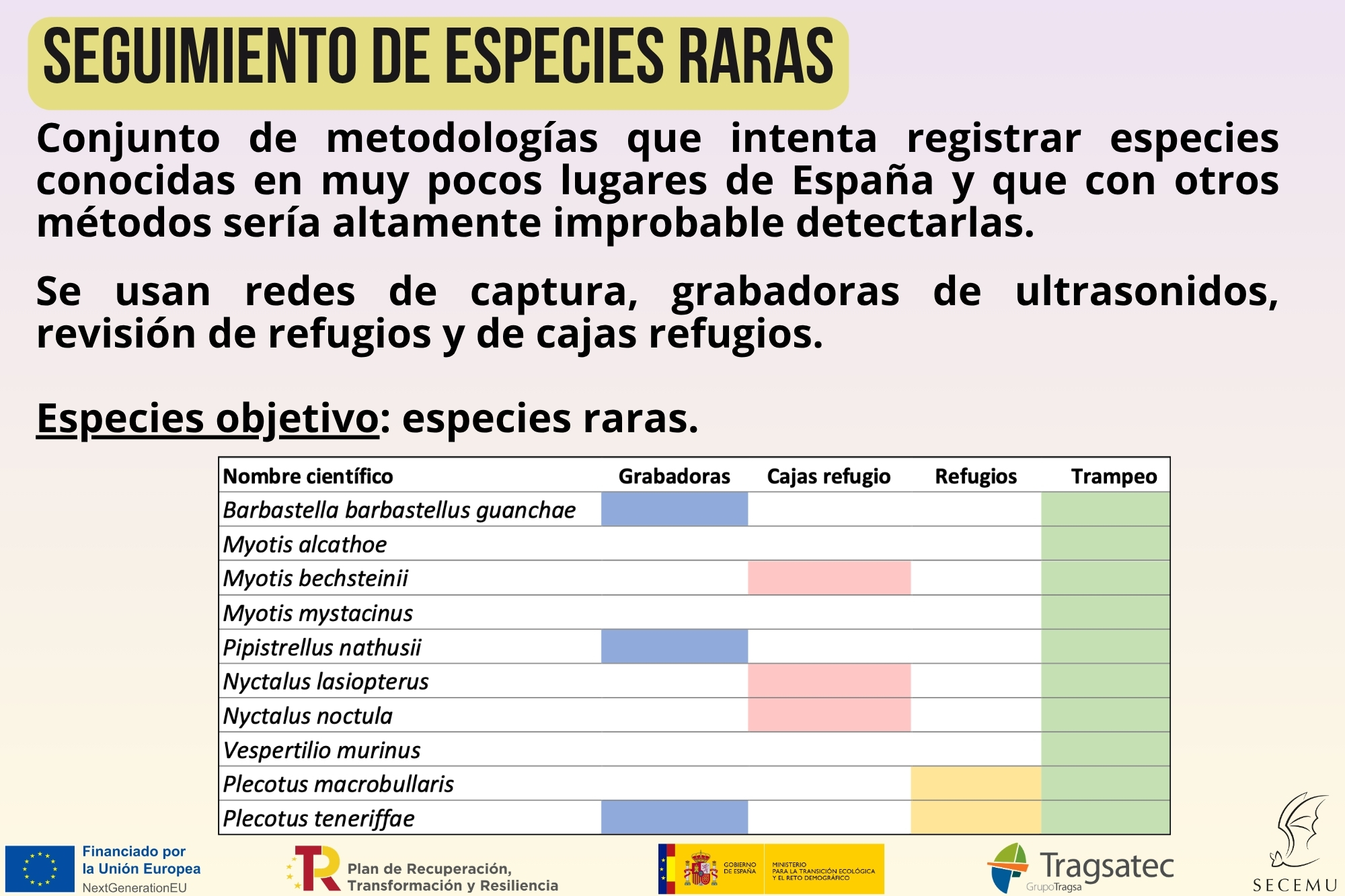
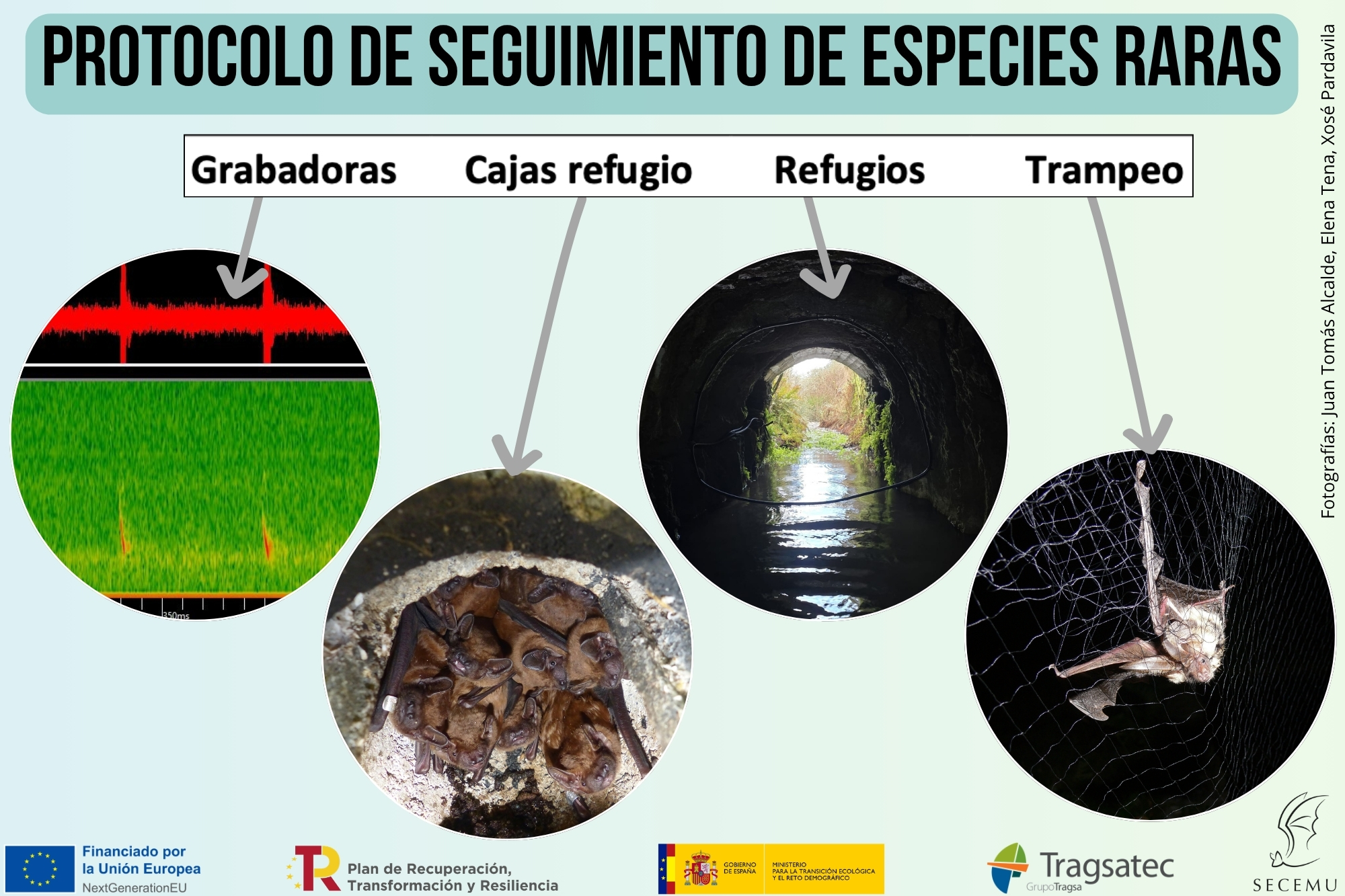
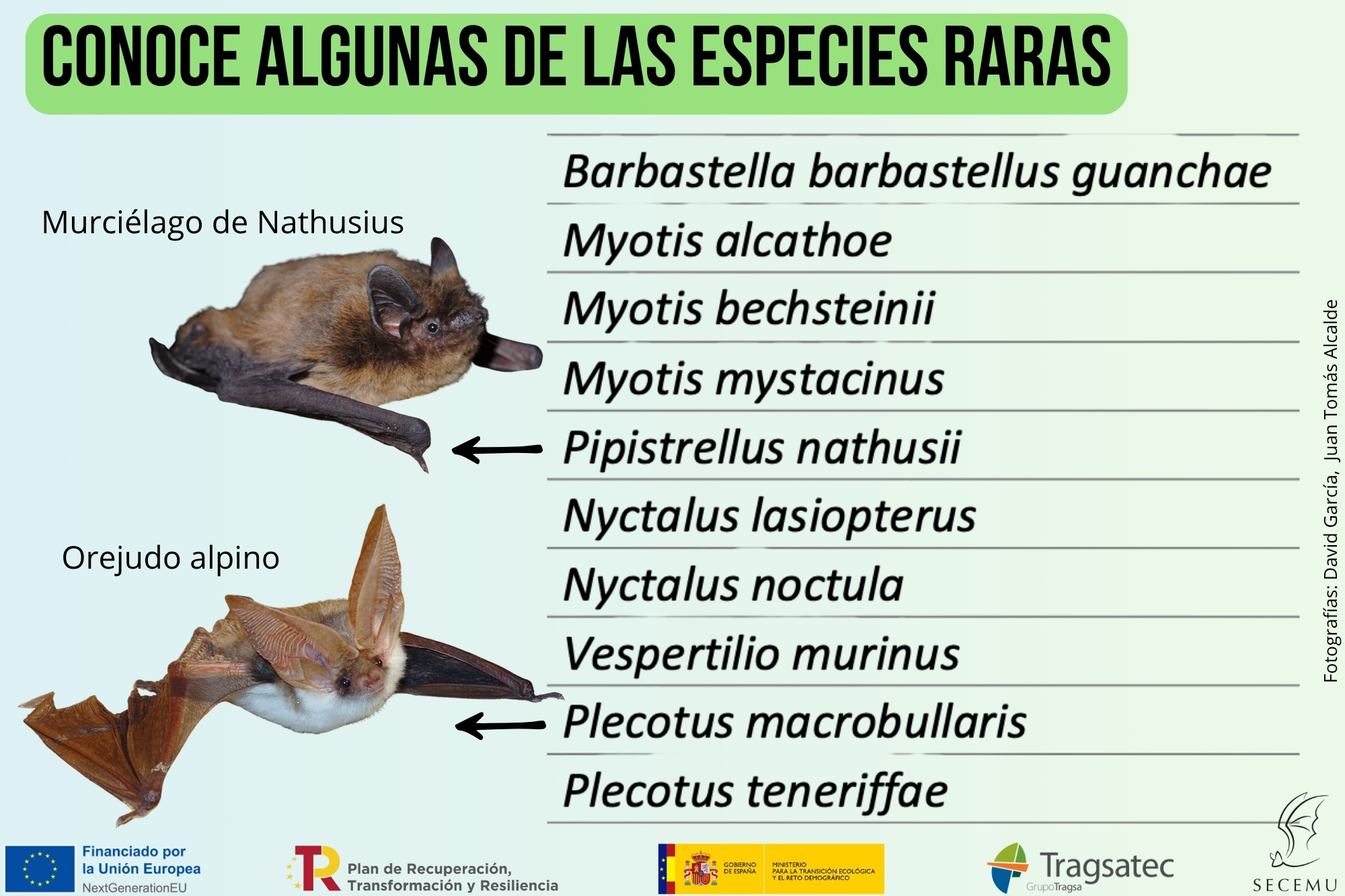
The fieldwork began in summer 2023 and ended in summer 2025, and included several sampling methods: automatic ultrasound recorders, capture stations with nets and genetic sampling of cryptic species, censuses of cave-dwelling breeding and hibernation colonies, and targeted surveys to monitor rare species.
More than 90 members took part as collaborators in the fieldwork carried out during the project.
2. Methodology and protocols
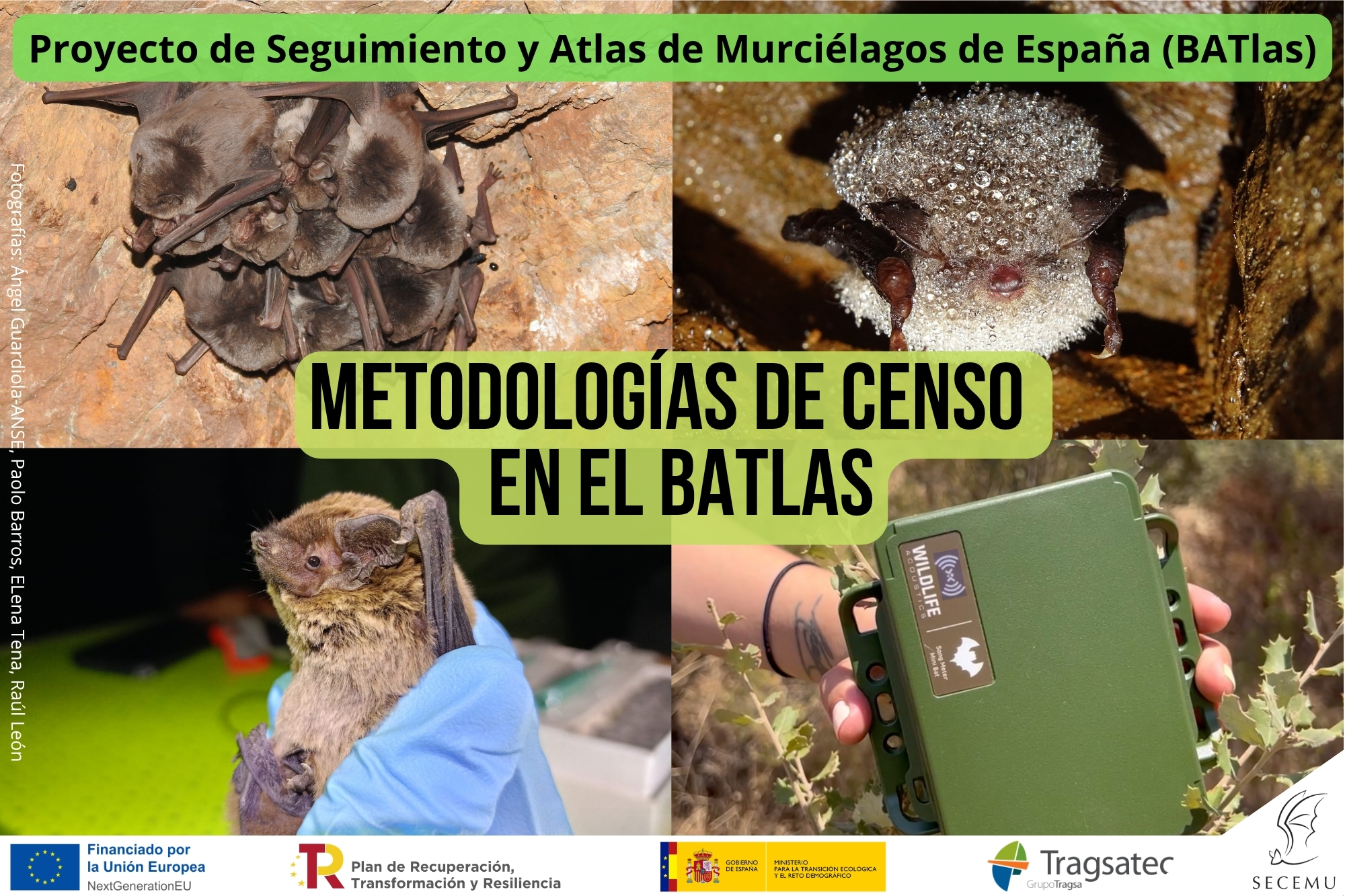
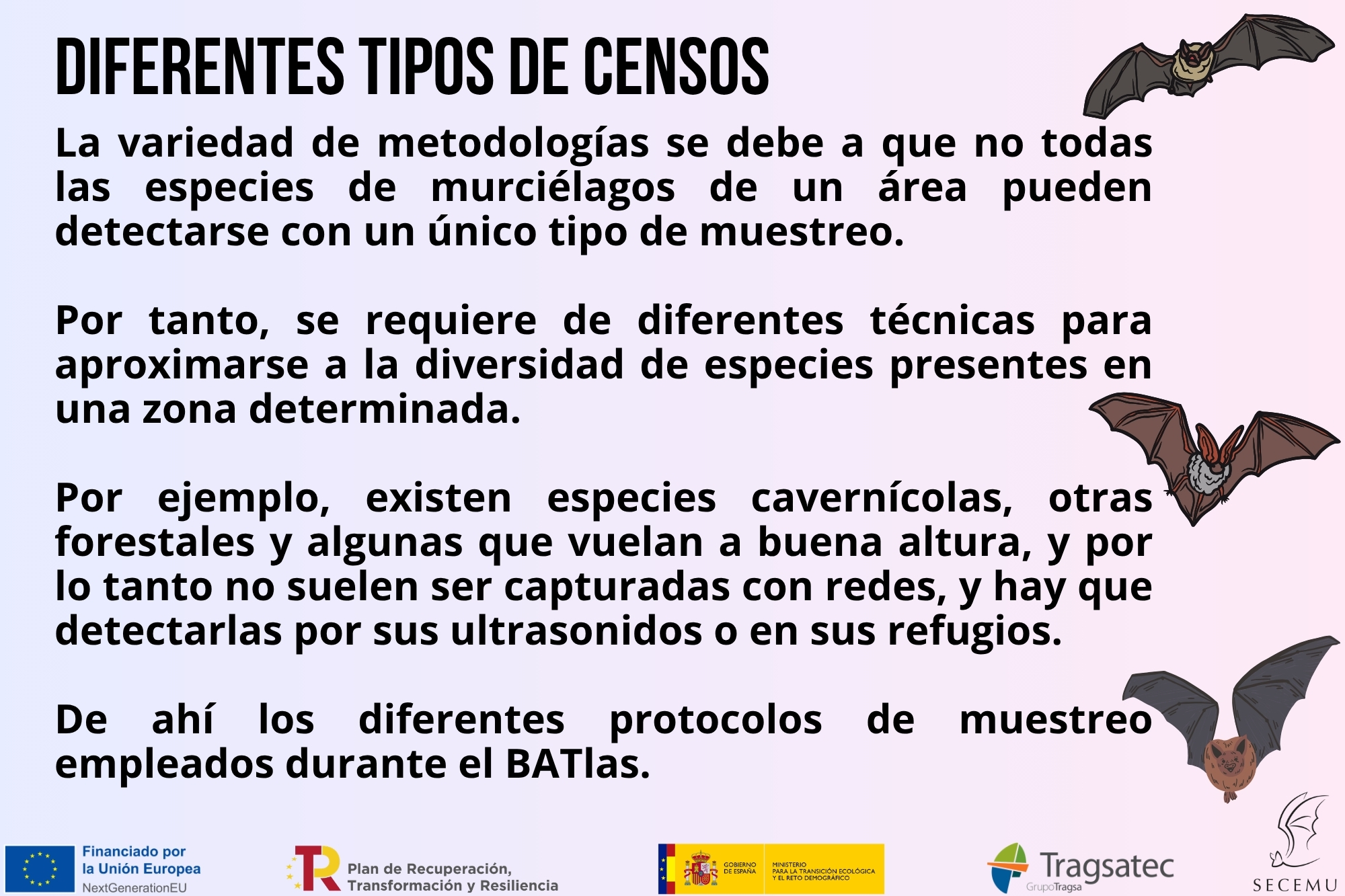
Bat surveys and censuses were based on three complementary methods, adapted for rare, migratory and island species:
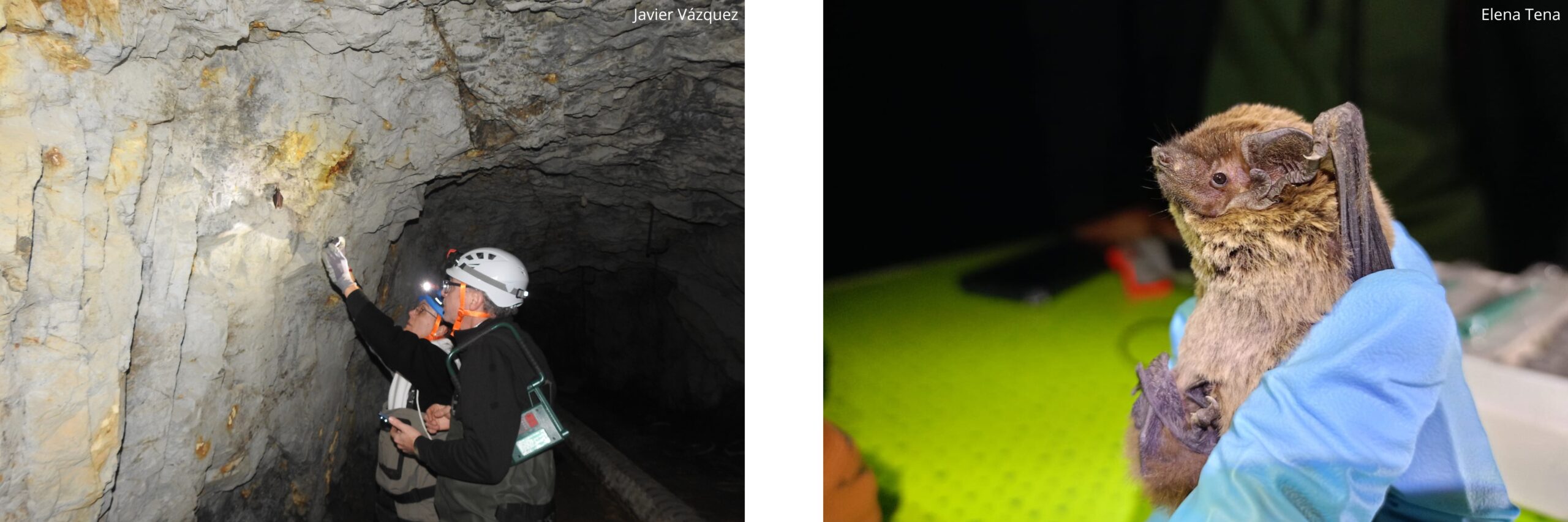
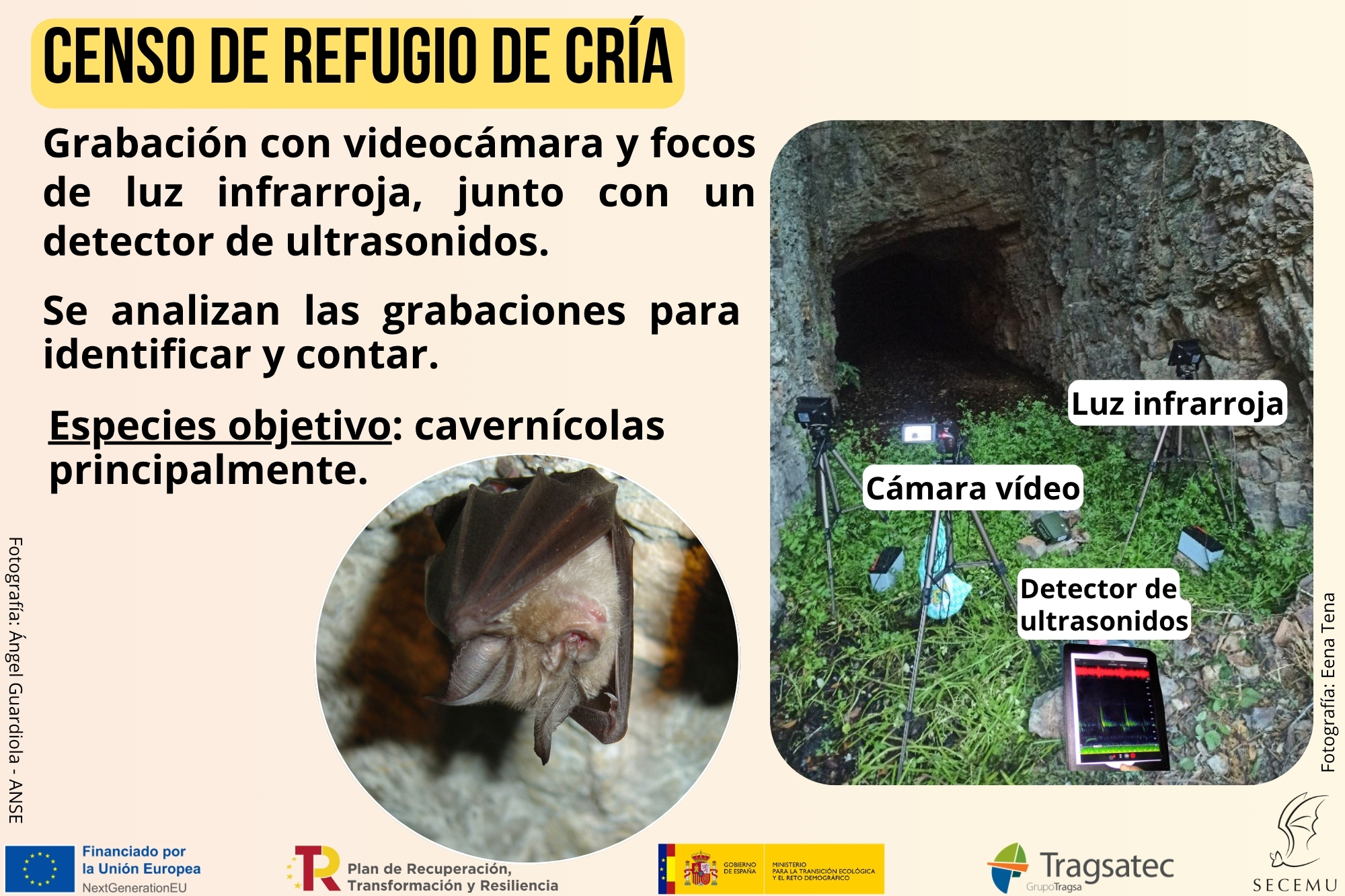
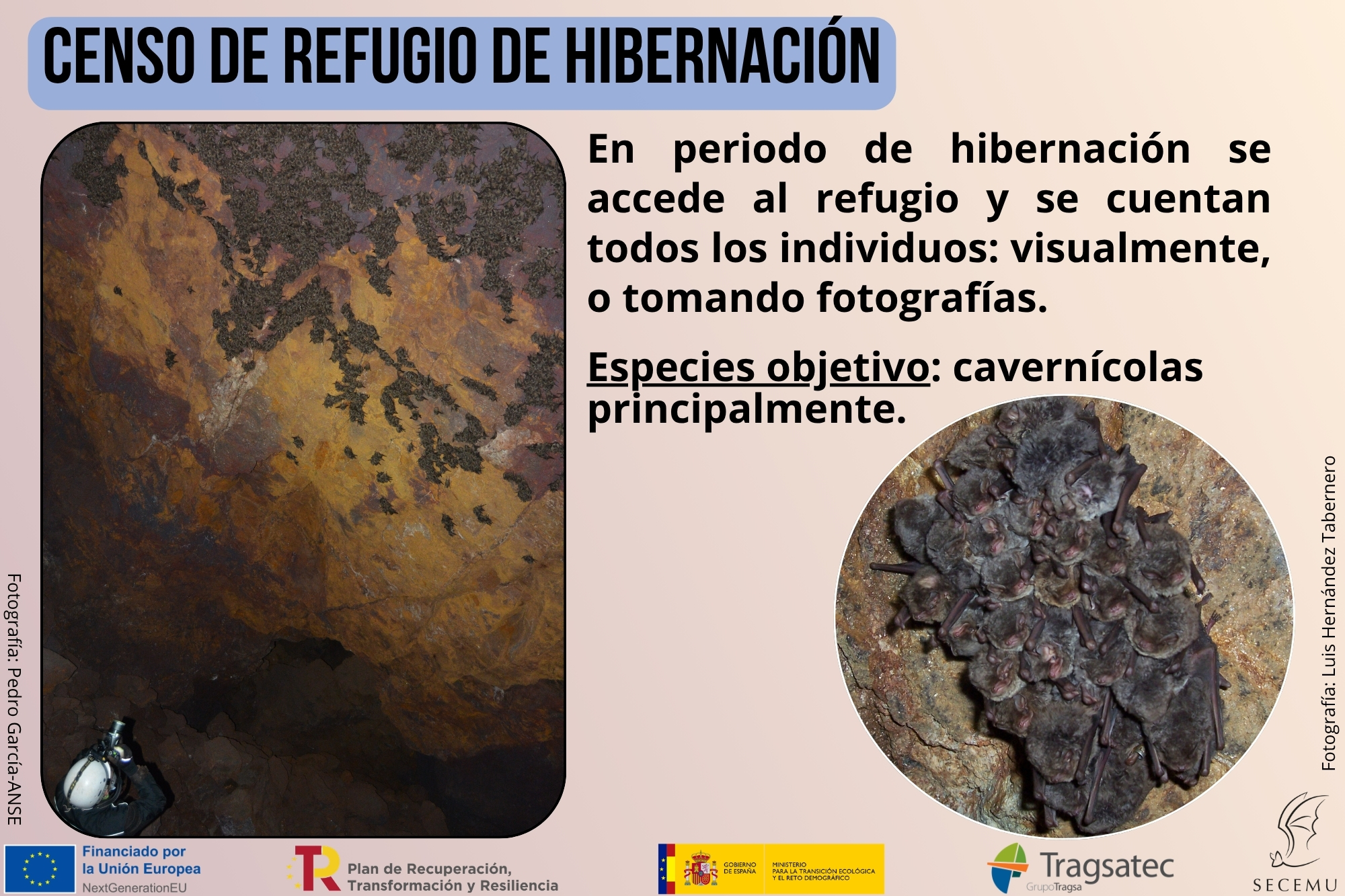
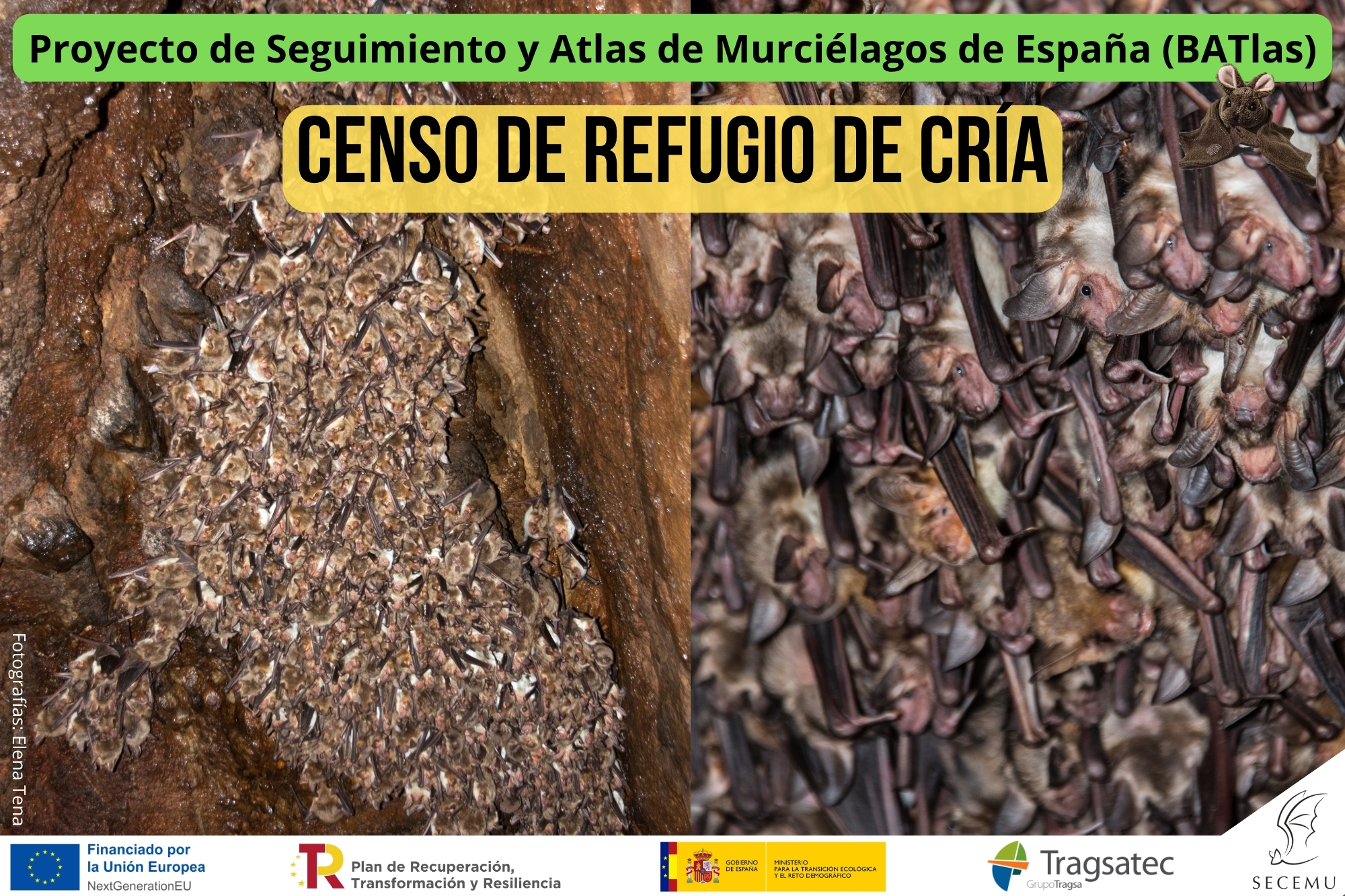
- Censuses of cave roosts: in breeding colonies, using video, infrared and acoustic support; in hibernation roosts, through direct visual or photographic inspections.
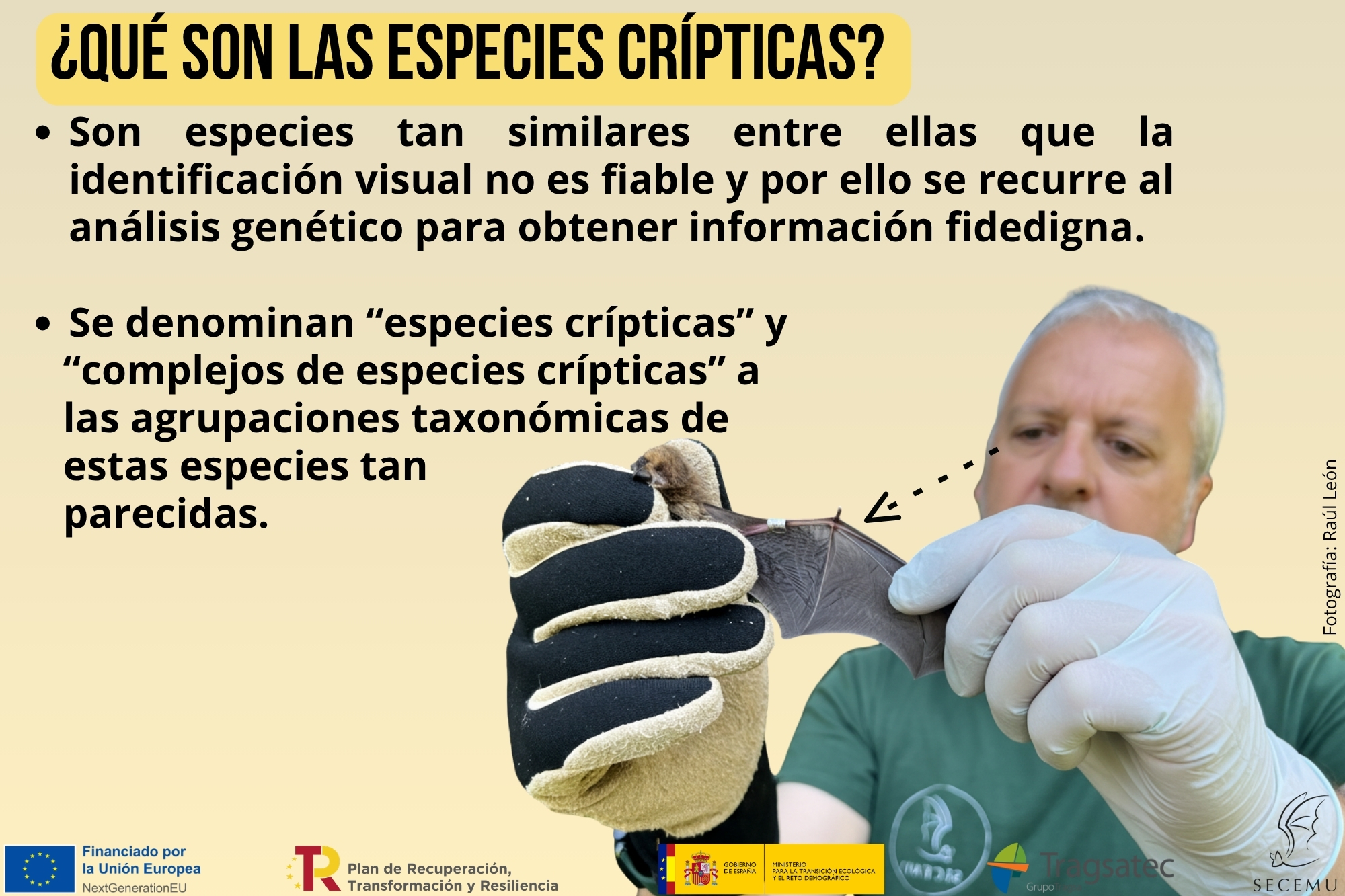
- Direct captures and sampling: these provide great accuracy through morphological identification and collection of genetic samples to resolve complexes of cryptic species.
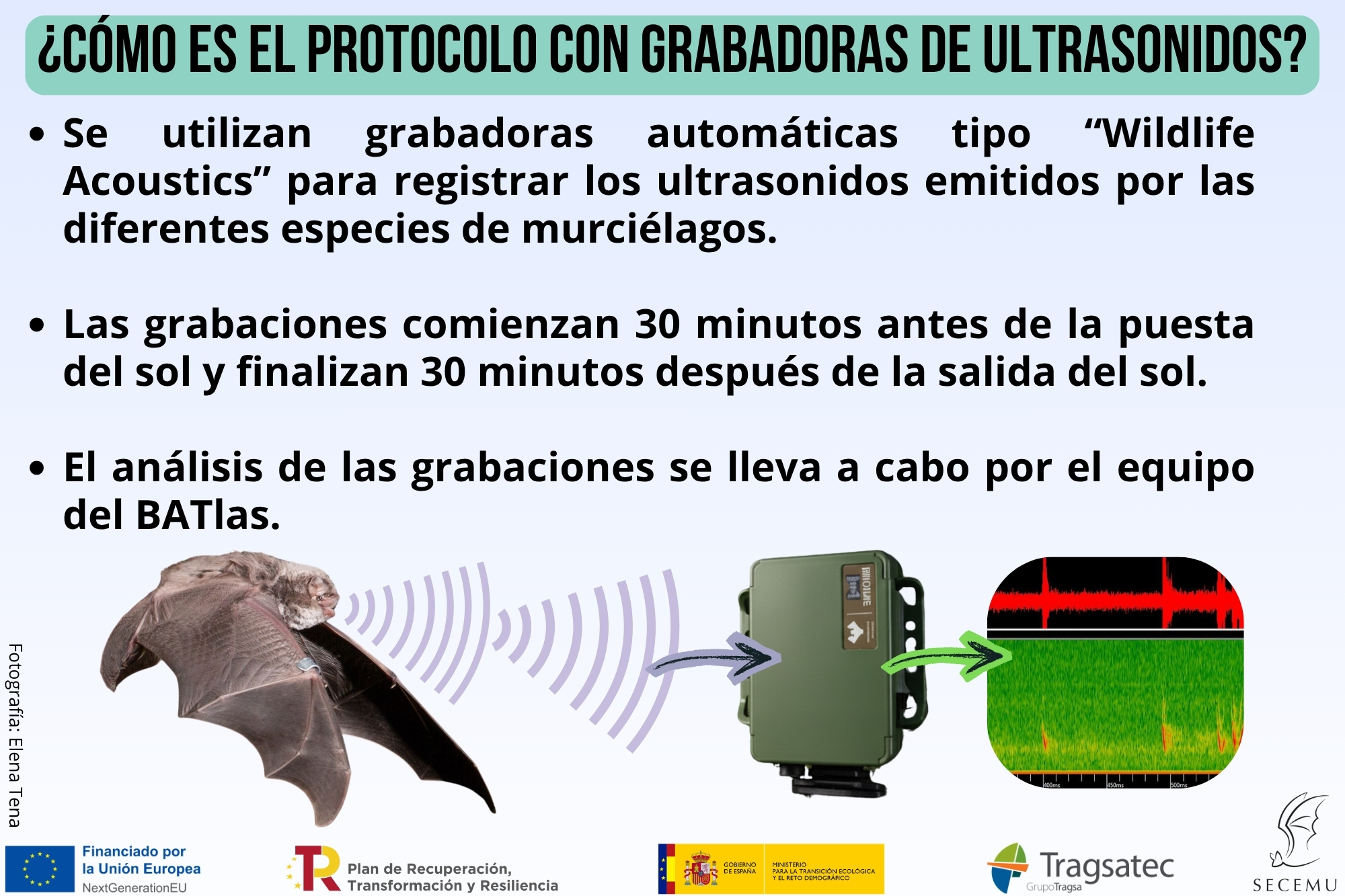
- Ultrasound recorders: this is the method with the widest territorial reach and the lowest logistical demands. It allowed standardised sampling at national level, although limited in some cases by classification into sonotype groups, as the exact species could not always be identified.
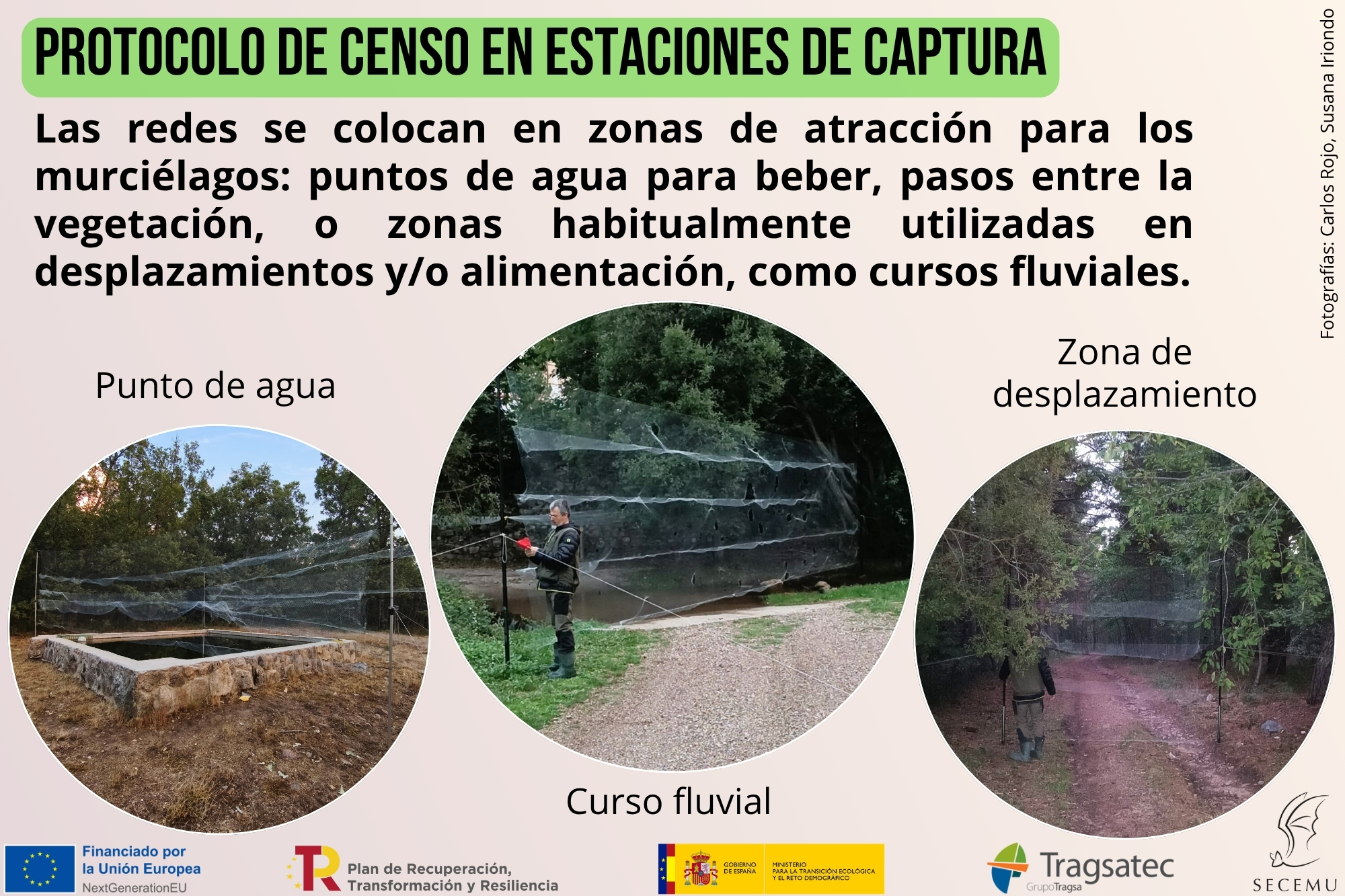
Sampling effort was scaled in proportion to each province’s area to ensure consistency. However, captures were constrained to woodland and water points, while roosts were selected in a targeted way according to their biological importance and independently of existing regional monitoring schemes.
Breeding and hibernation roosts
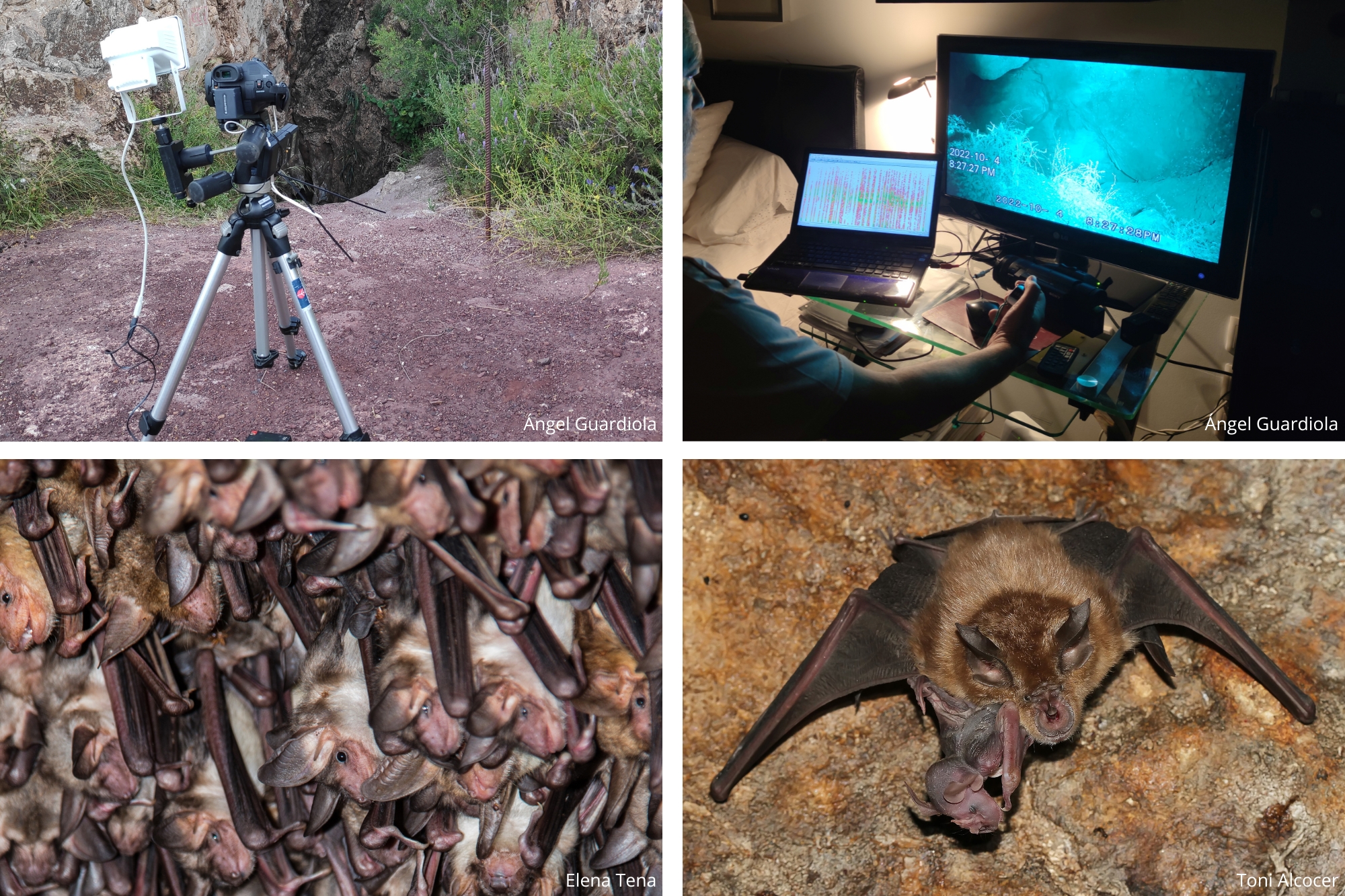
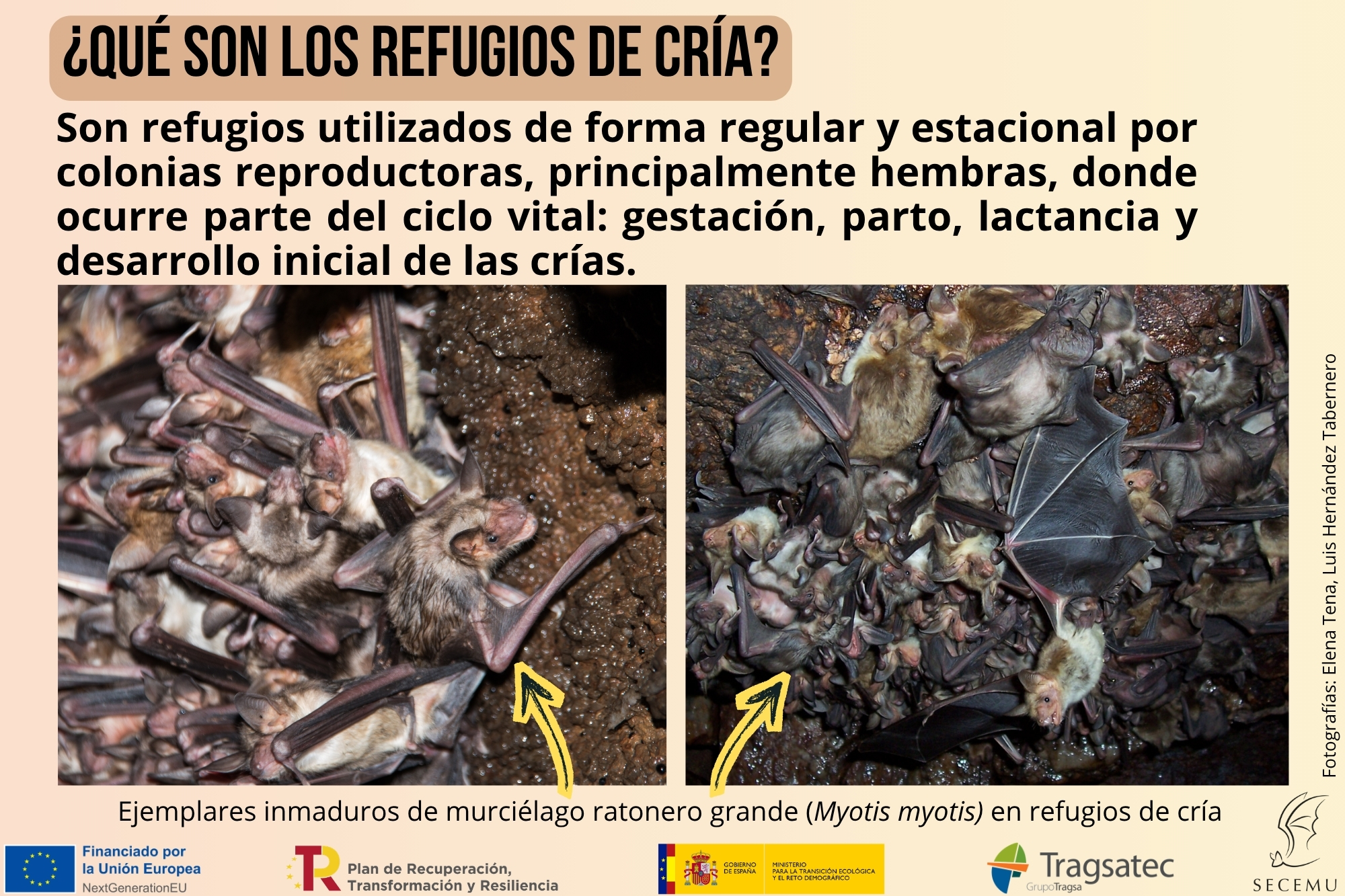
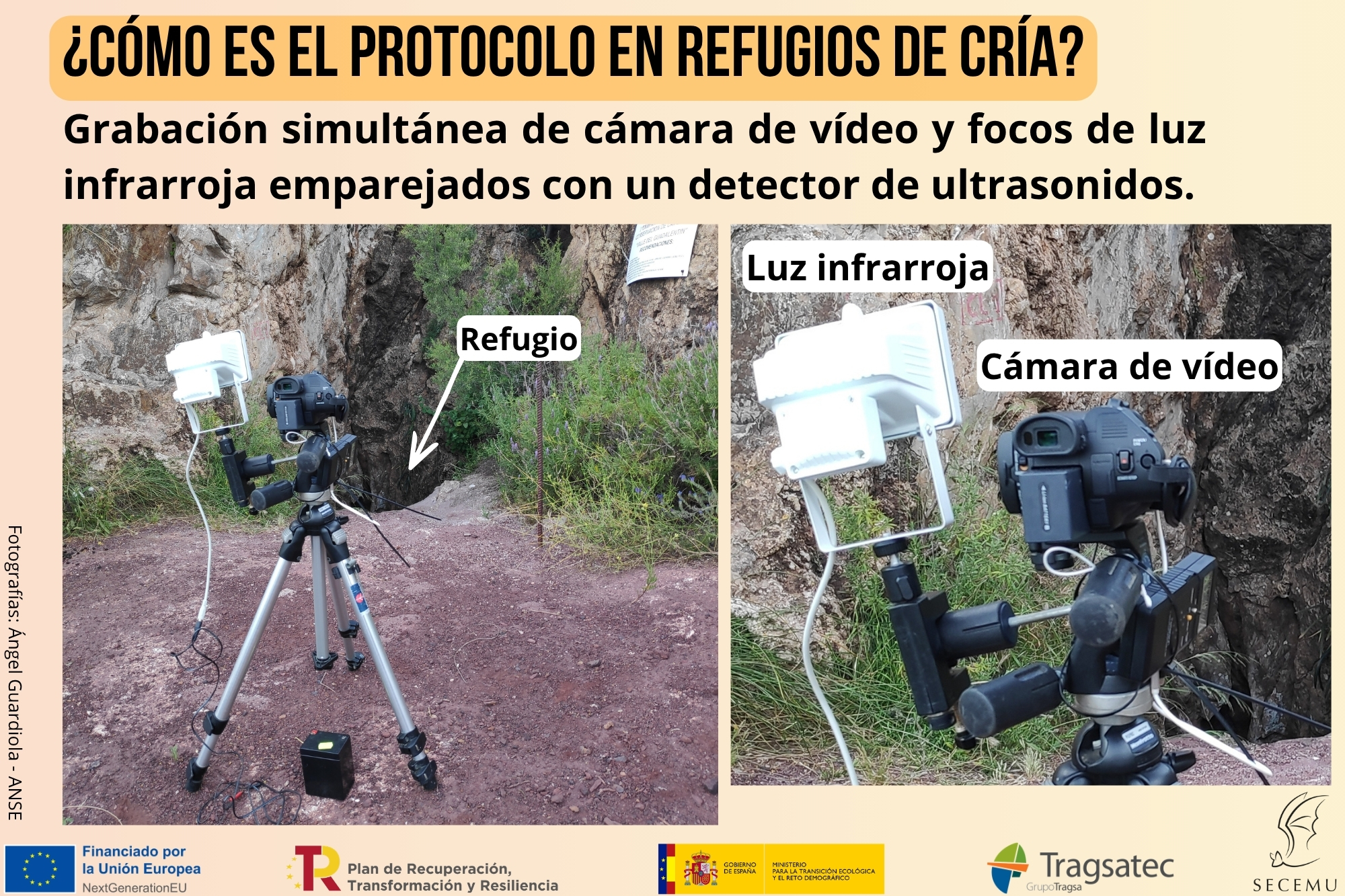
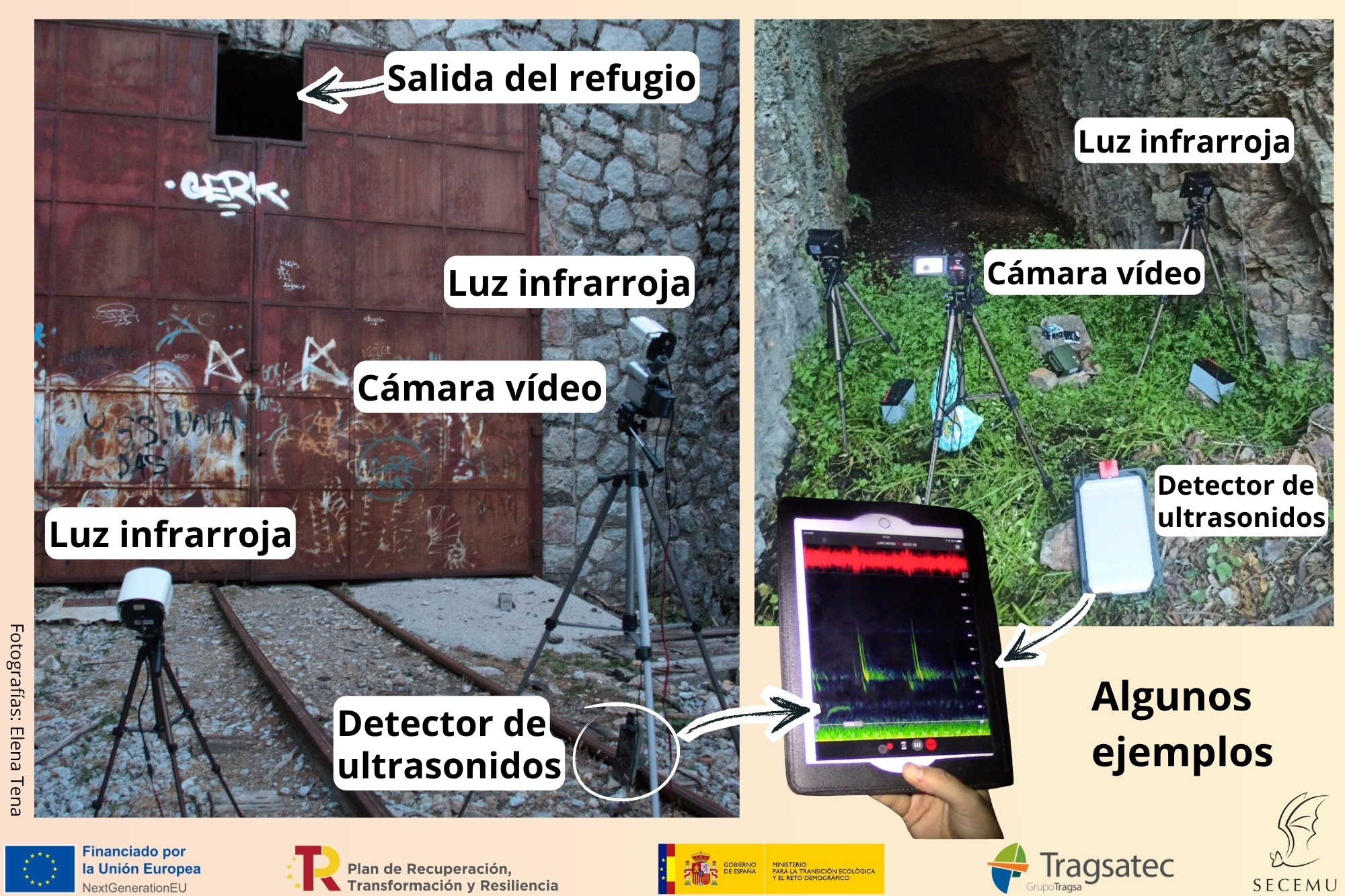
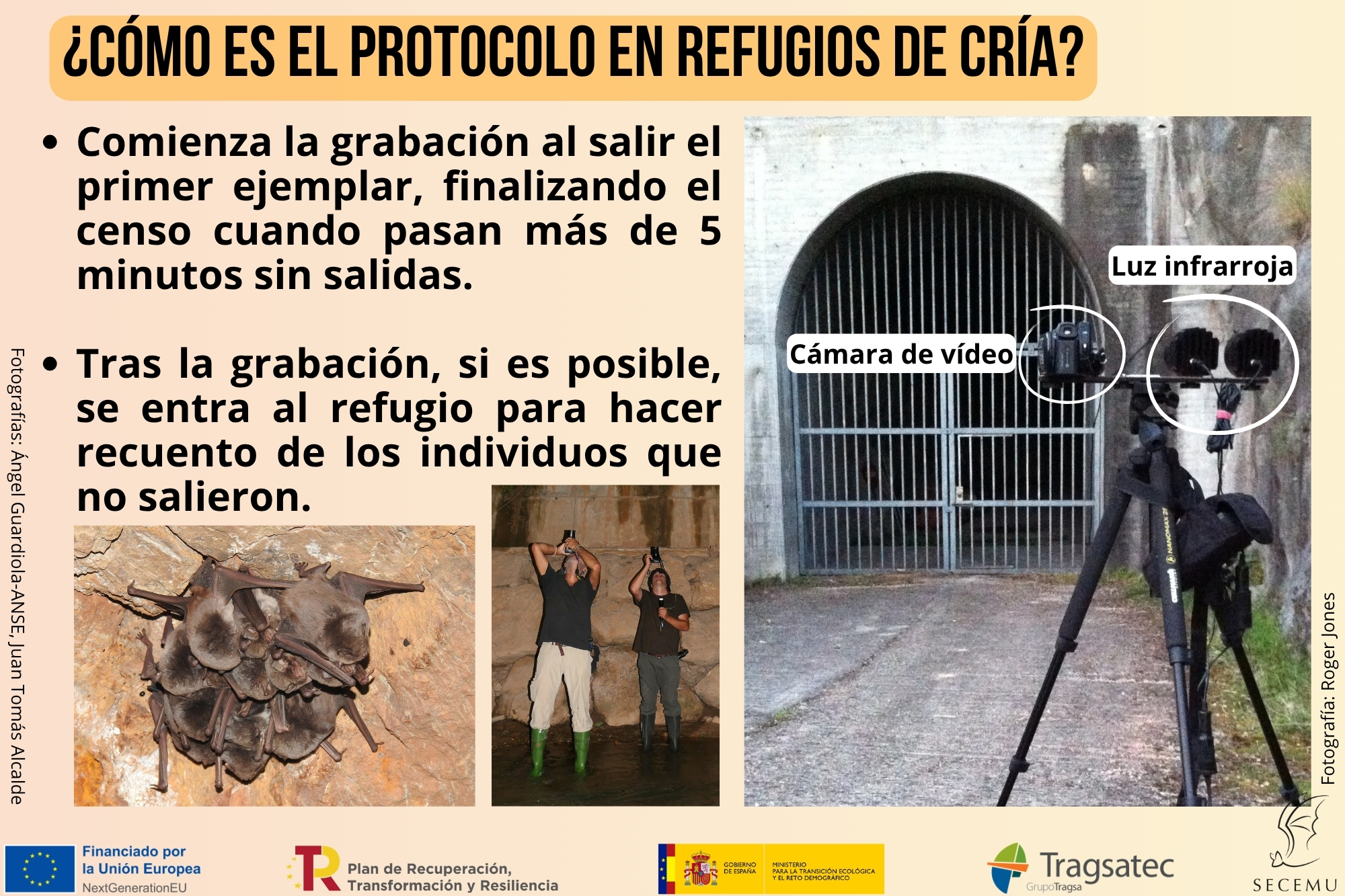
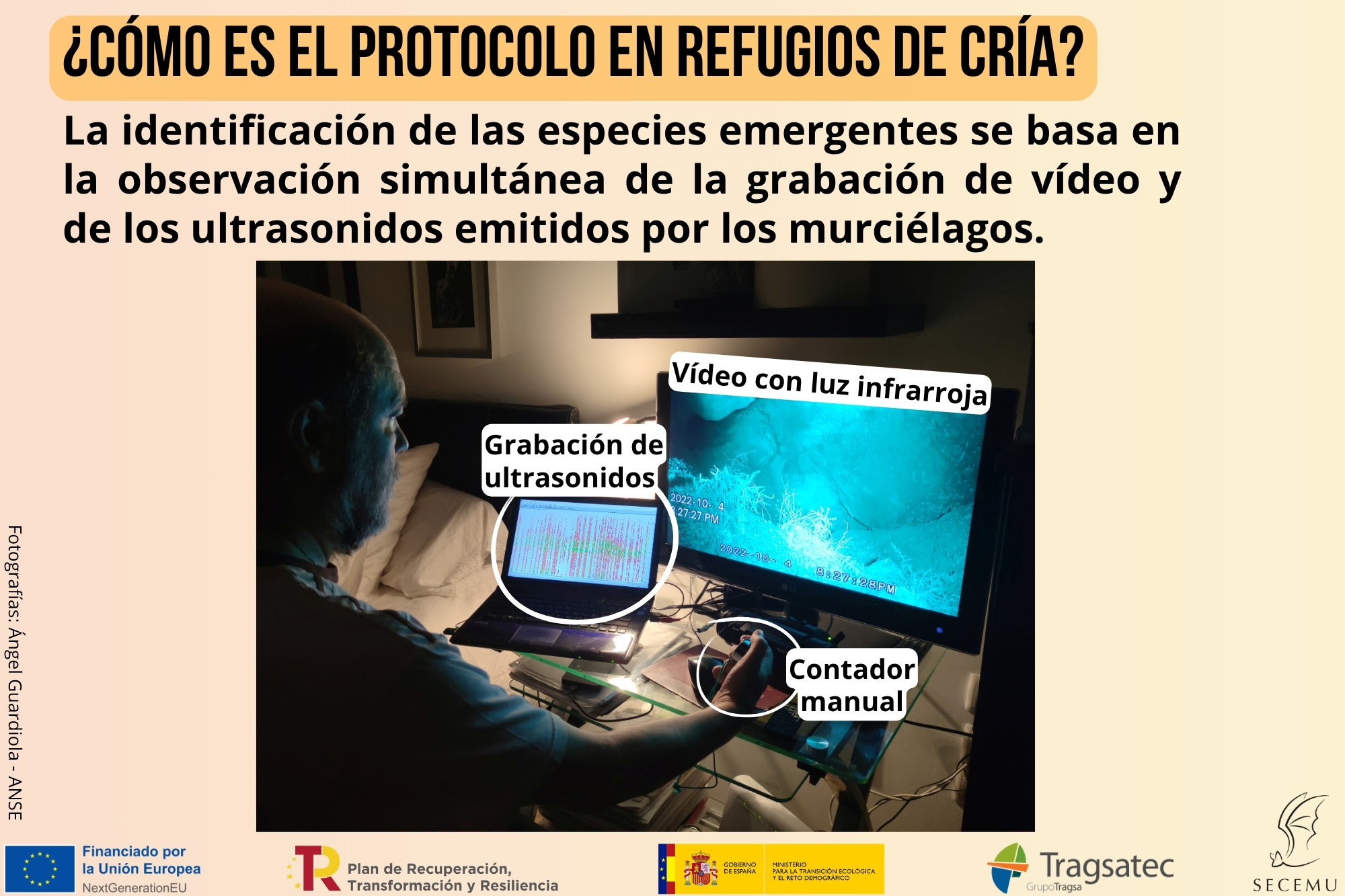
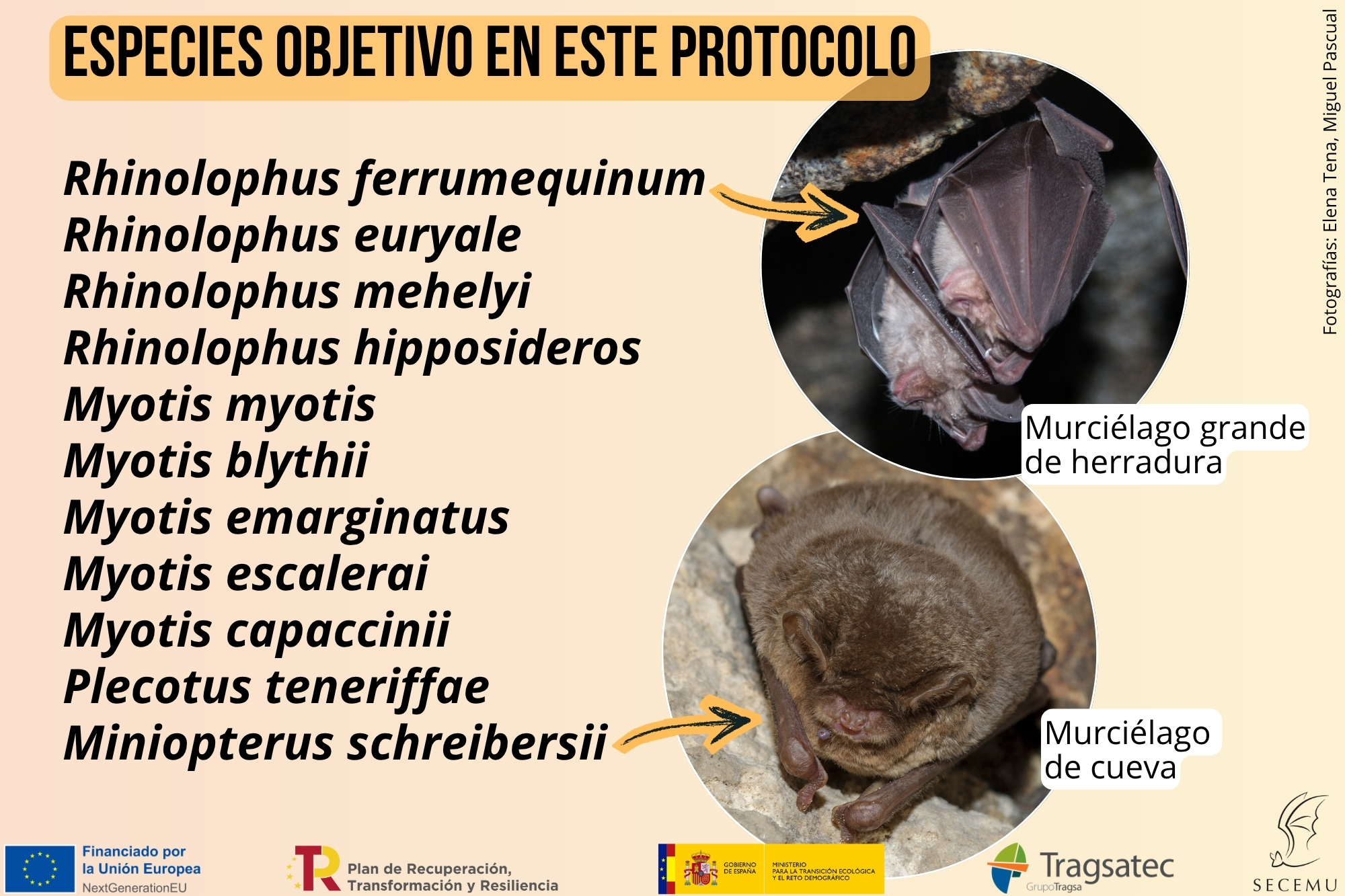
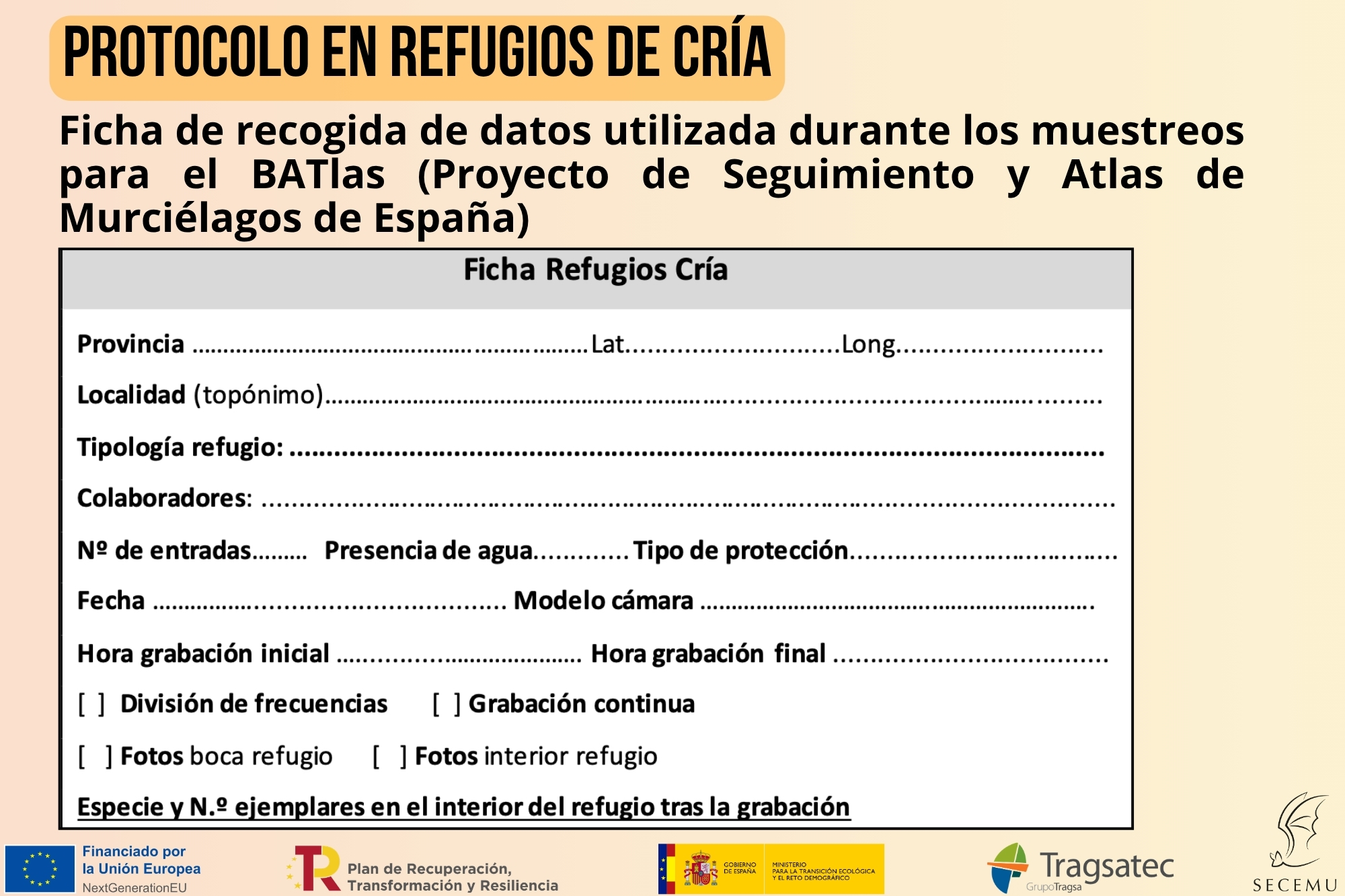
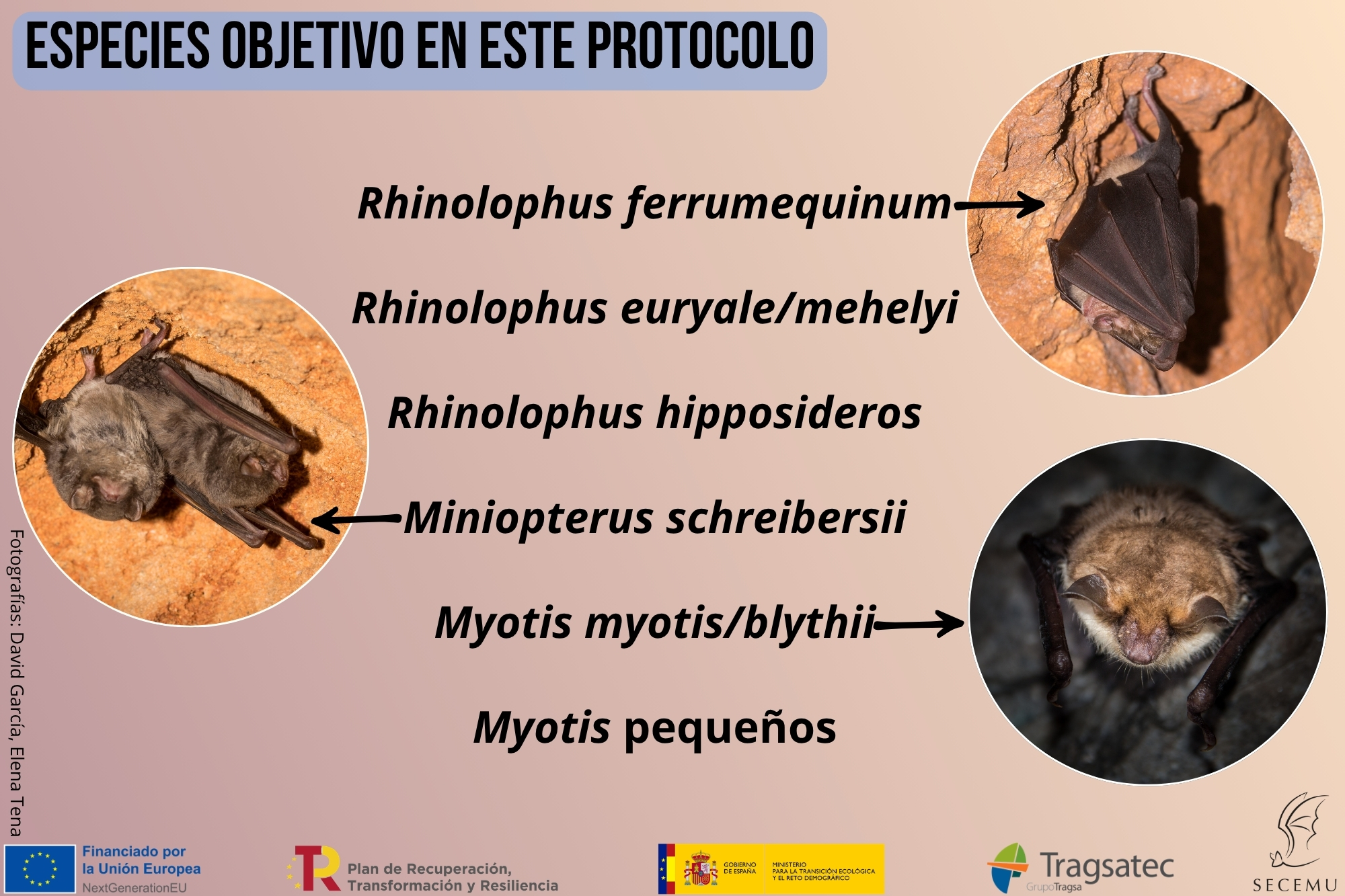
Censuses of breeding and hibernation roosts focused on cave-dwelling species, prioritising the sites of greatest biological importance without strict selection by grid square. Breeding colonies were counted between 1 May and 30 June, to record only the breeding population before the young begin to fly. To do this, simultaneous recordings were made with video cameras and infrared lights synchronised with ultrasound detectors, which allowed species identification and detailed counts to be carried out later in the office.
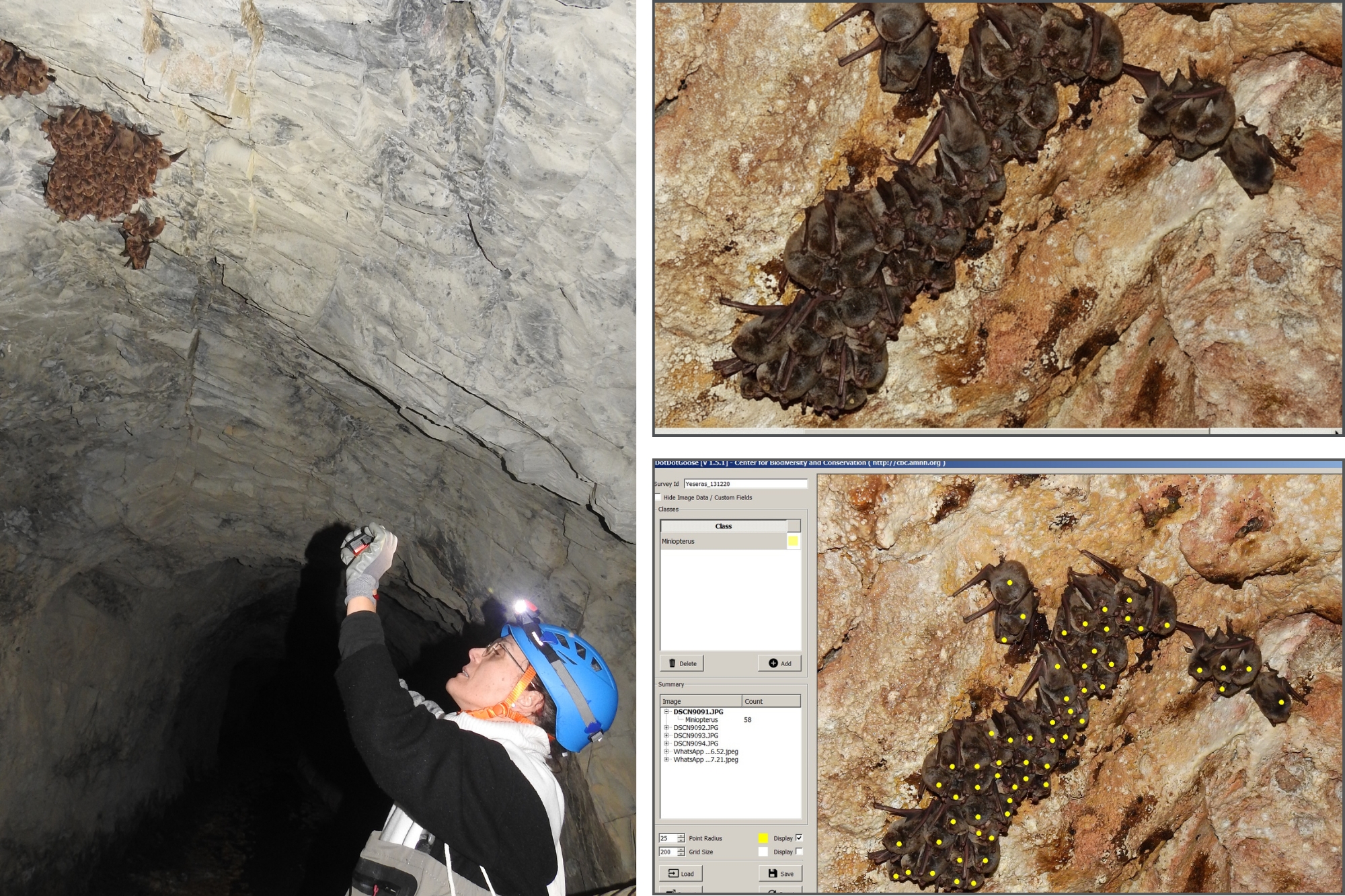
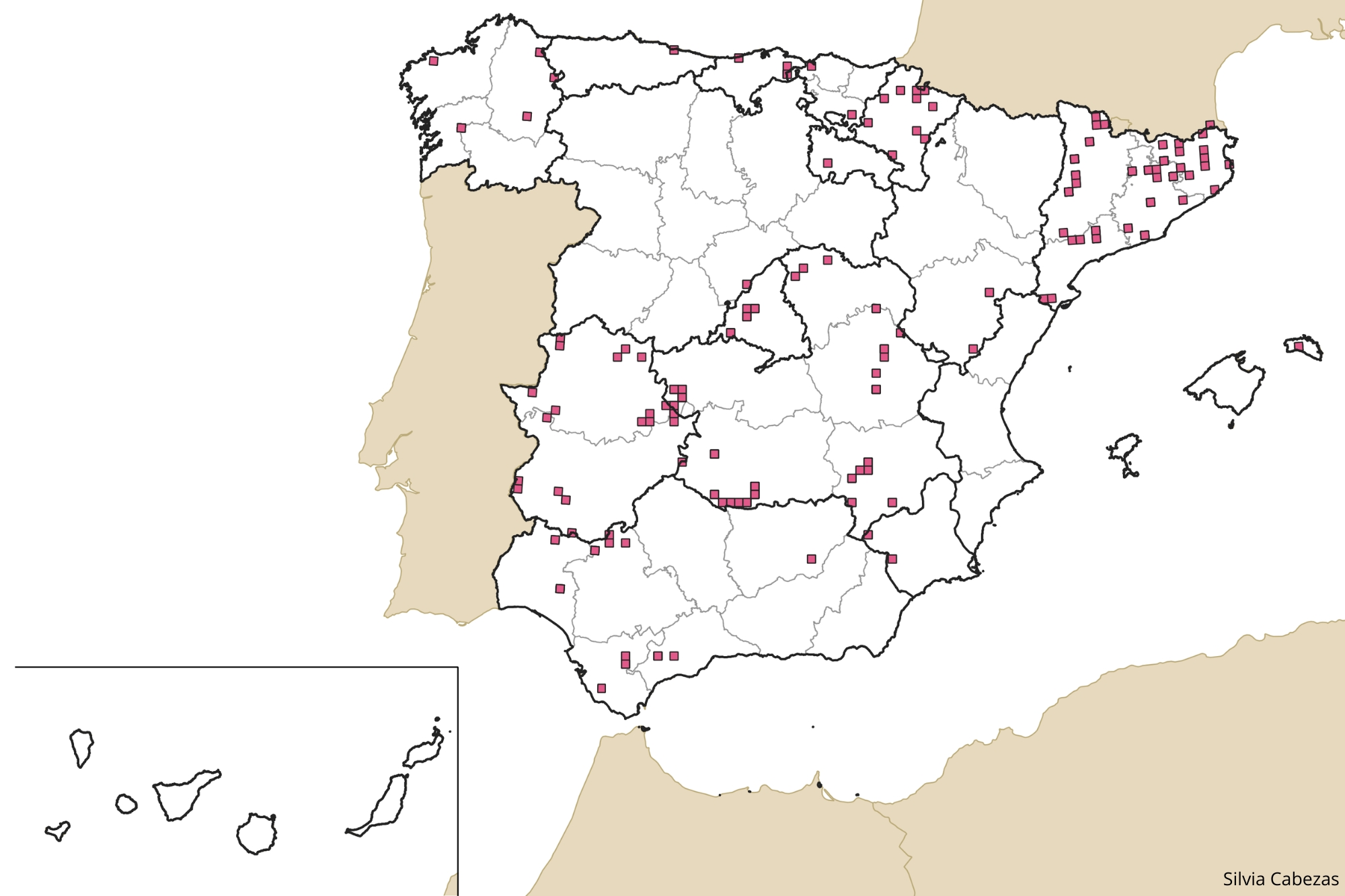
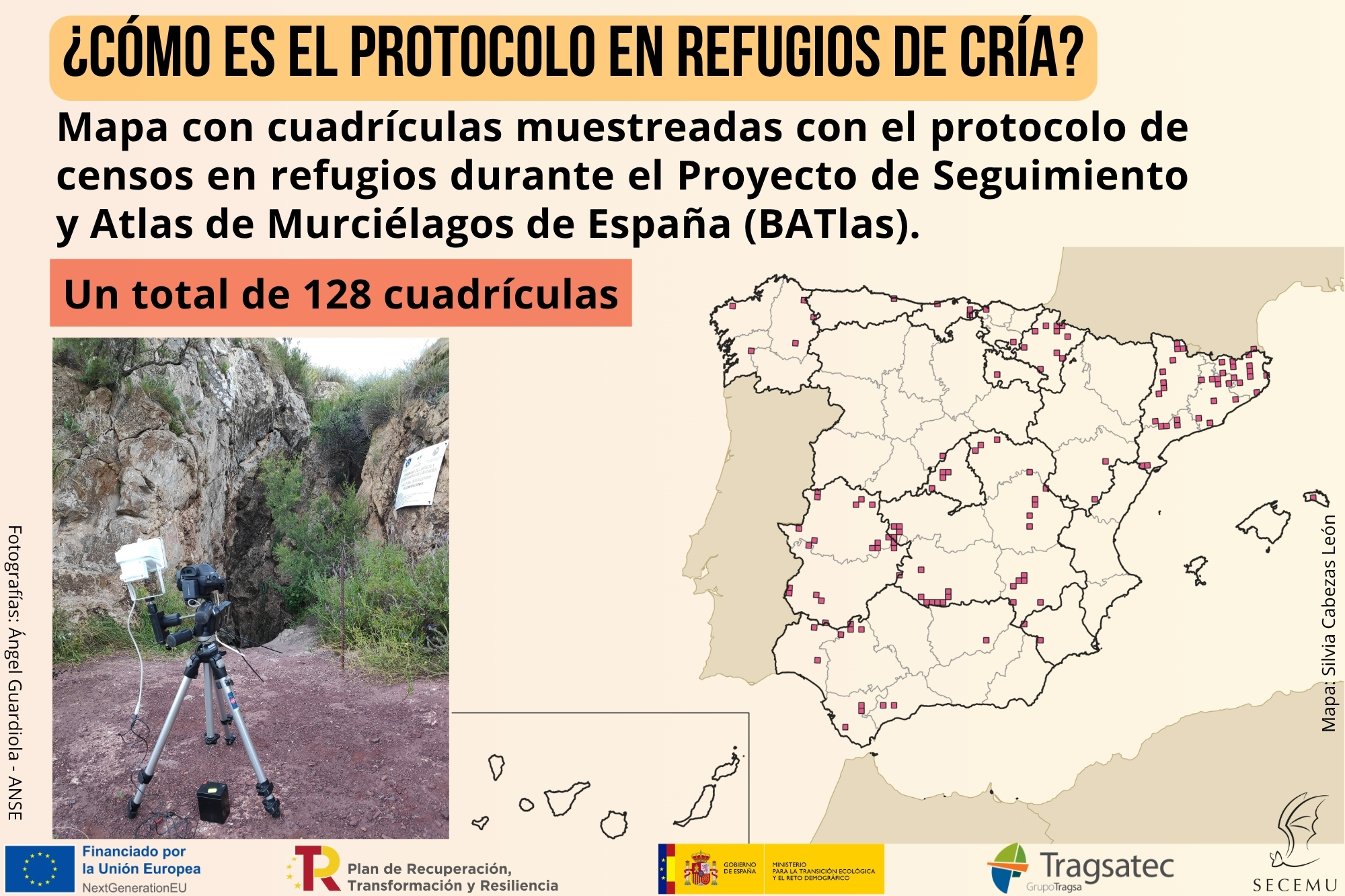
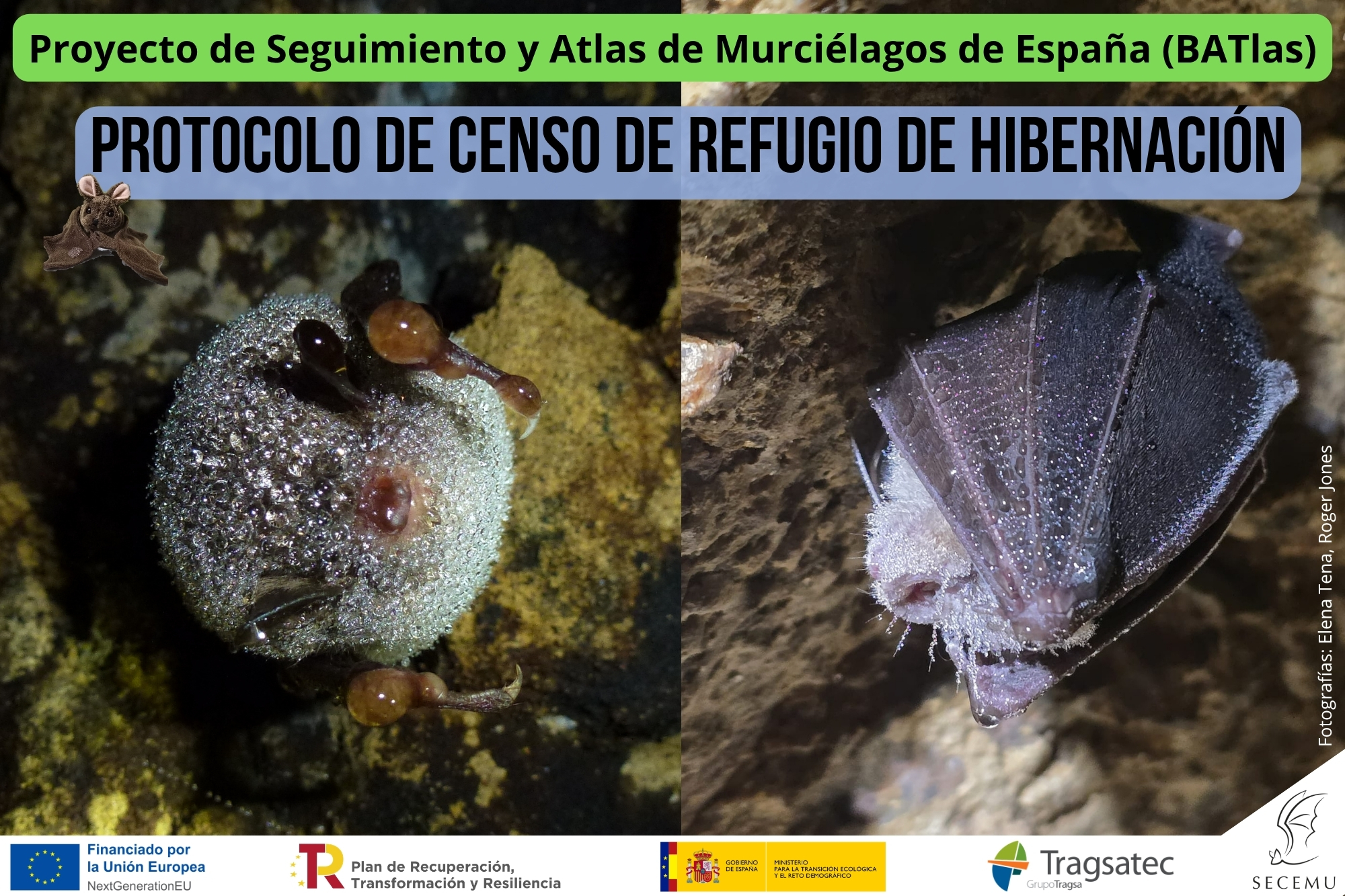
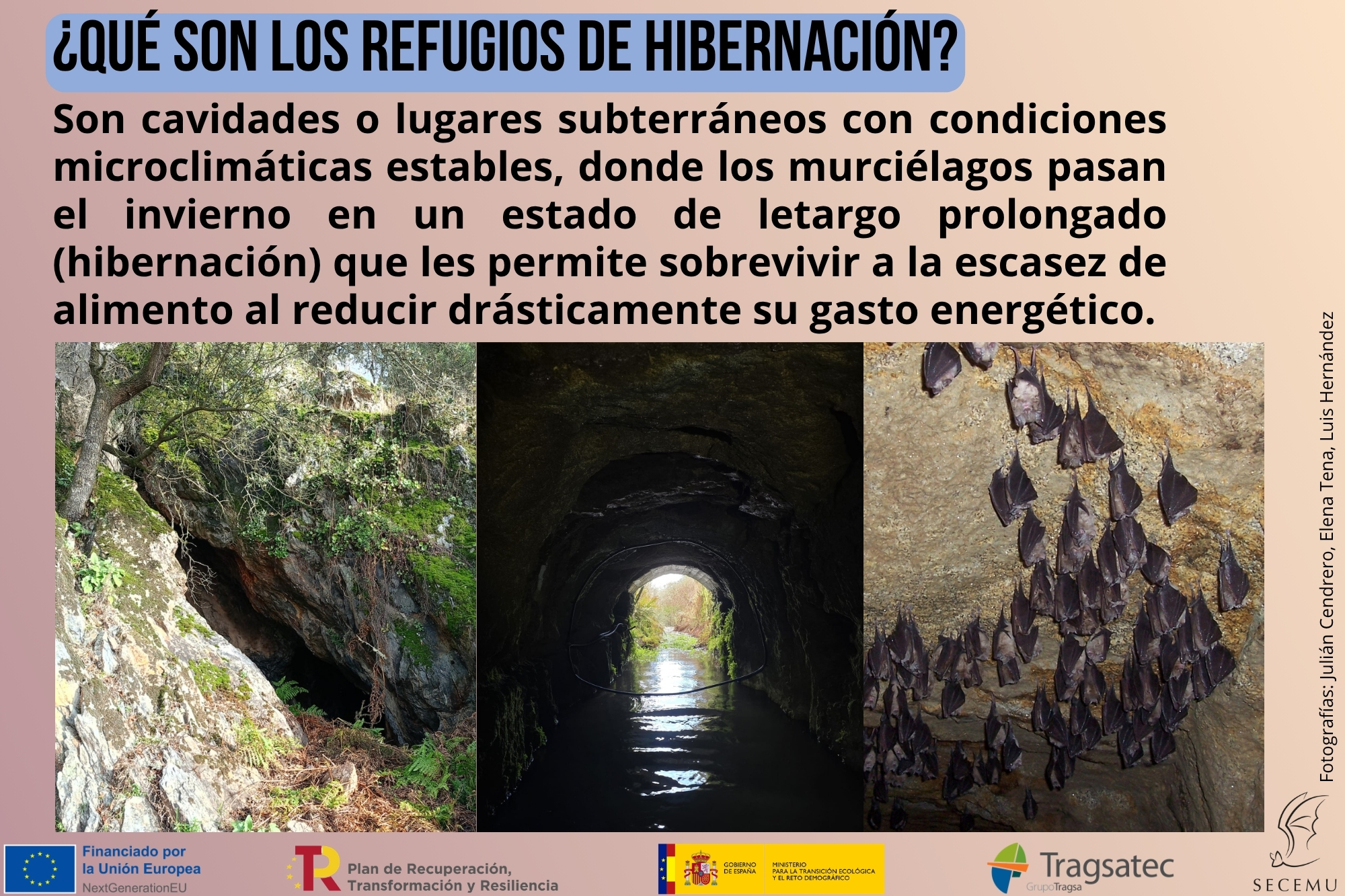
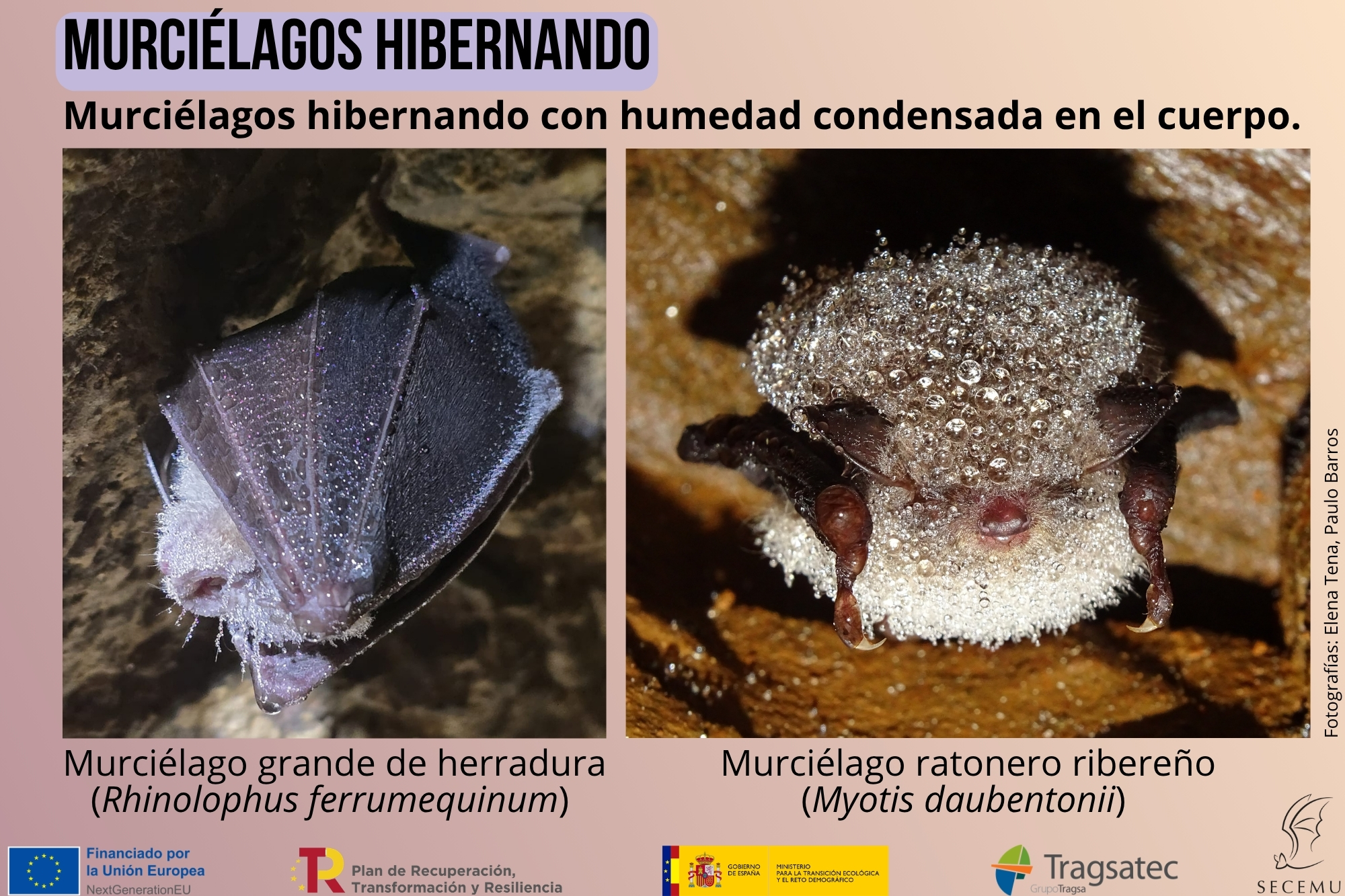
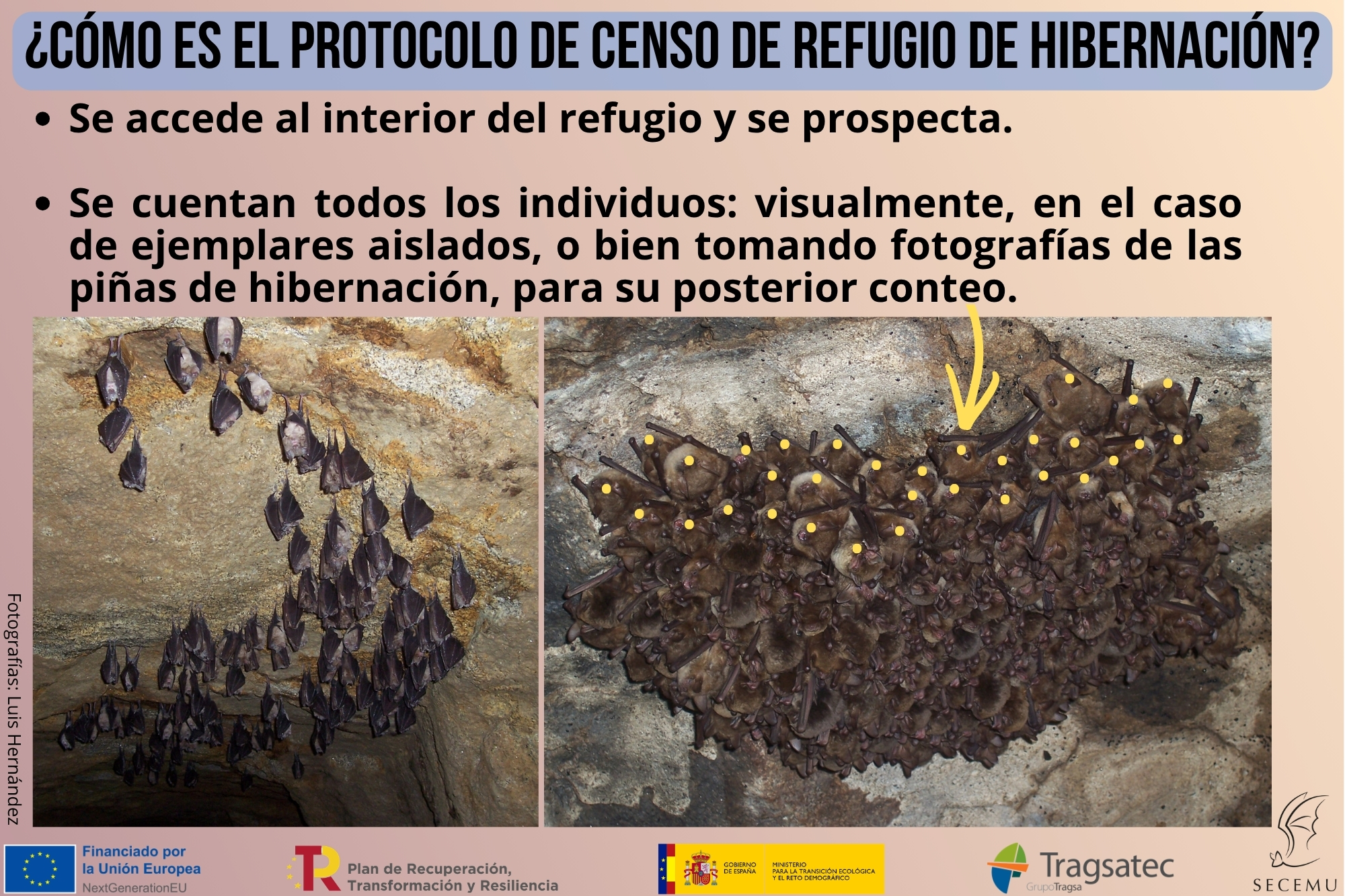
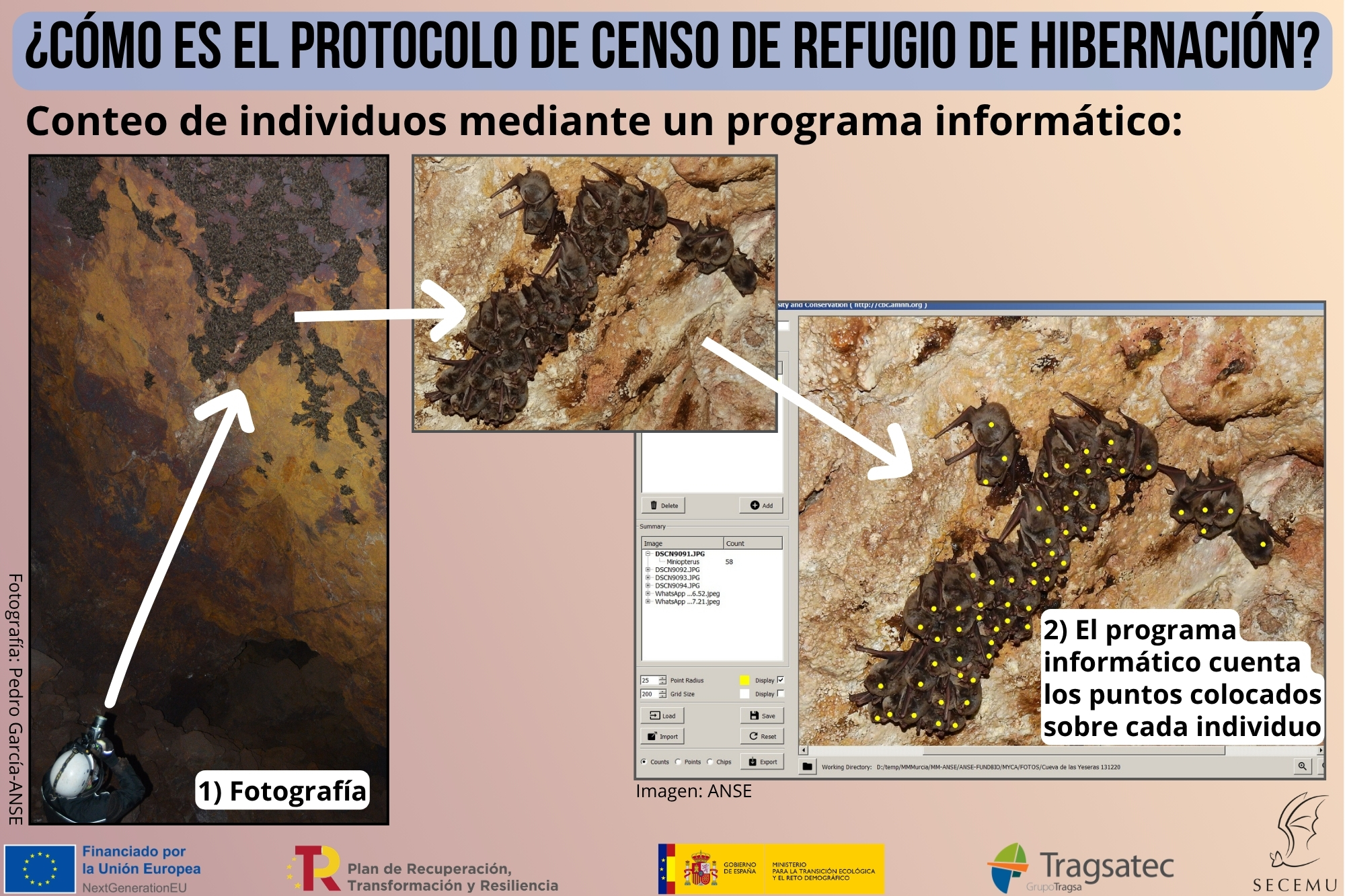
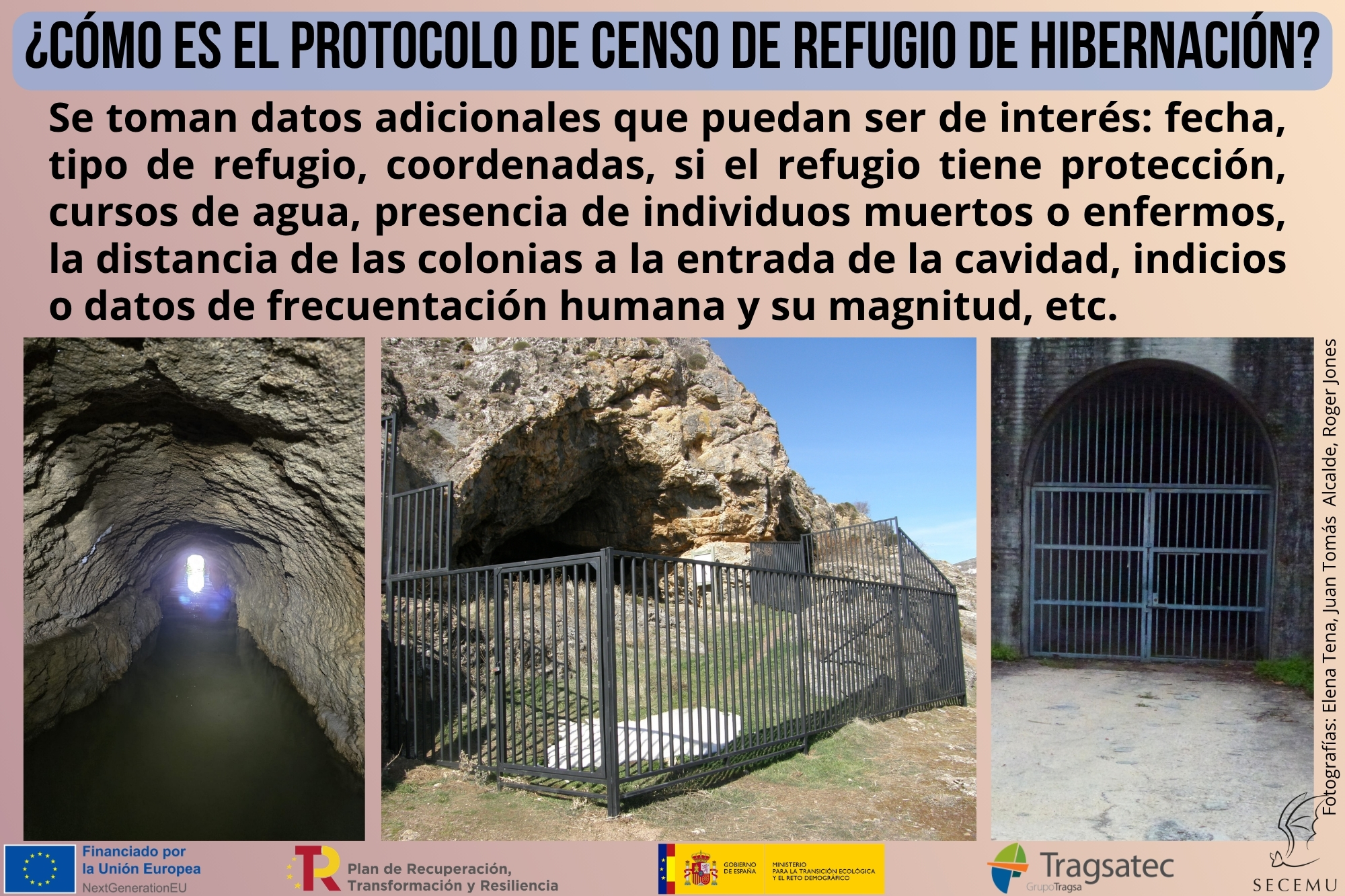
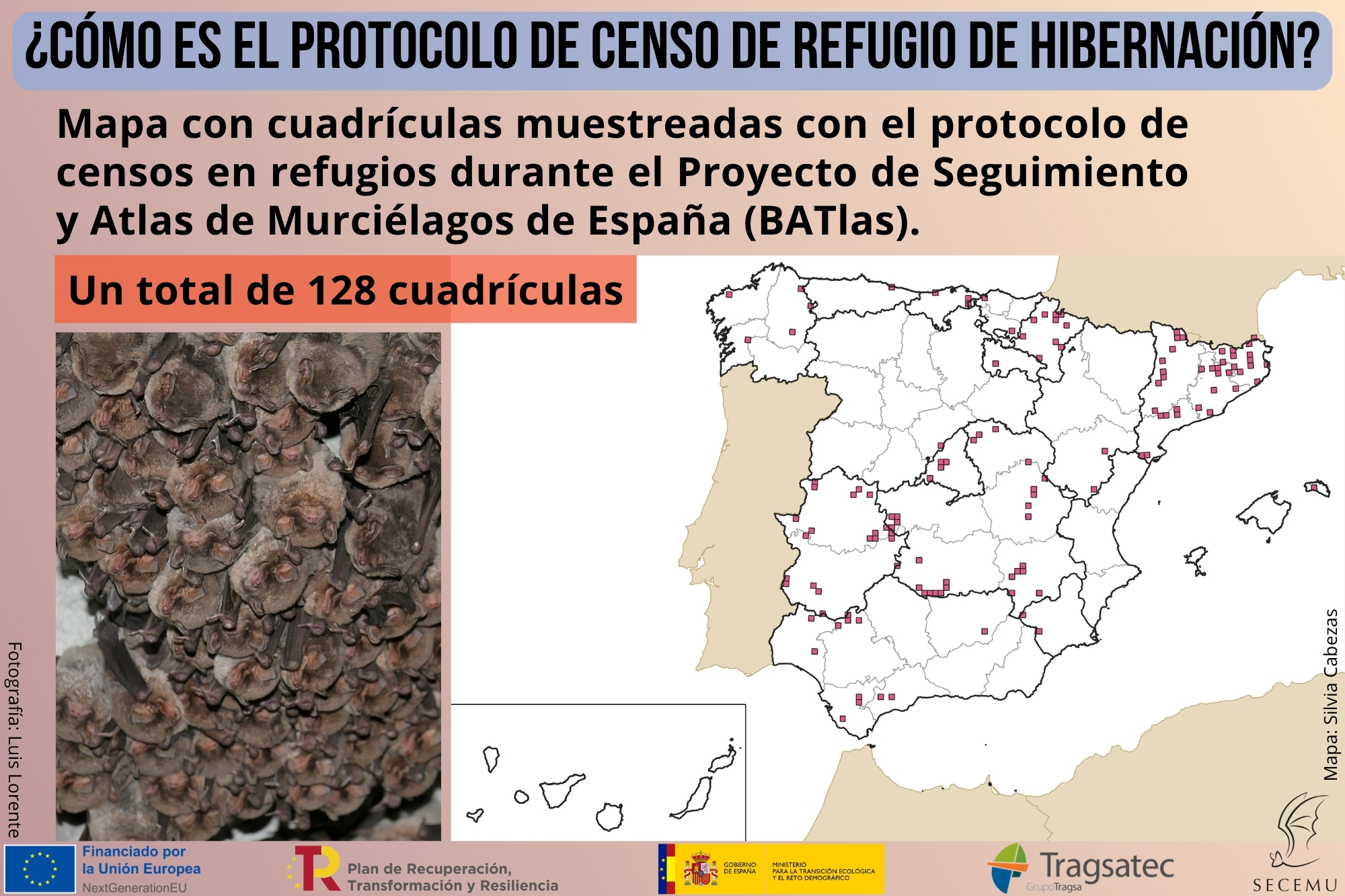
Monitoring in hibernation roosts, meanwhile, was concentrated between 15 December and 15 February, through direct surveys inside the caves, with visual counts or photographic records for later digital analysis. To make the best use of resources and avoid unnecessary disturbance to colonies, autonomous communities that already had up-to-date monitoring programmes for cave-dwelling bats were excluded. In total, under the protocol published on the SECEMU website (2023), 173 roosts were counted in 128 UTM 10×10 km grid squares.
Capture stations and genetic sampling of cryptic species
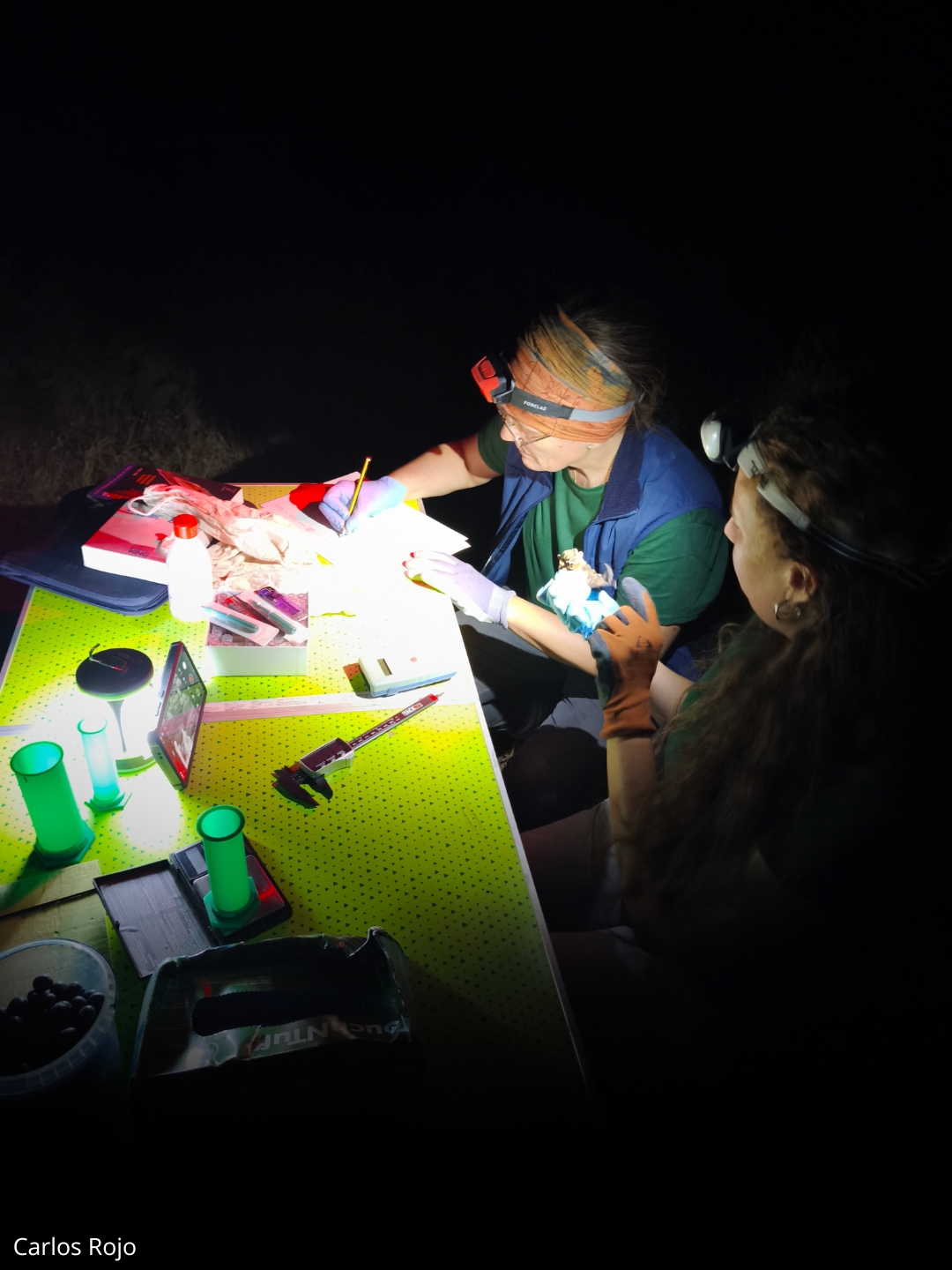
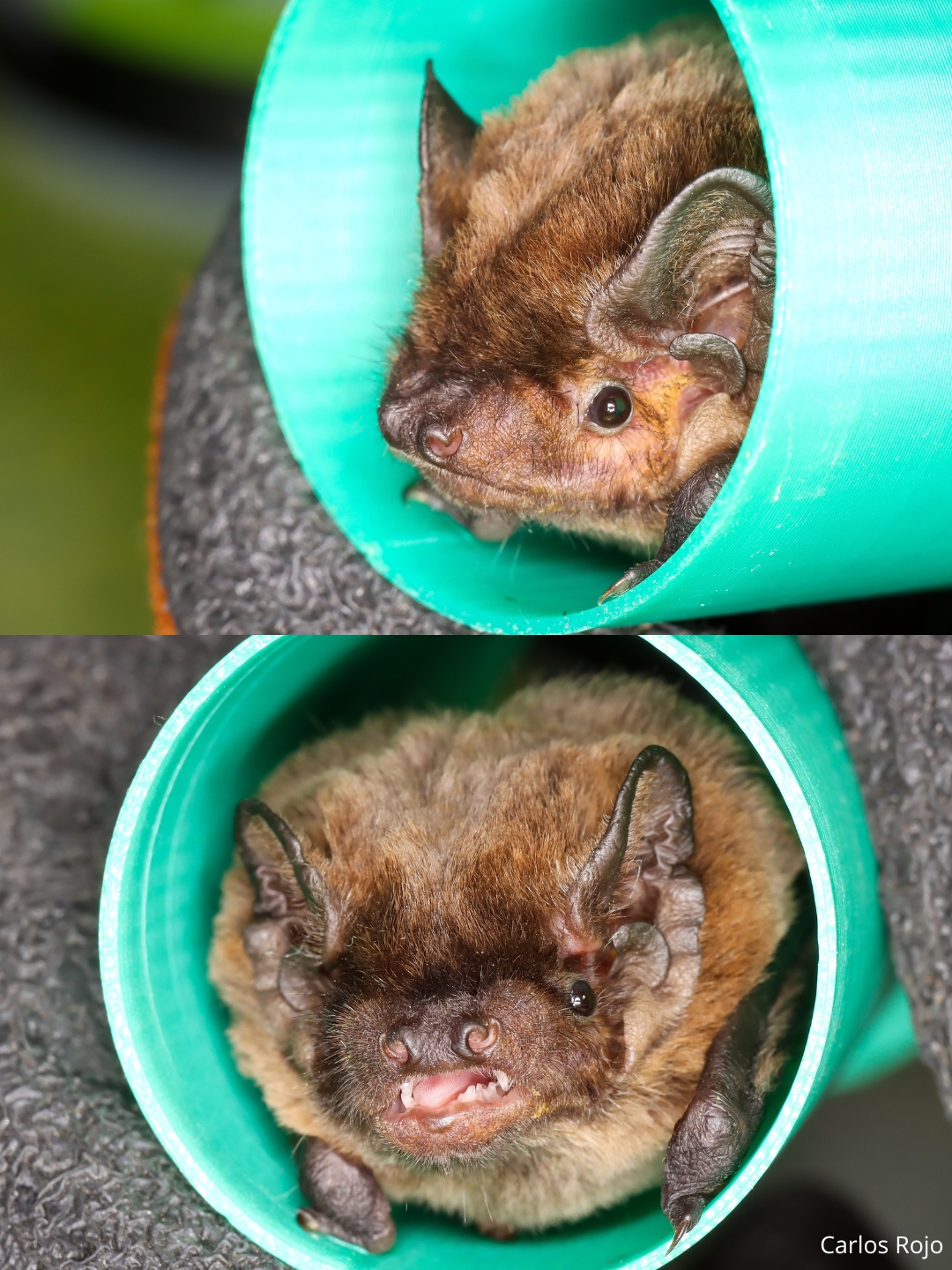
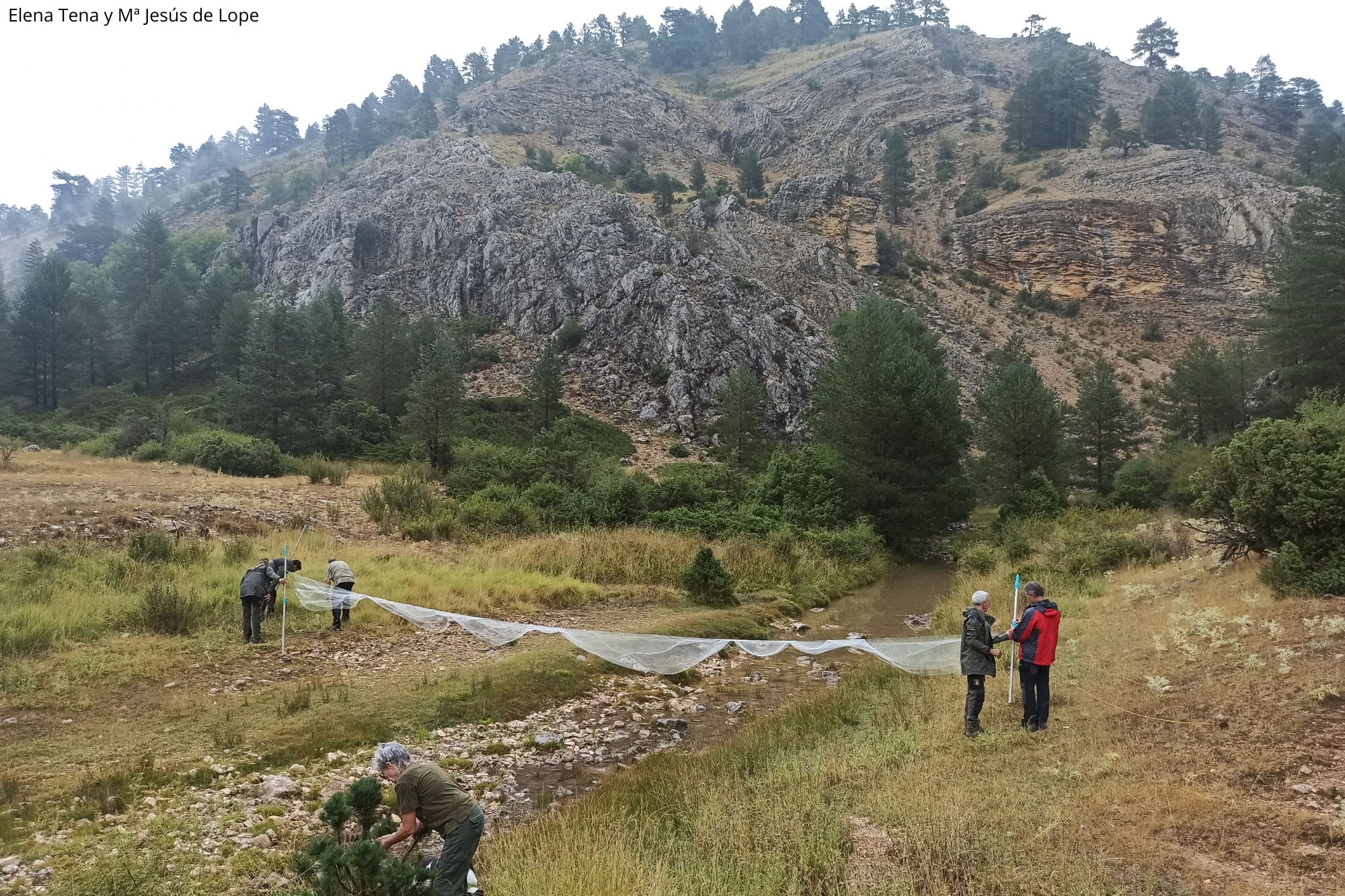
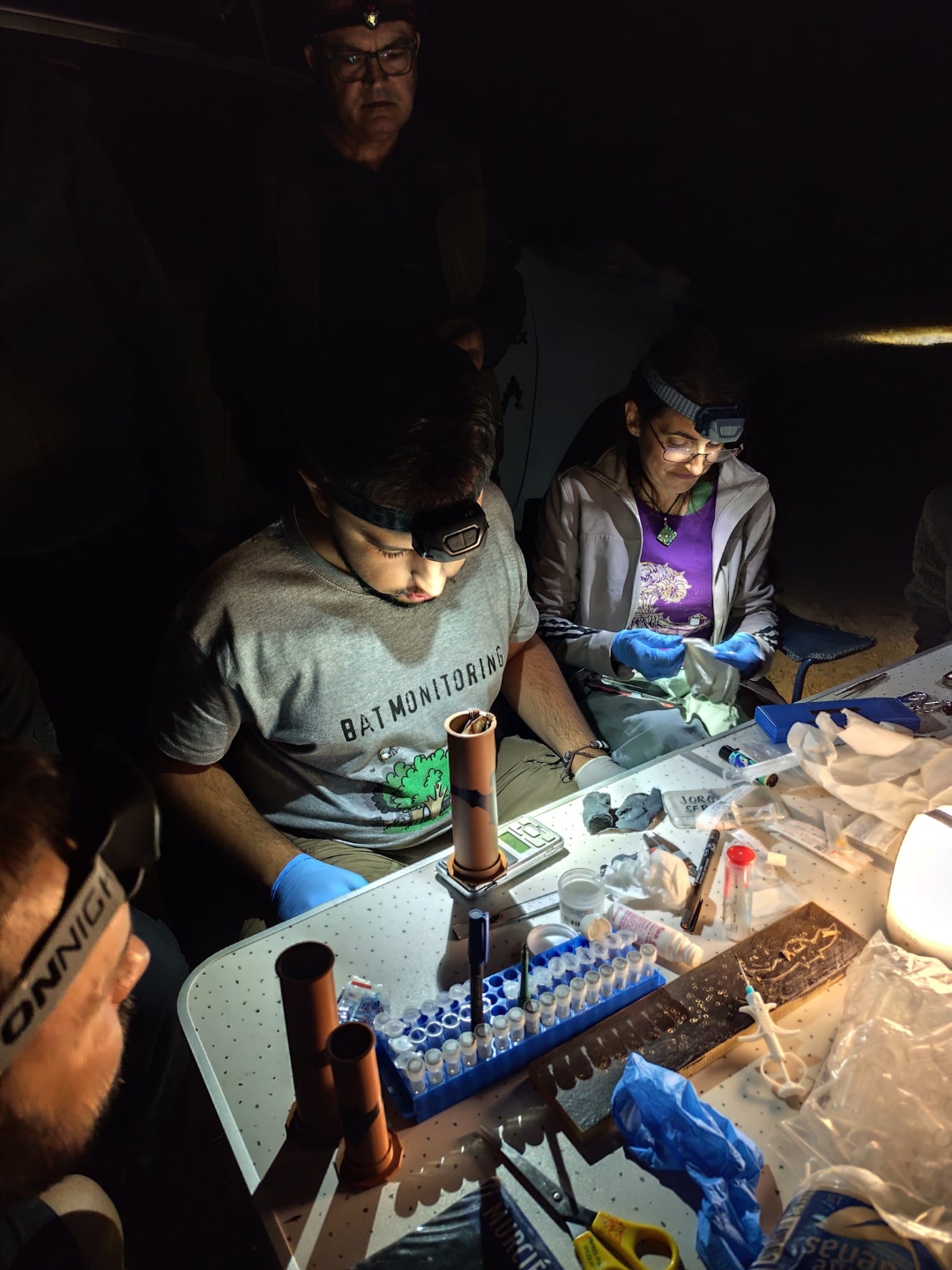
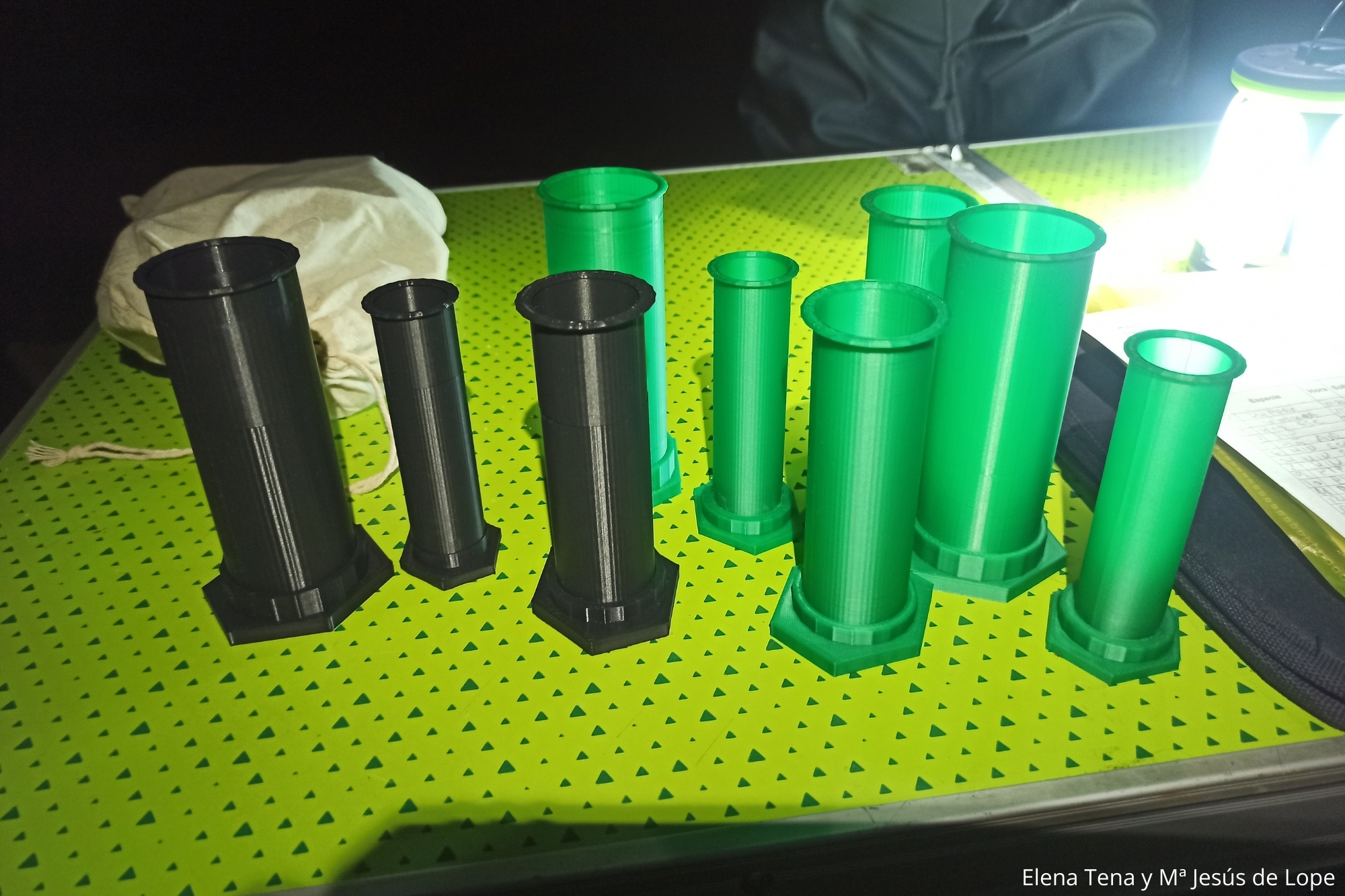
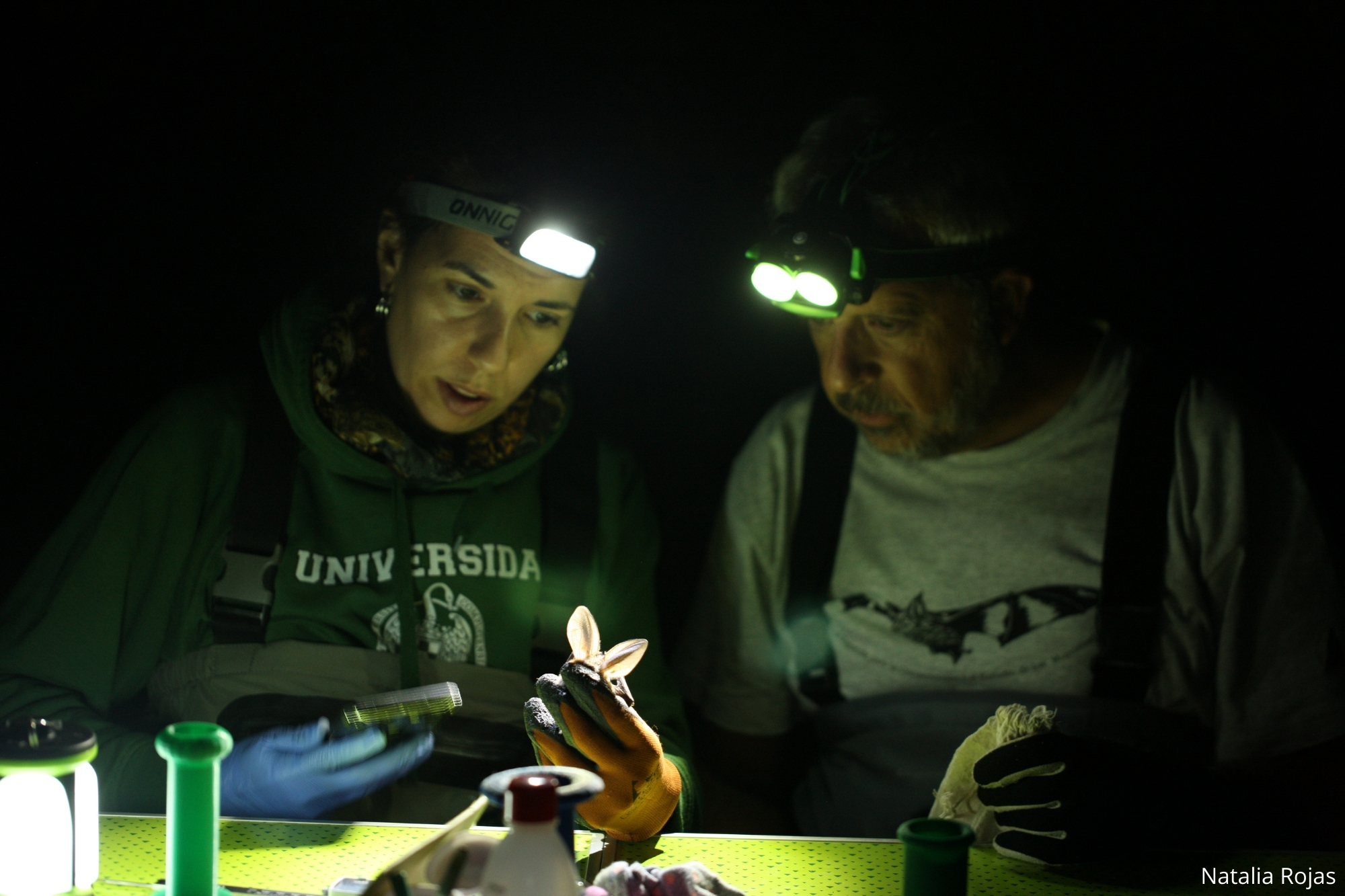
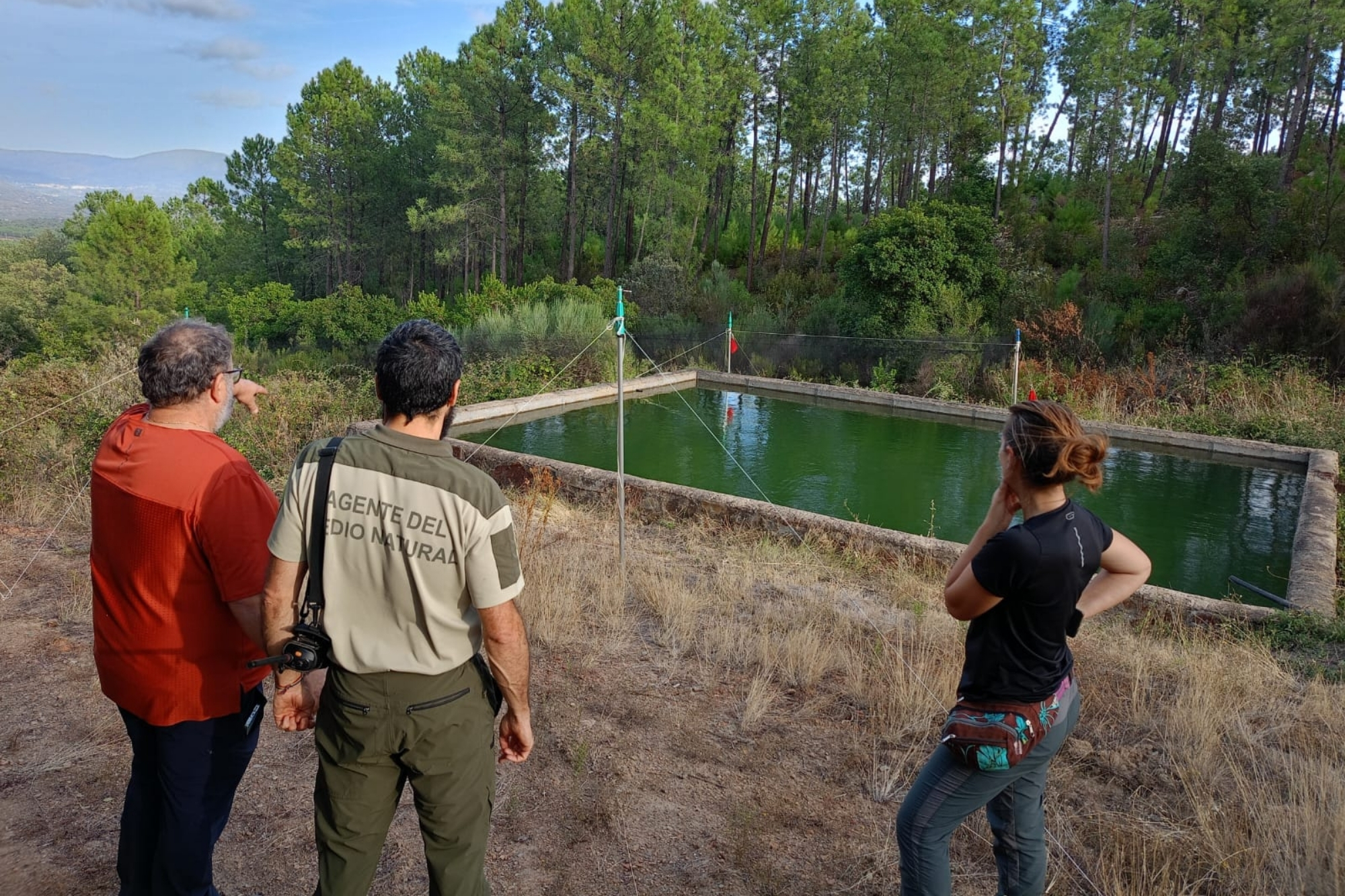
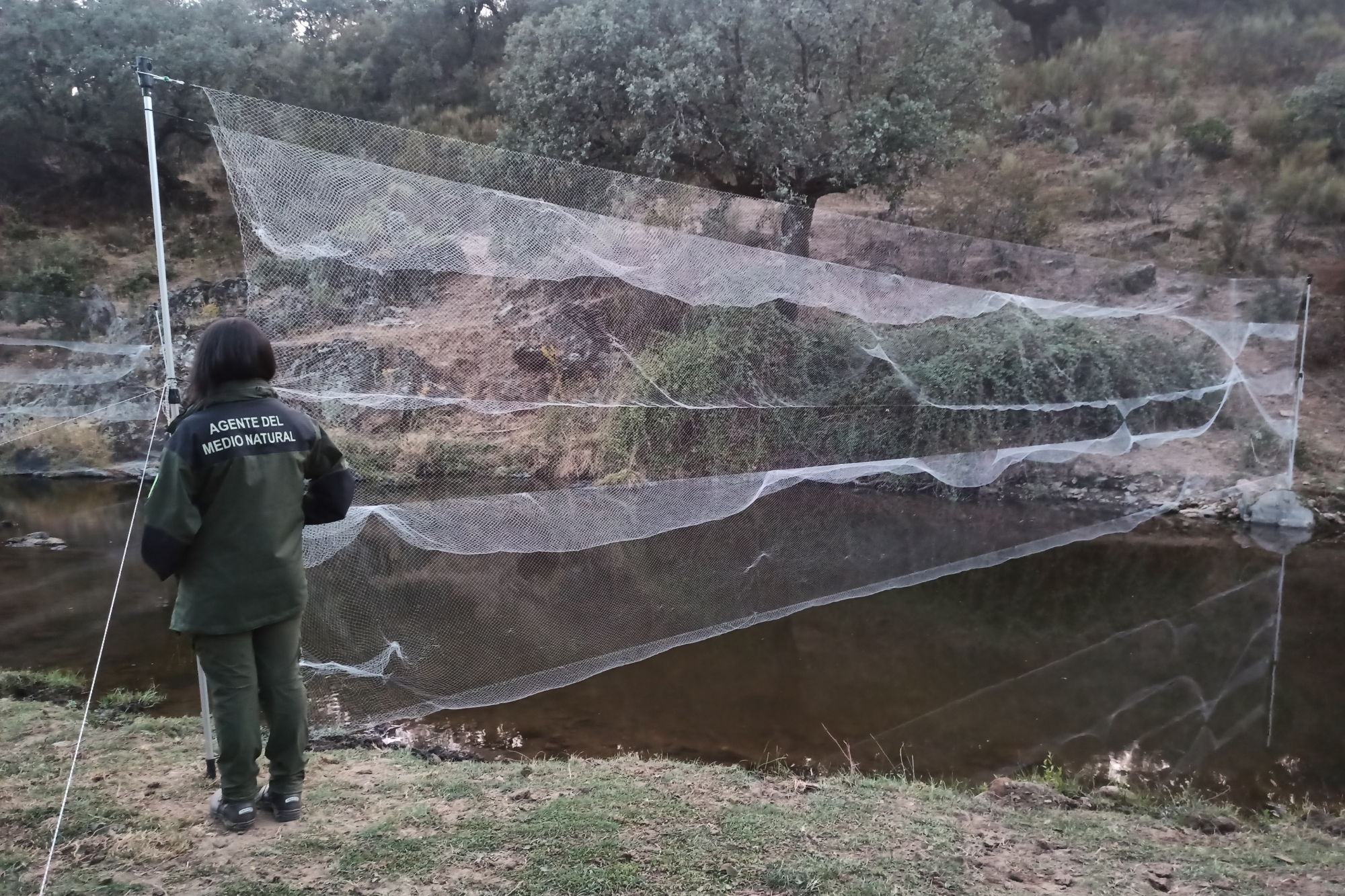
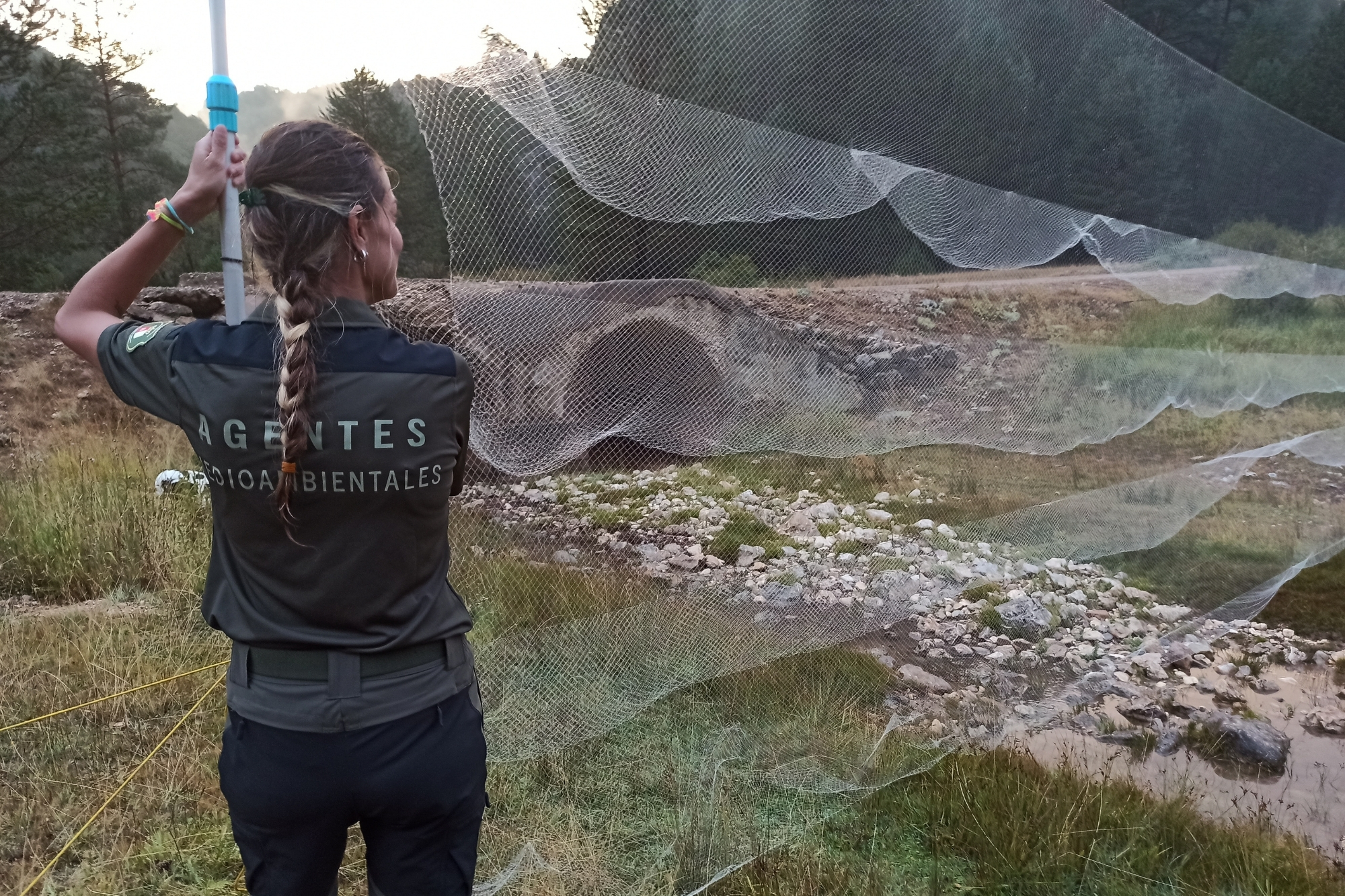
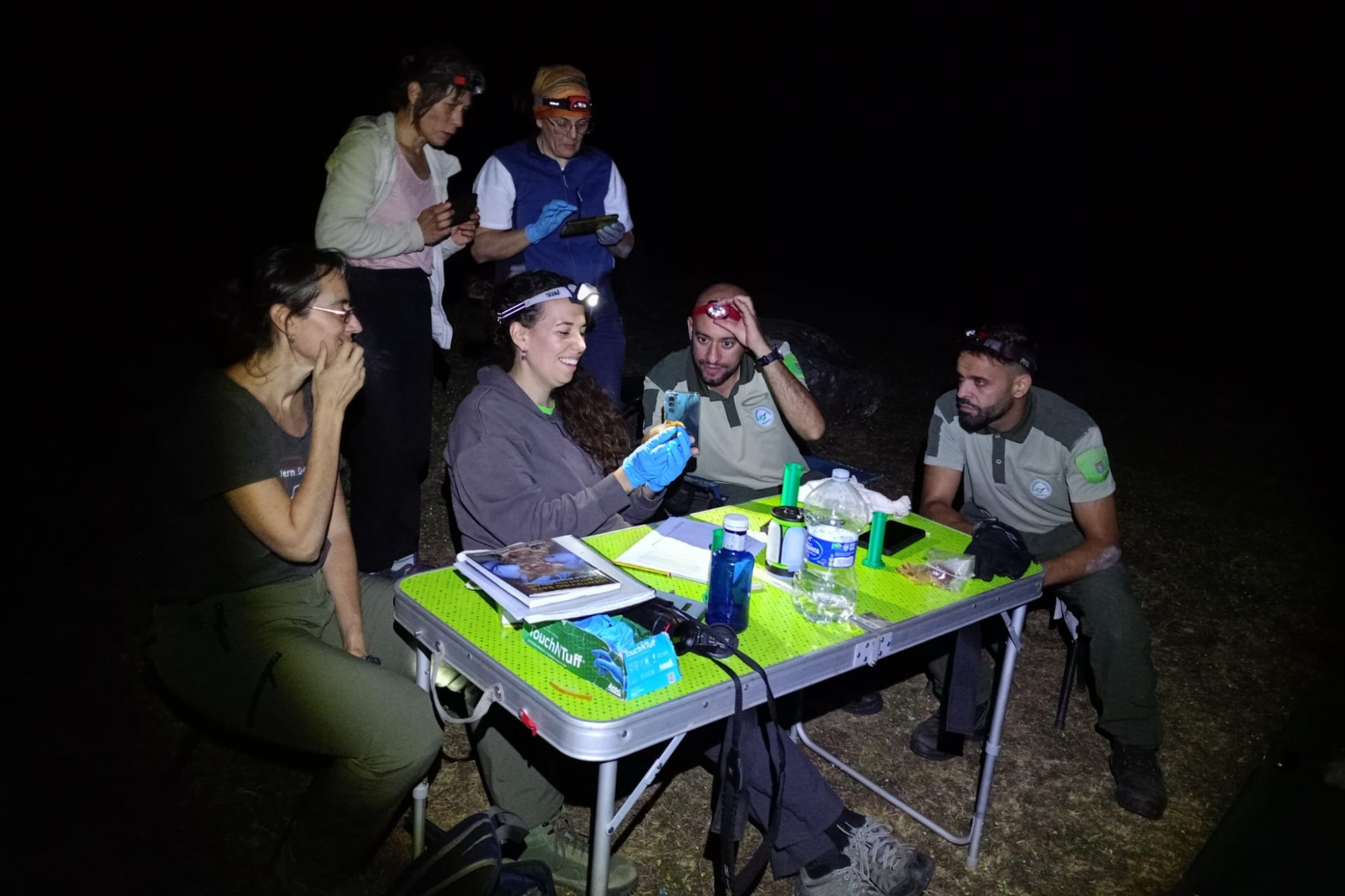
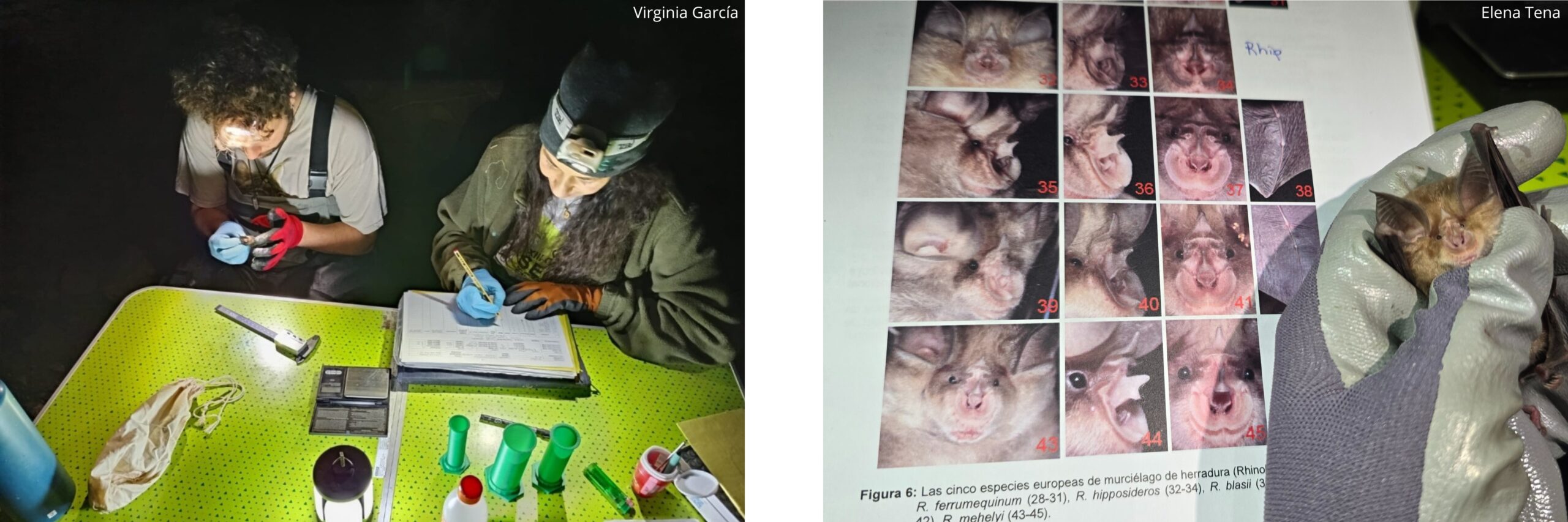
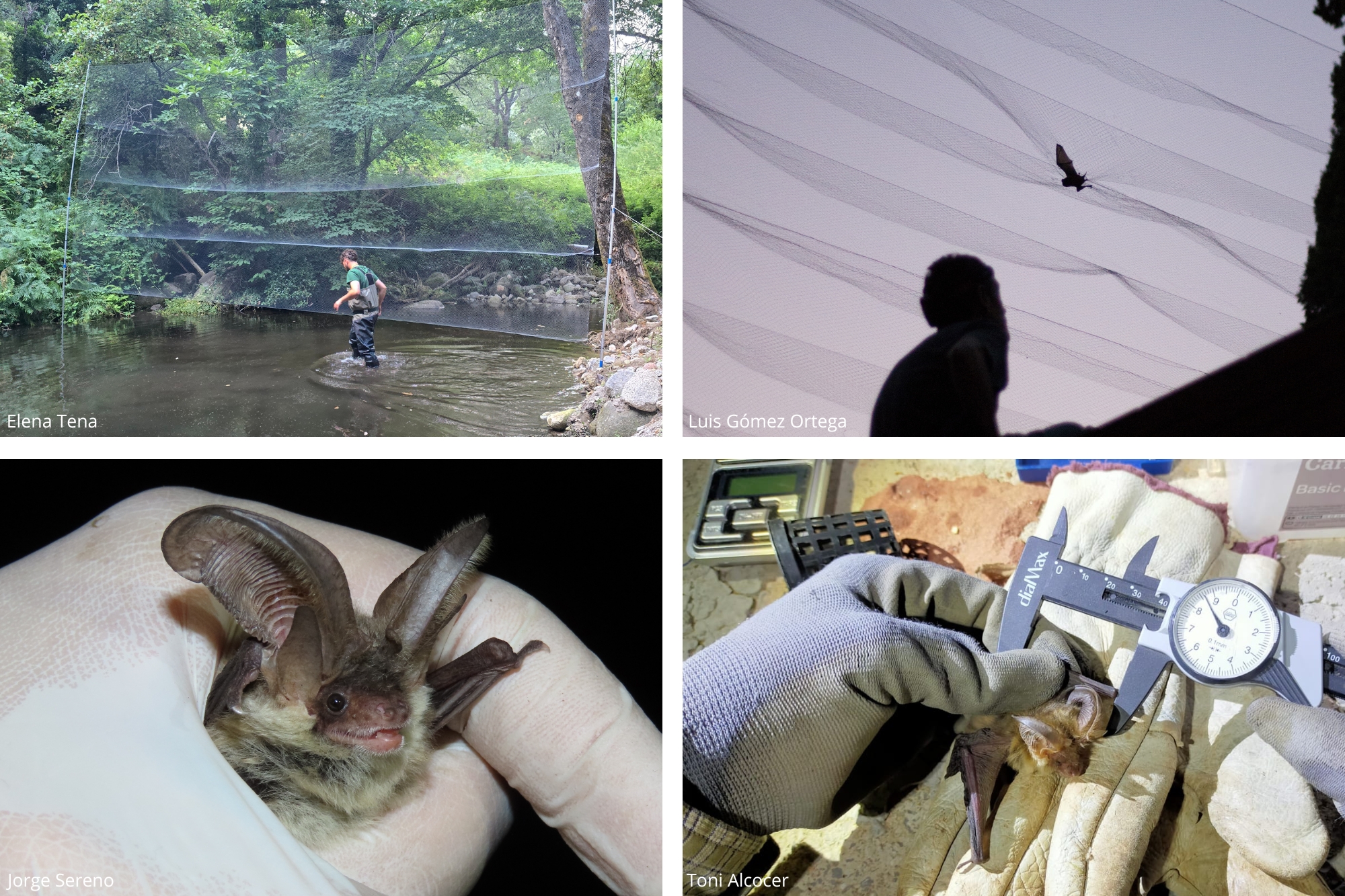
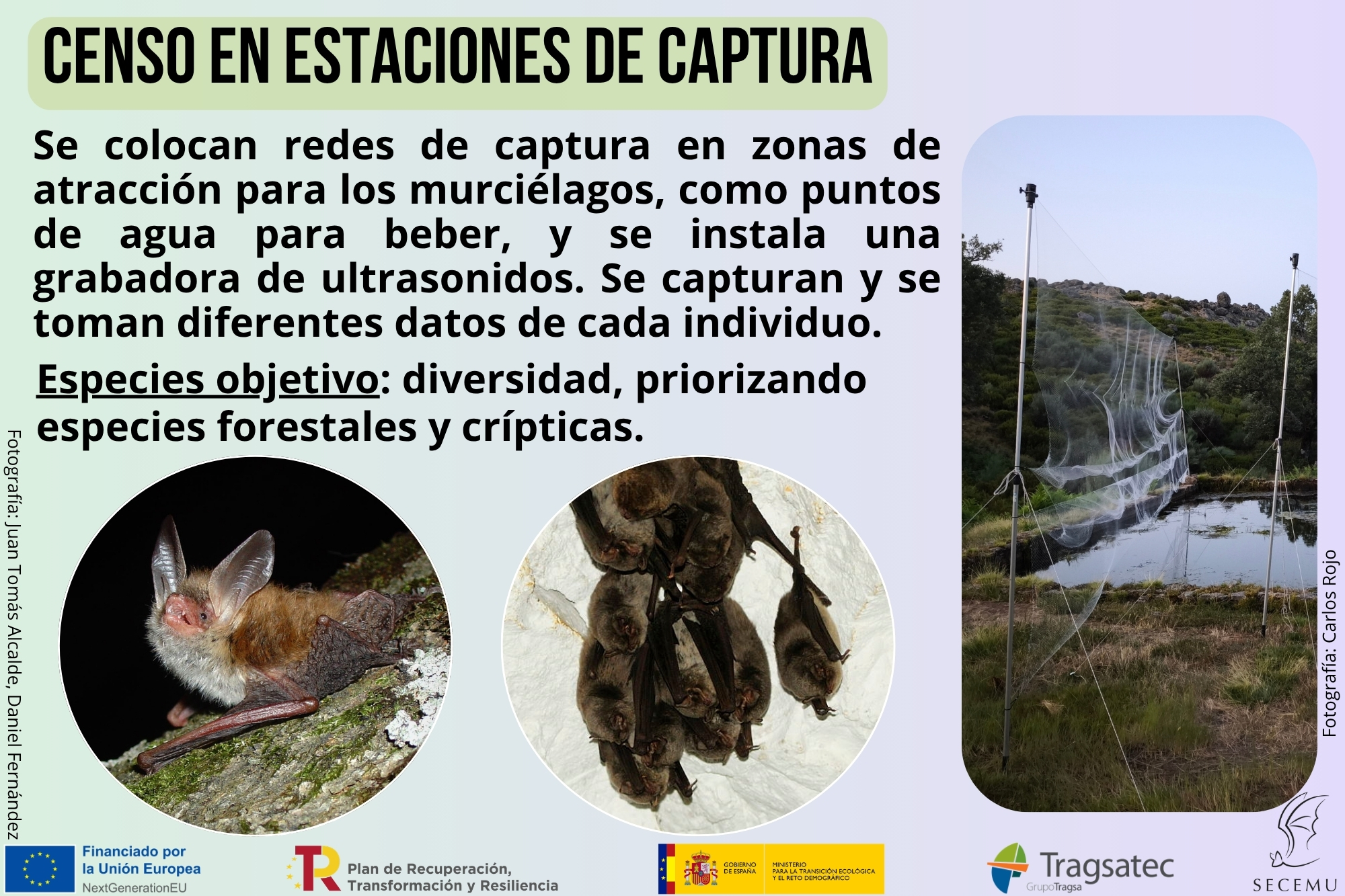
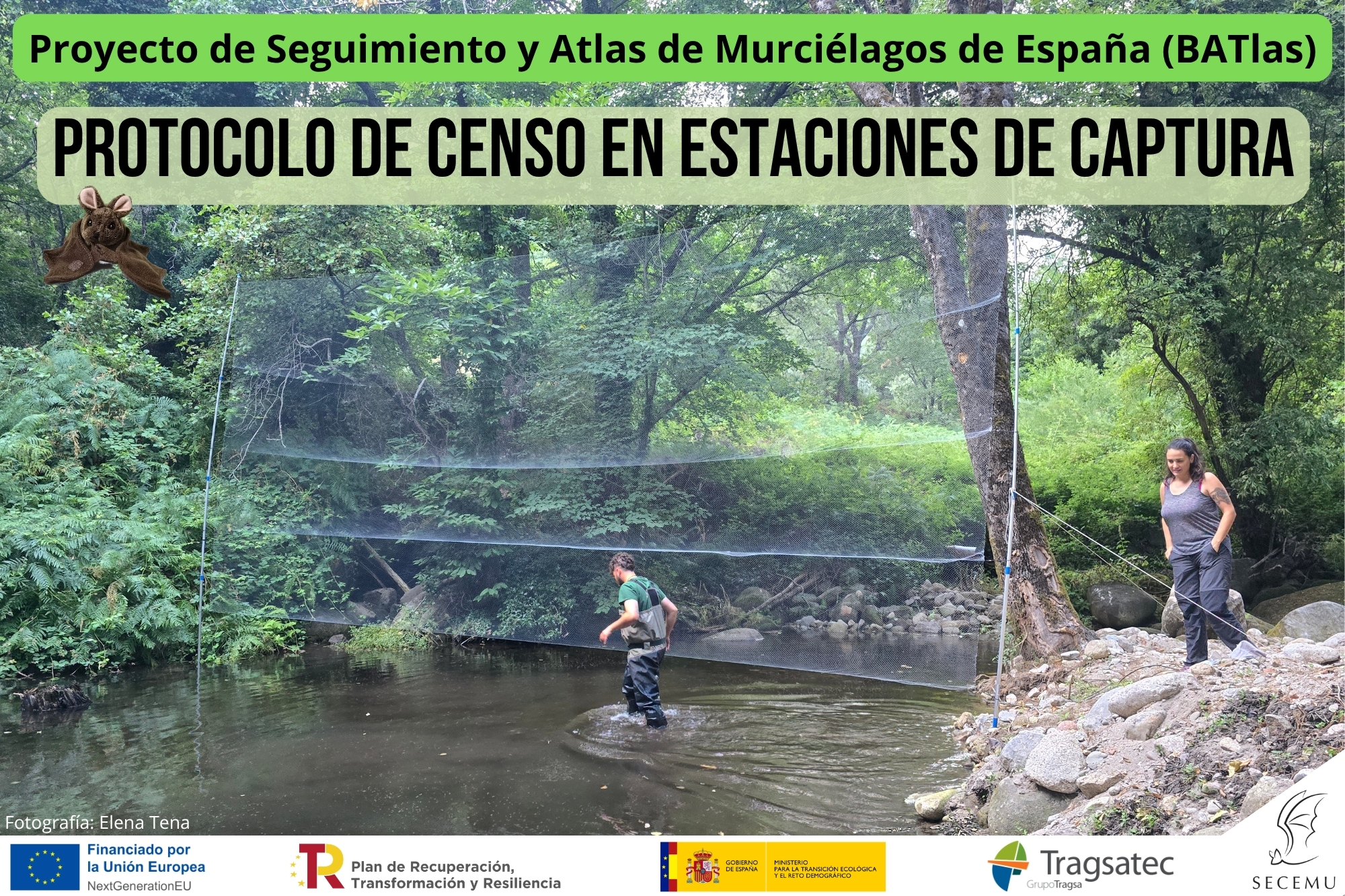
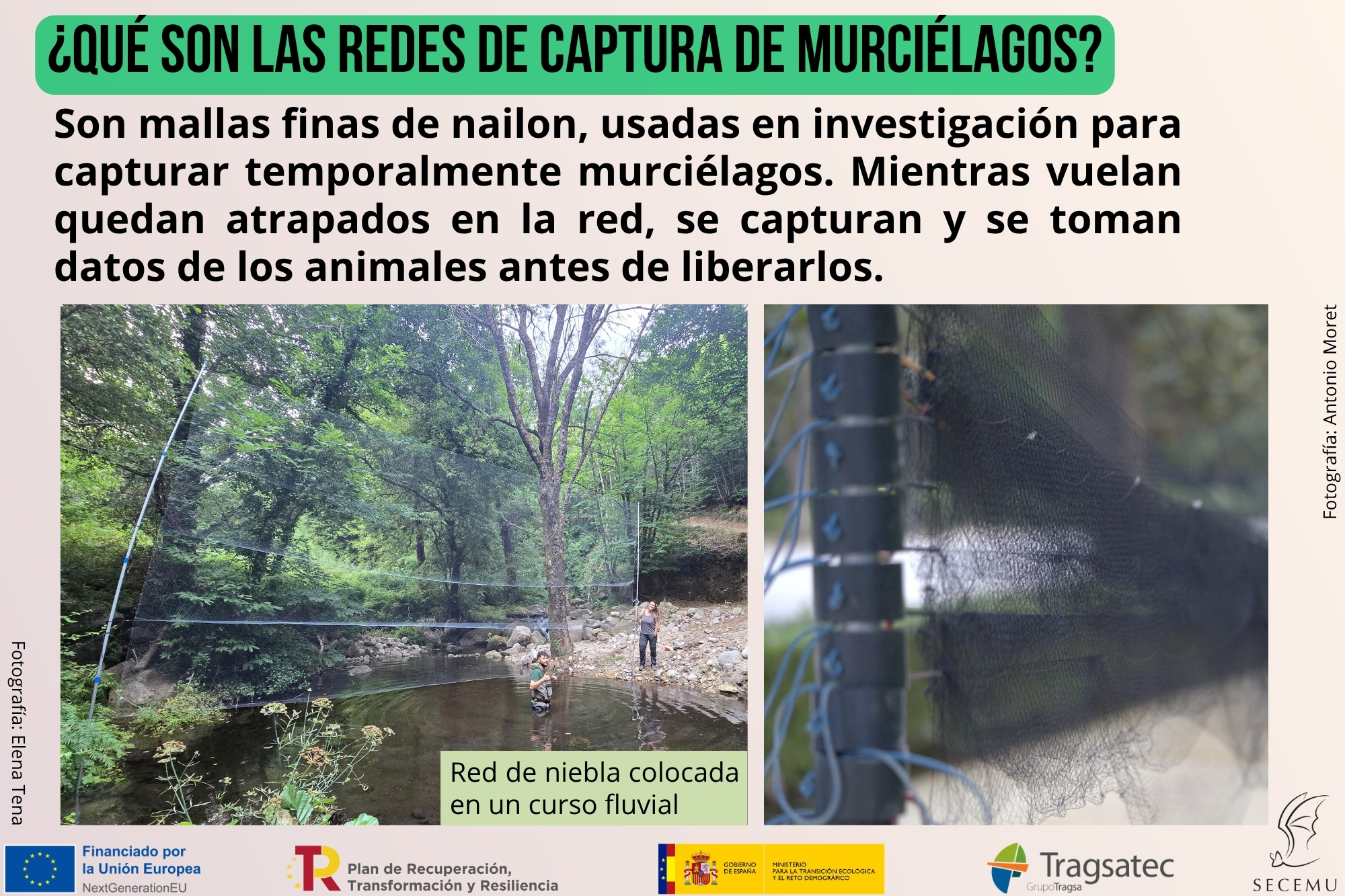
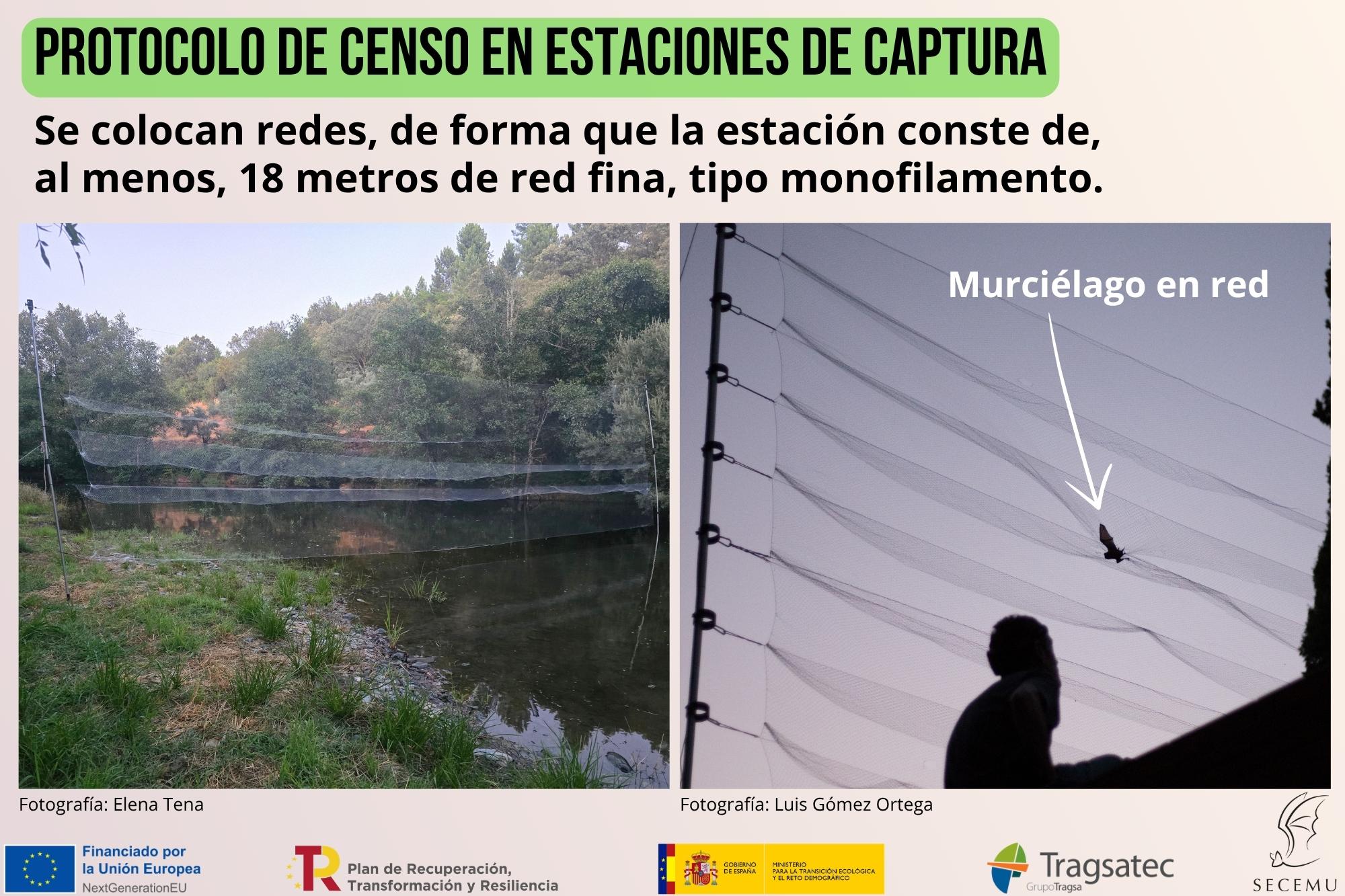
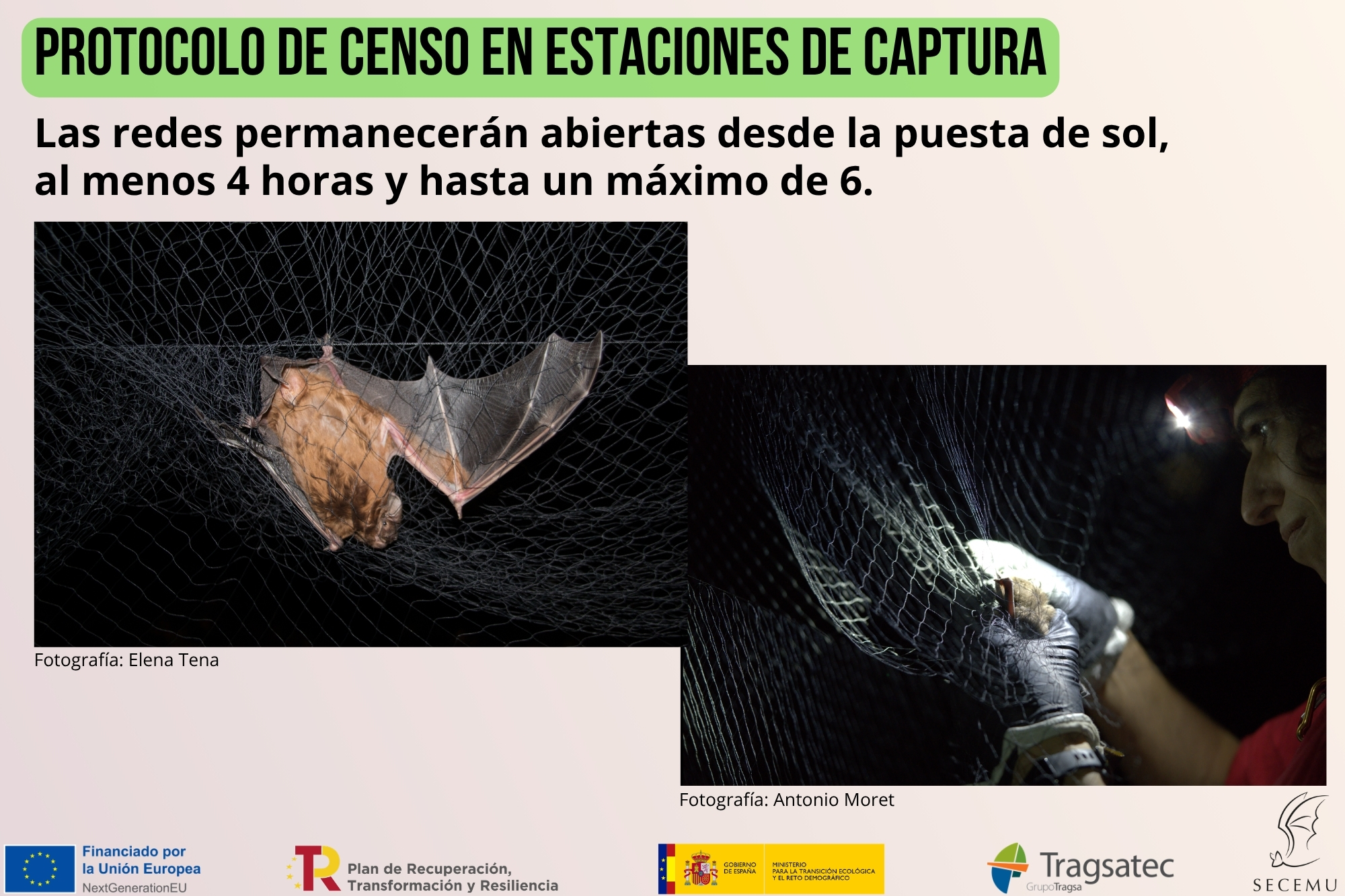
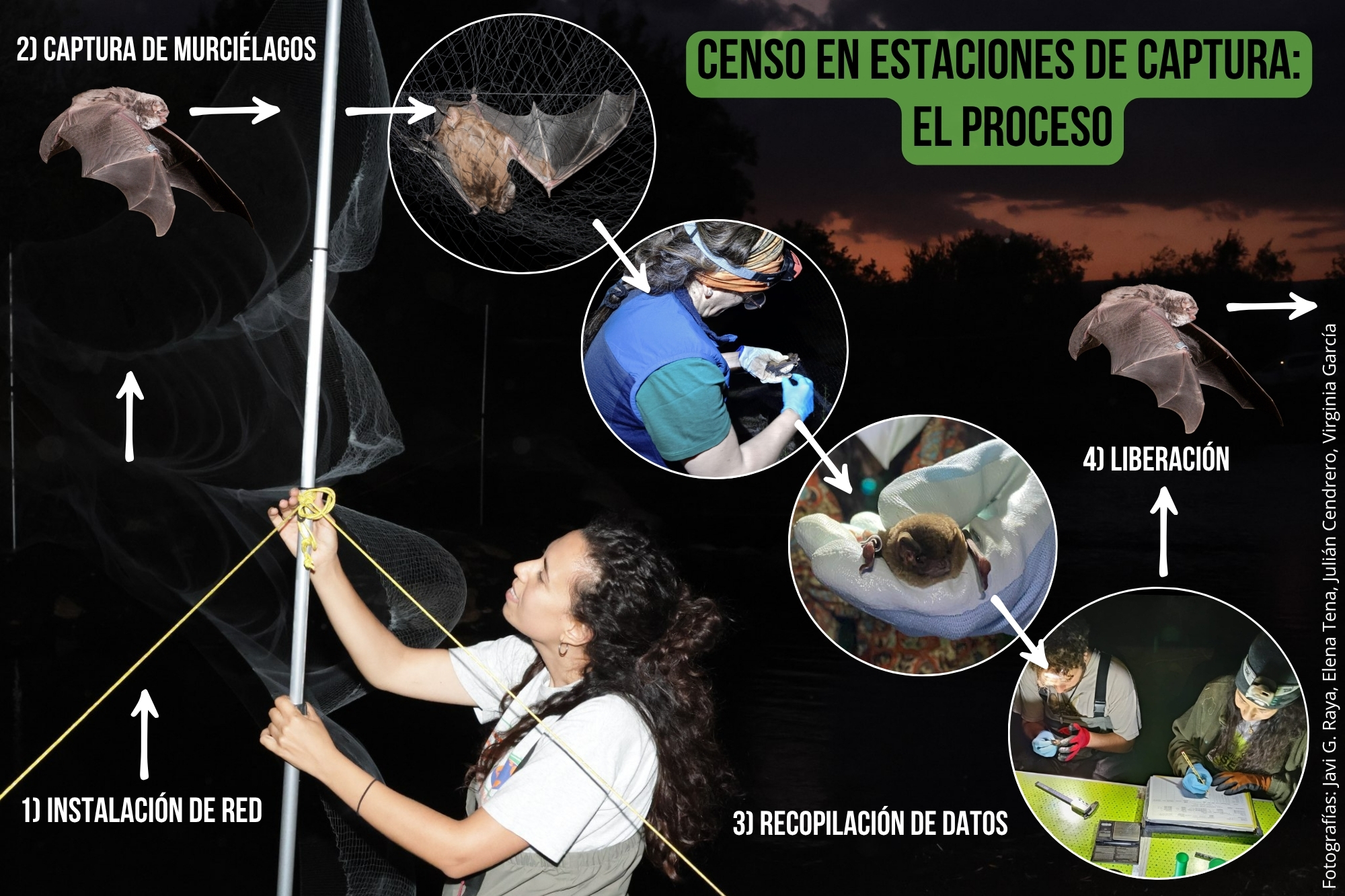
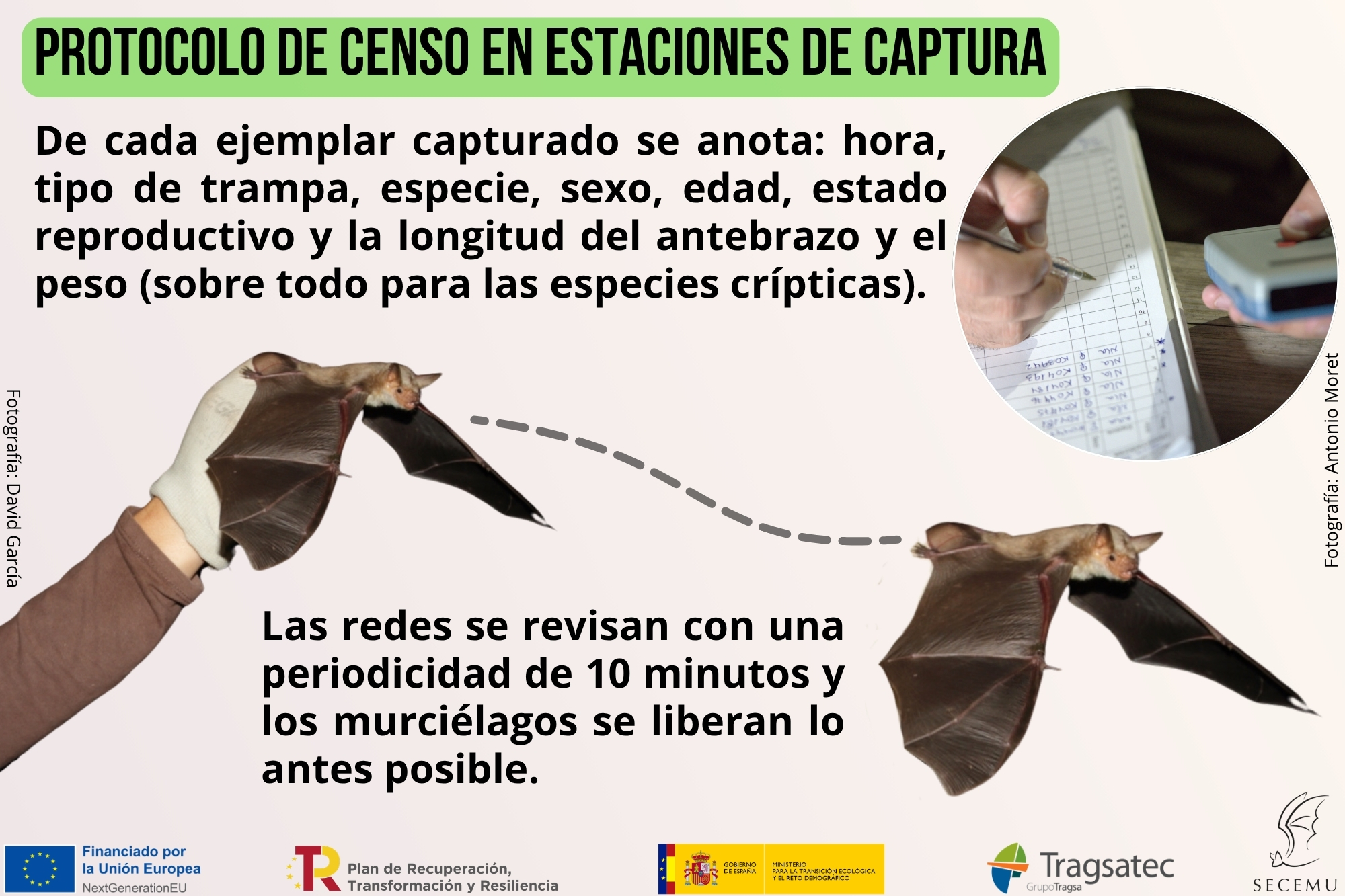
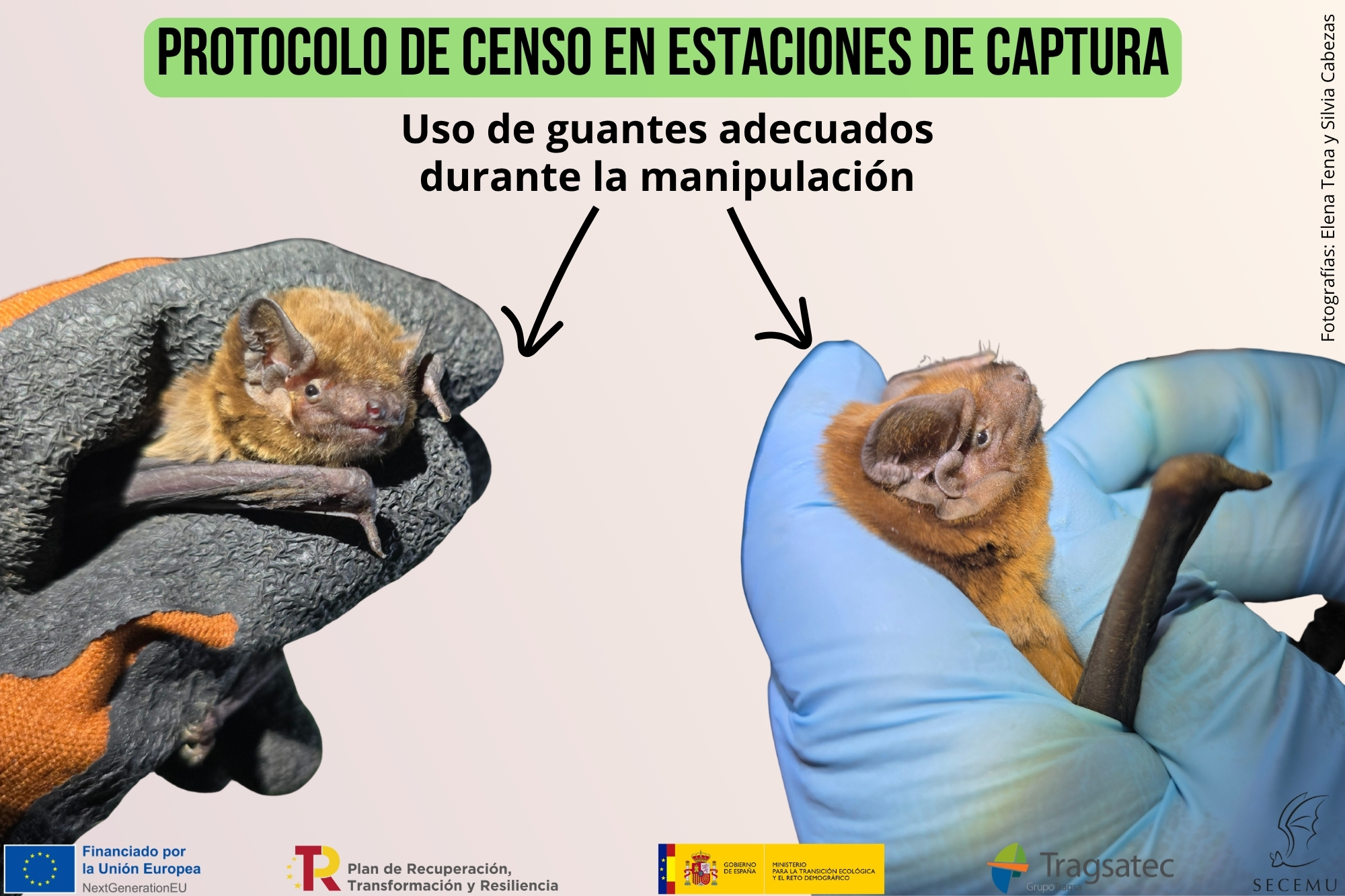
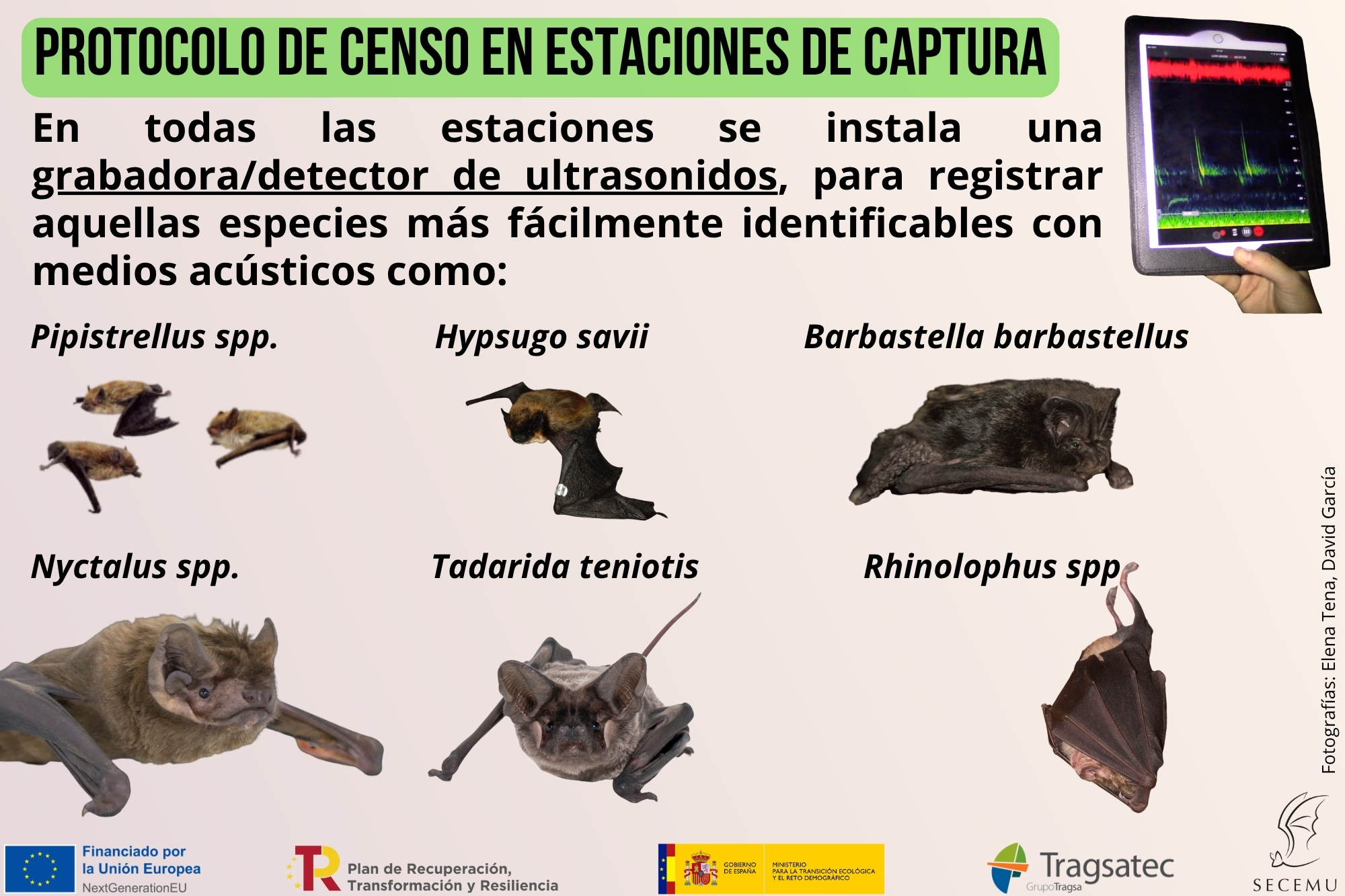
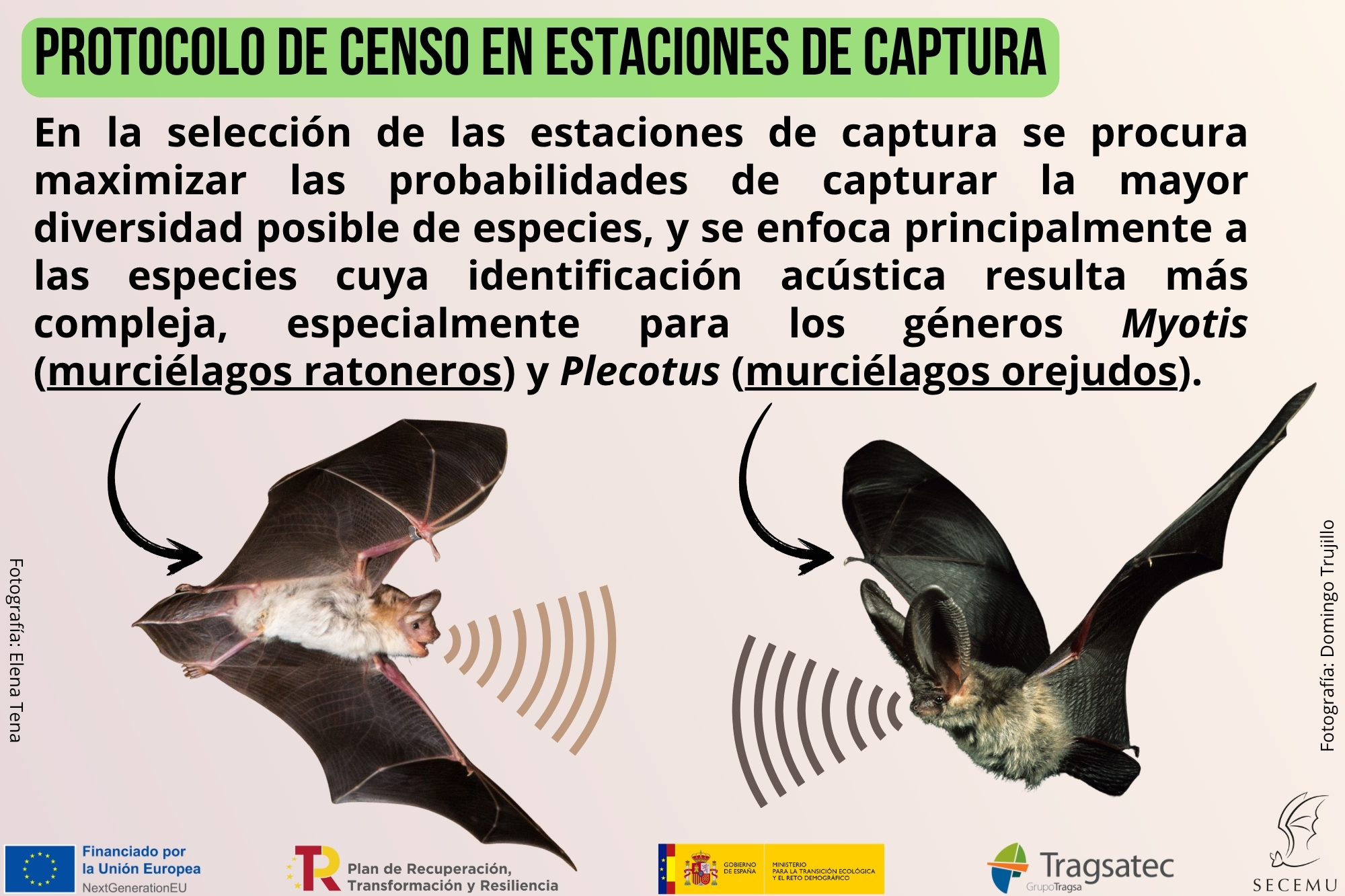
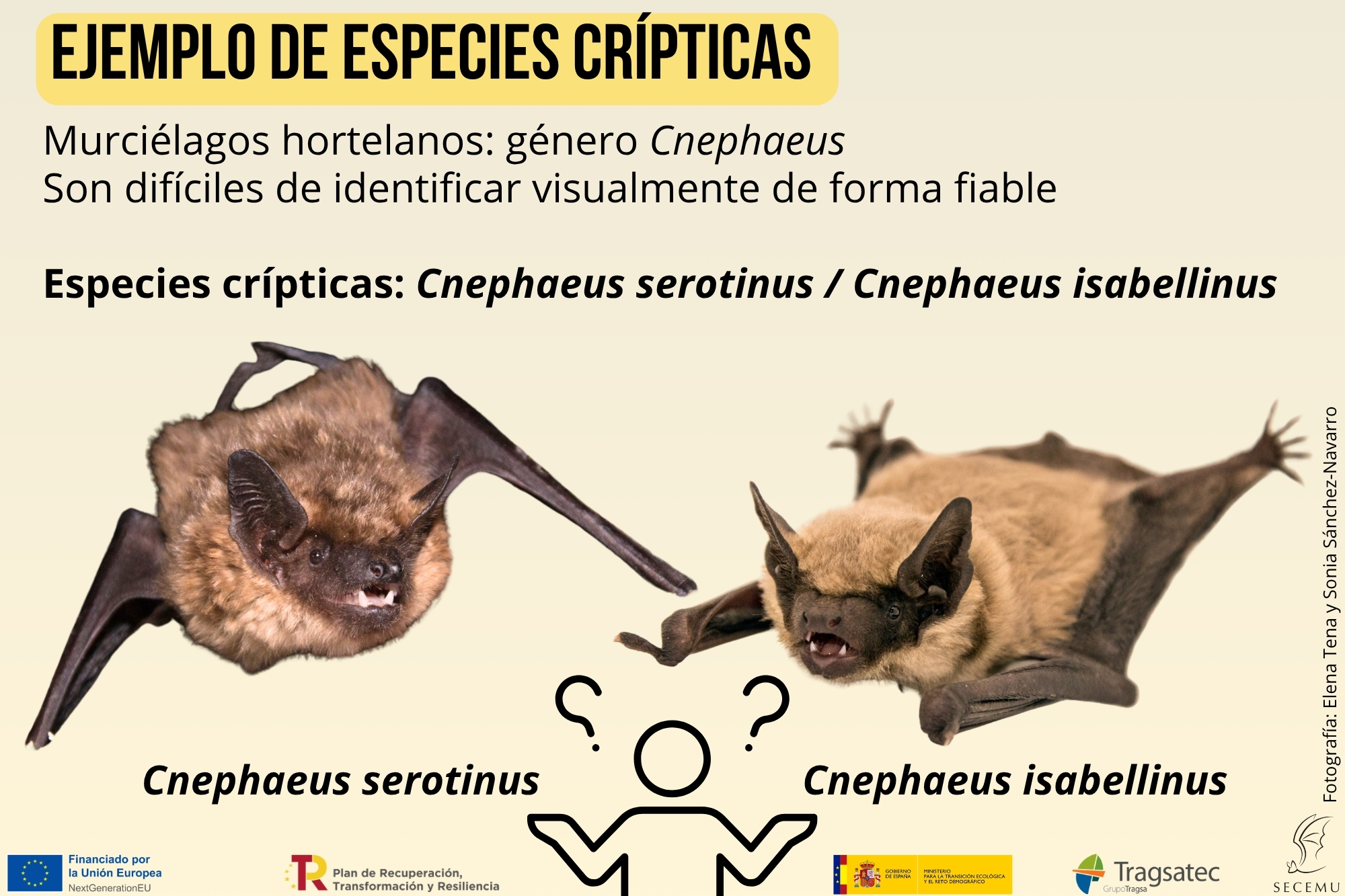
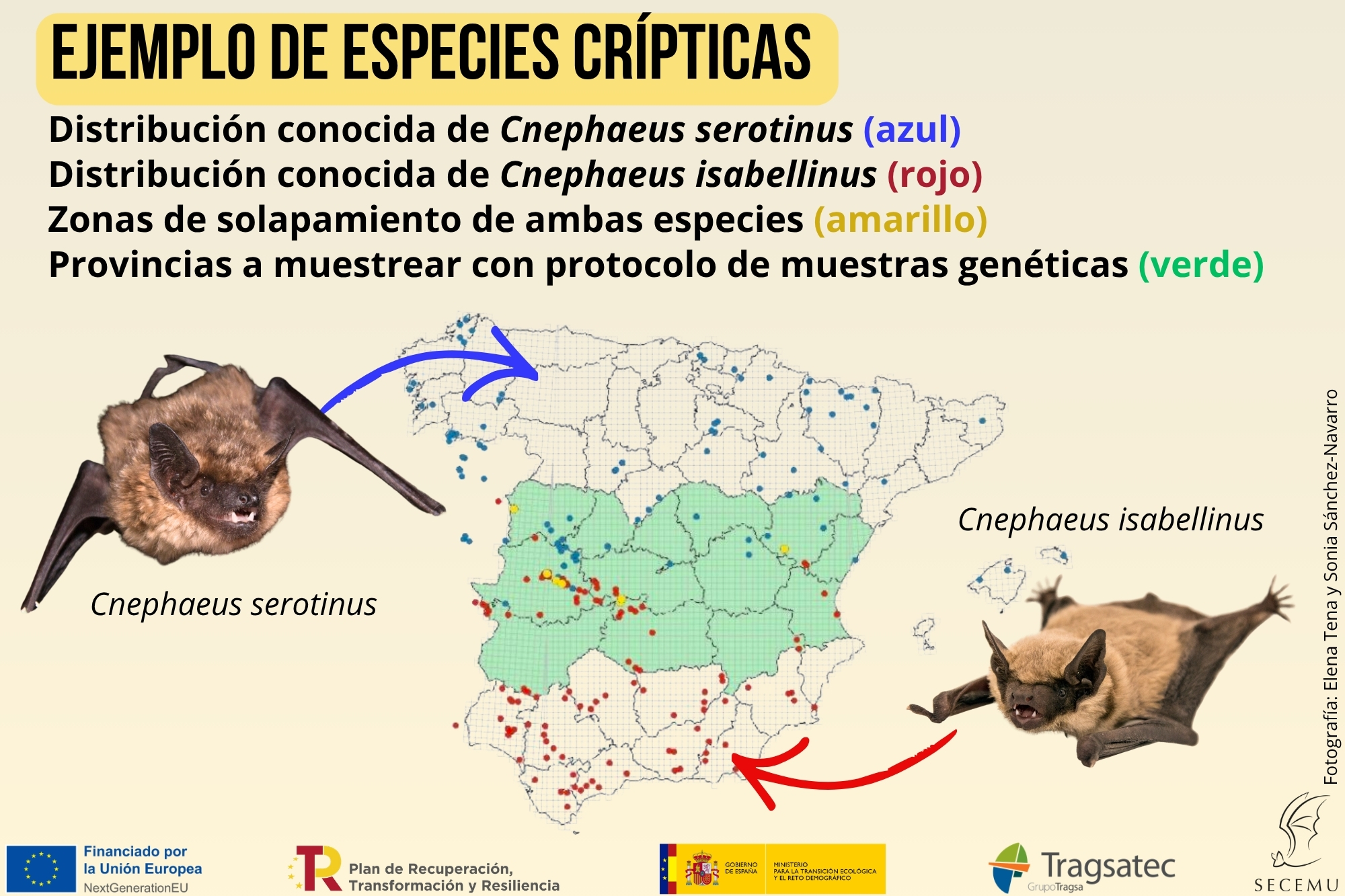
Capture stations were designed to maximise species diversity, prioritising woodland habitats and water points in provinces with data gaps, to avoid duplicating earlier efforts. Sampling focused on recording taxa that are hard to identify acoustically, such as the genera Myotis and Plecotus, where it is difficult to determine the exact species from their calls. Field effort was standardised using at least eighteen metres of monofilament net, operating for at least four hours from sunset.
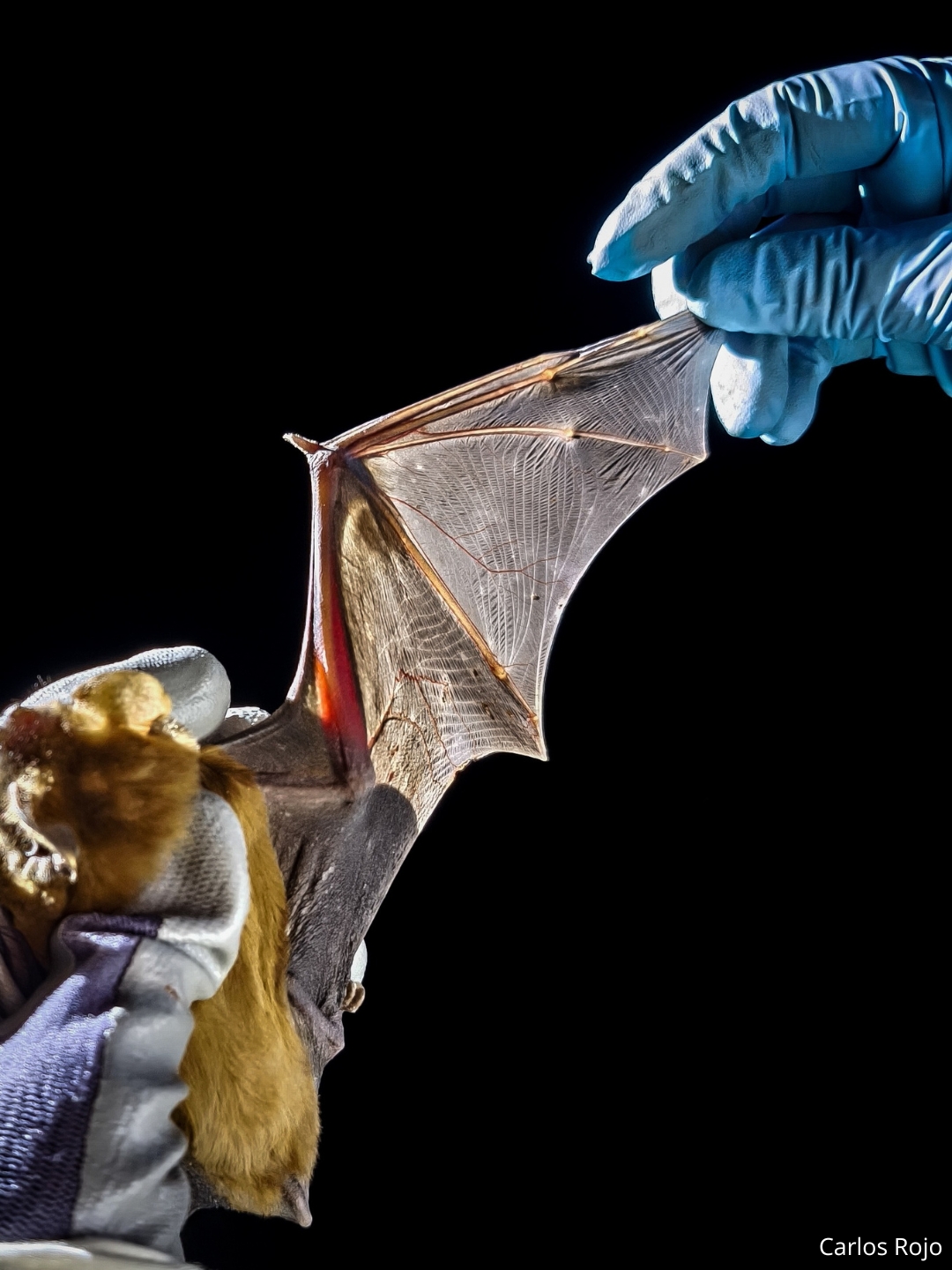
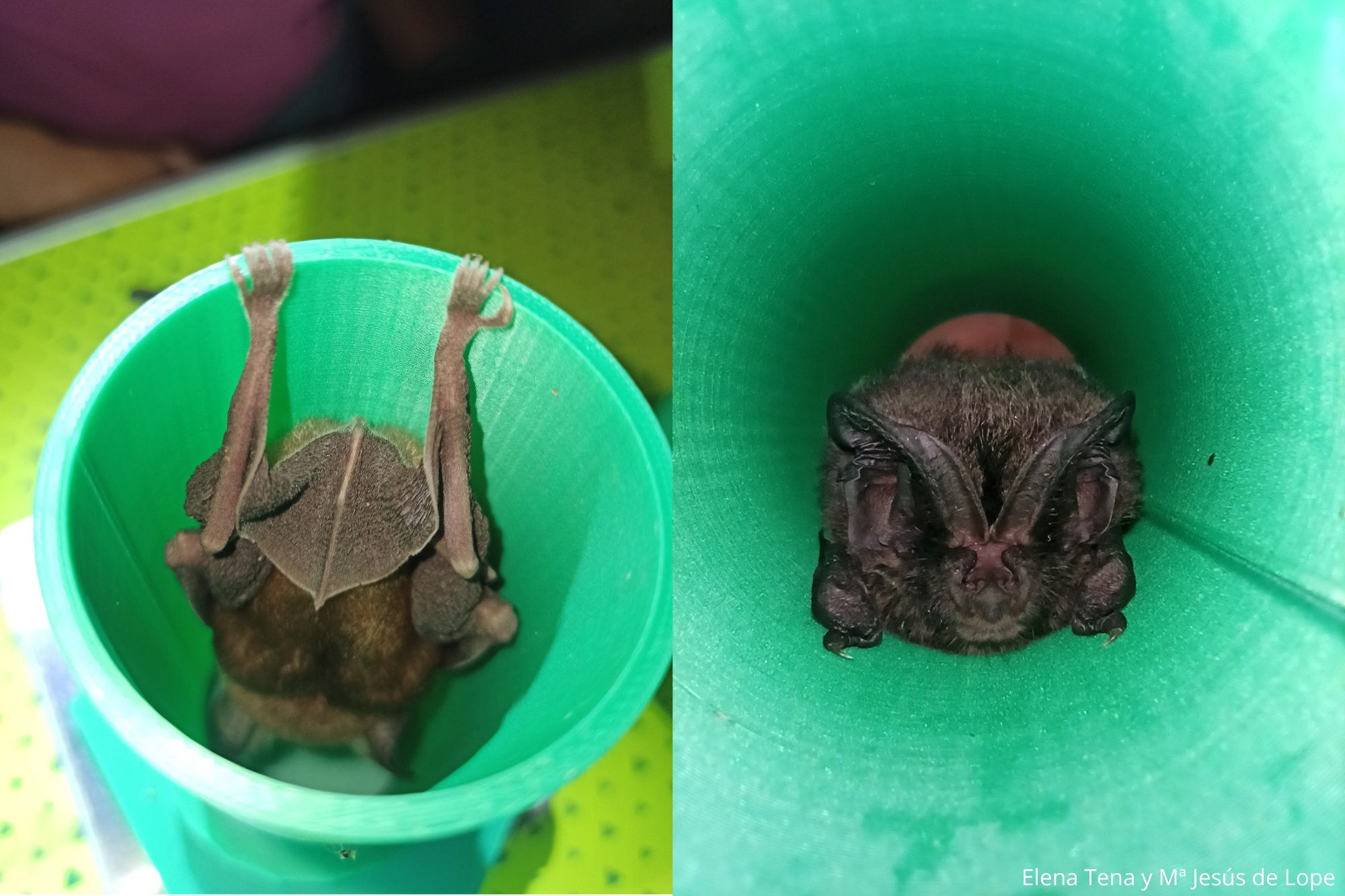
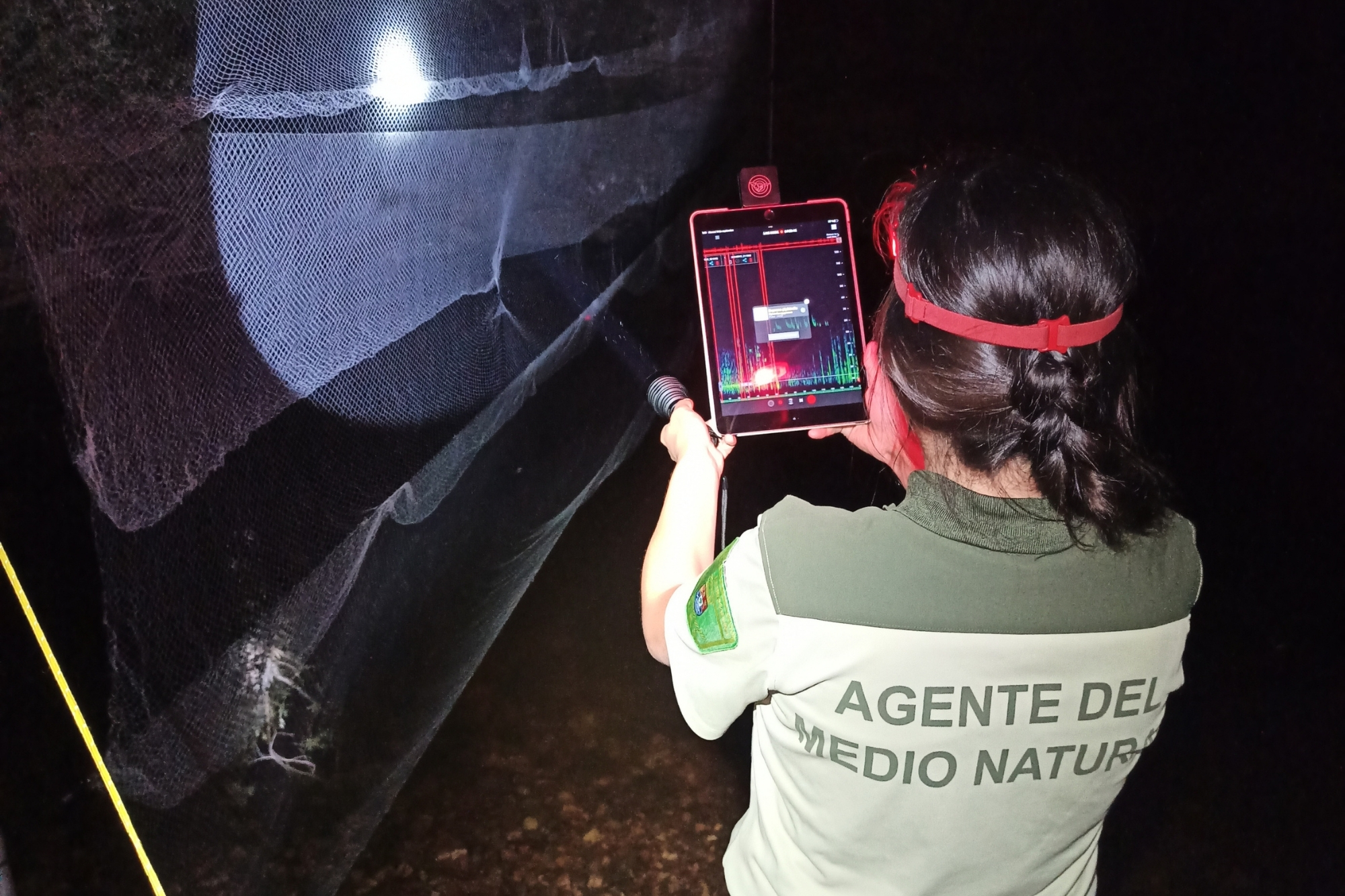
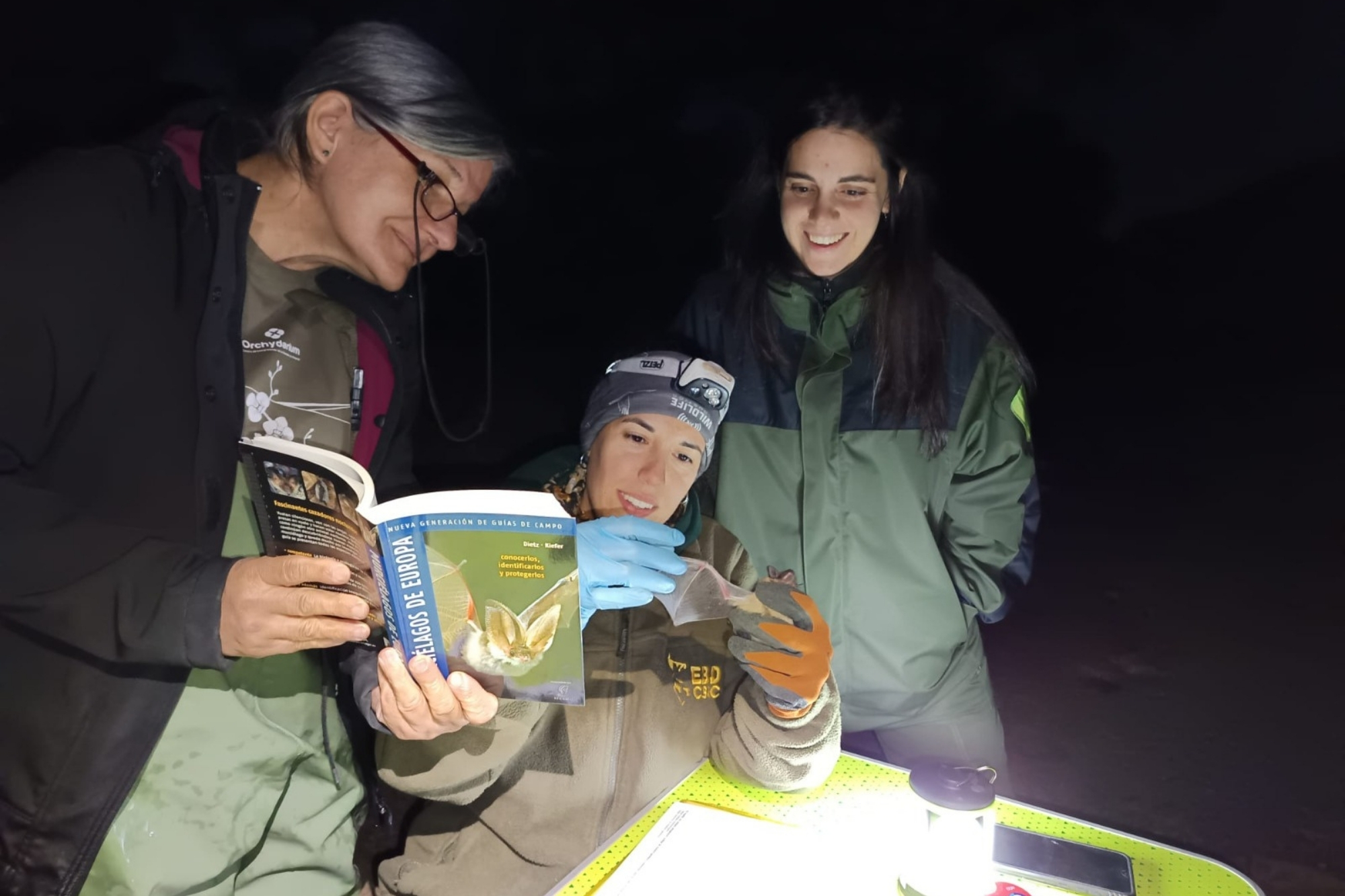
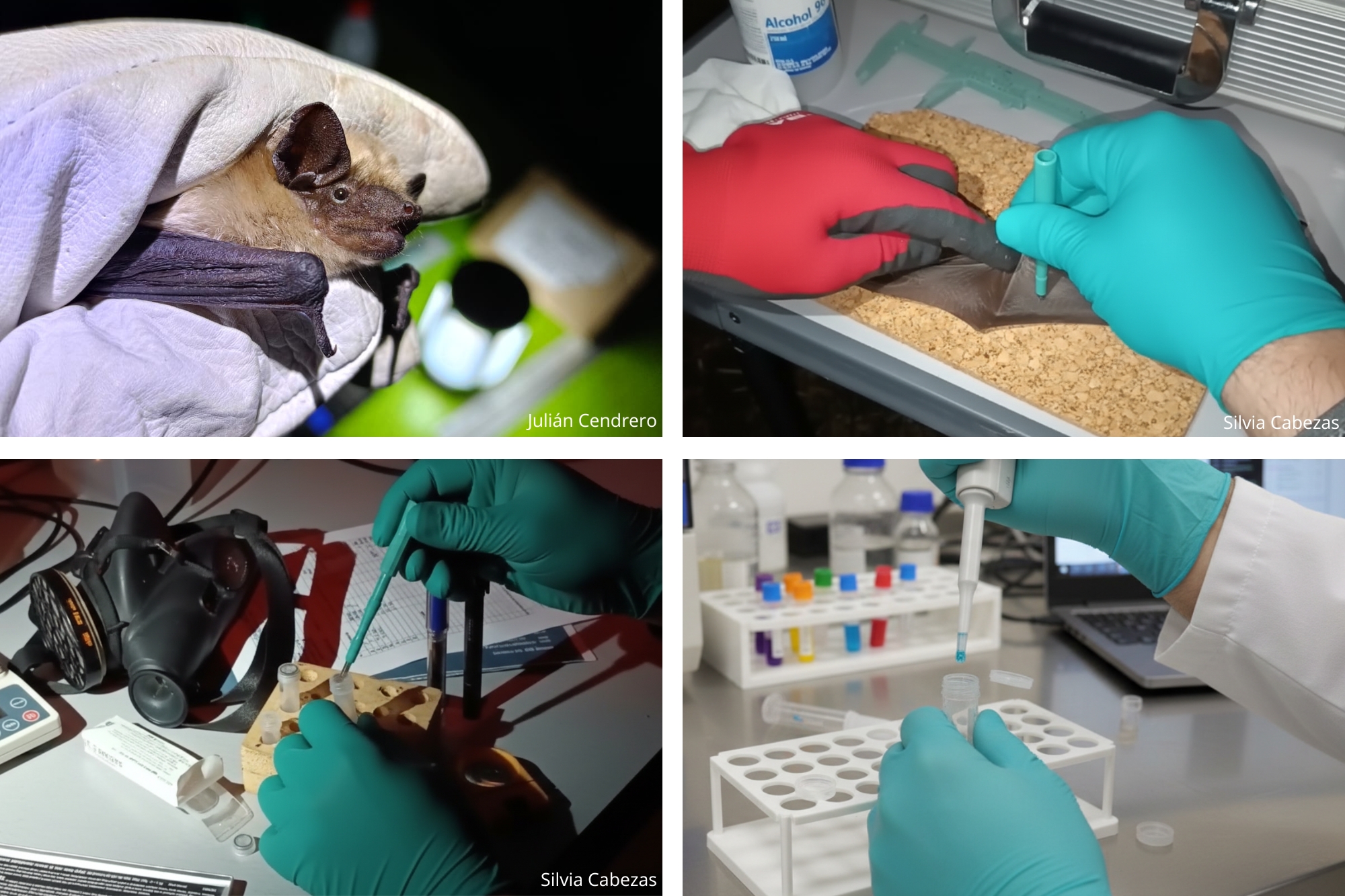
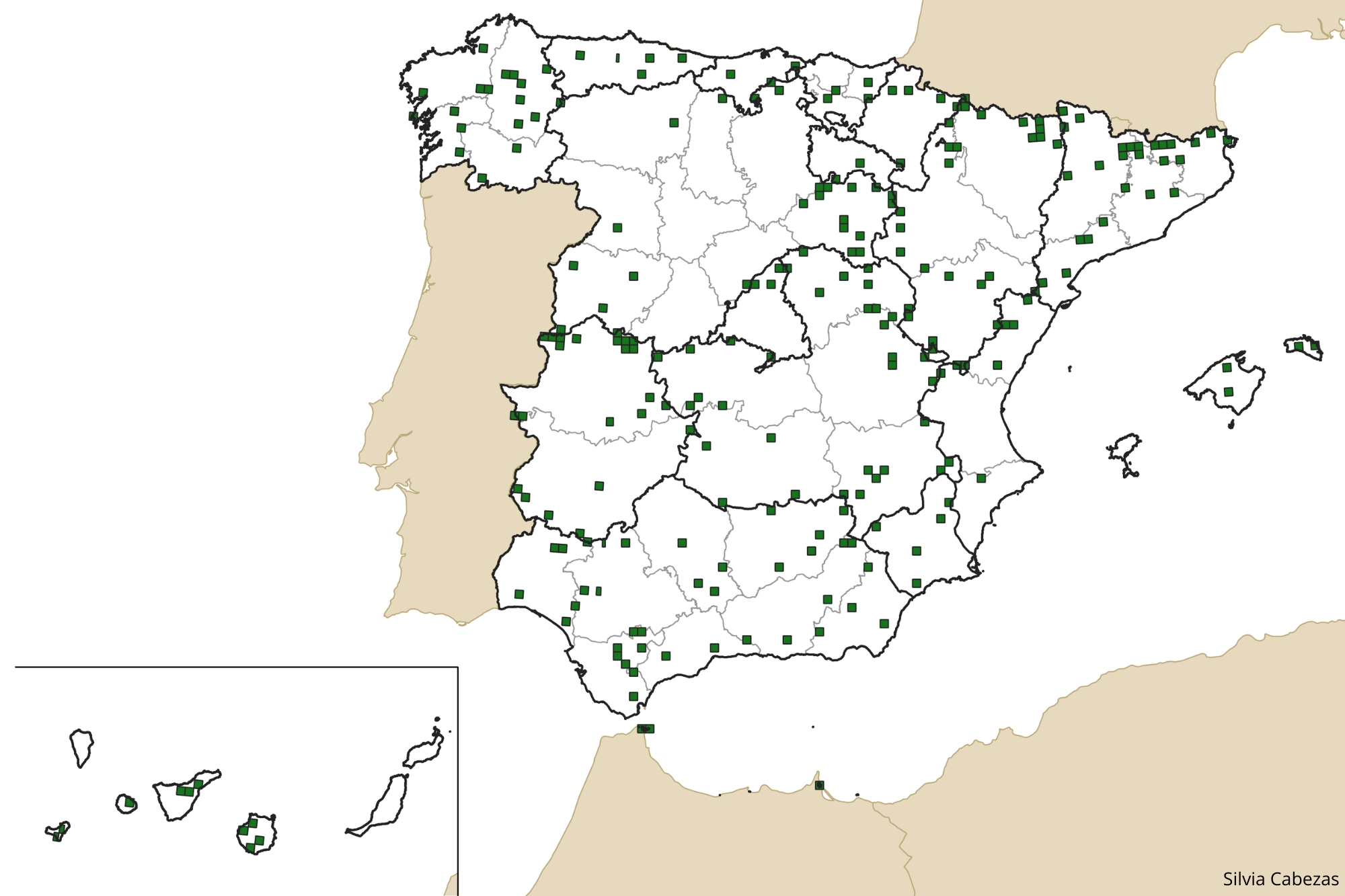
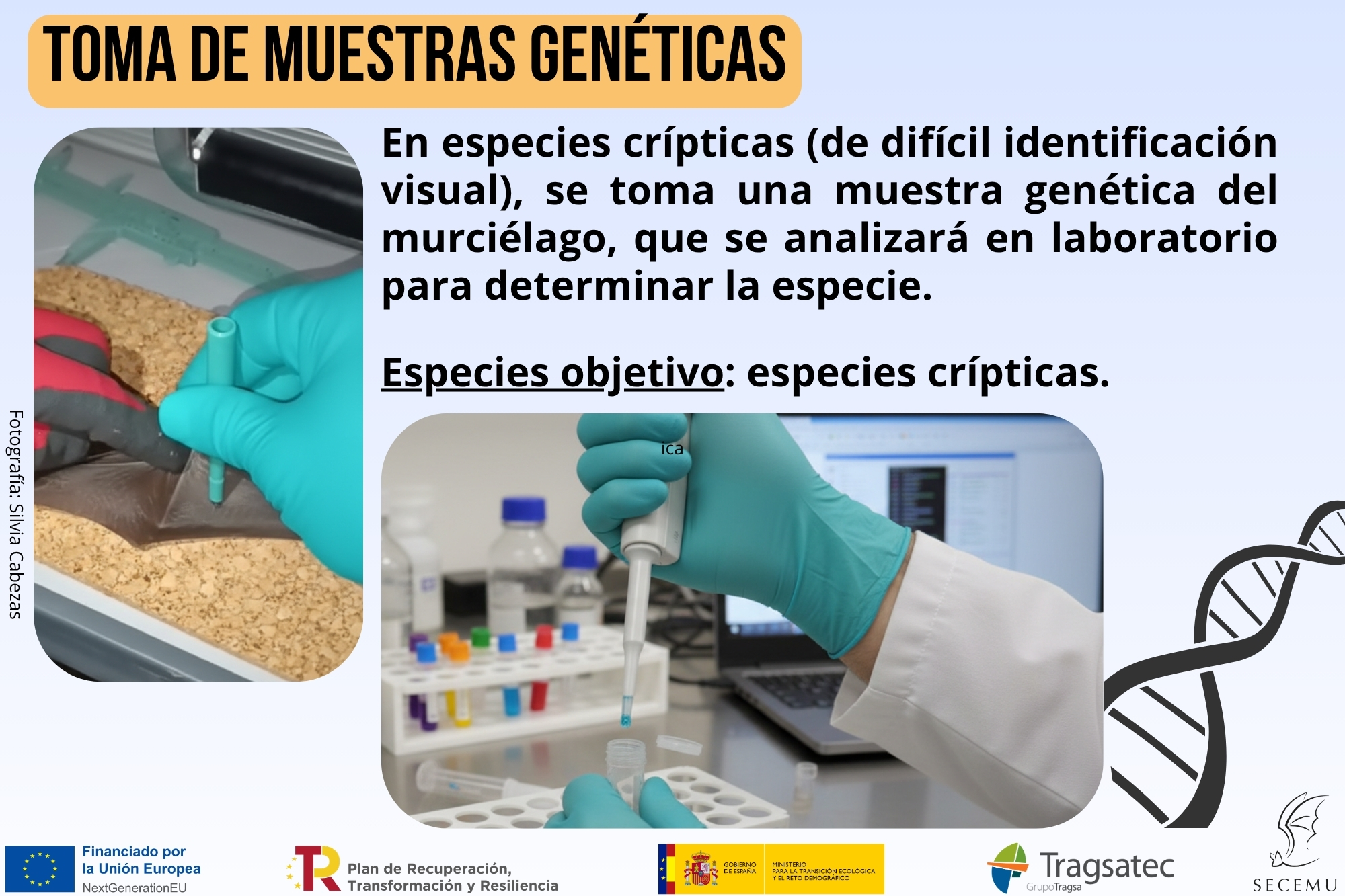
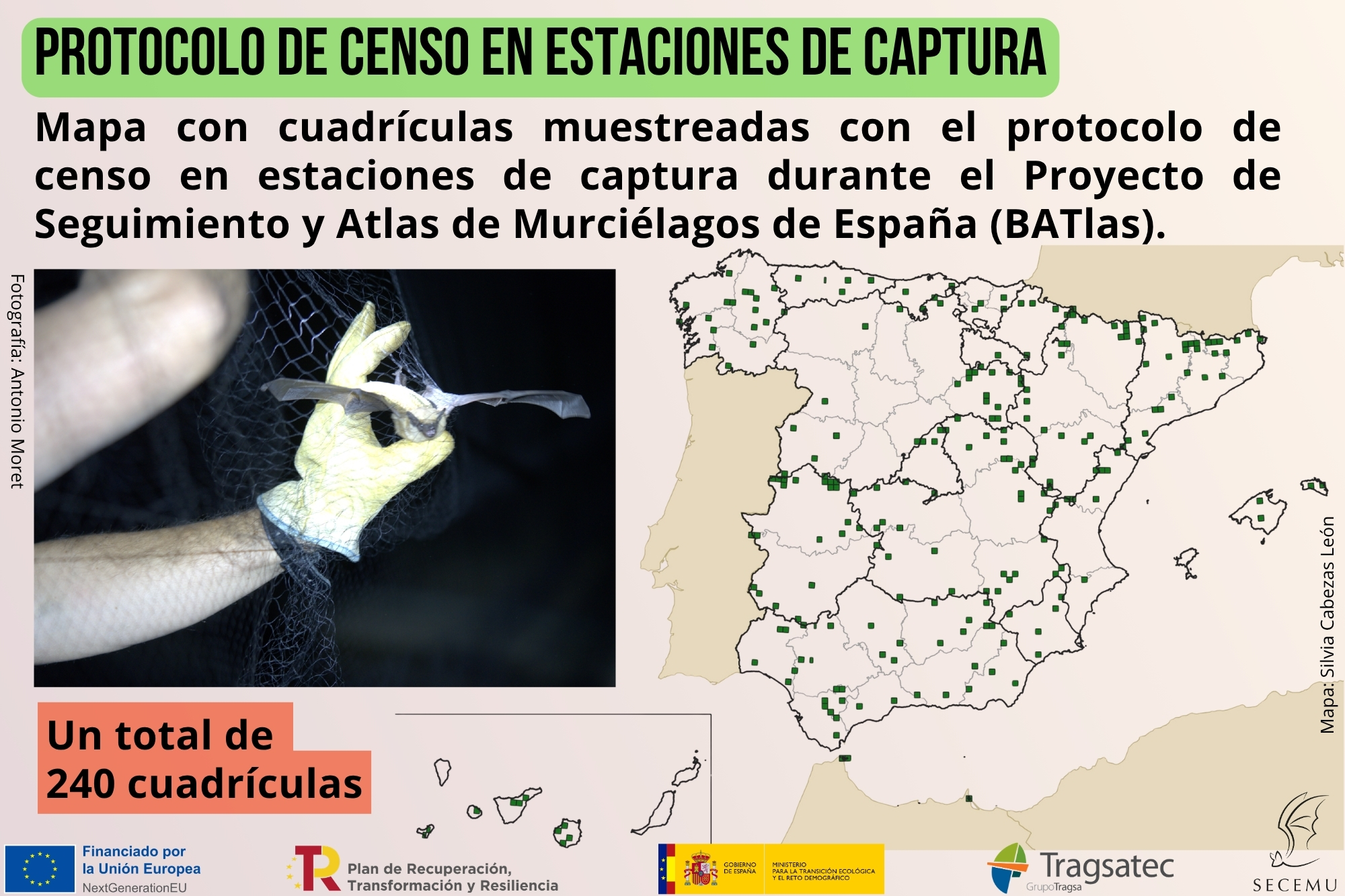
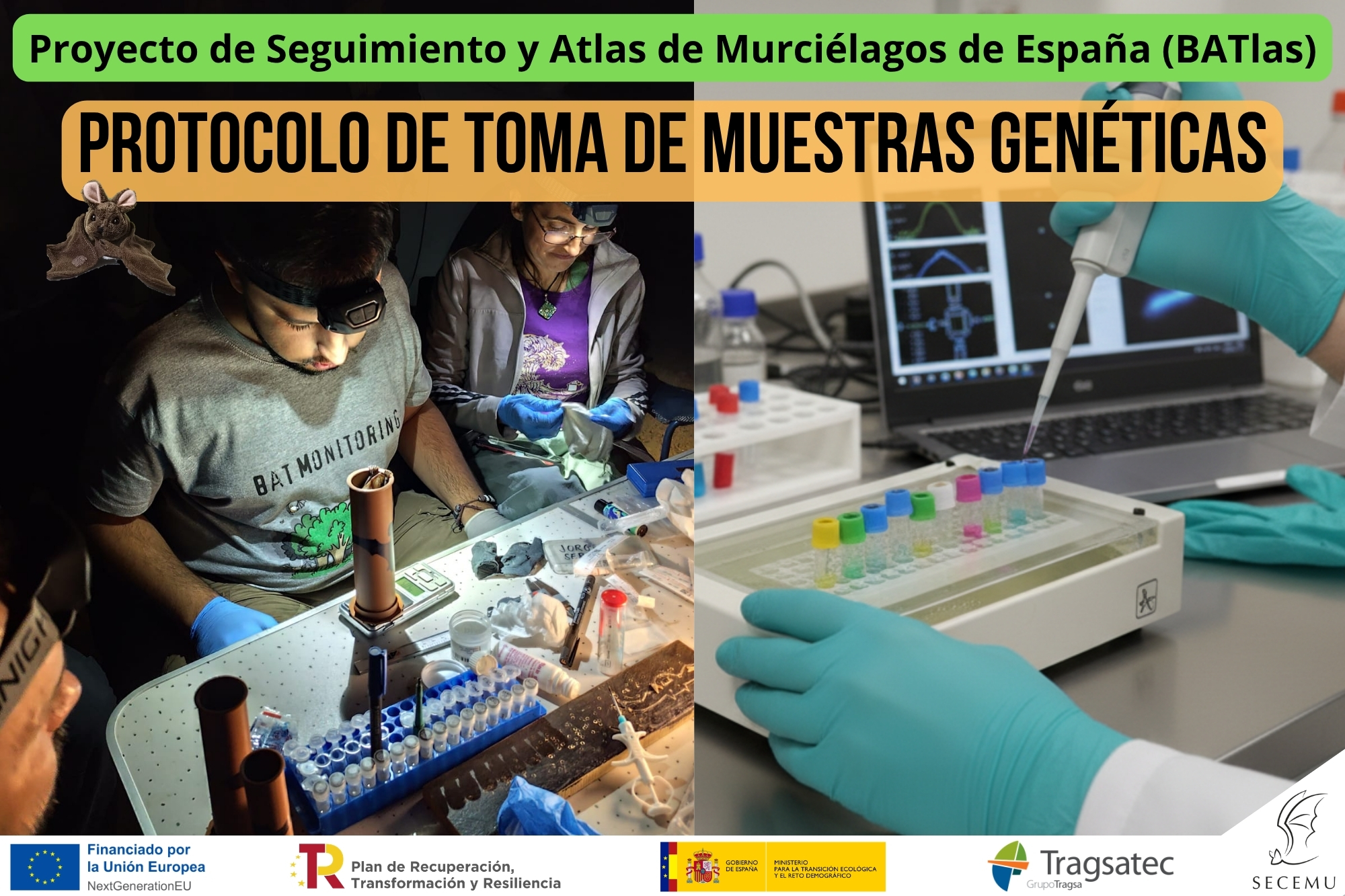
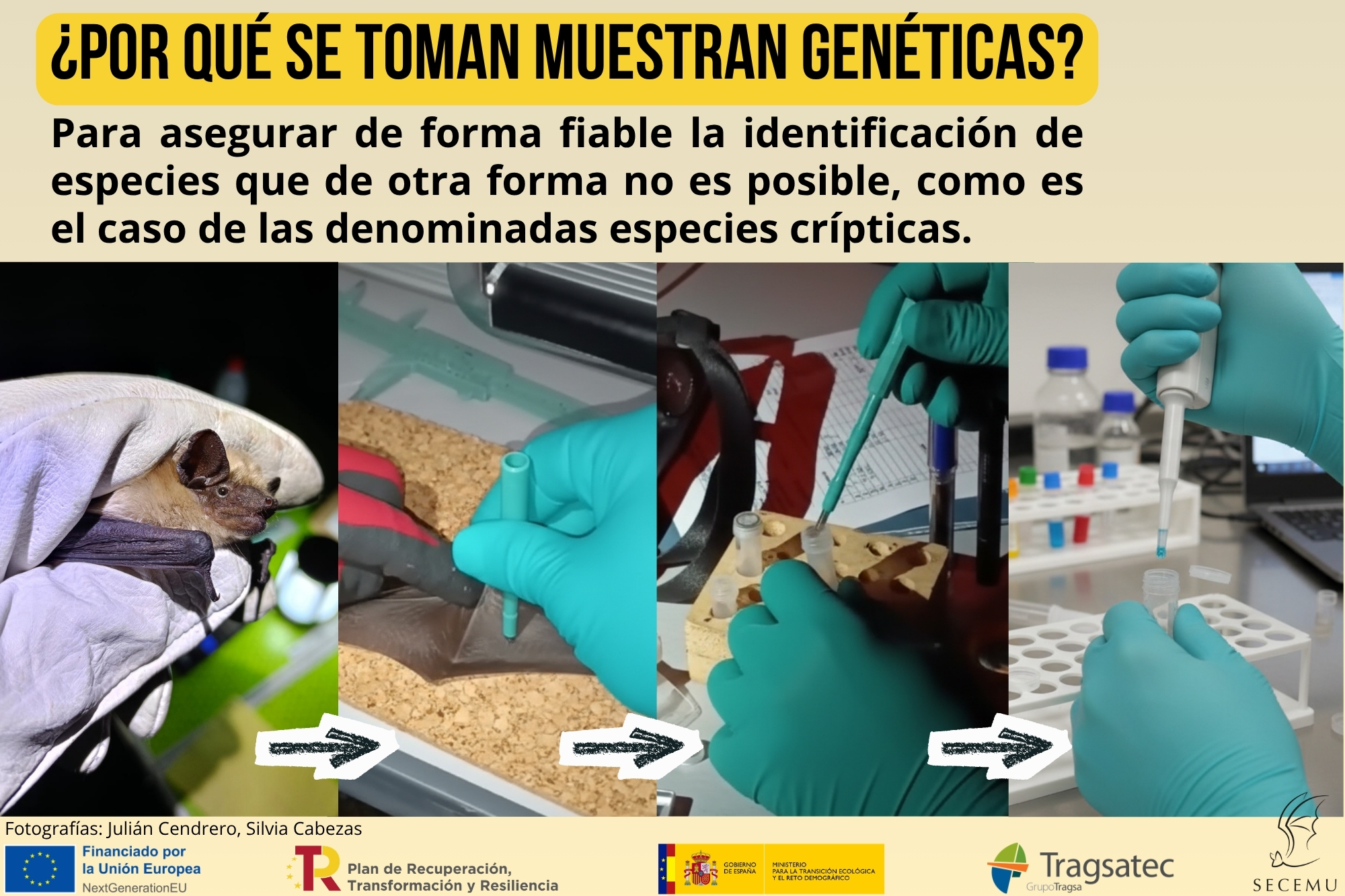
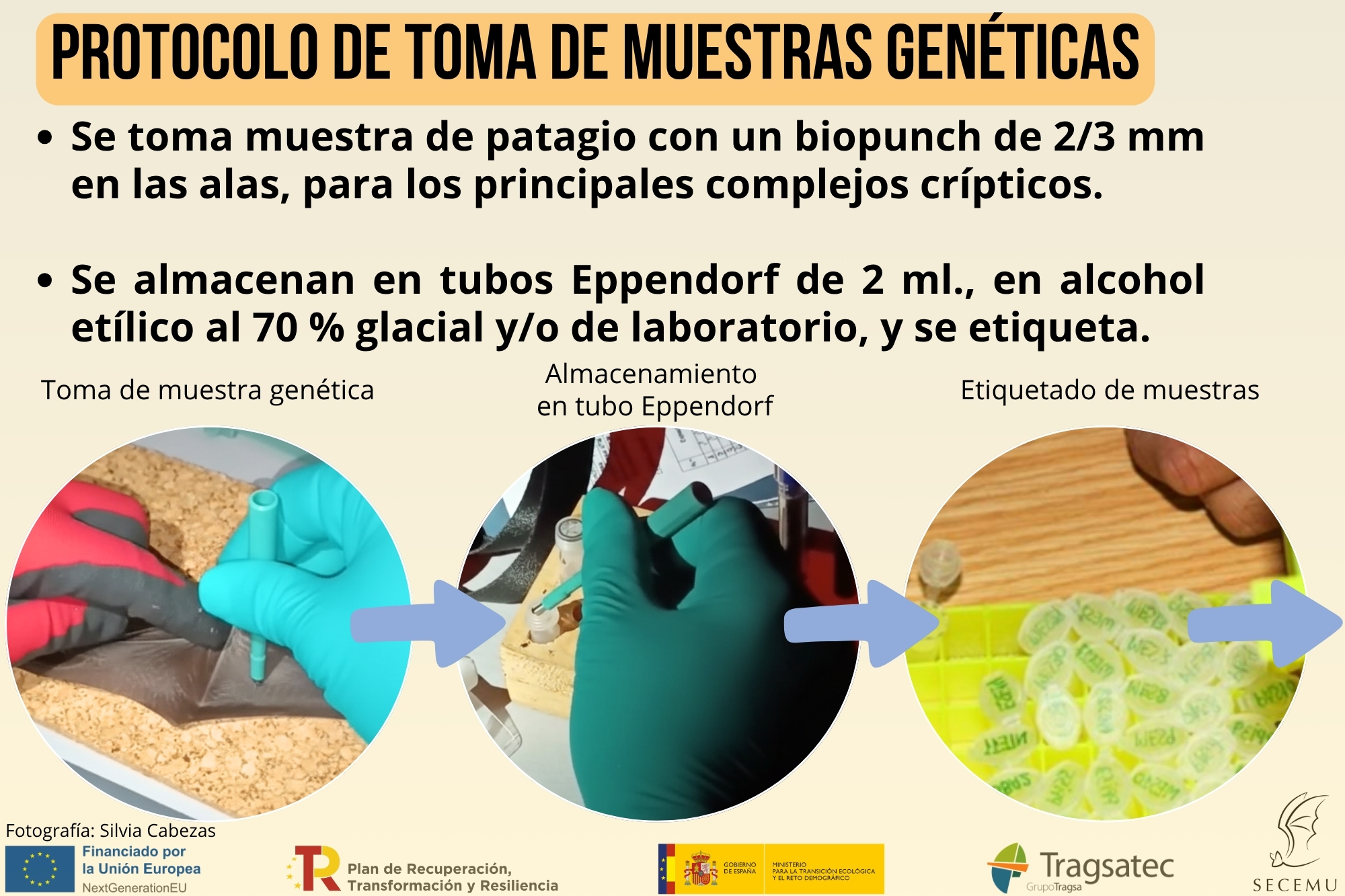
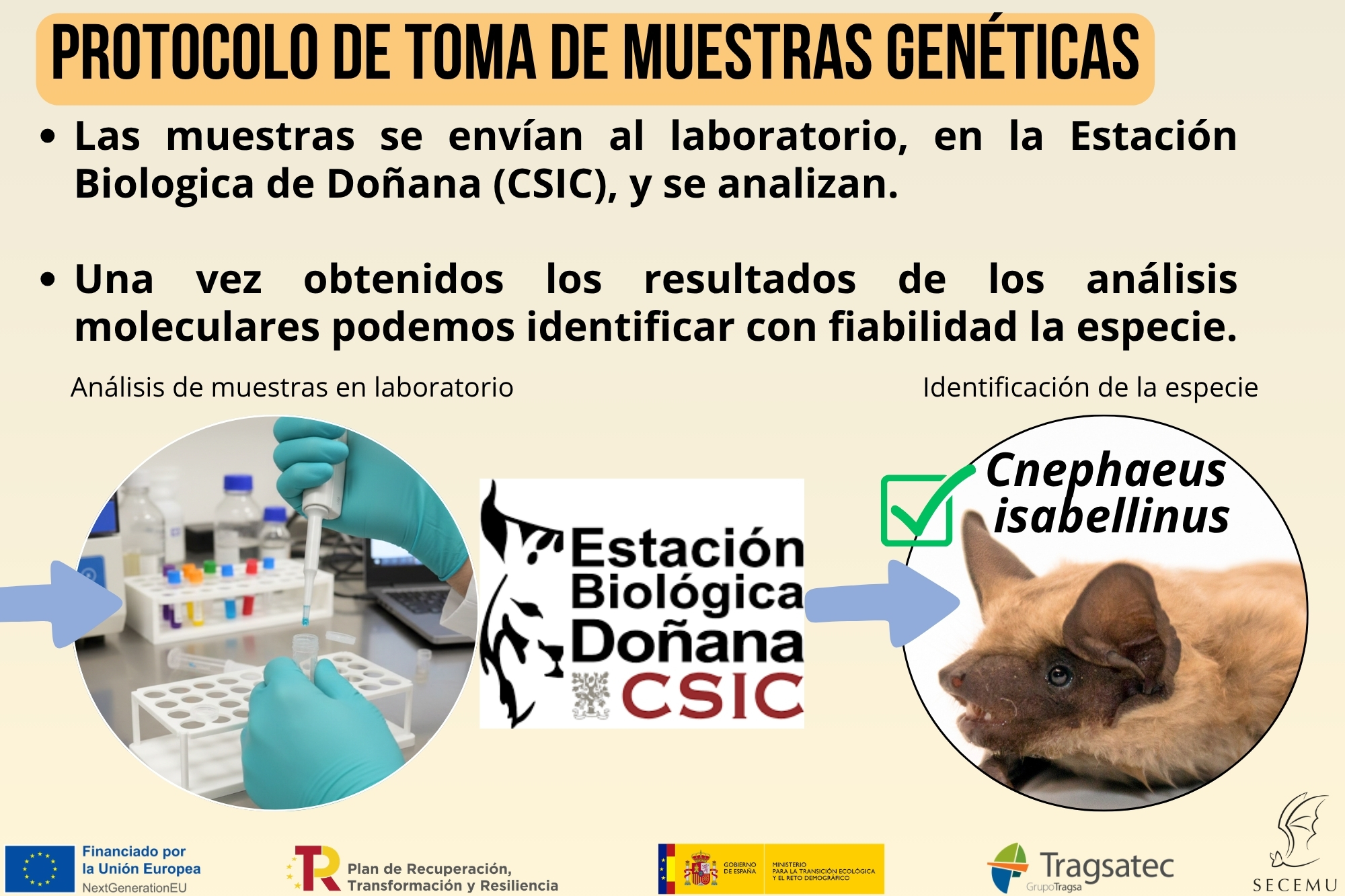
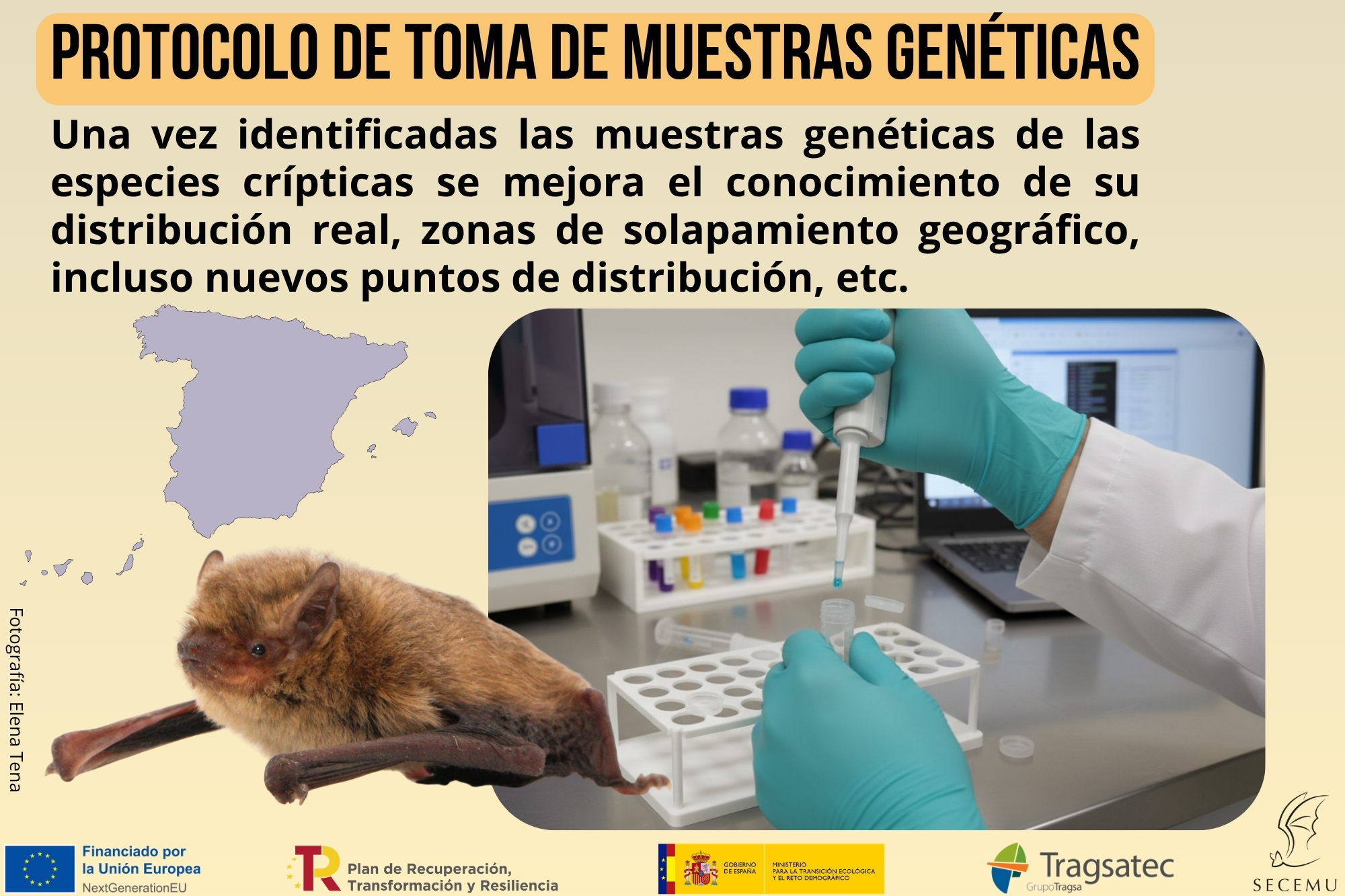
To ensure exact species identification of cryptic species, tissue samples were systematically taken from the patagium for later molecular analysis in the laboratory. This genetic procedure, carried out by the bat group at the Doñana Biological Station (CSIC), was also applied to any specimen raising morphological doubts. Fieldwork was complemented by placing an ultrasound recorder next to the nets to record species that were not captured. In total, this combined method covered 259 capture points in 240 UTM 10×10 km grid squares, under the protocol available on the SECEMU website (2023).
Protocol for capture stations and genetic sampling of cryptic species.
Ultrasound recorders
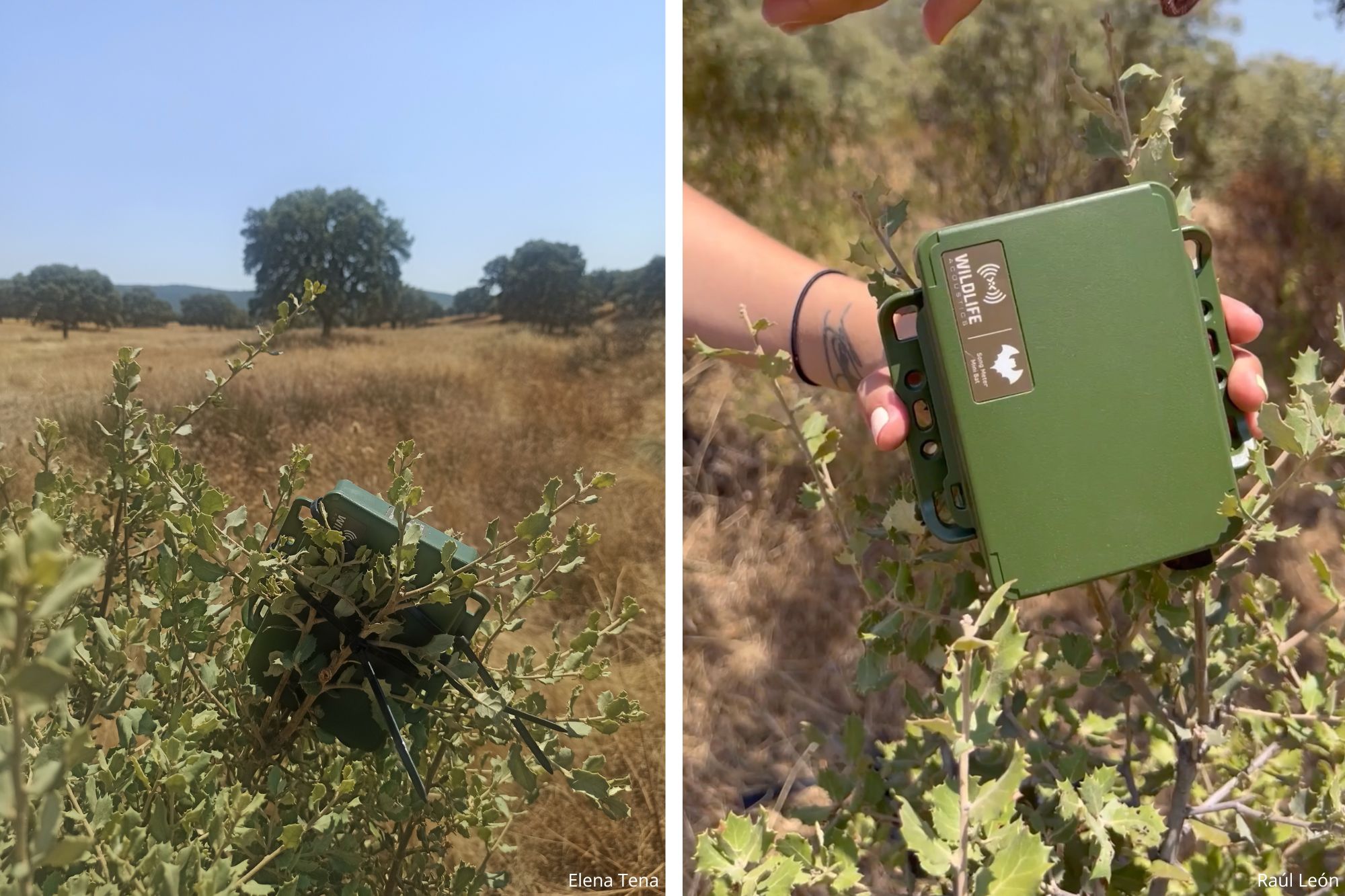
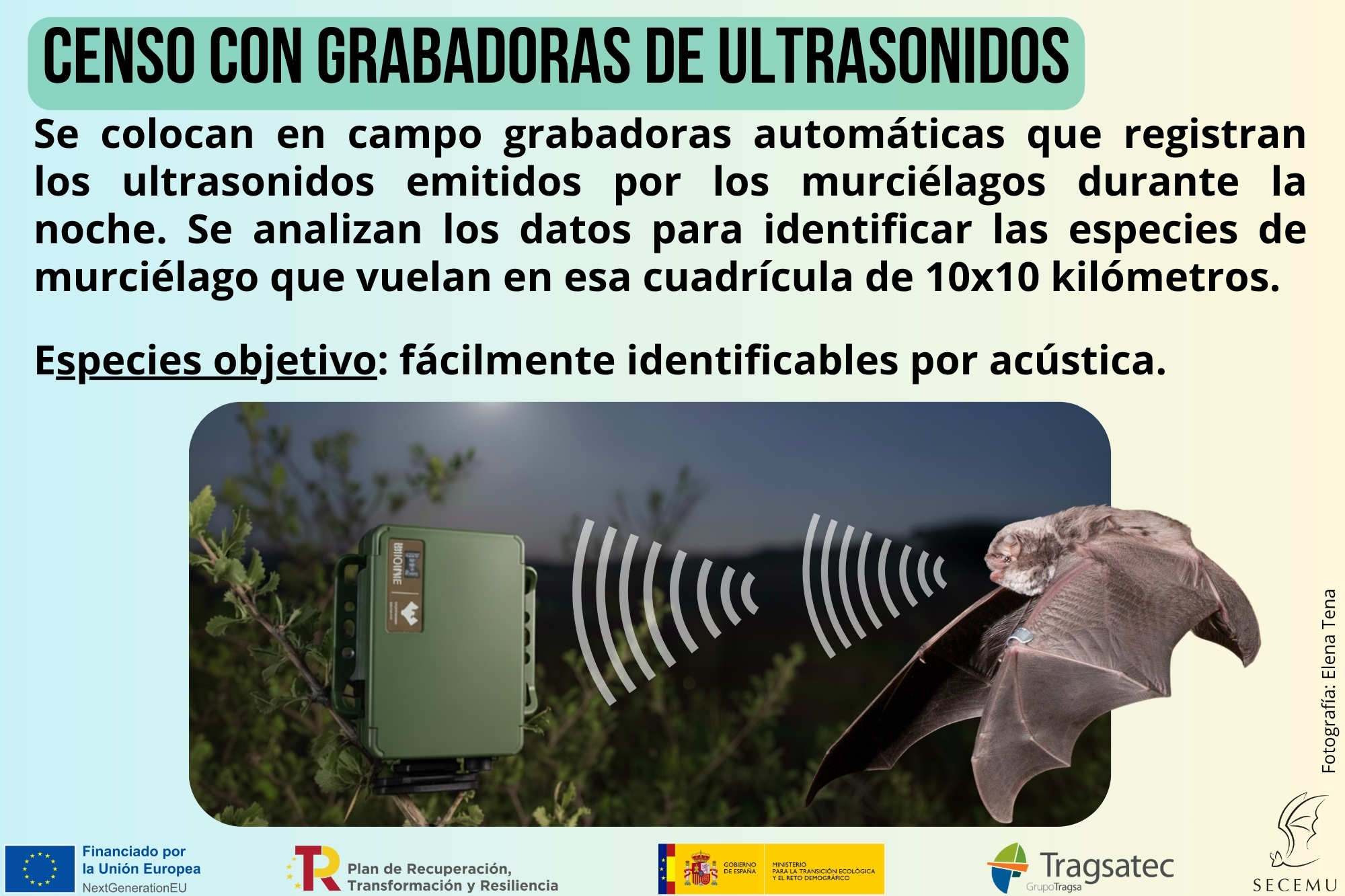
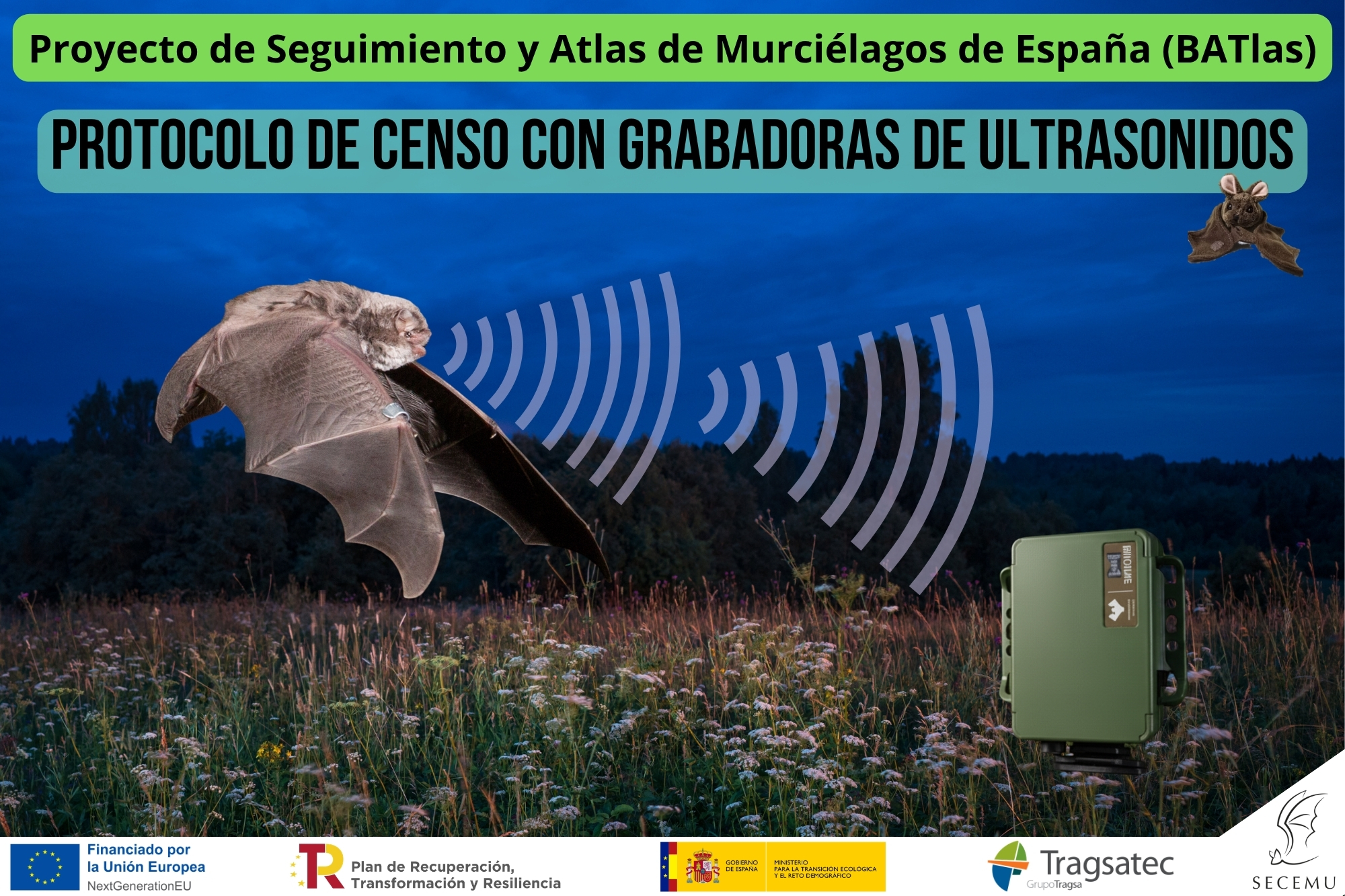
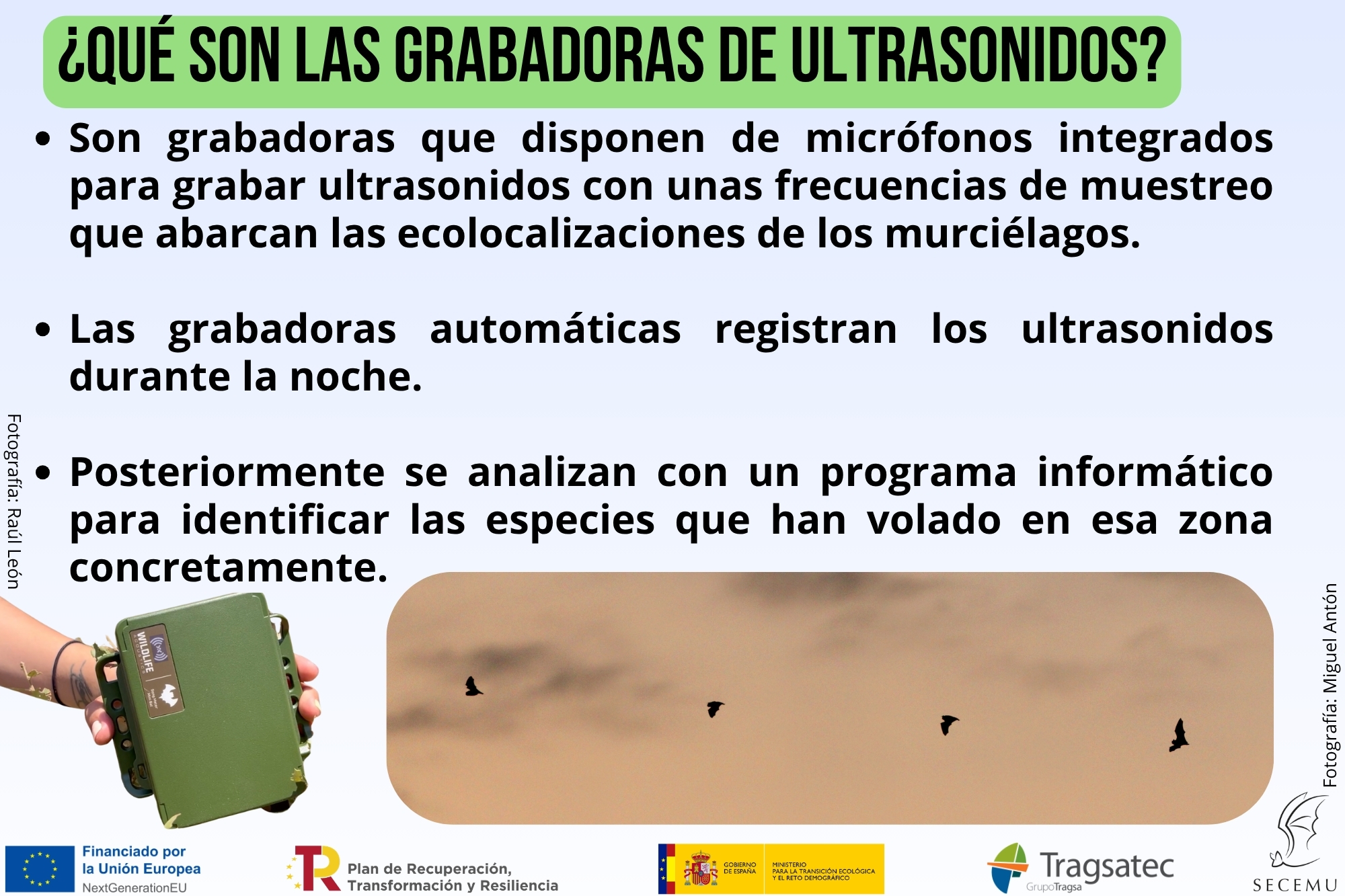
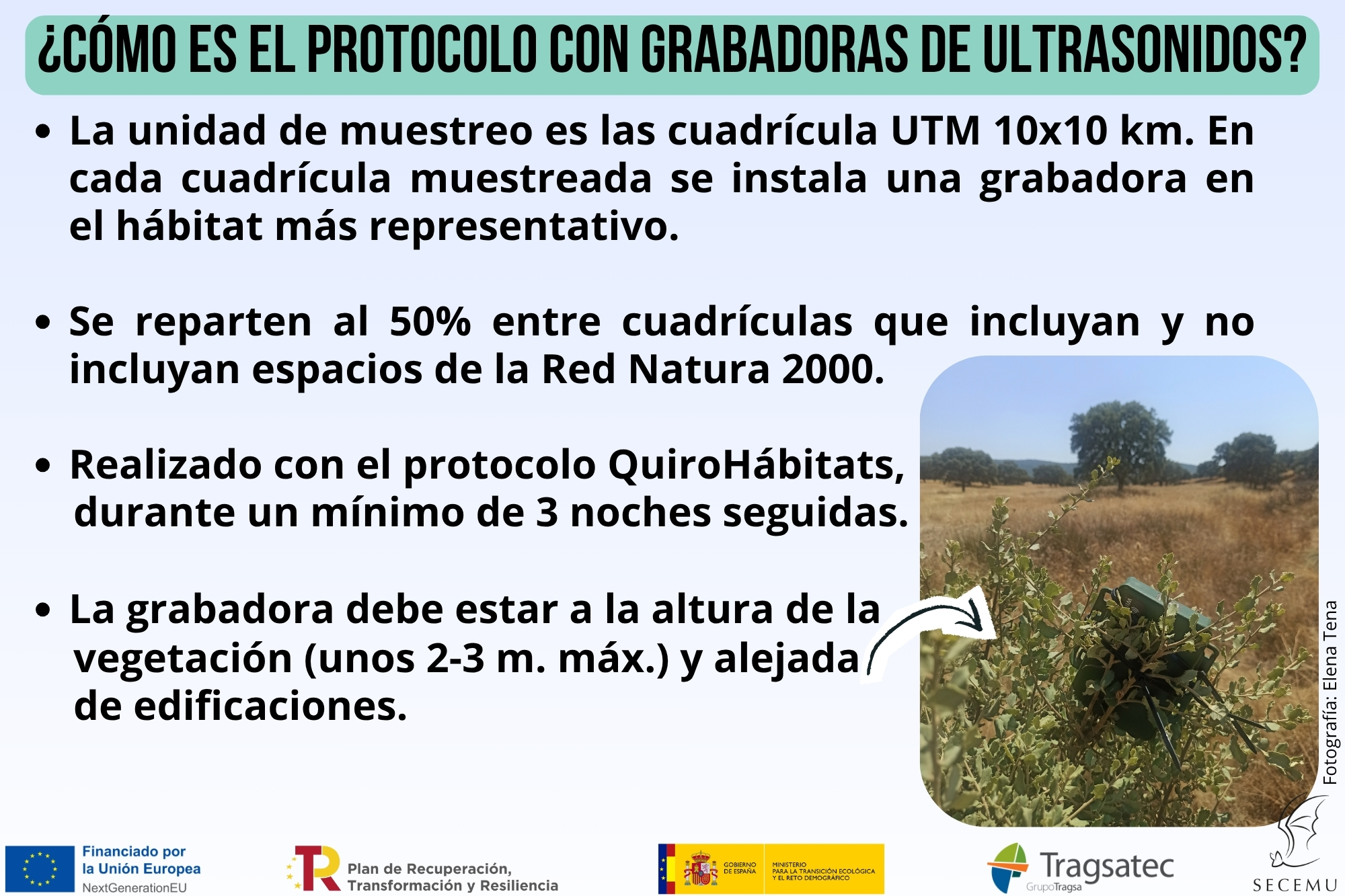
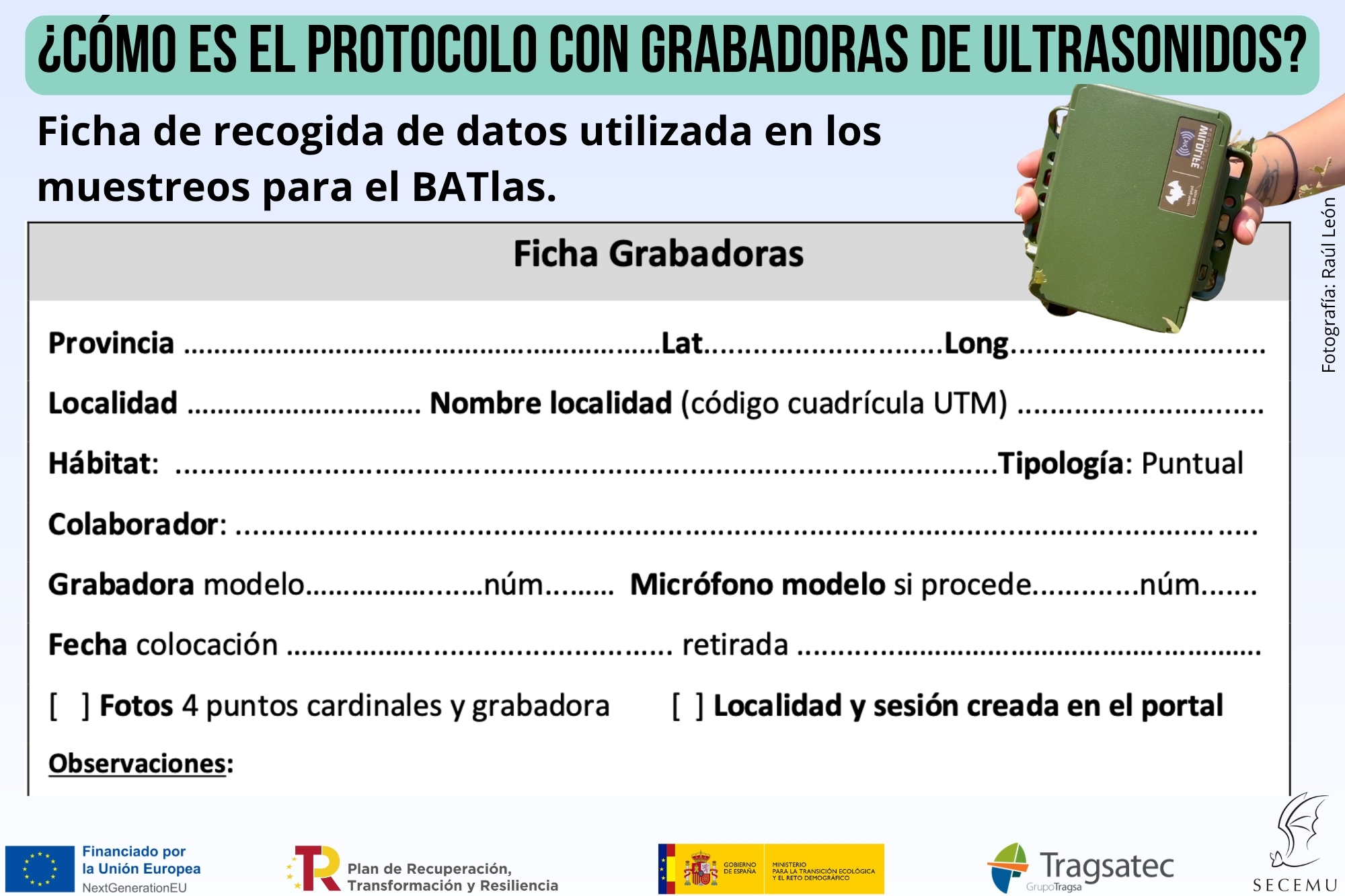
Acoustic sampling was carried out to record species that can be identified by their echolocation calls, using autonomous ultrasound recorders active for three to seven consecutive nights. Sessions took place during the period of peak bat activity, from June to September, with the devices set to full-spectrum mode at sampling rates of 250 kHz or higher. The method was based on the QuiroHábitats protocol of the Museu de Ciències Naturals de Granollers, adapted to this atlas, using the UTM 10×10 km grid square as the reference unit and placing the device in the most representative habitat.
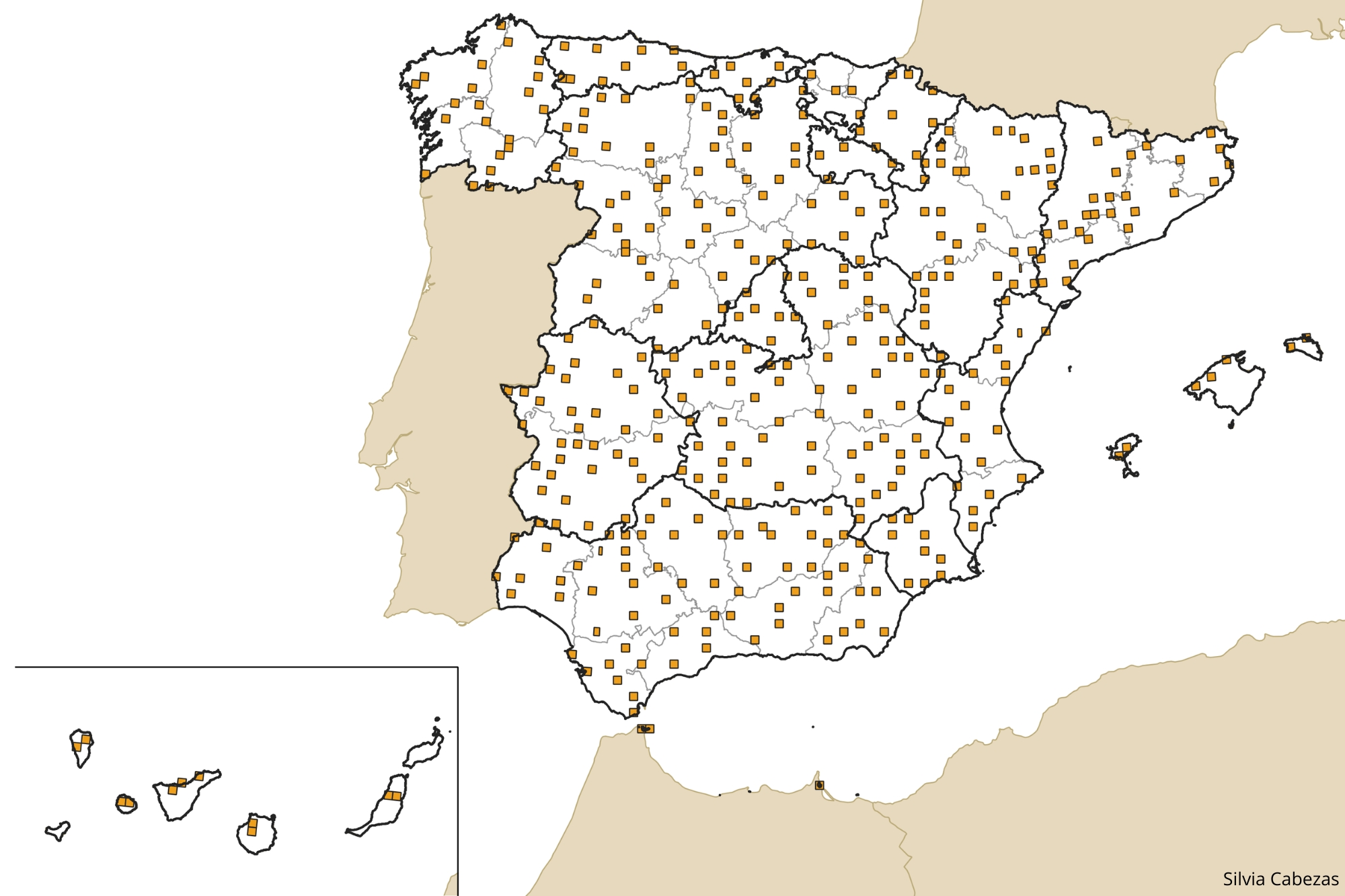
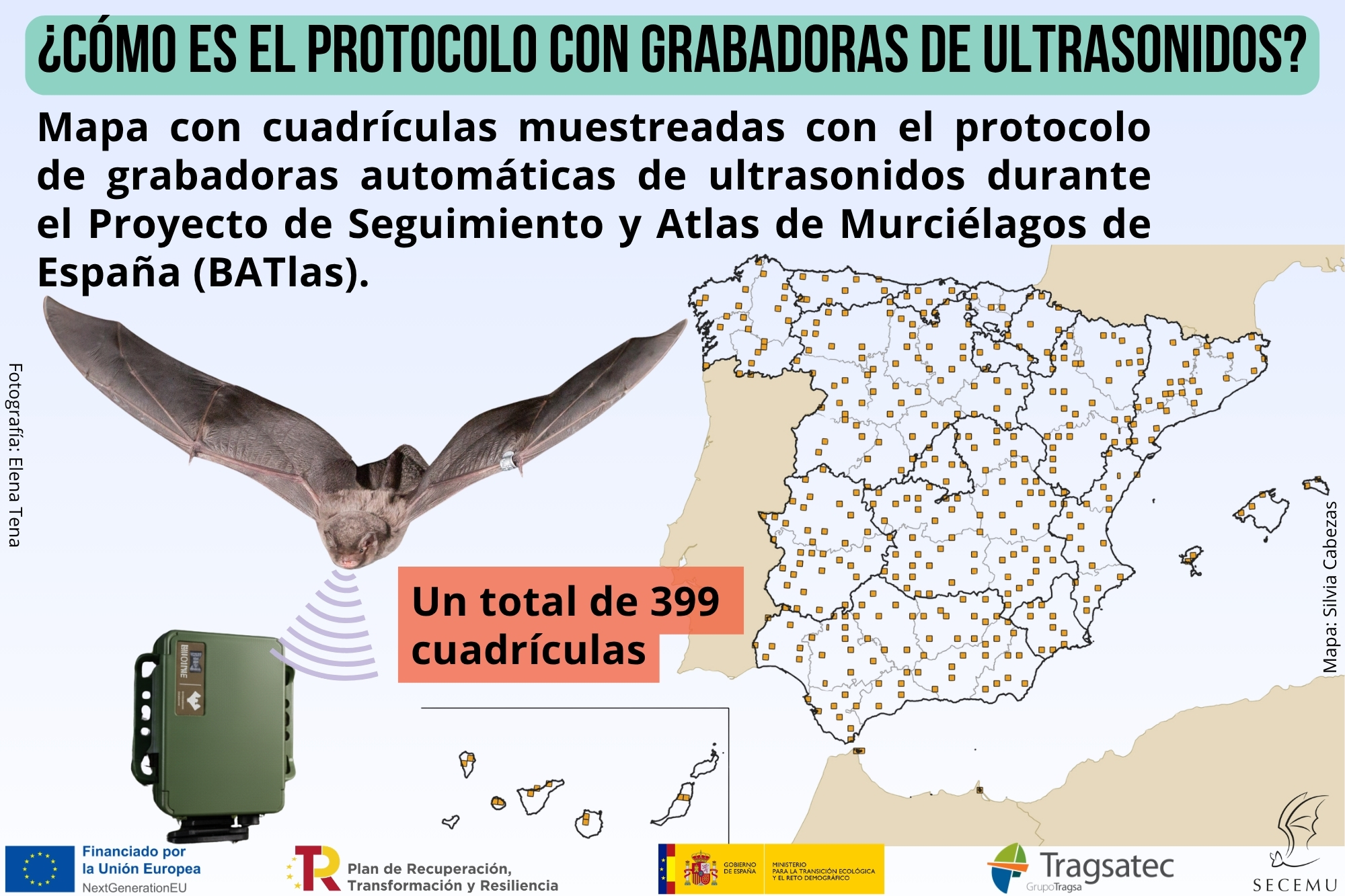
To ensure even national coverage, adjacent grid squares and those with a strong urban or marine presence were excluded, with effort spread evenly inside and outside the Natura 2000 network. The recordings went through automatic identification, manual analysis by bioacoustics specialists and later validation by regional experts to adjust the data for geographical variation. In total, 399 grid squares were sampled on the mainland, the Balearic Islands, Ceuta and Melilla, following the detailed protocol on the SECEMU website (2023).
Video on the recorder protocol.
3. Results
Following intensive fieldwork with bats under the Bat Monitoring and Atlas Project of Spain, and the compilation of data from recent years, a huge amount of information has been gathered covering hundreds of UTM 10×10 grid squares in Spain (including the islands).
This effort translates into:
Roosts: 173 roosts sampled, covering 128 grid squares.
Captures: 259 capture points, covering 240 grid squares.
Ultrasound recorders: 399 grid squares sampled.
Other results:
In addition to this valuable data collection, other project results include:
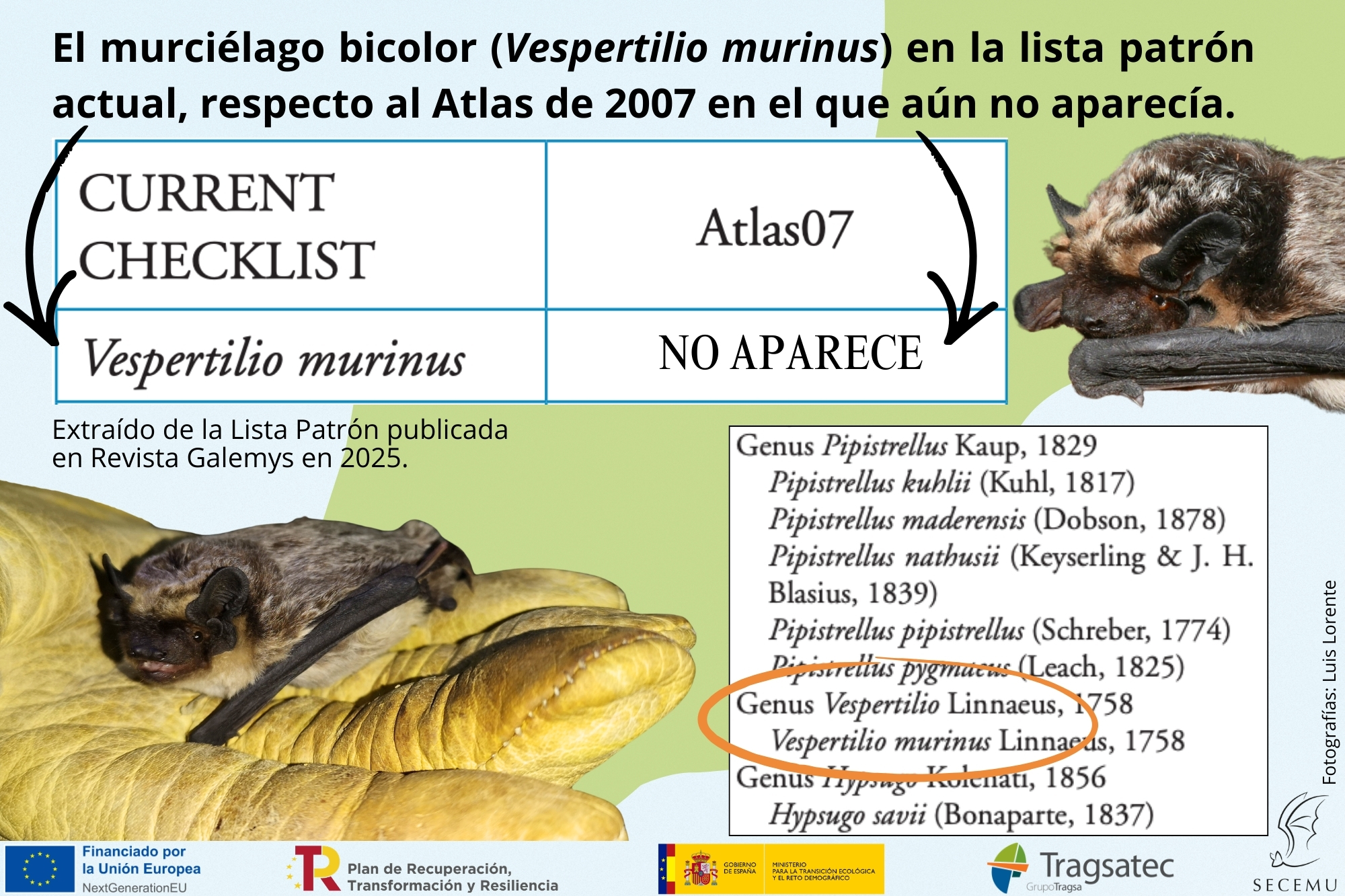
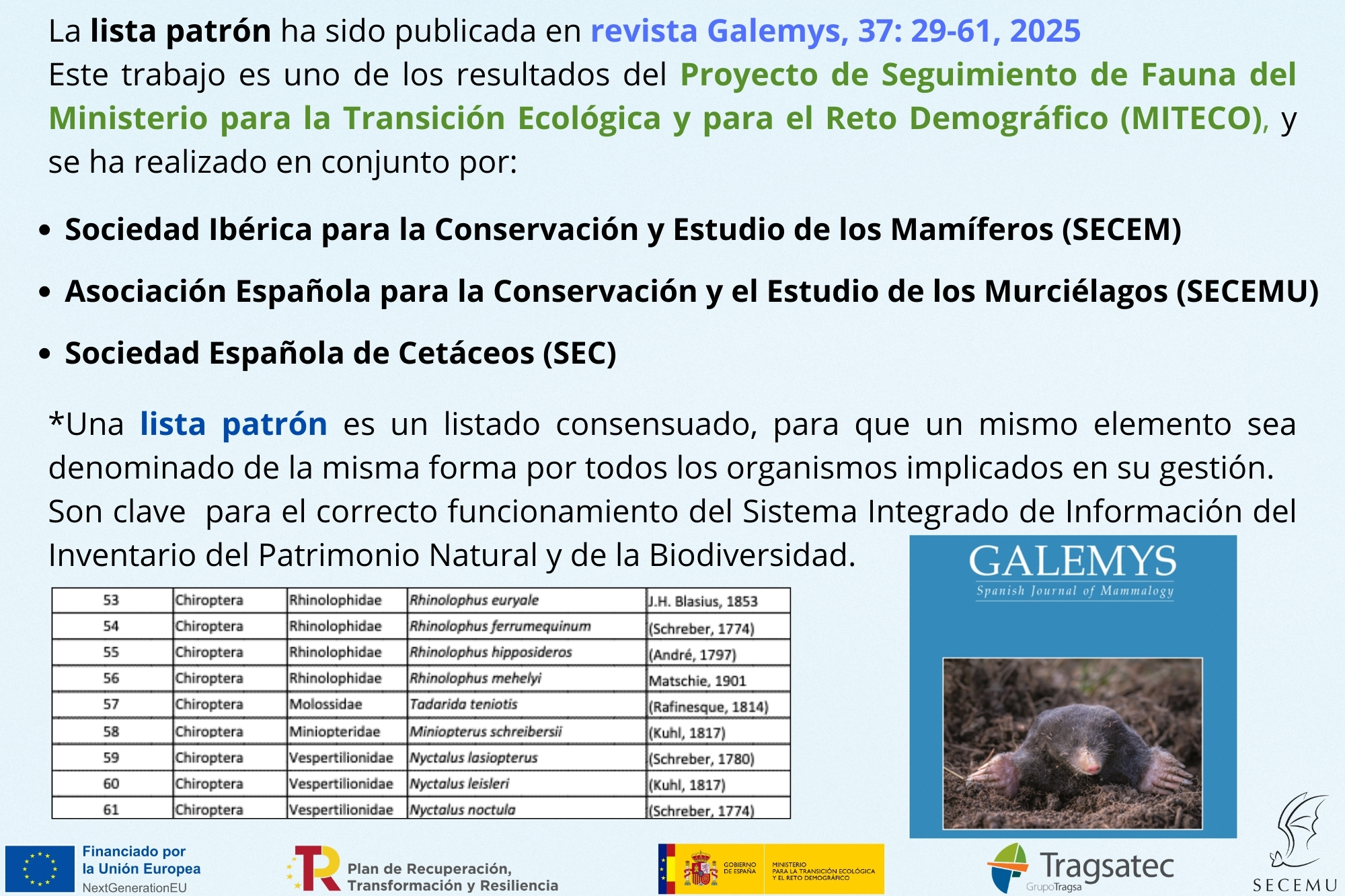
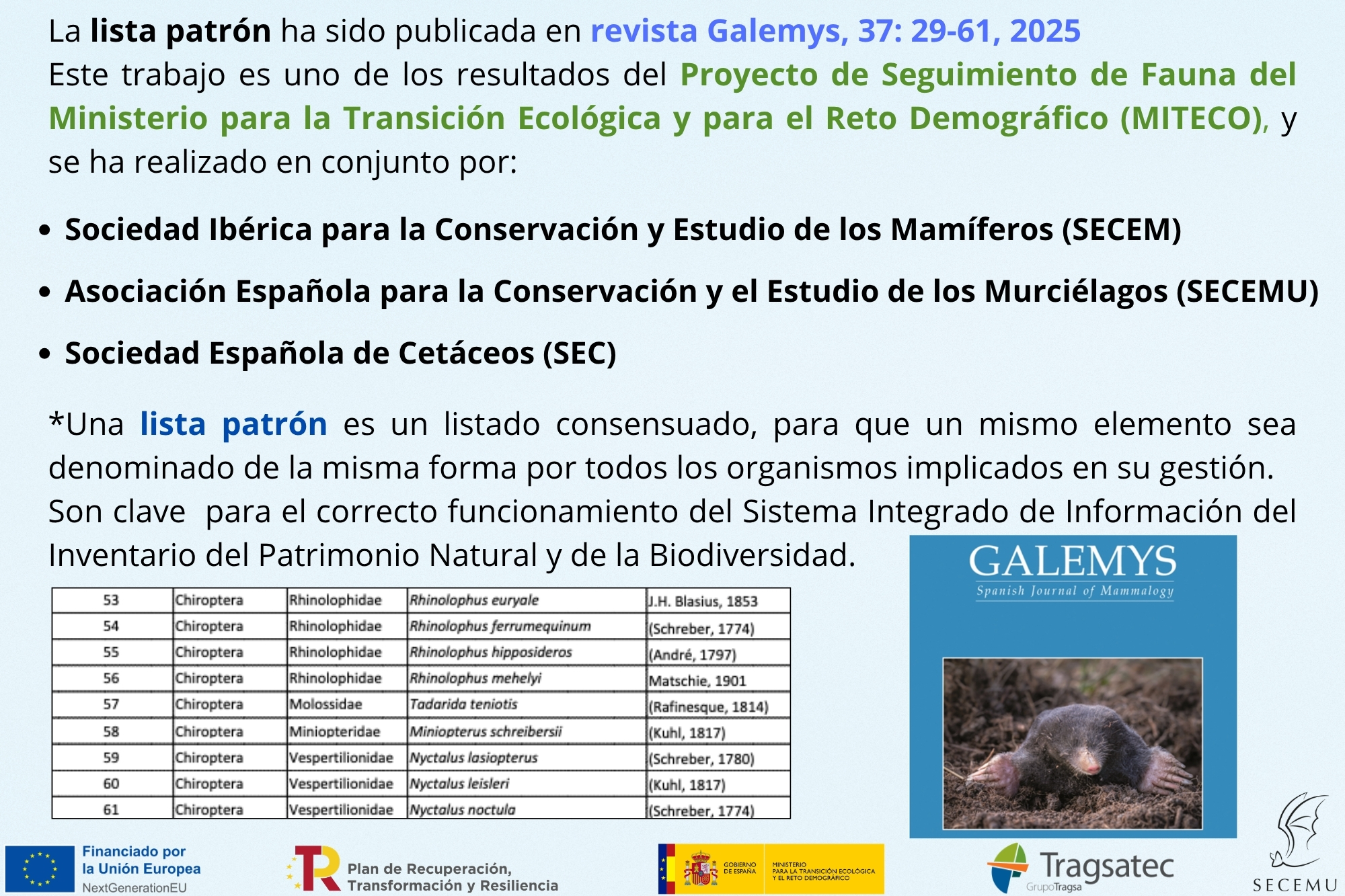
Update of the Standard List of the Mammals of Spain (2025)
An update was needed, as the previous standard list had been published in 2017, and the new one brings together many important changes.
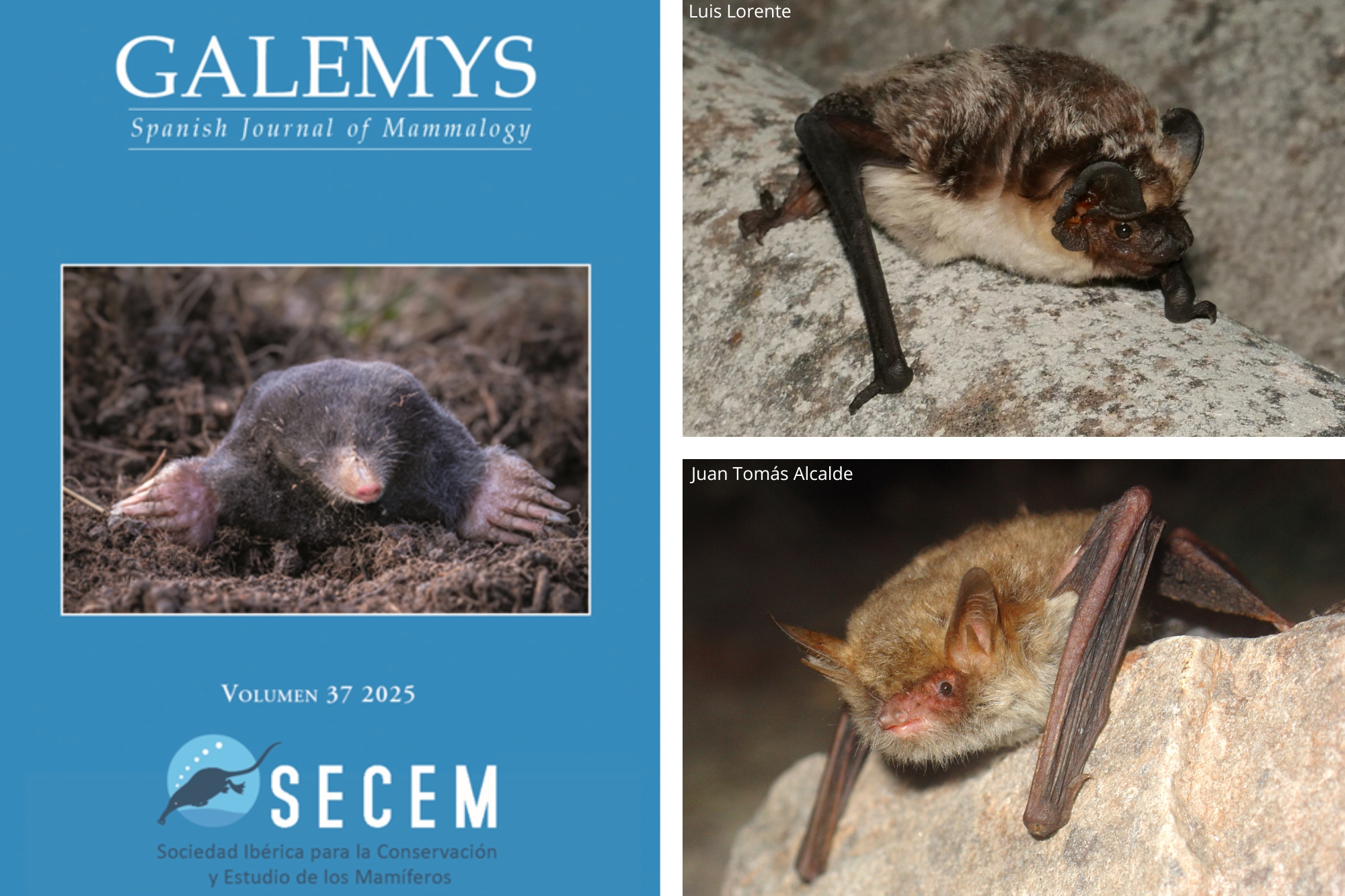
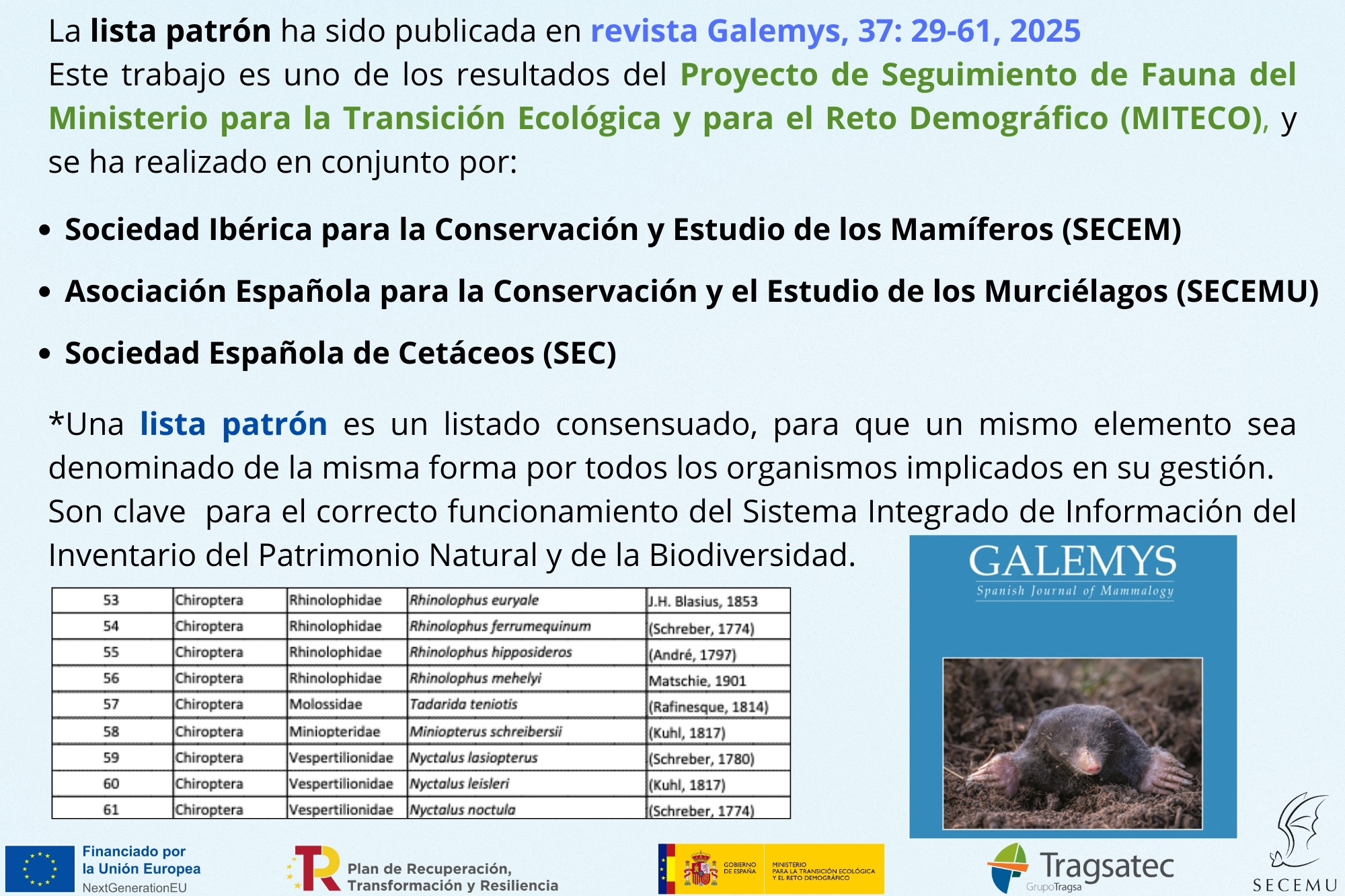
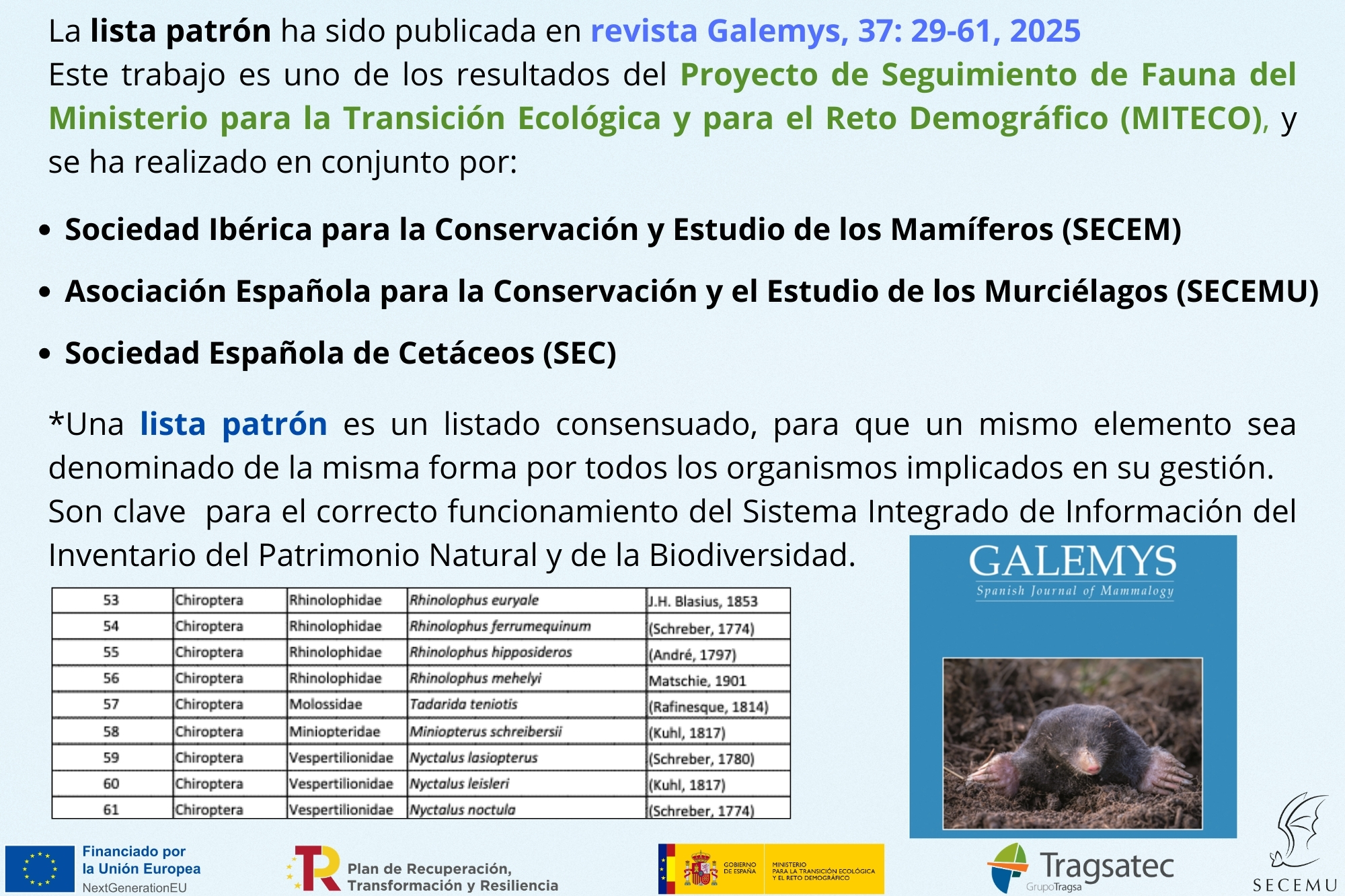
The current standard list has been published in the journal Galemys, 37: 29-61, 2025, and is one of the outputs of the Wildlife Monitoring Project of the Ministry for the Ecological Transition and the Demographic Challenge (MITECO), carried out jointly by the Iberian Society for the Conservation and Study of Mammals (SECEM), the Spanish Association for the Conservation and Research of Bats (SECEMU) and the Spanish Cetacean Society (SEC).
The changes in this list that affect bats are as follows:
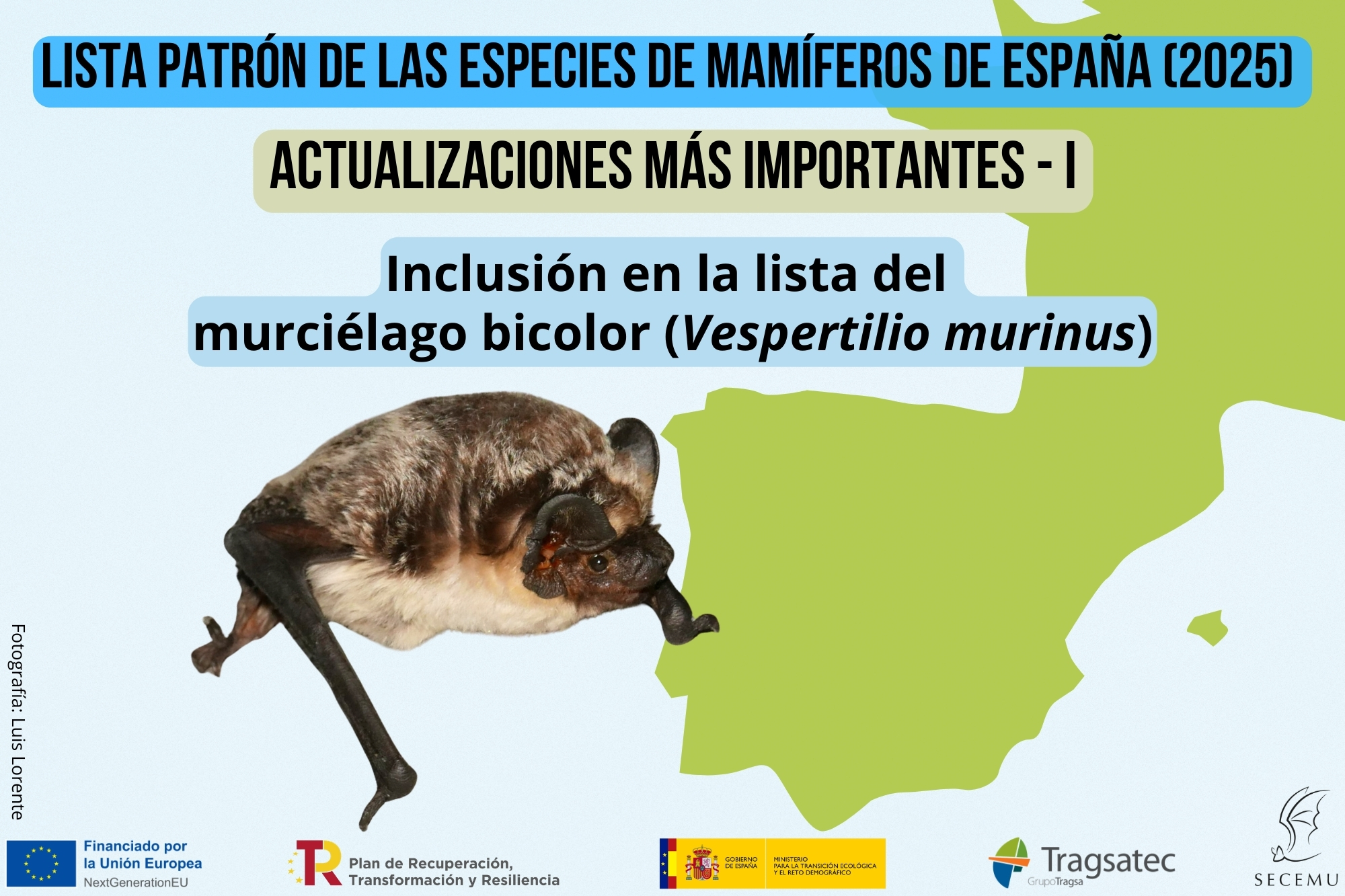
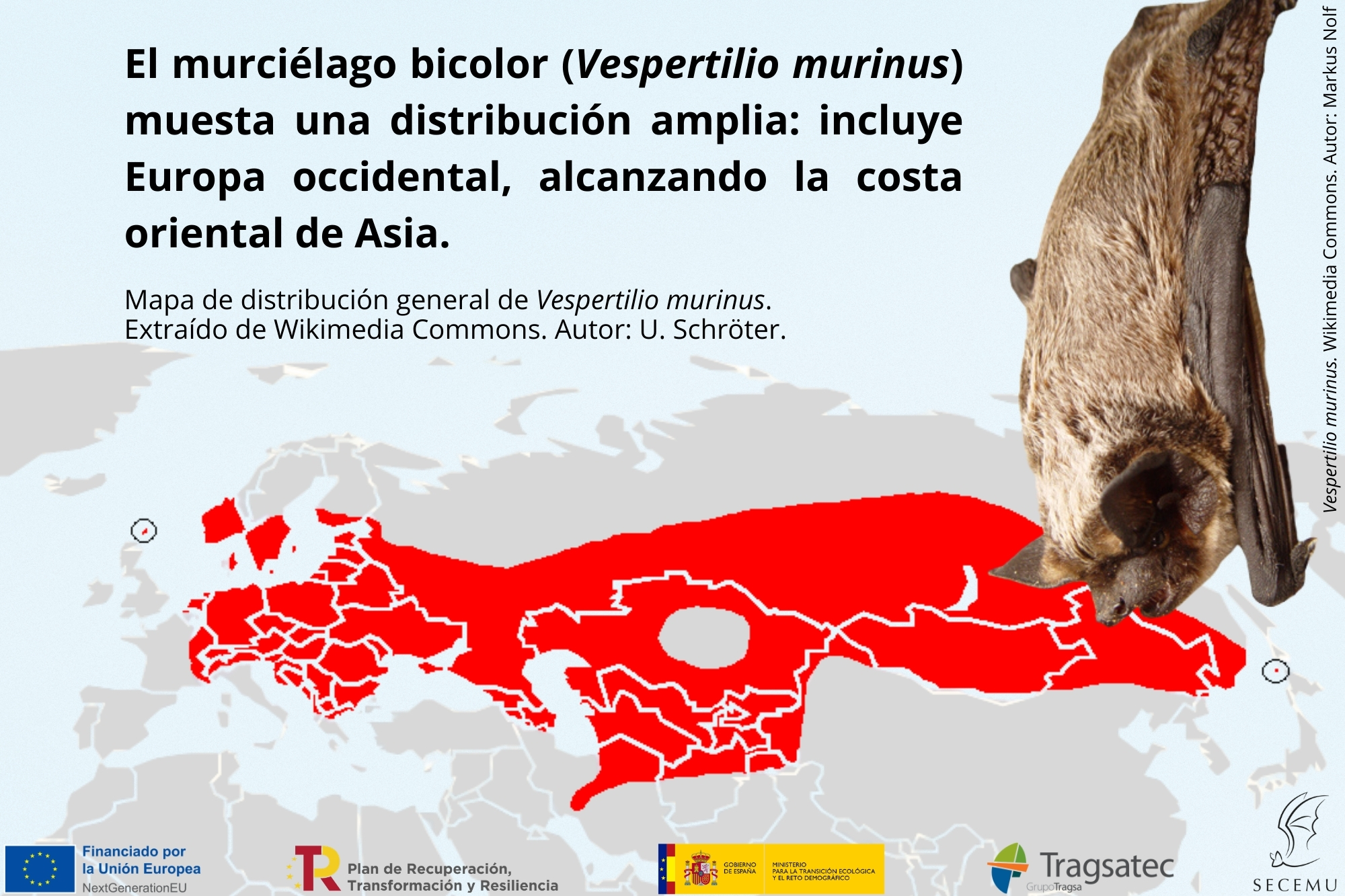
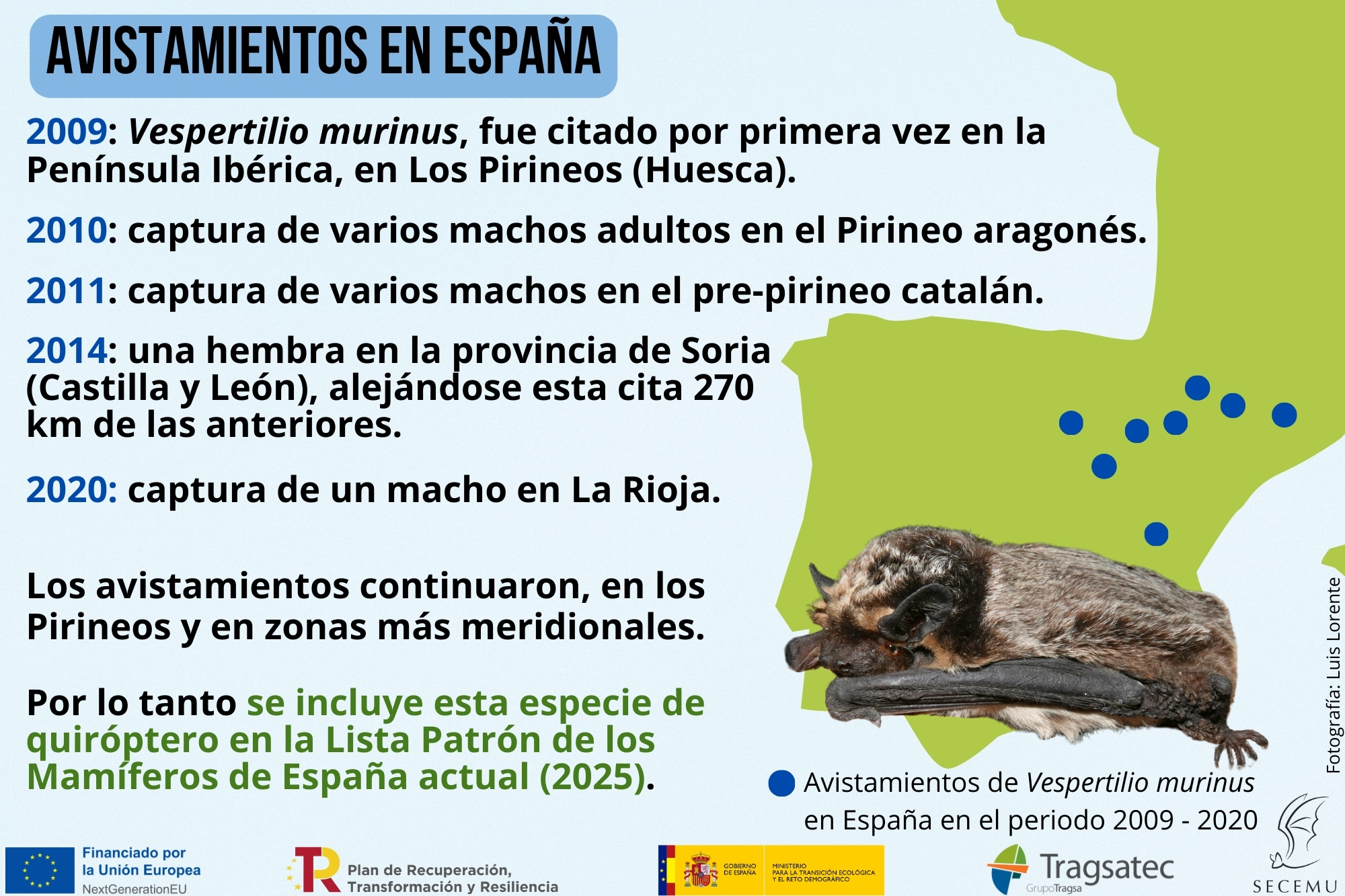
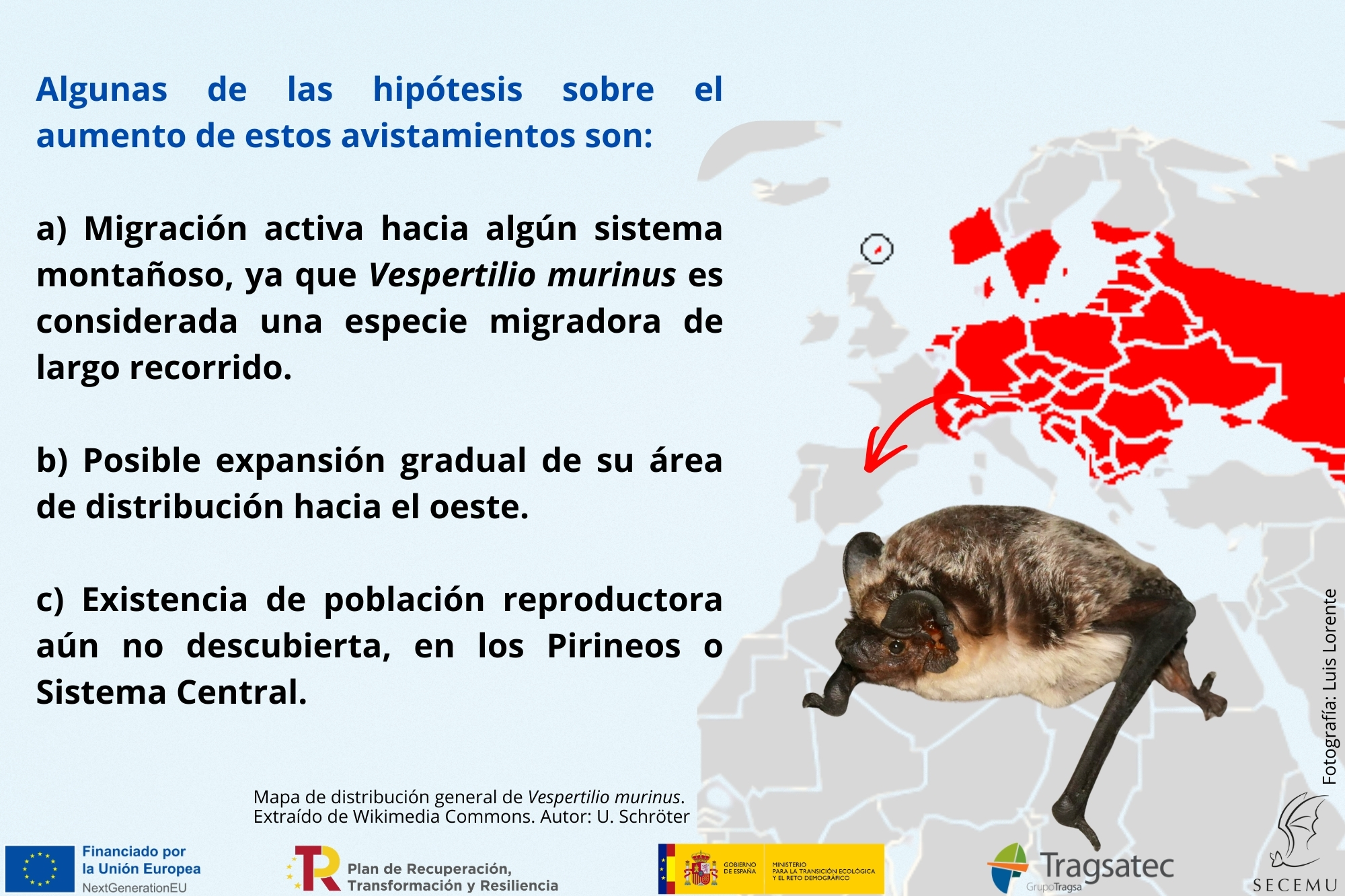
– Inclusion in the standard list of a new bat species for Spain: the parti-coloured bat (Vespertilio murinus)
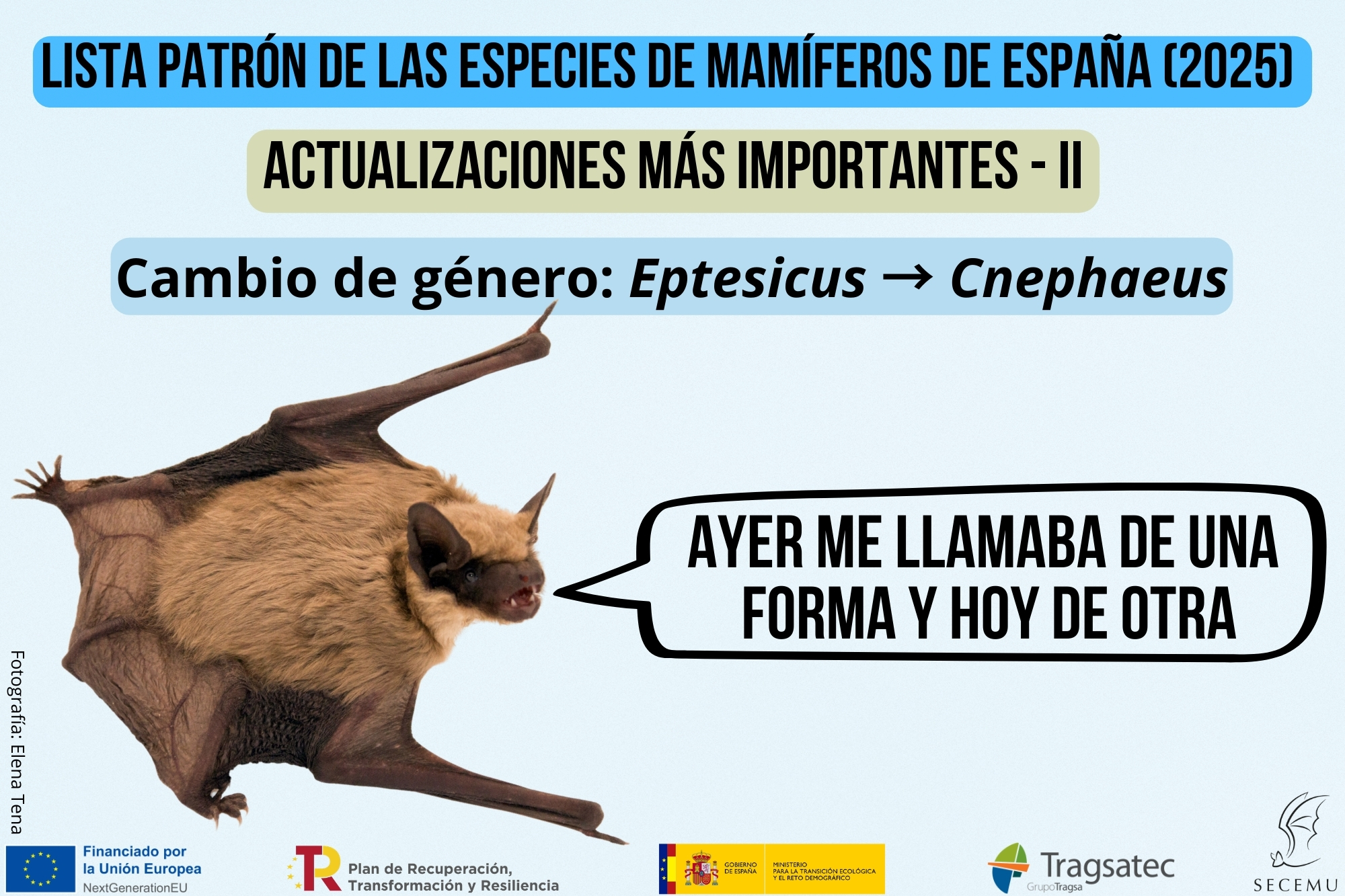
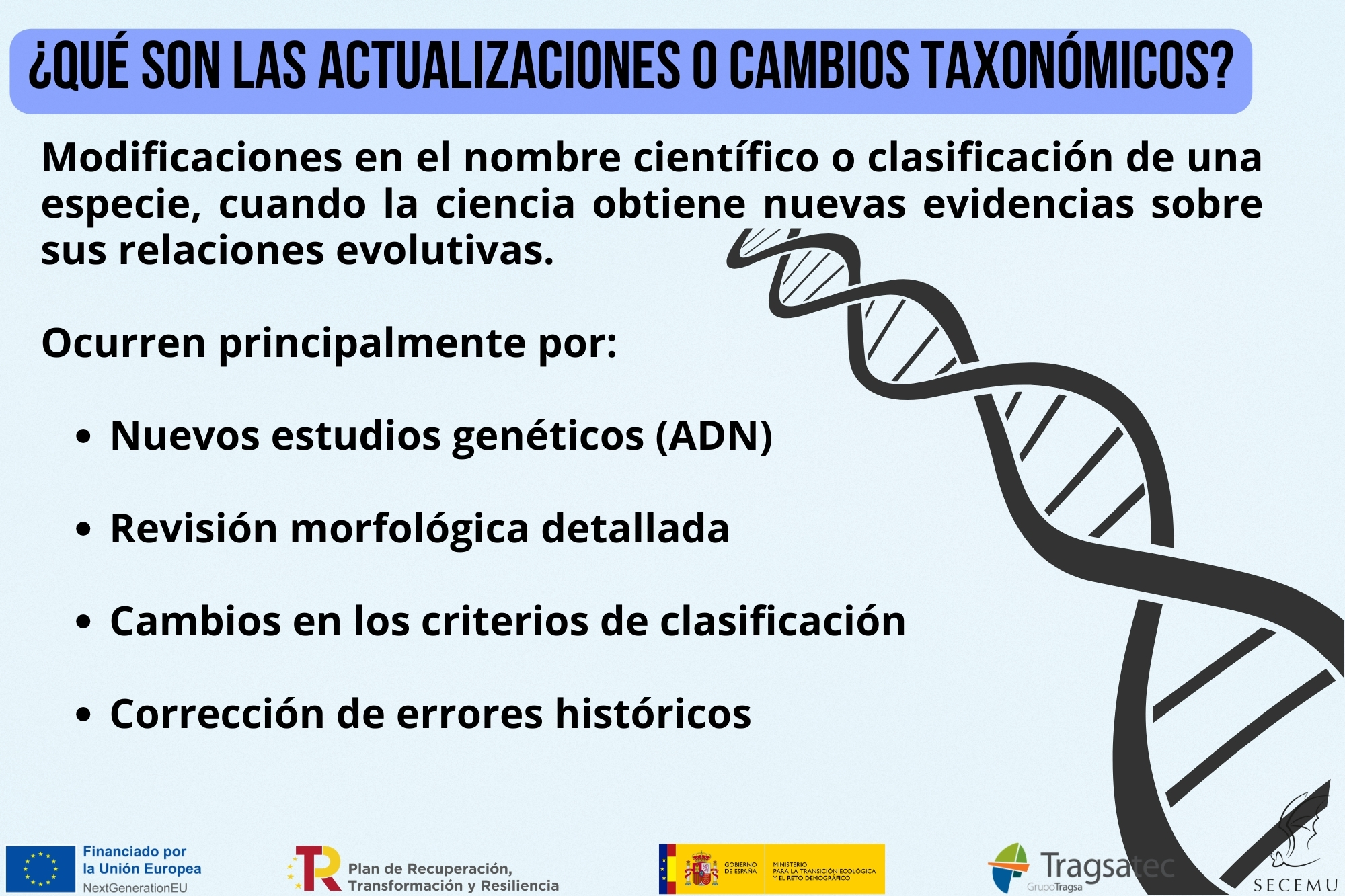
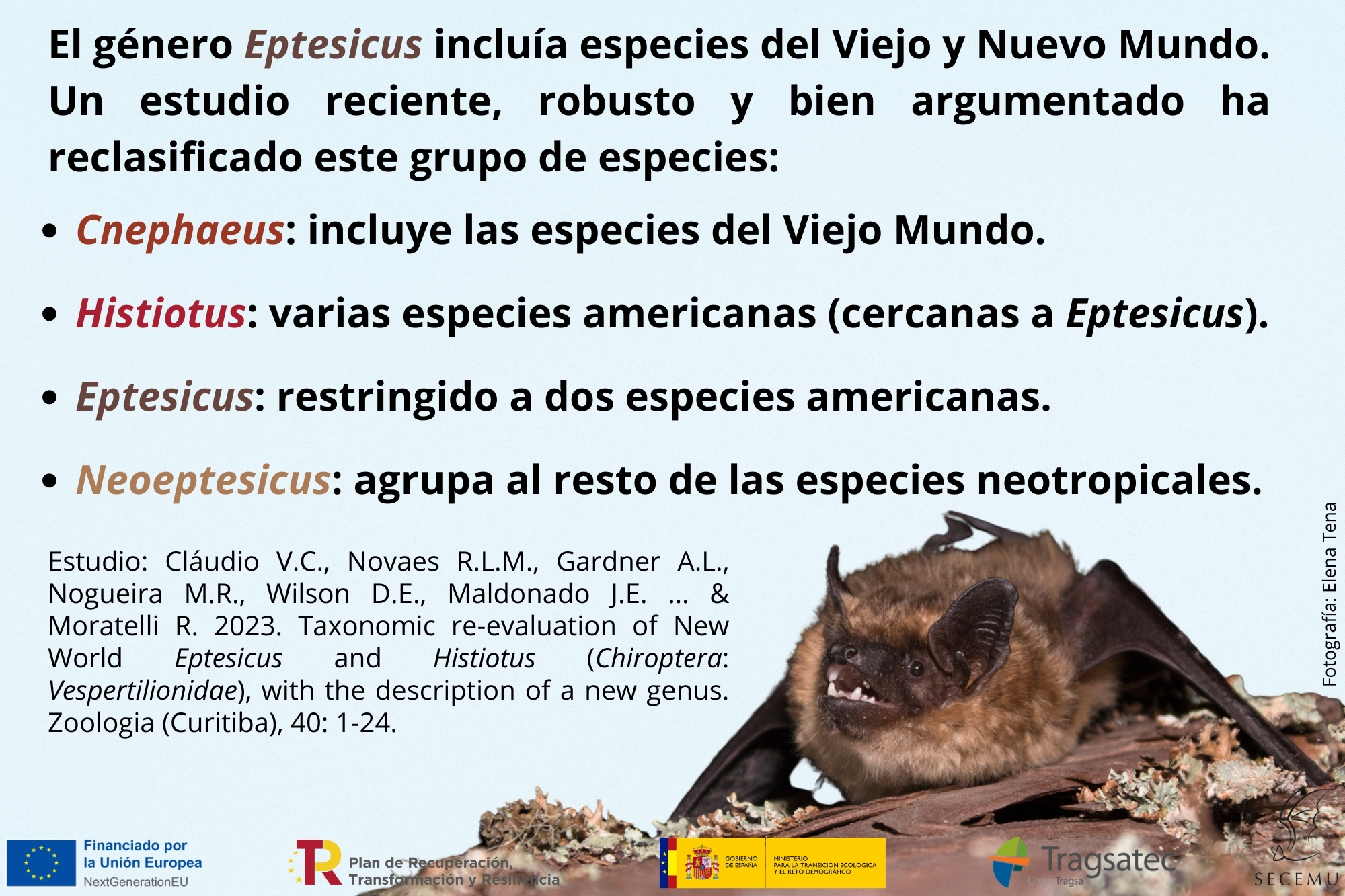
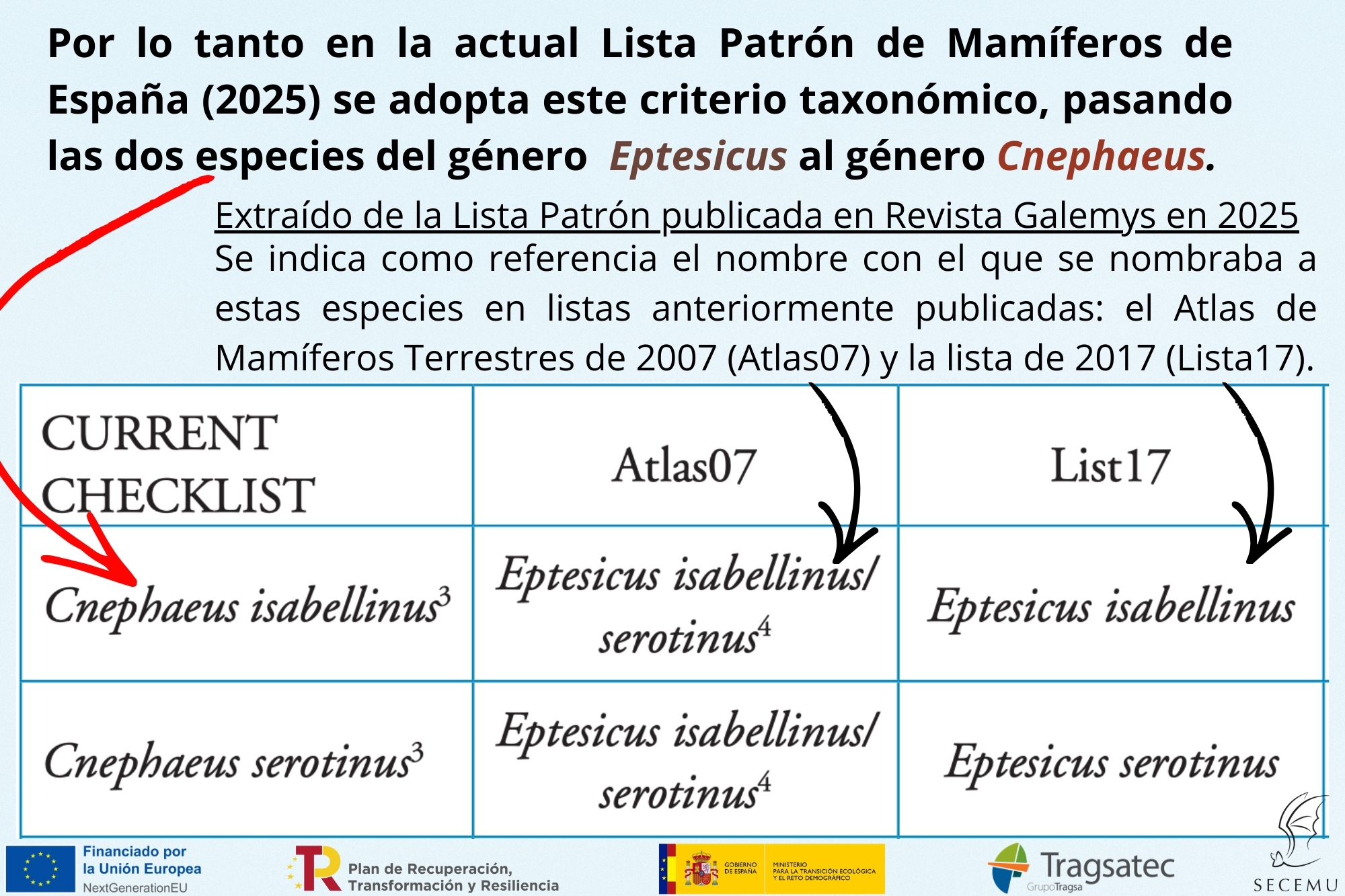
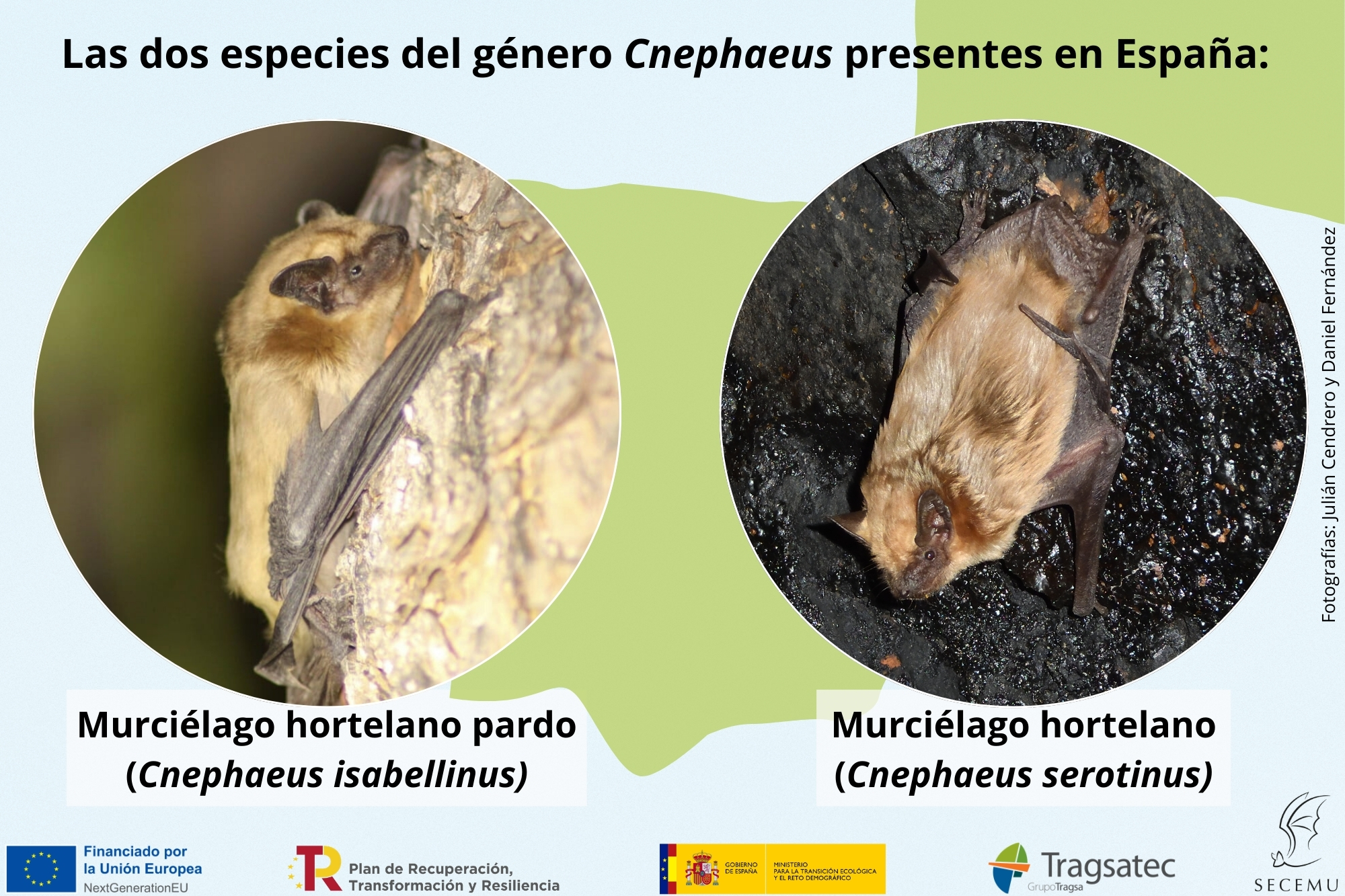
– Change of genus for serotine bats, based on robust studies, from the genus Eptesicus to the genus Cnephaeus. As a result, the names of the species present in Spain are: Cnephaeus serotinus and C. isabellinus.
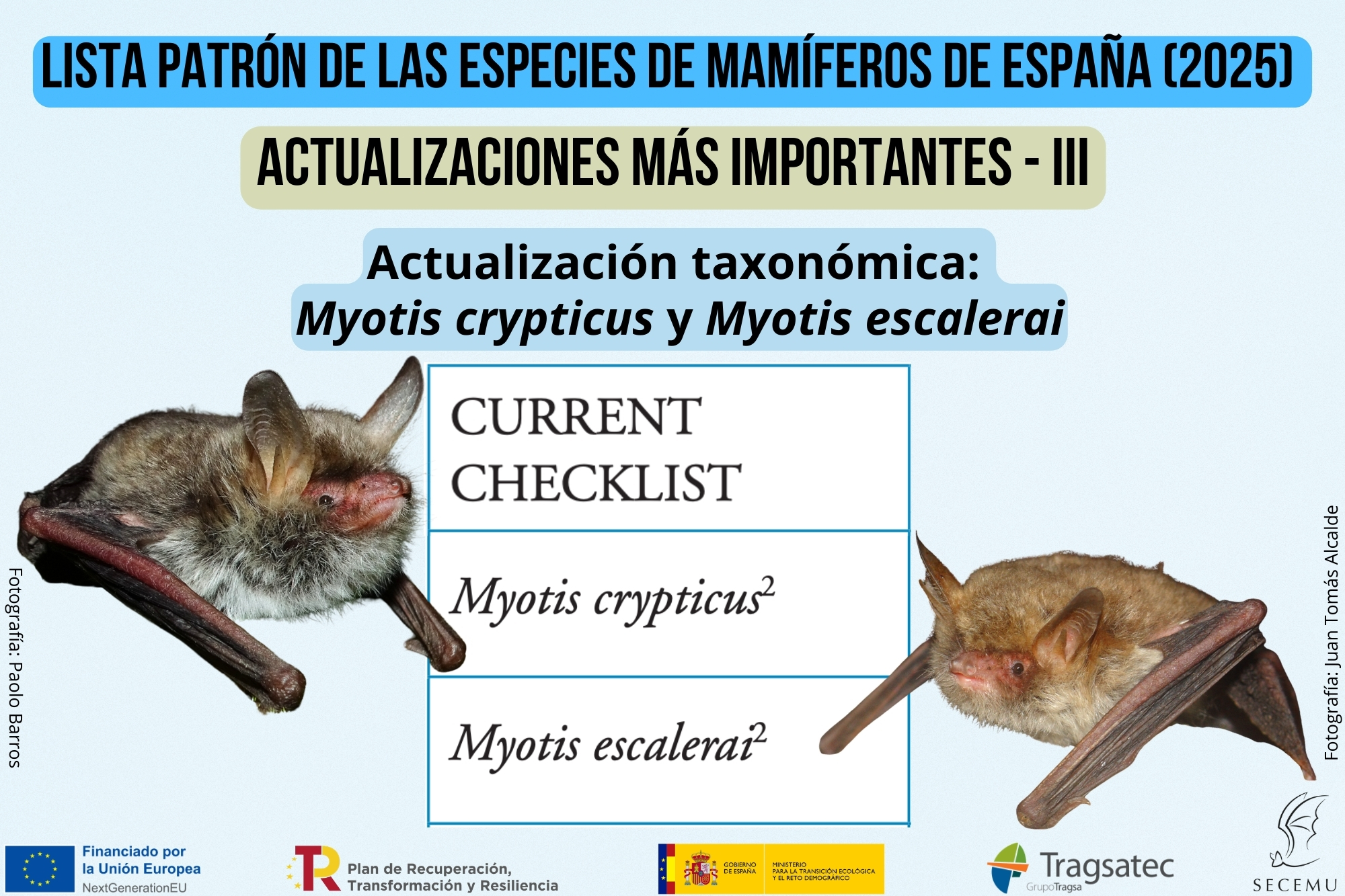
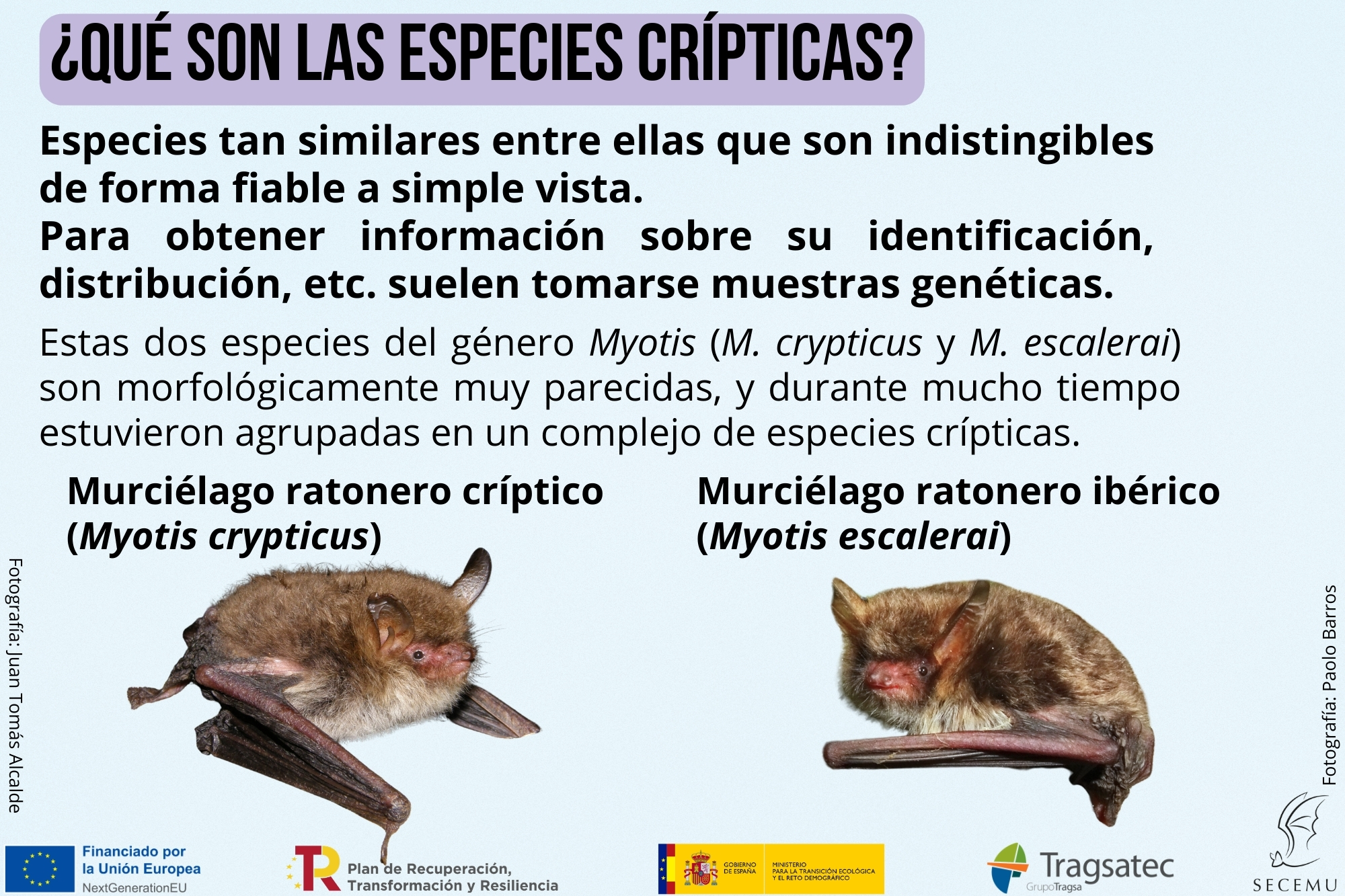
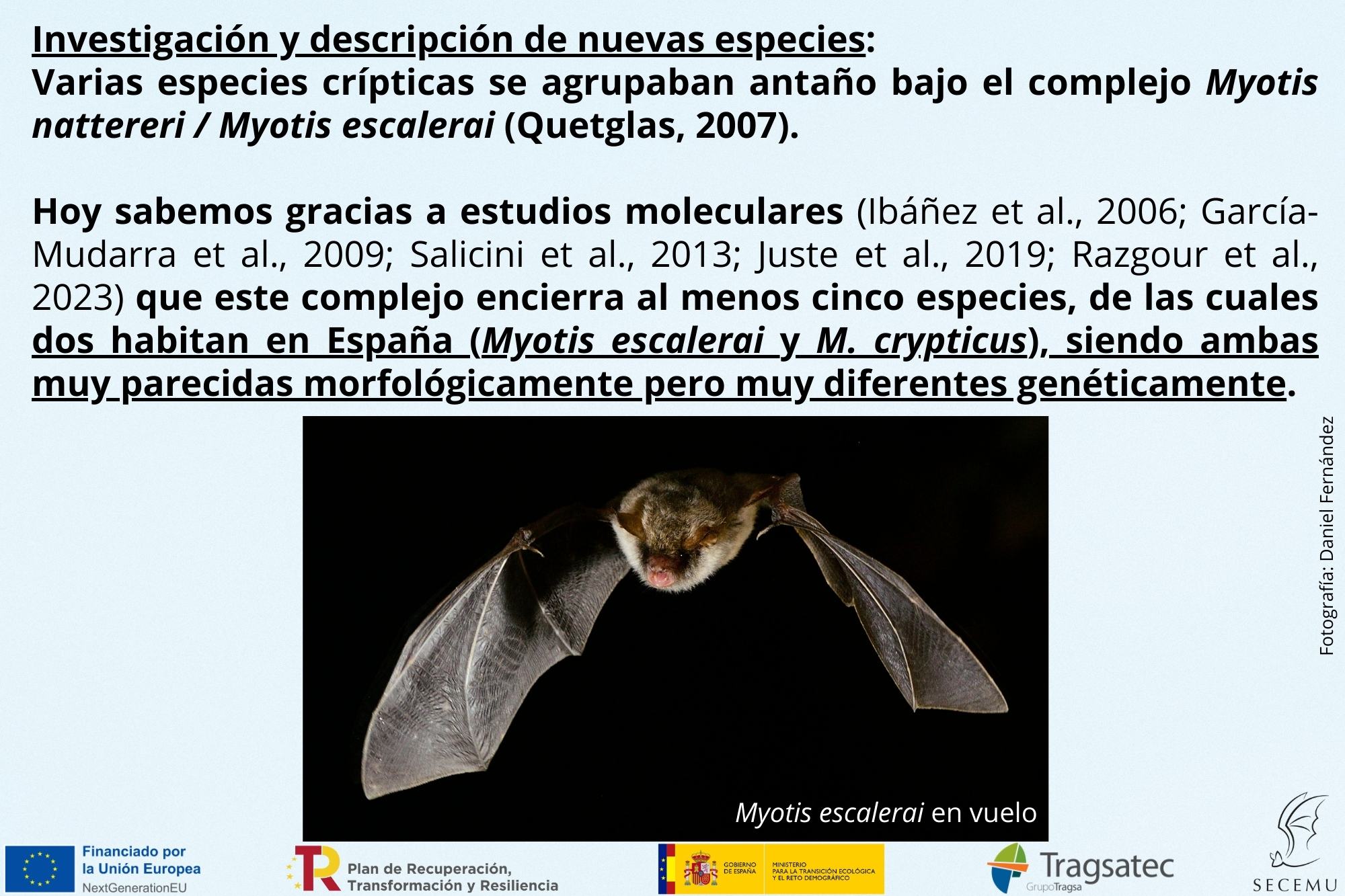
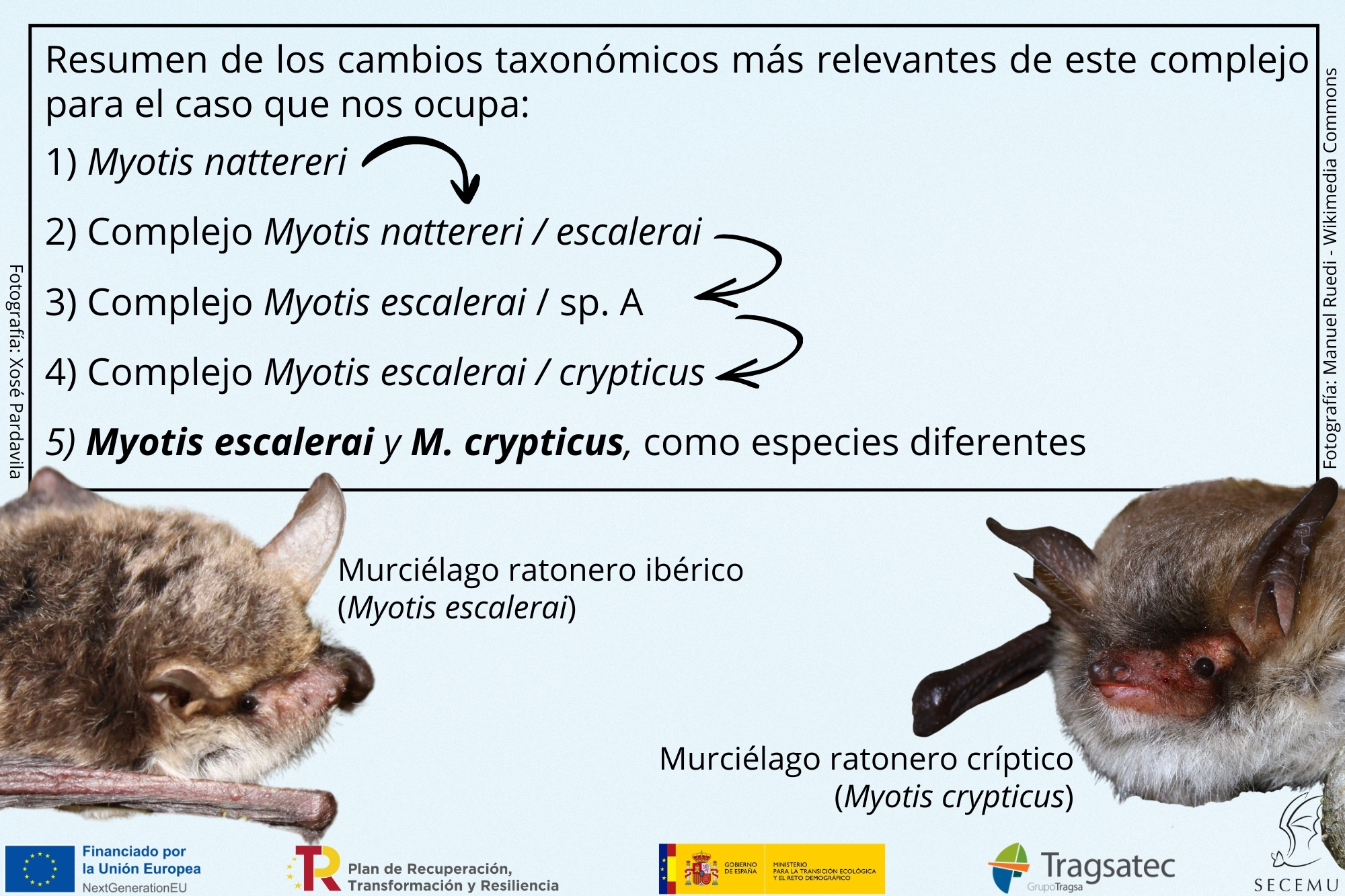
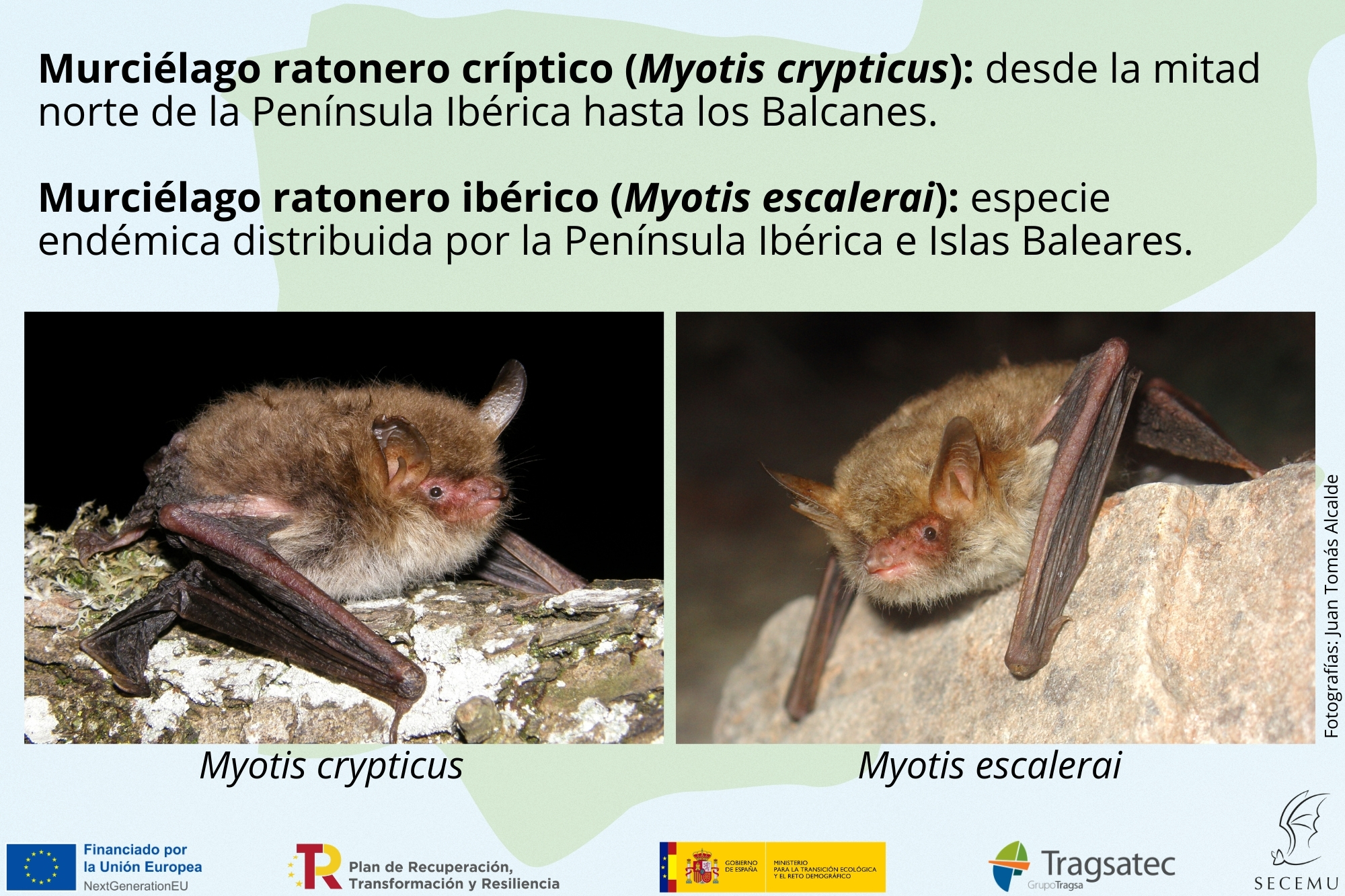
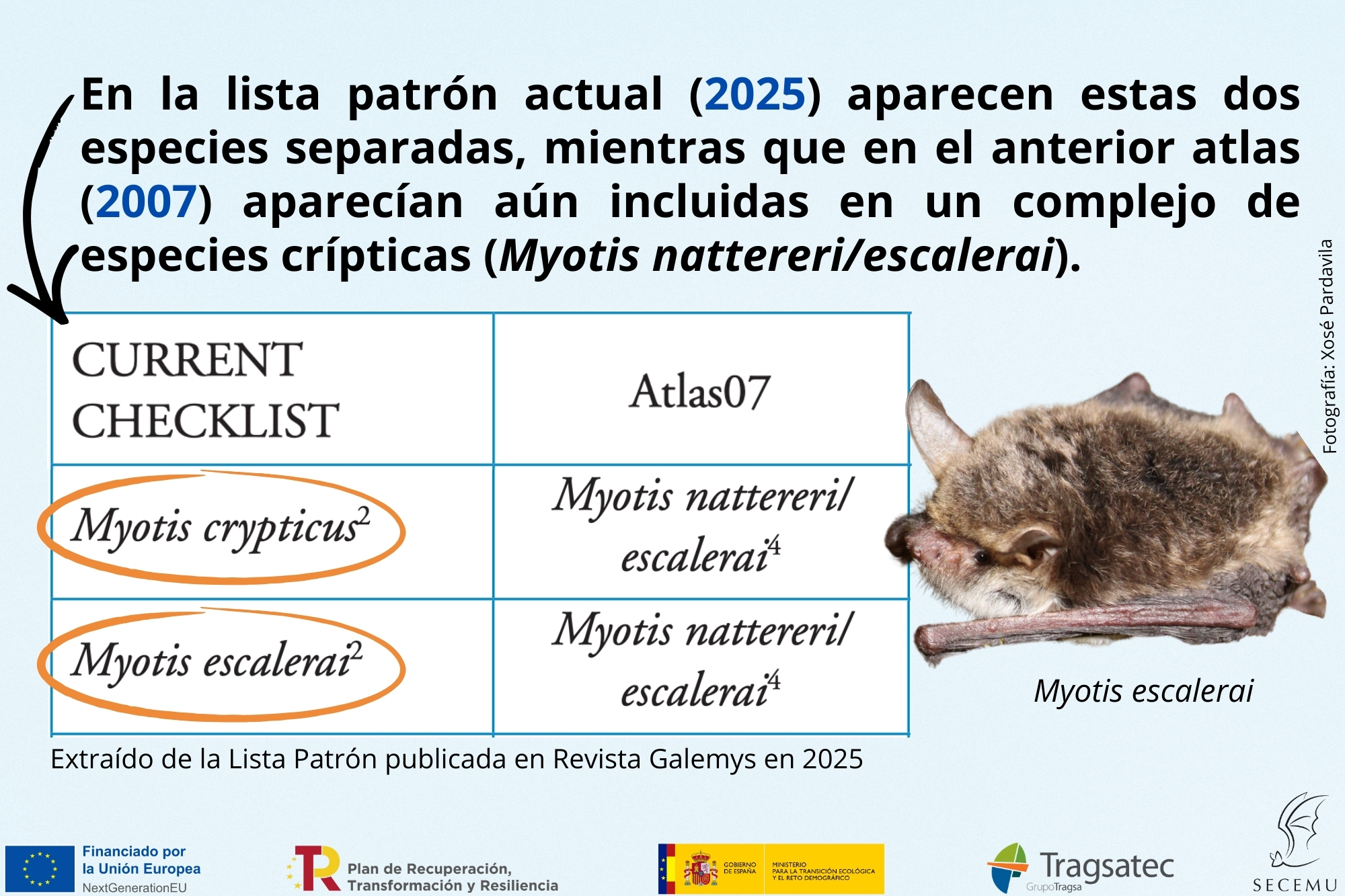
– Clarification of the two species living in Spain that were previously included in a cryptic complex: the cryptic myotis (Myotis crypticus) and Escalera’s bat (Myotis escalerai)
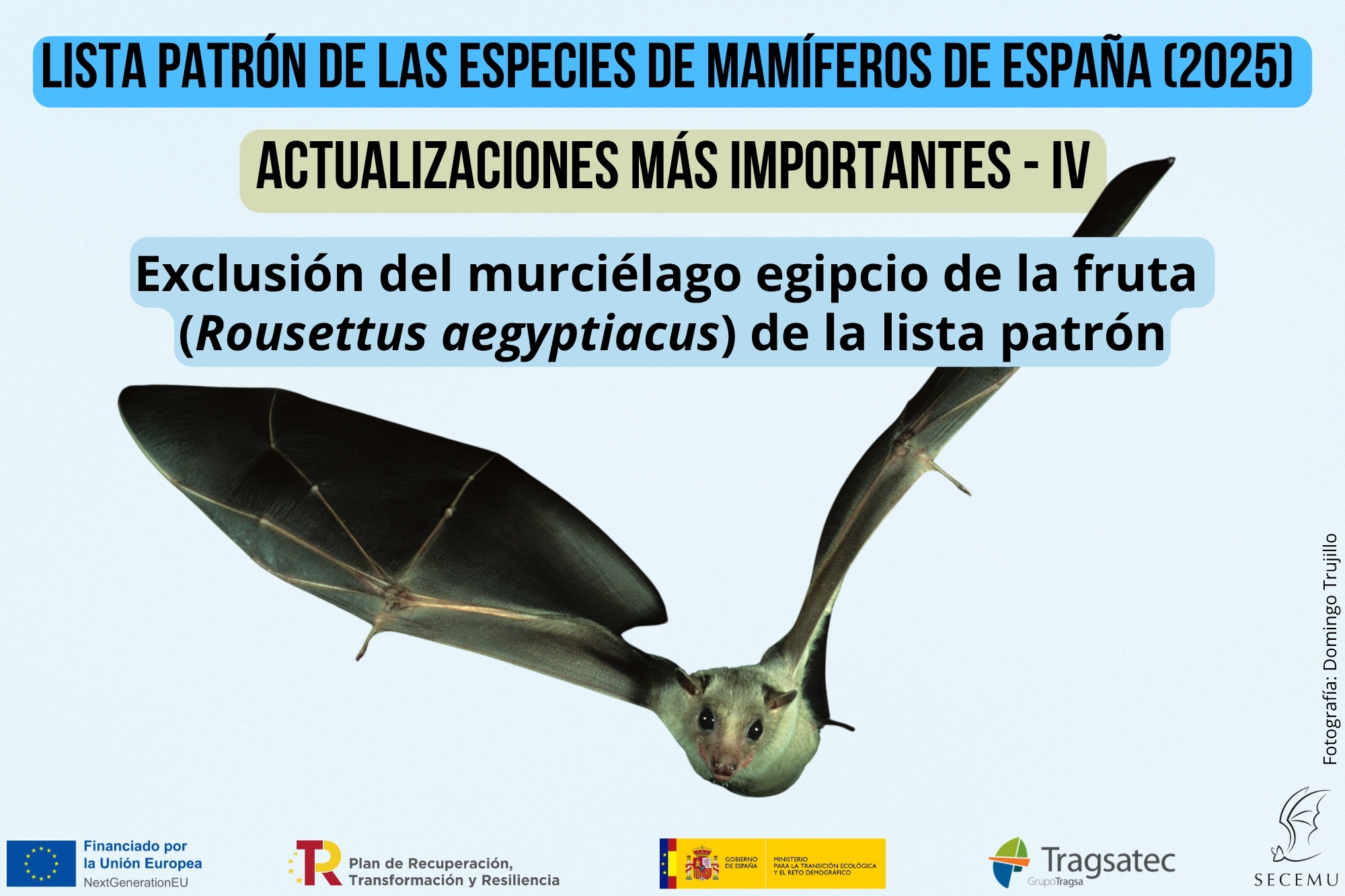
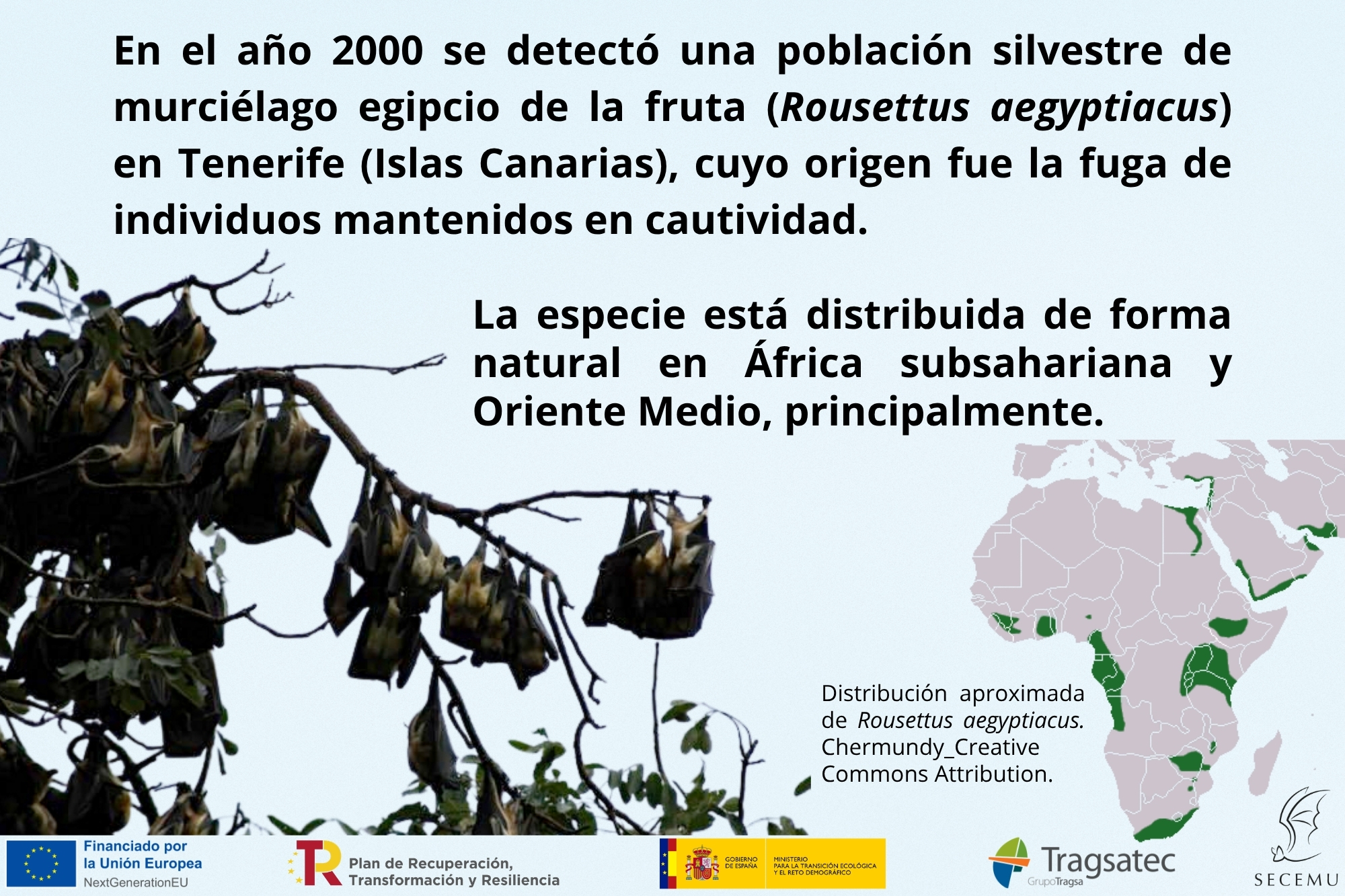
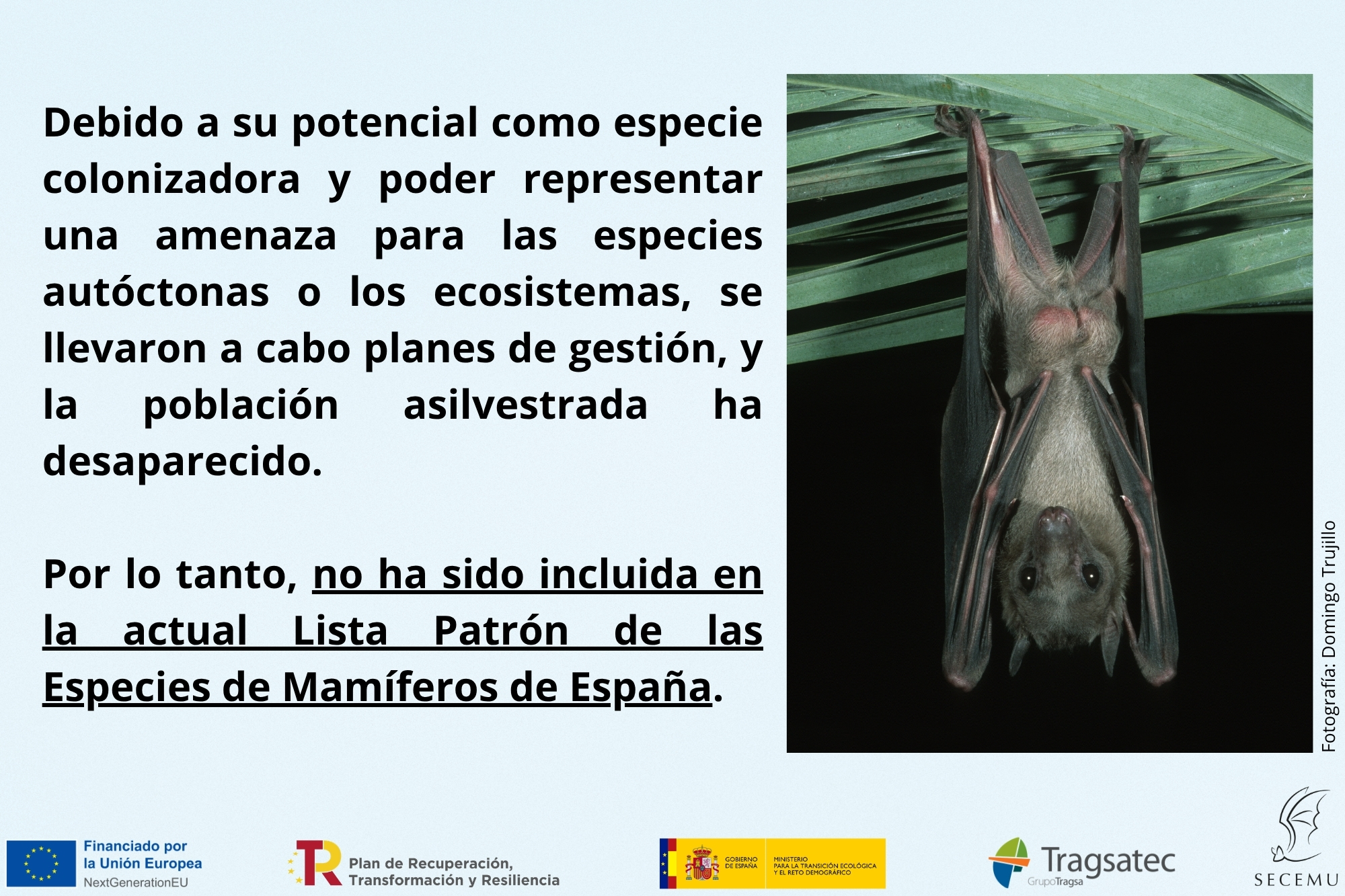
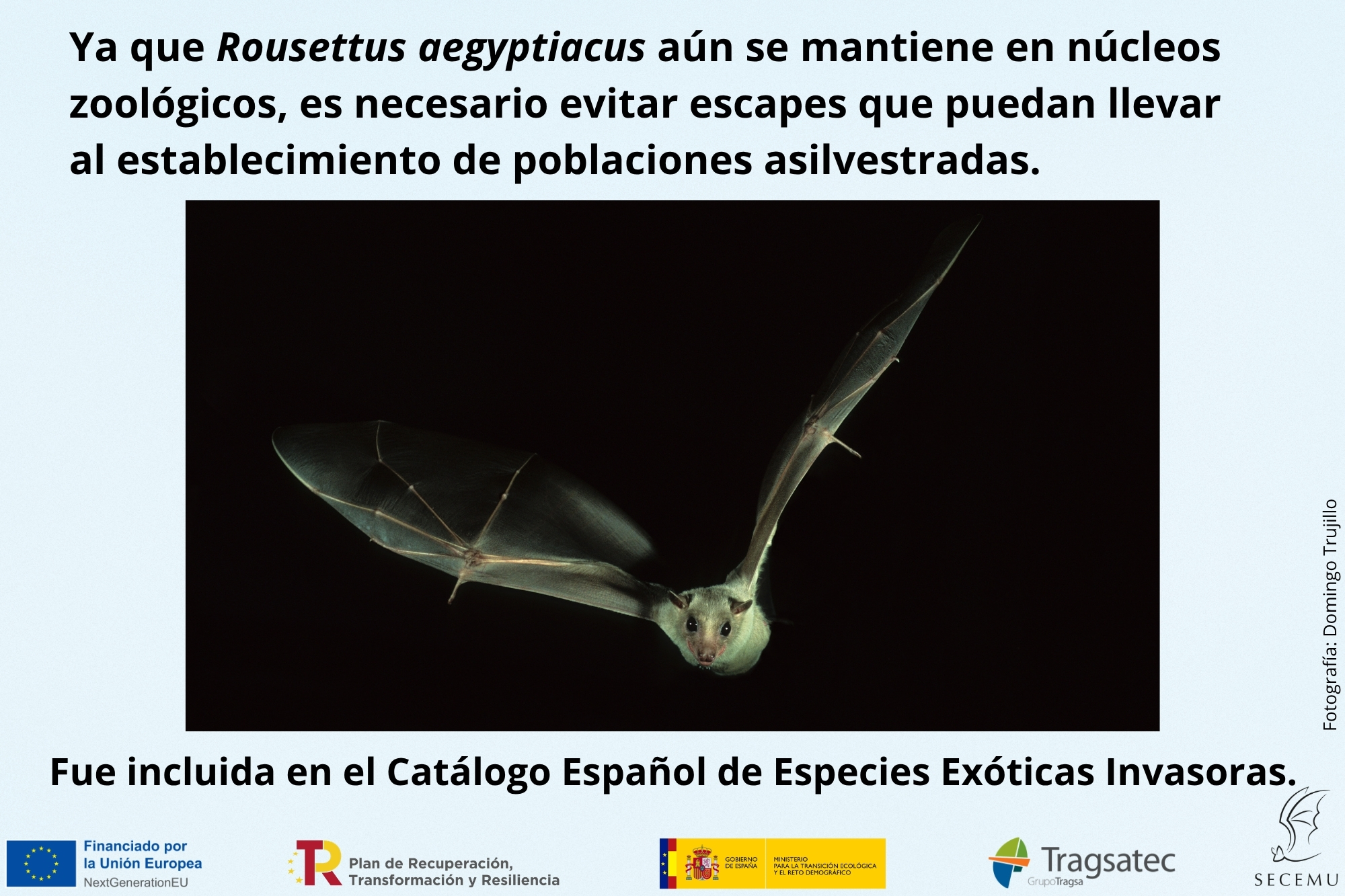
– Removal from the standard list of the Egyptian fruit bat (Roussetus aegyptiacus), as the colony established in the wild in Tenerife after captive individuals escaped no longer exists.
News and new findings
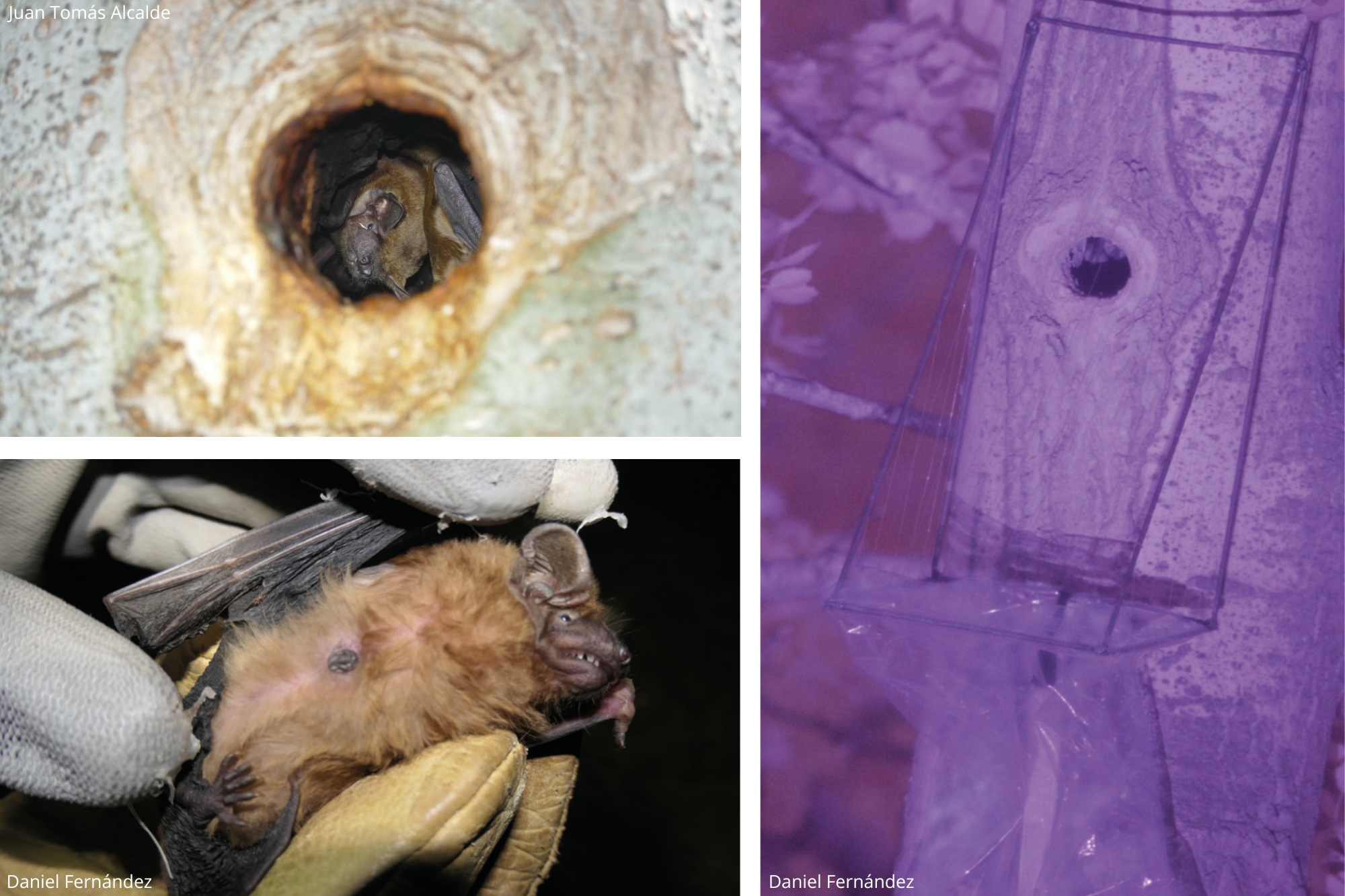
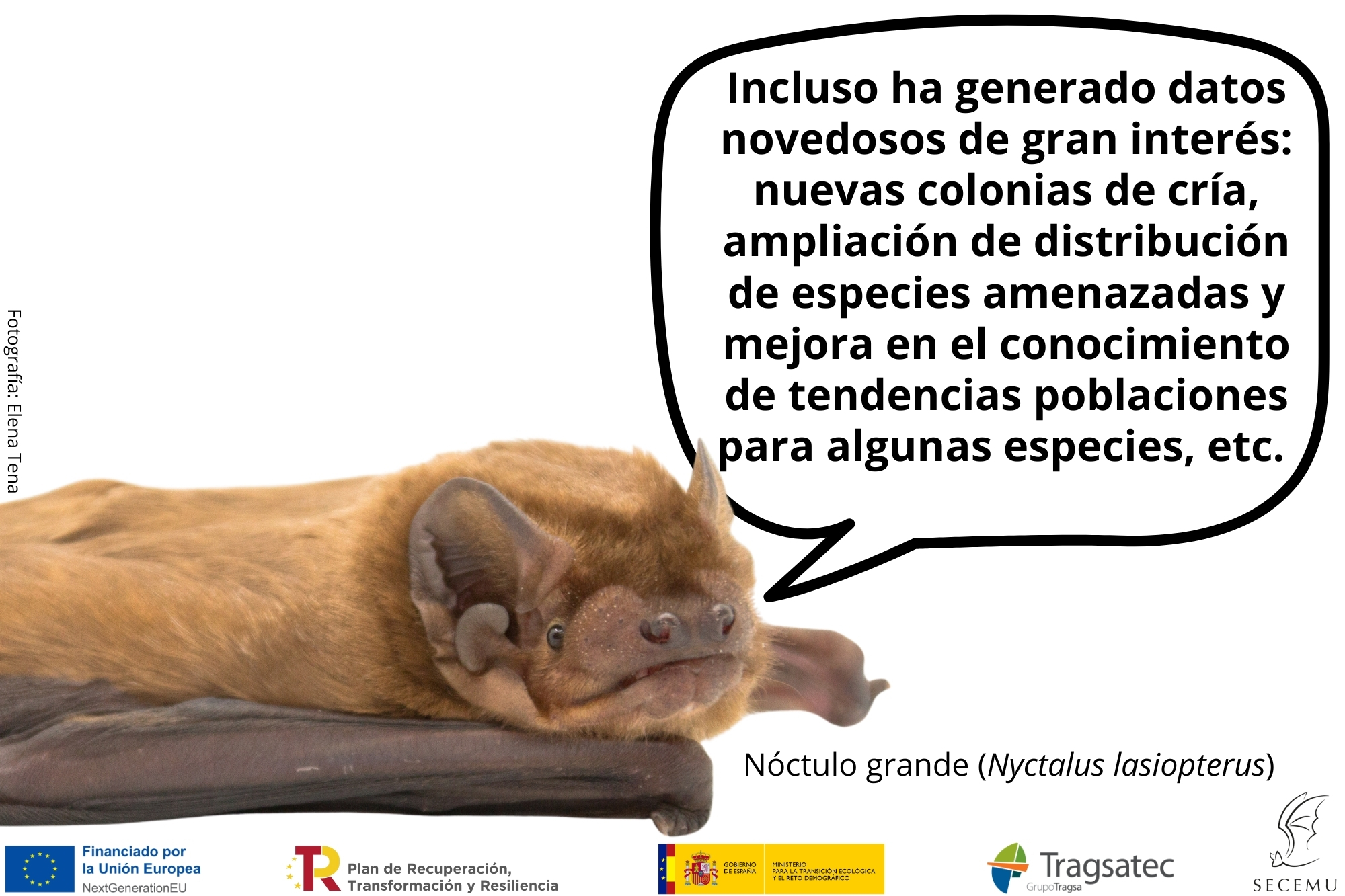
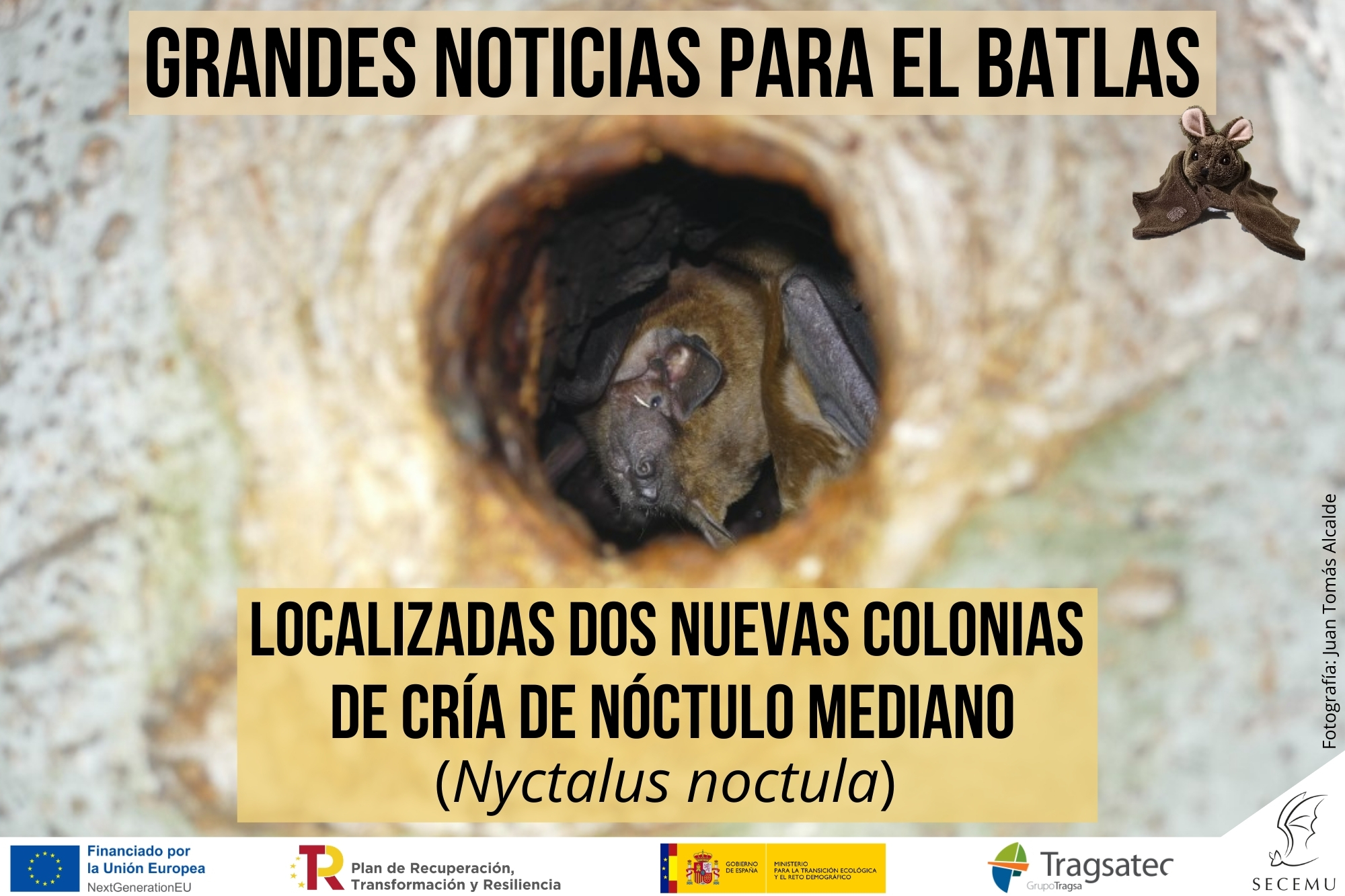
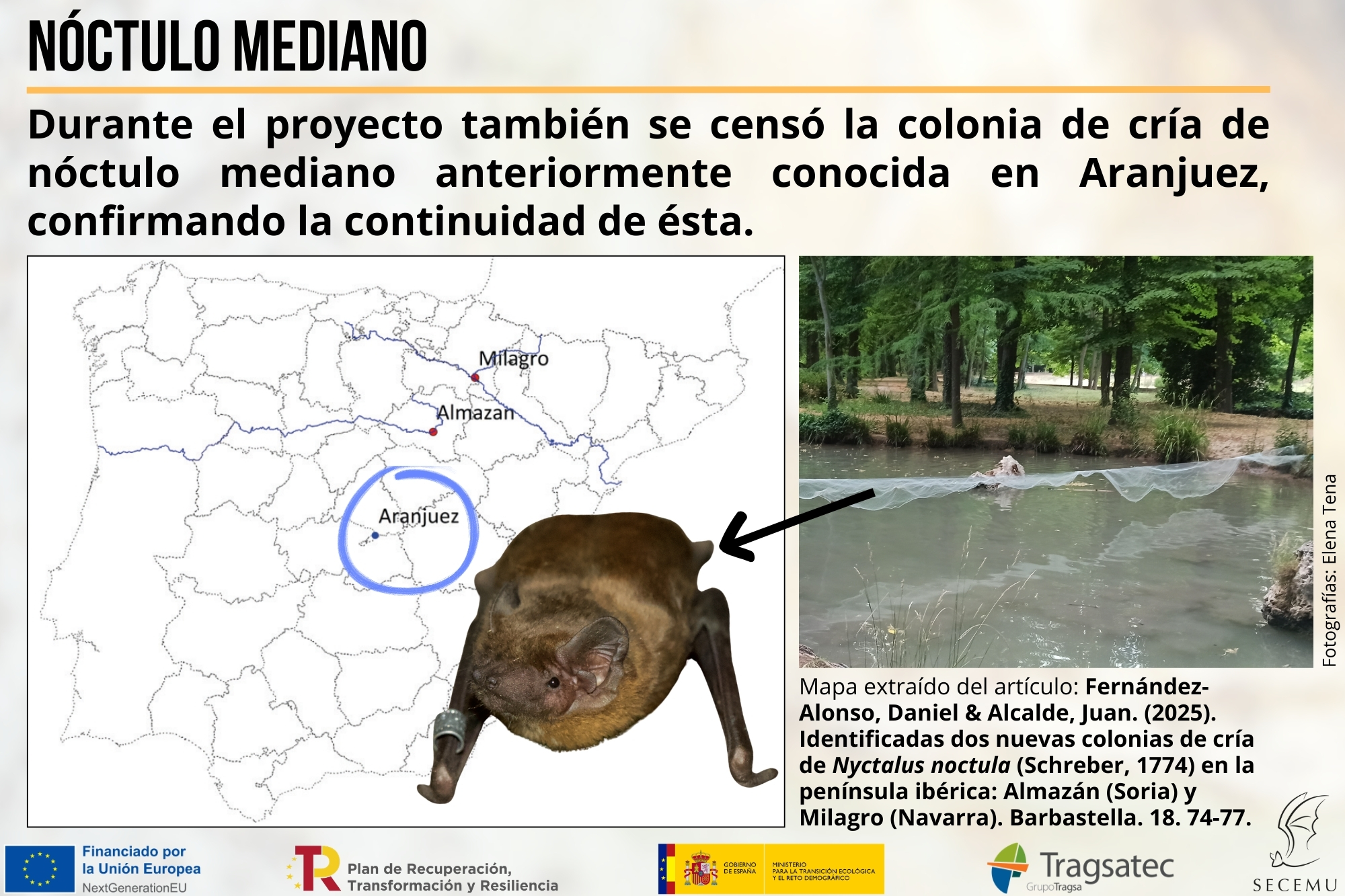
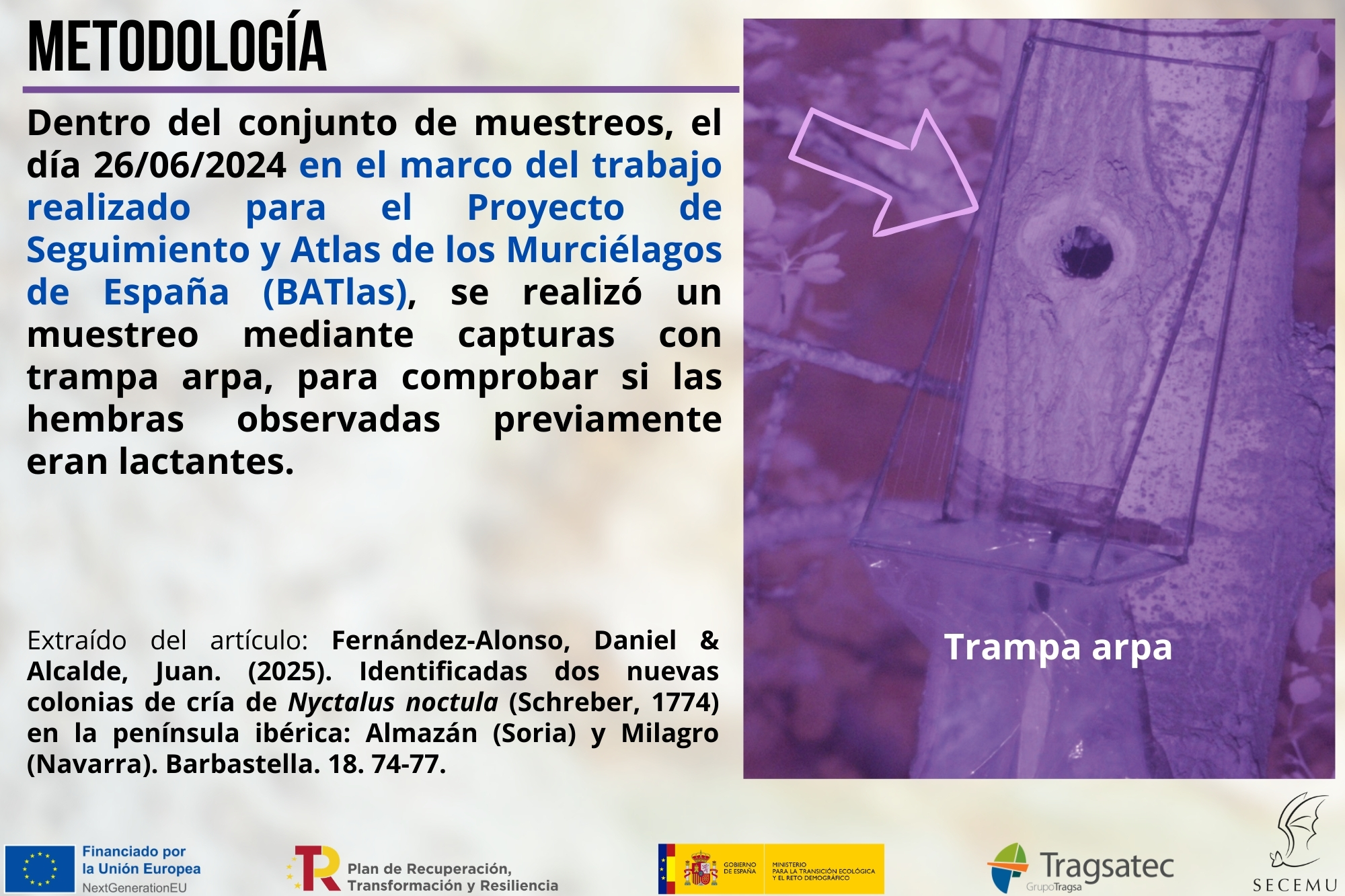
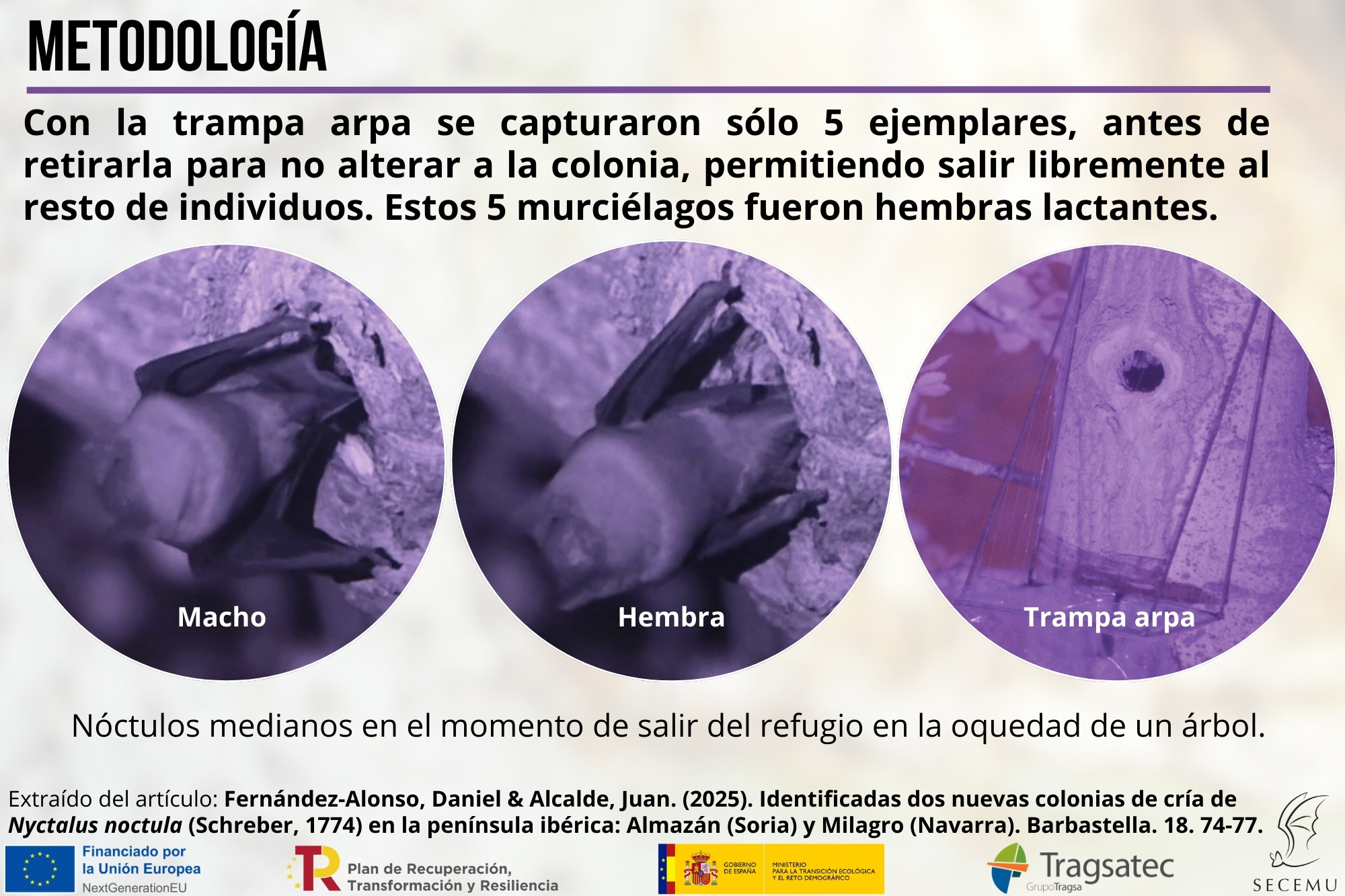
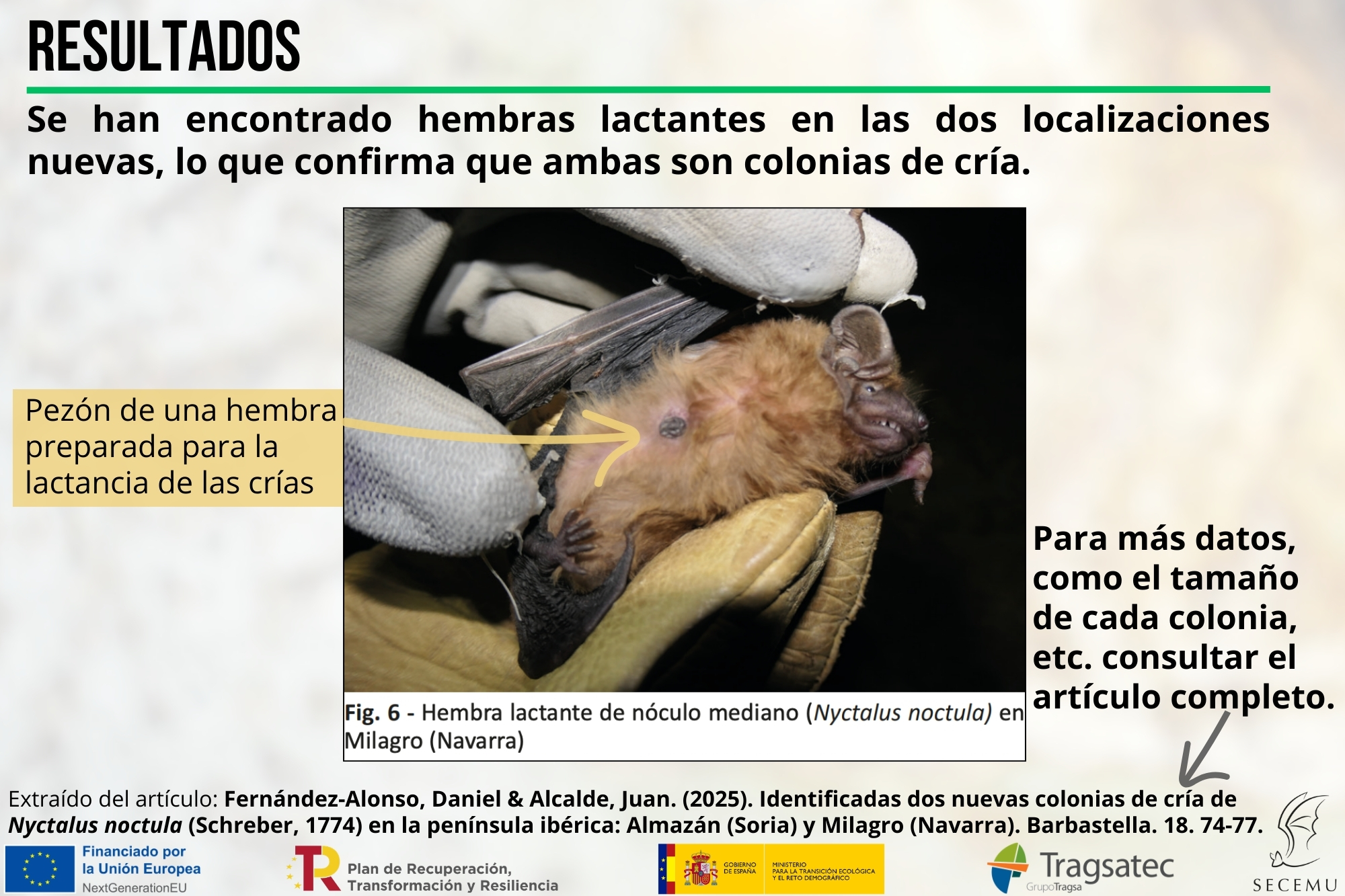
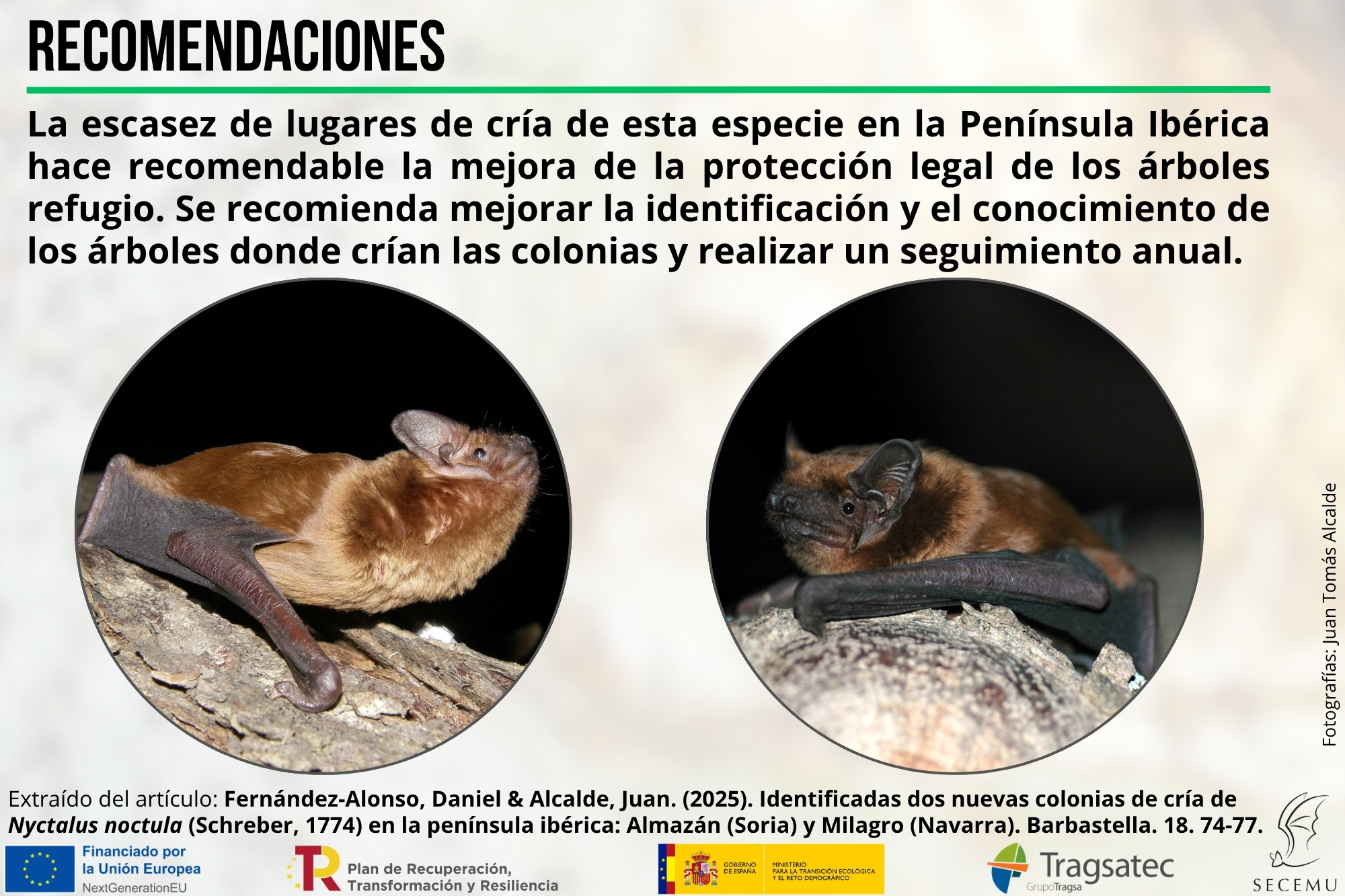
– Two new breeding colonies of common noctule (Nyctalus noctula)
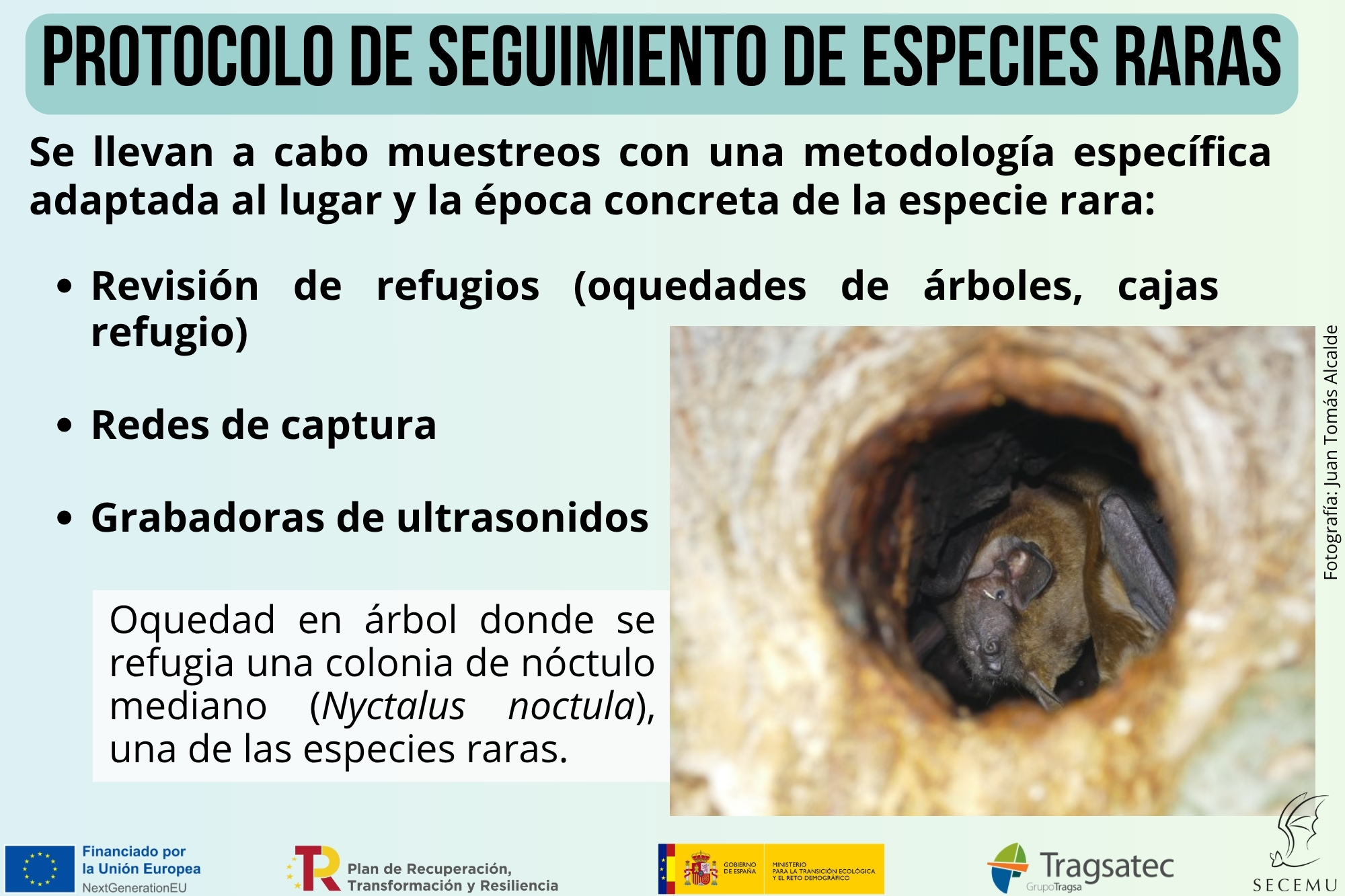
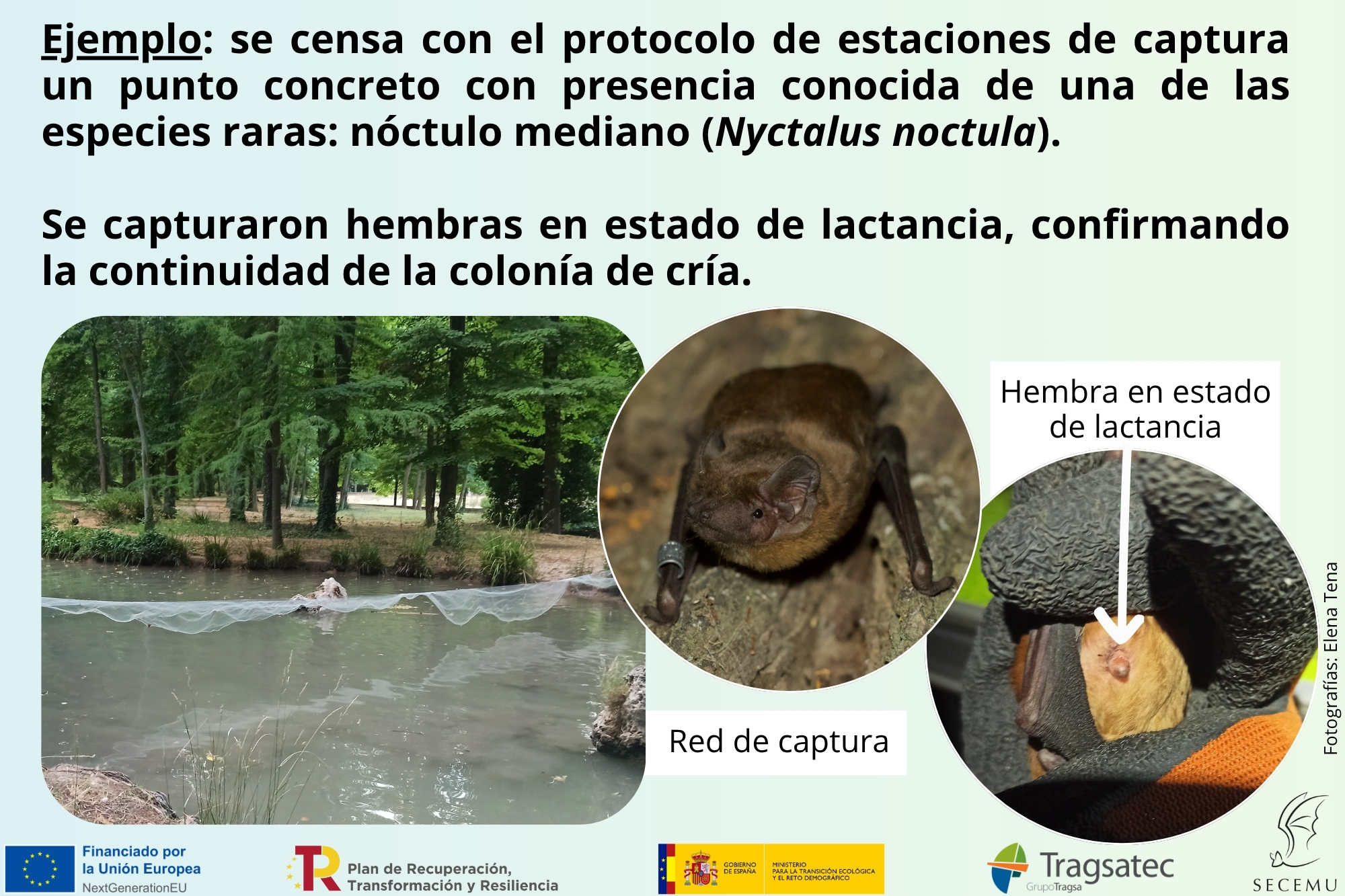
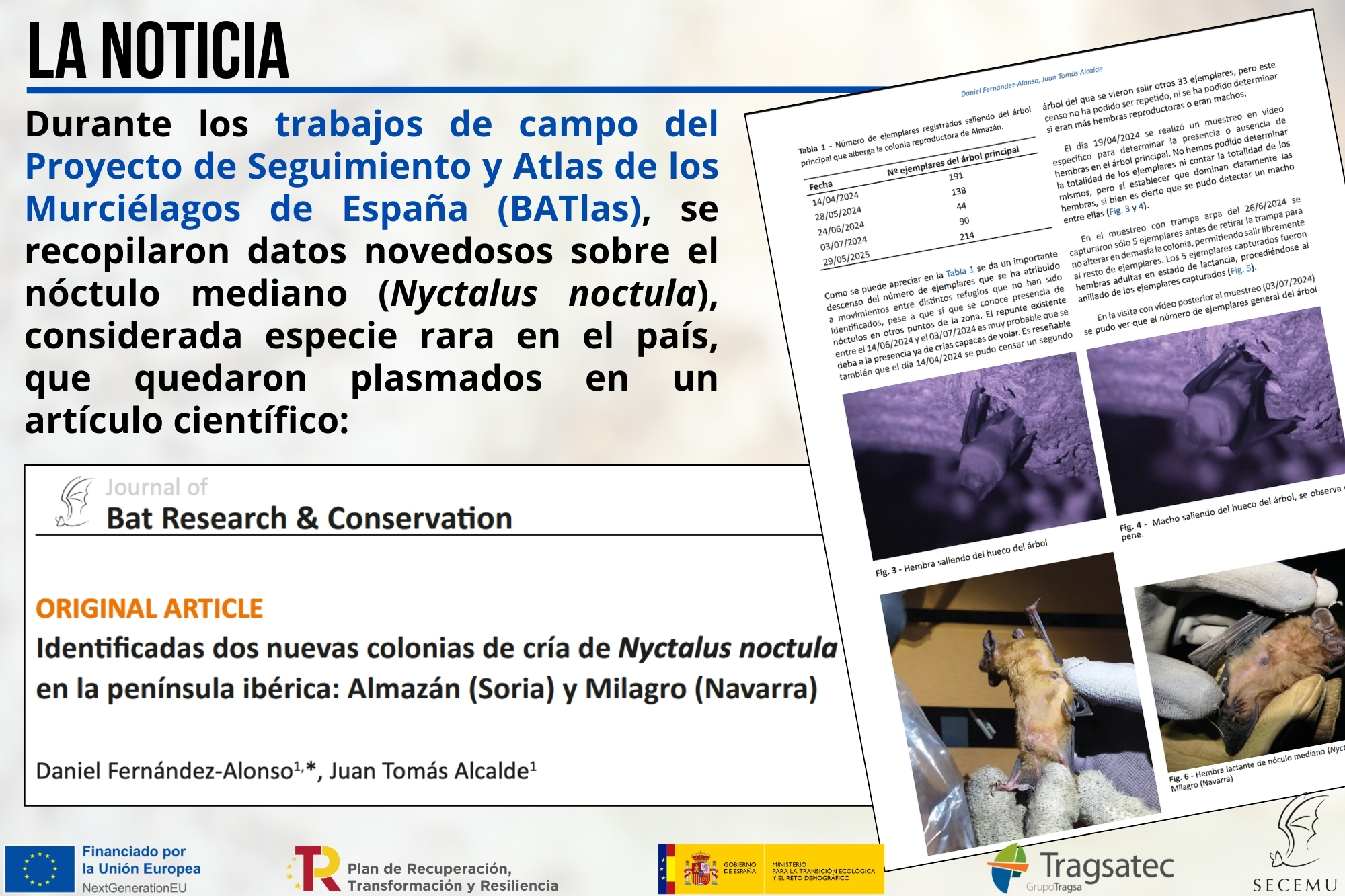
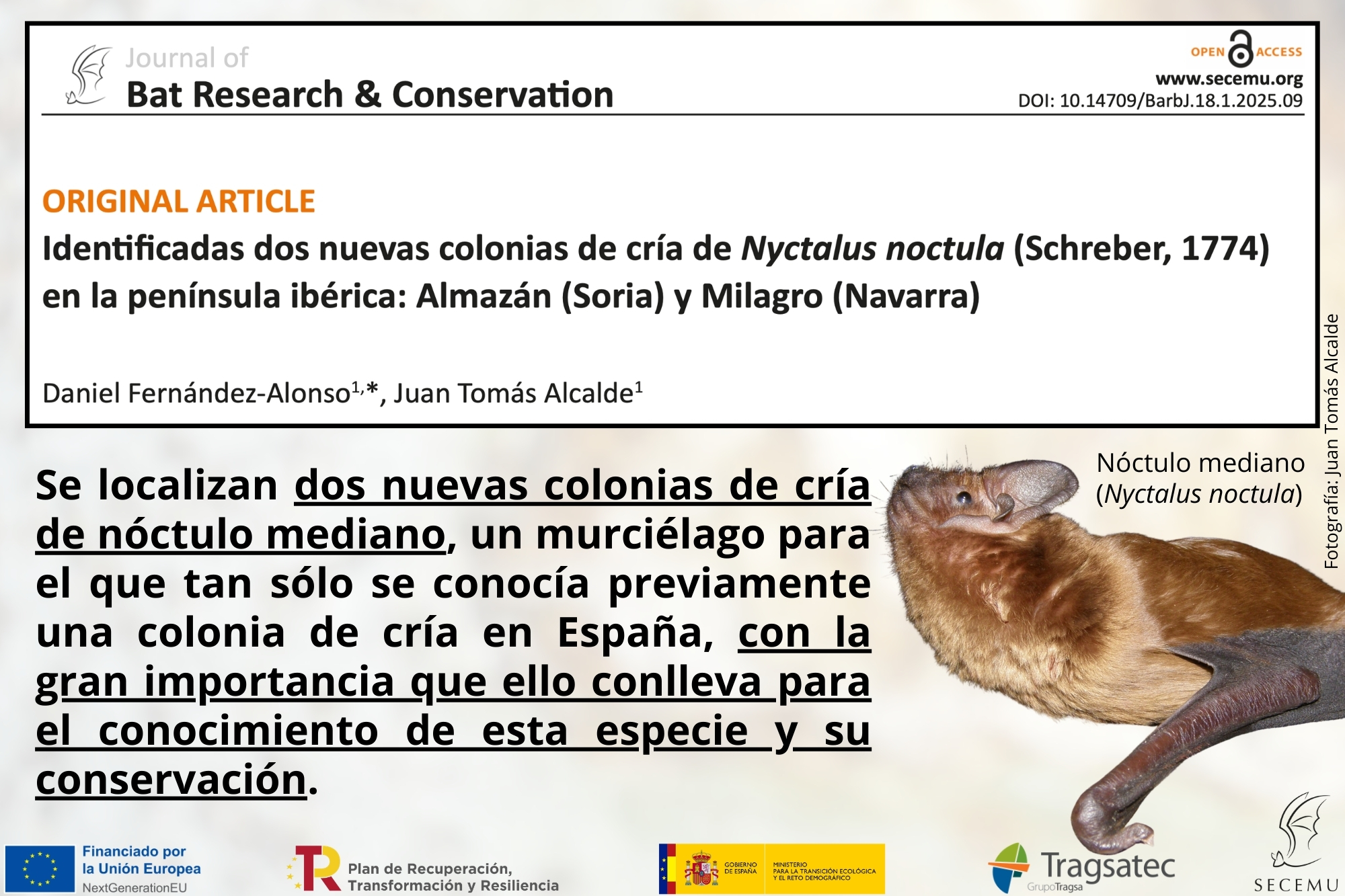
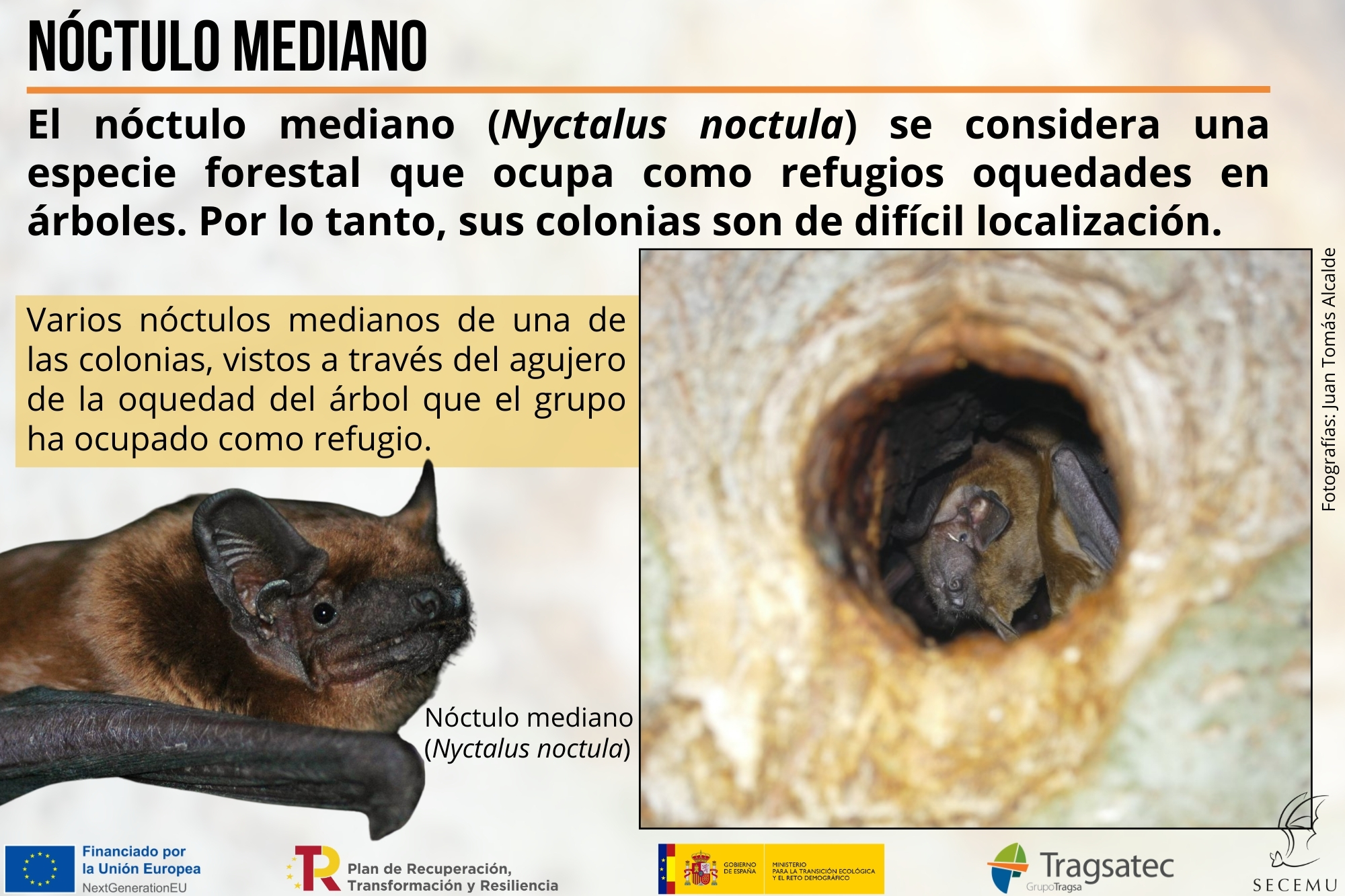
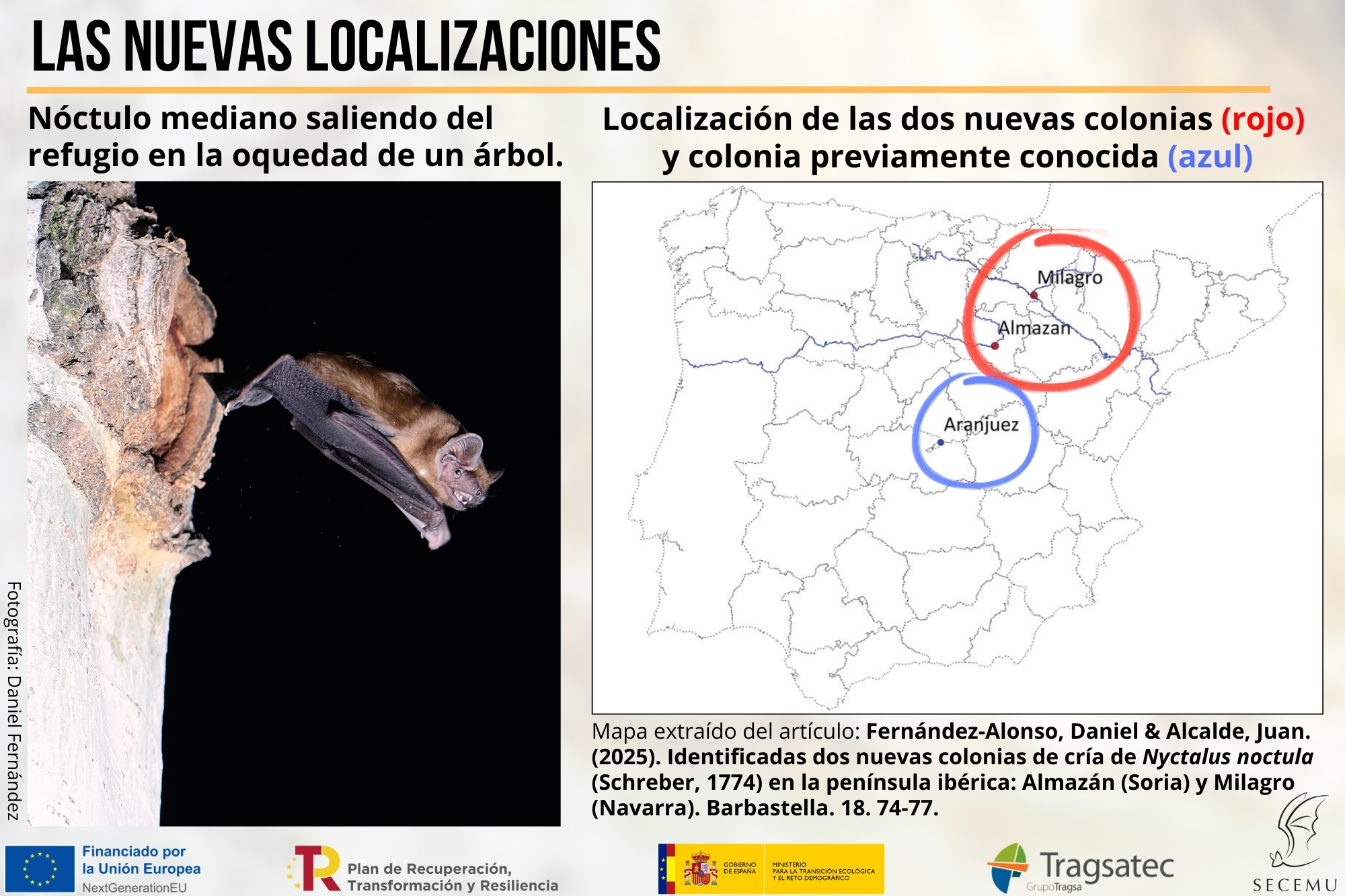
During fieldwork for the Bat Monitoring and Atlas Project of Spain, new data were collected on the common noctule (Nyctalus noctula), considered a rare species in the country. Two new breeding colonies of the species were found. Previously, only one breeding colony was known in Spain, which makes this new finding very important for the knowledge and conservation of the species.
The discovery is described in a scientific article:
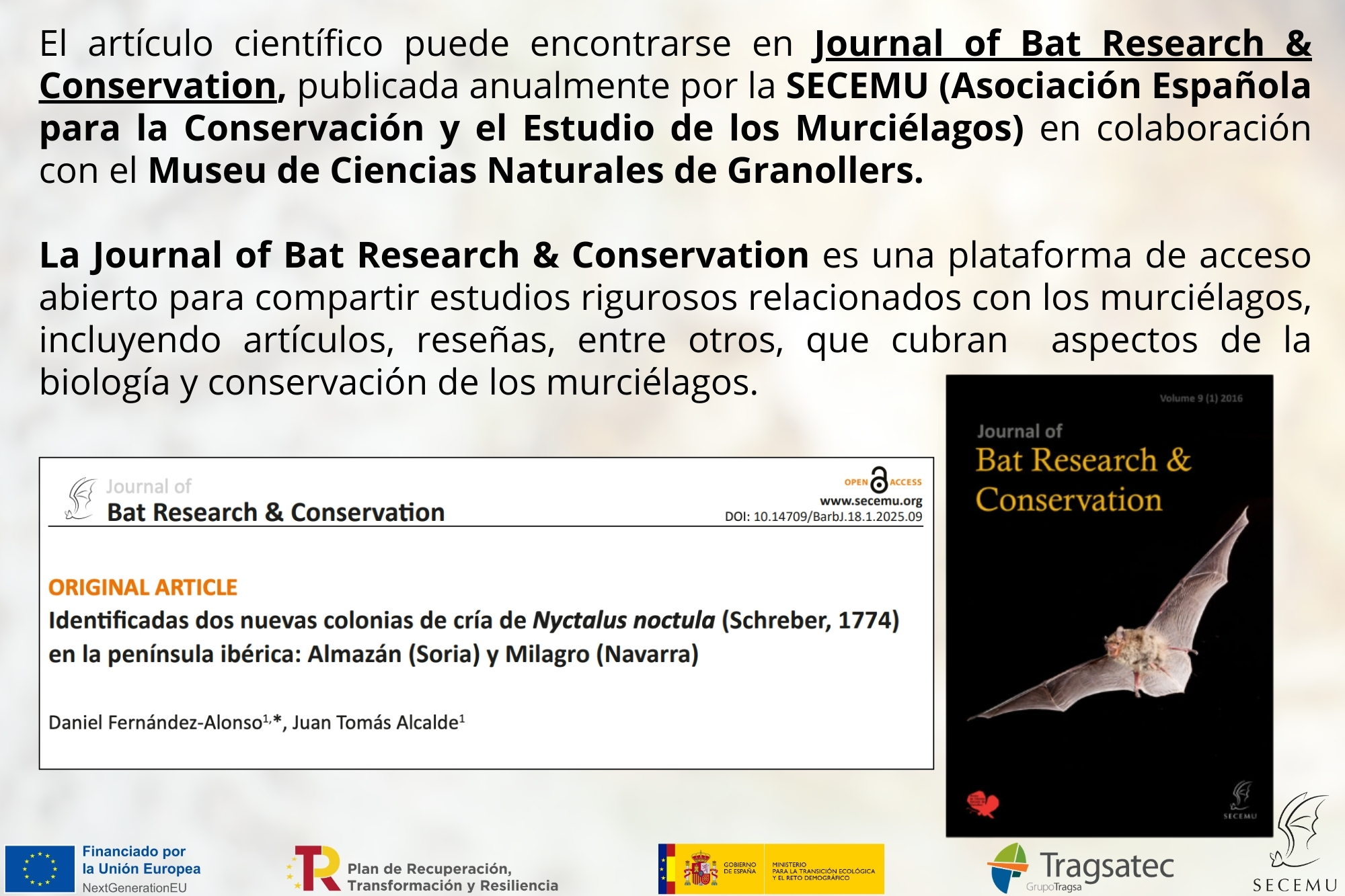
Fernández-Alonso, Daniel & Alcalde, Juan. (2025). Identificadas dos nuevas colonias de cría de Nyctalus noctula (Schreber, 1774) en la península ibérica: Almazán (Soria) y Milagro (Navarra). Barbastella. 18. 74-77.
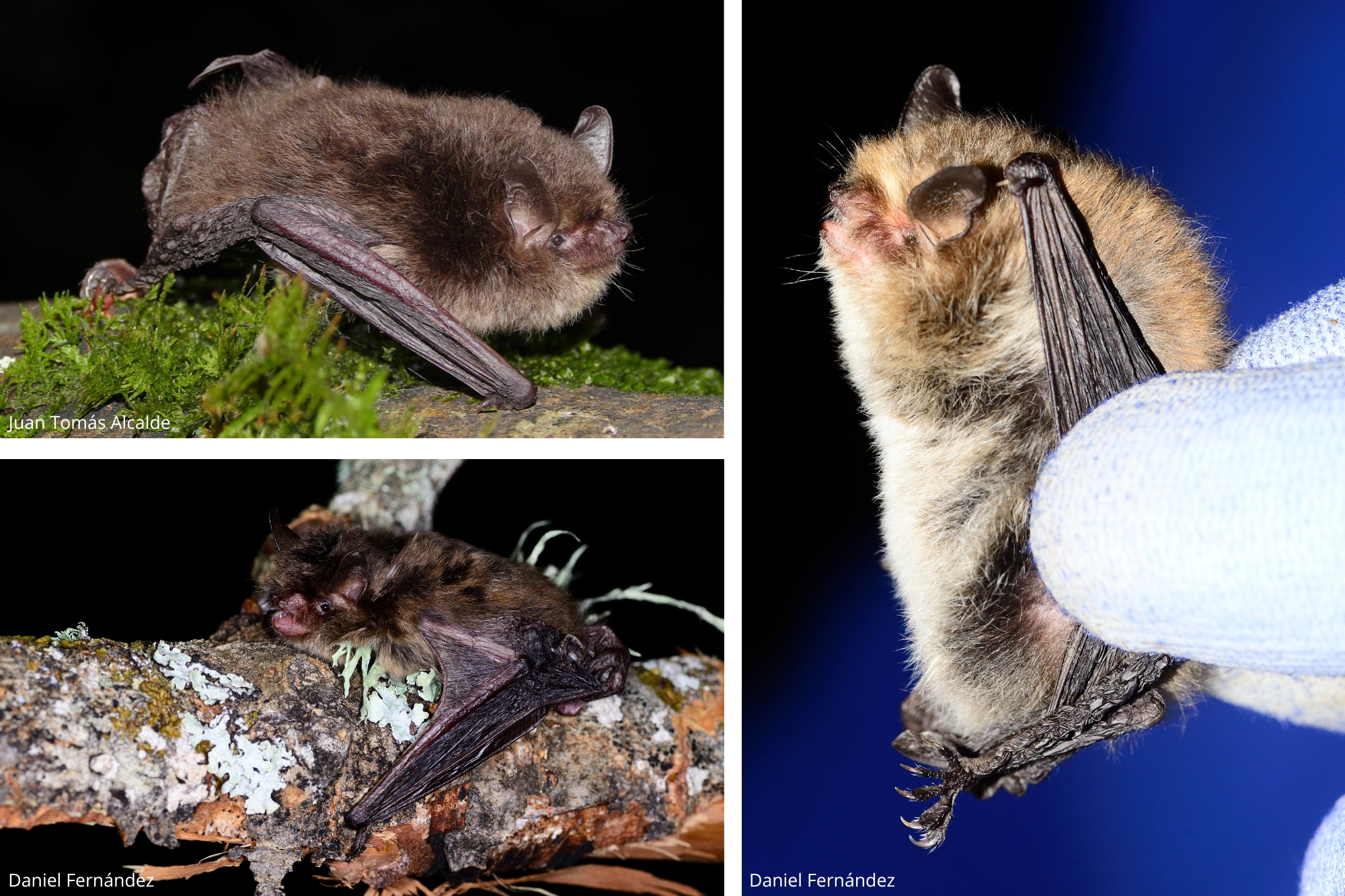
– New record of a rare species: Alcathoe’s bat (Myotis alcathoe)
In one of the surveys for the Bat Monitoring and Atlas Project of Spain (BATlas), specifically in the search for rare forest bat species, the research team from the Forest Science and Technology Centre of Catalonia (CTFC) detected Alcathoe’s bat (Myotis alcathoe) in the Cadí-Moixeró Natural Park, a new point on the distribution map of this very scarce species in Spain.
Alcathoe’s bat is considered a very little-known and scarce species, both in Spain and in Europe generally. At regional level, in Catalonia and the Basque Country, it is considered endangered.
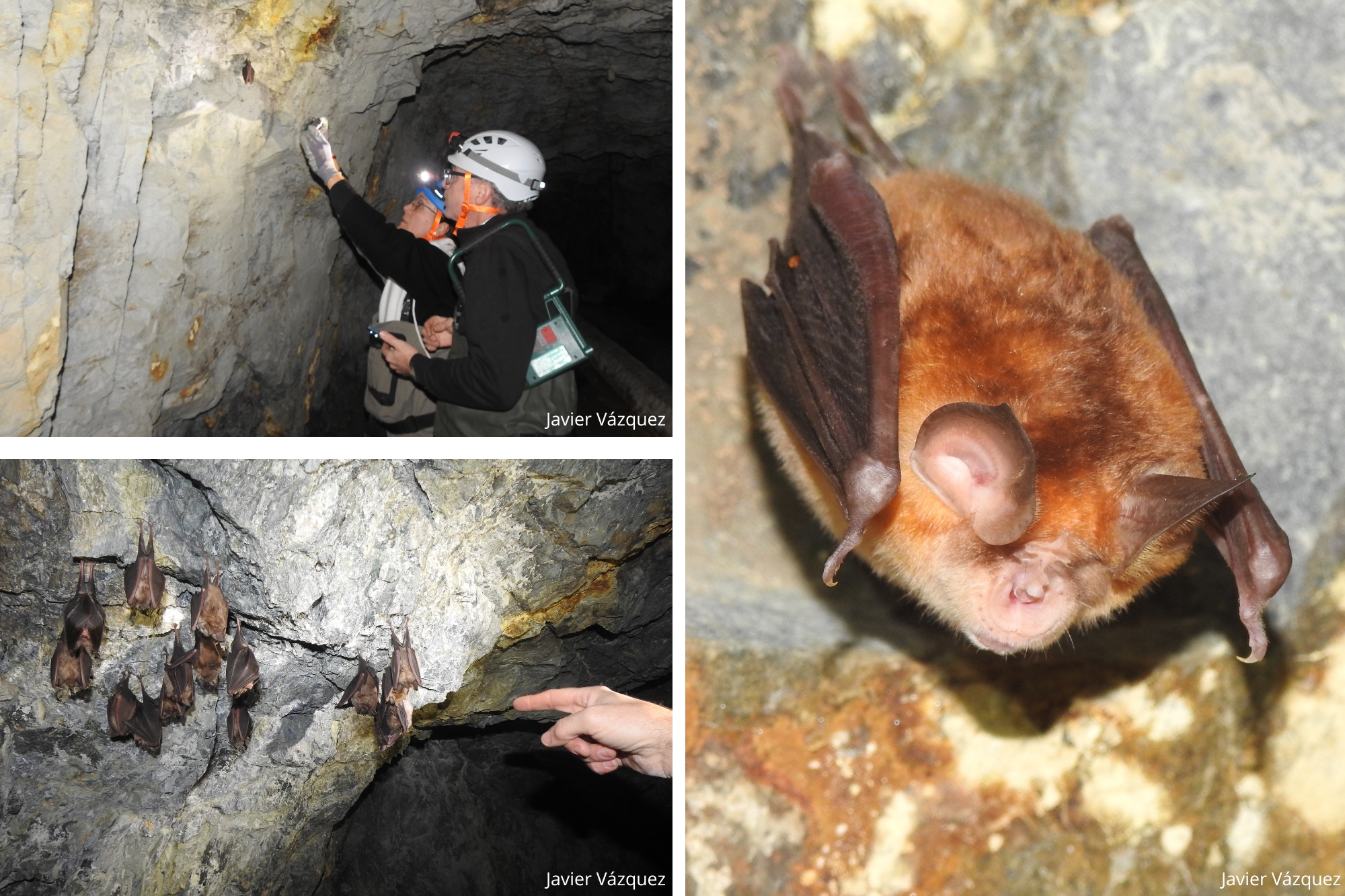
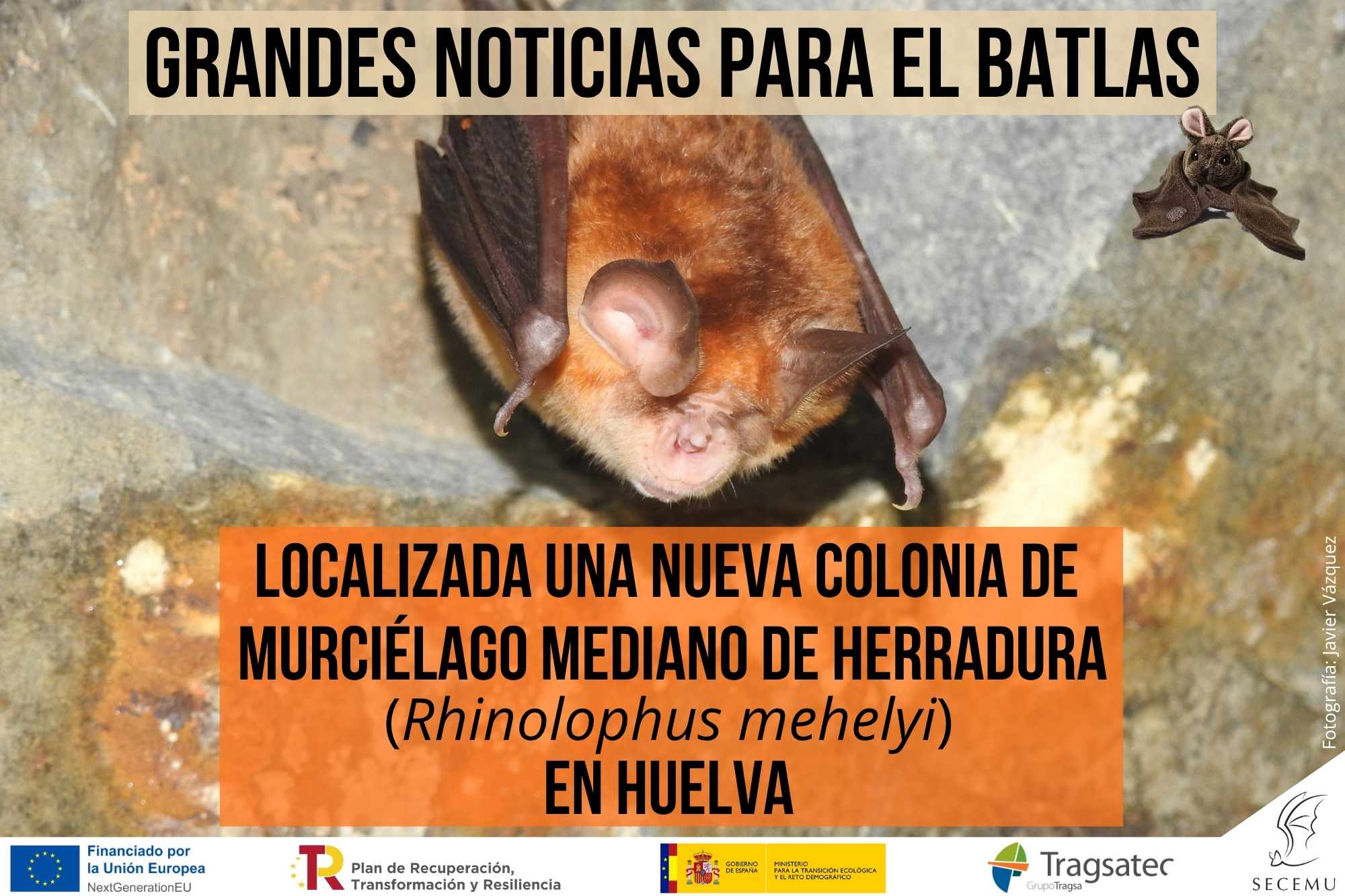
– A new colony of Mehely’s horseshoe bat (Rhinolophus mehelyi)
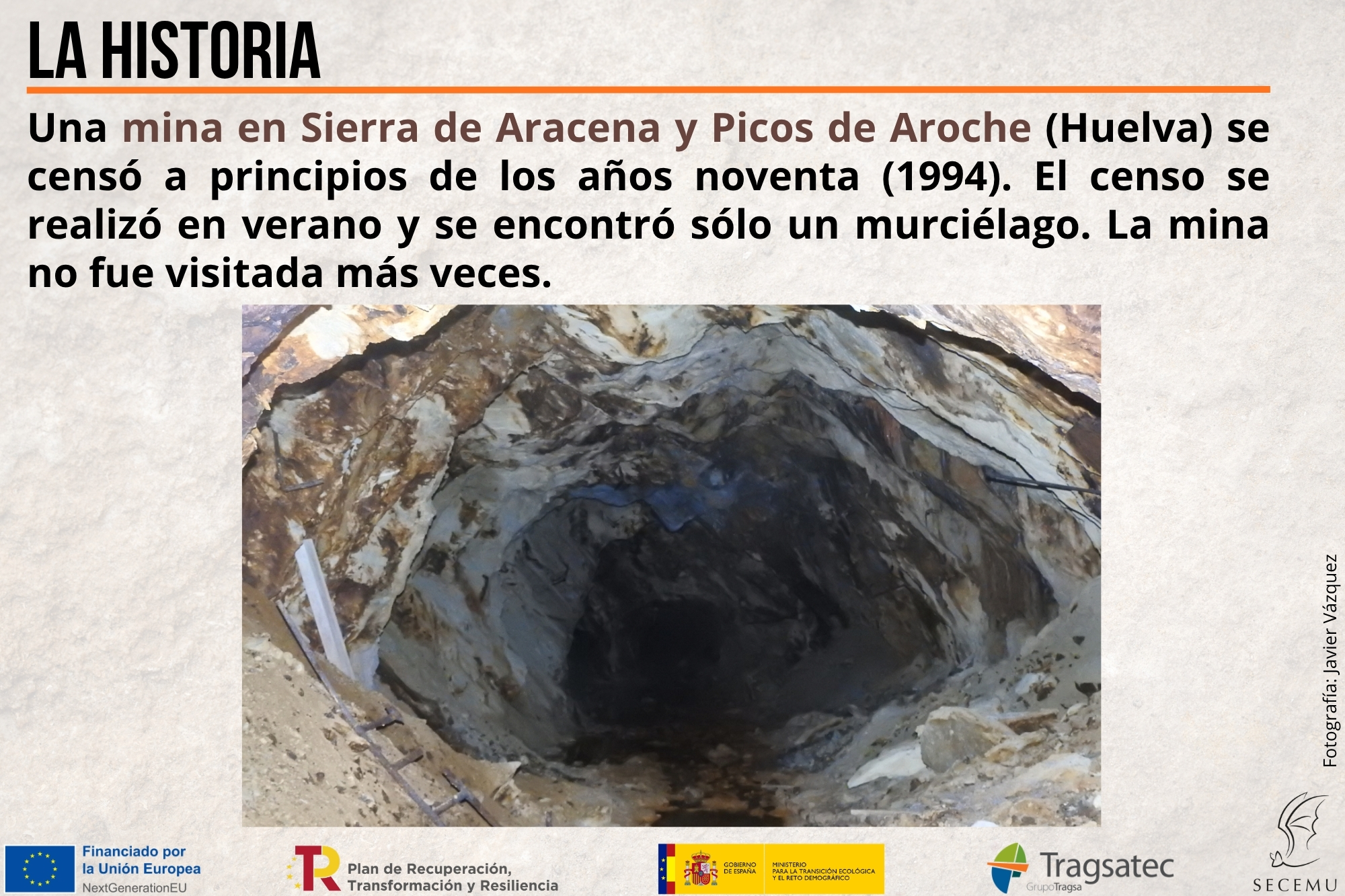
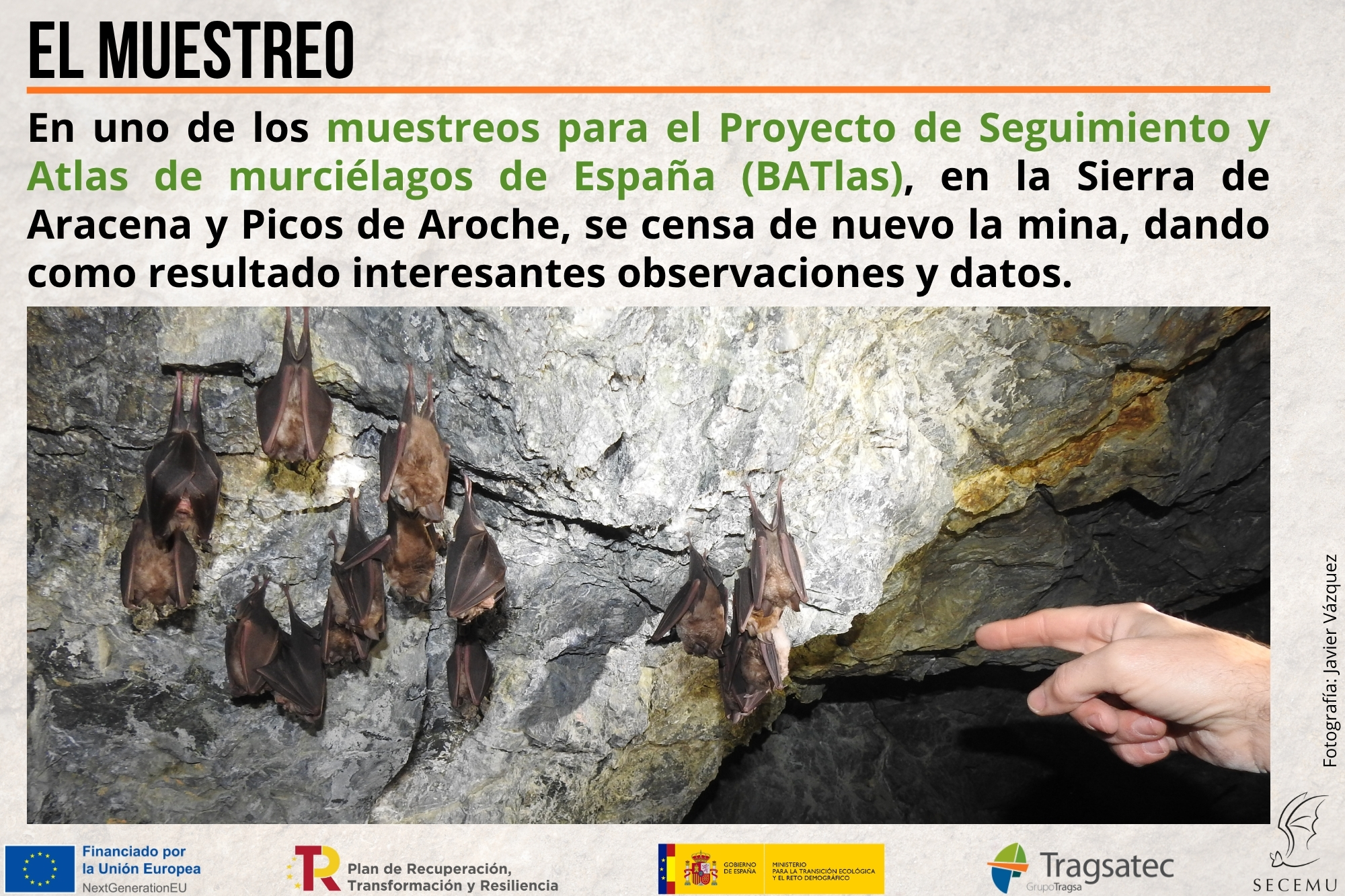
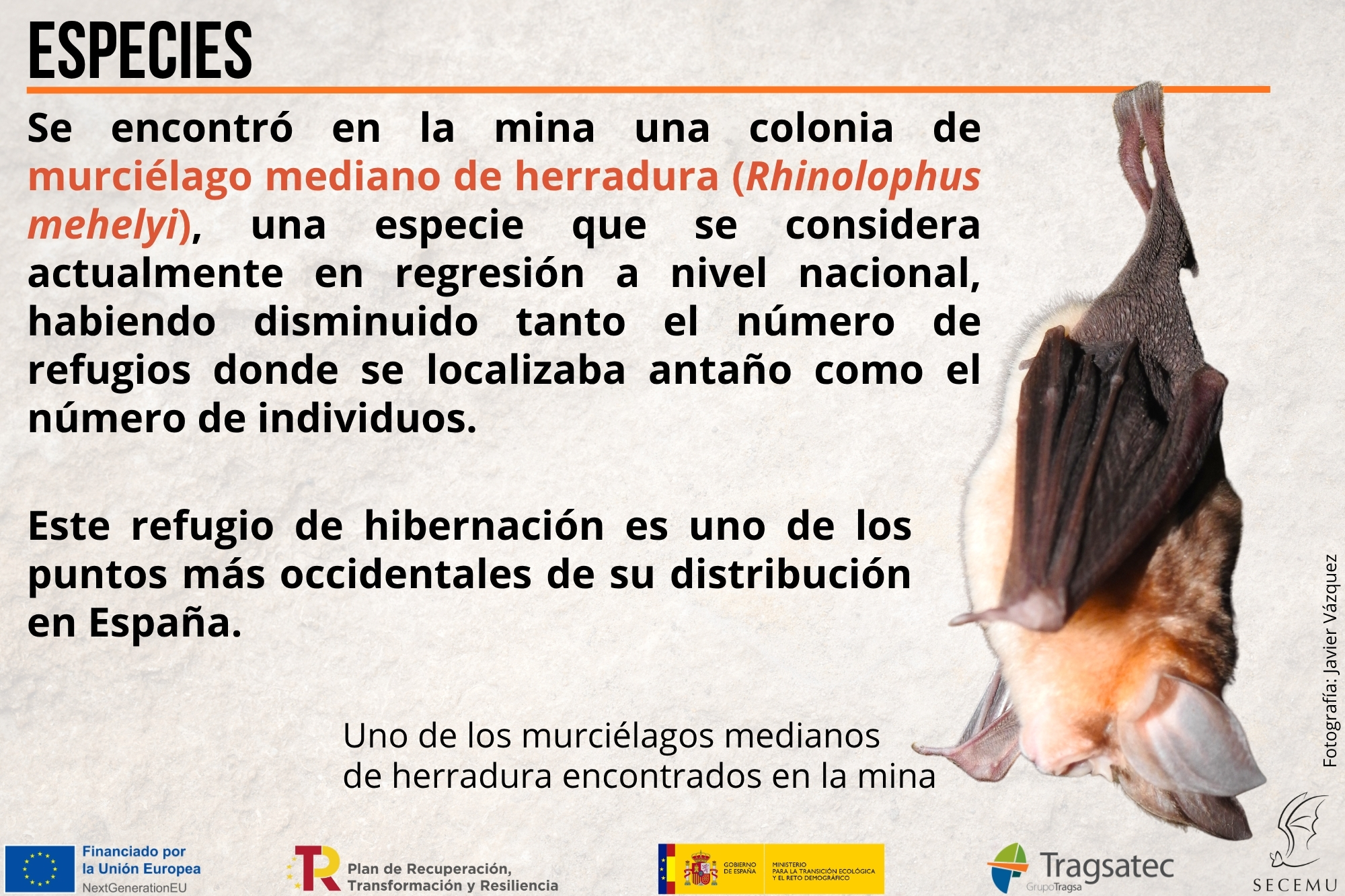
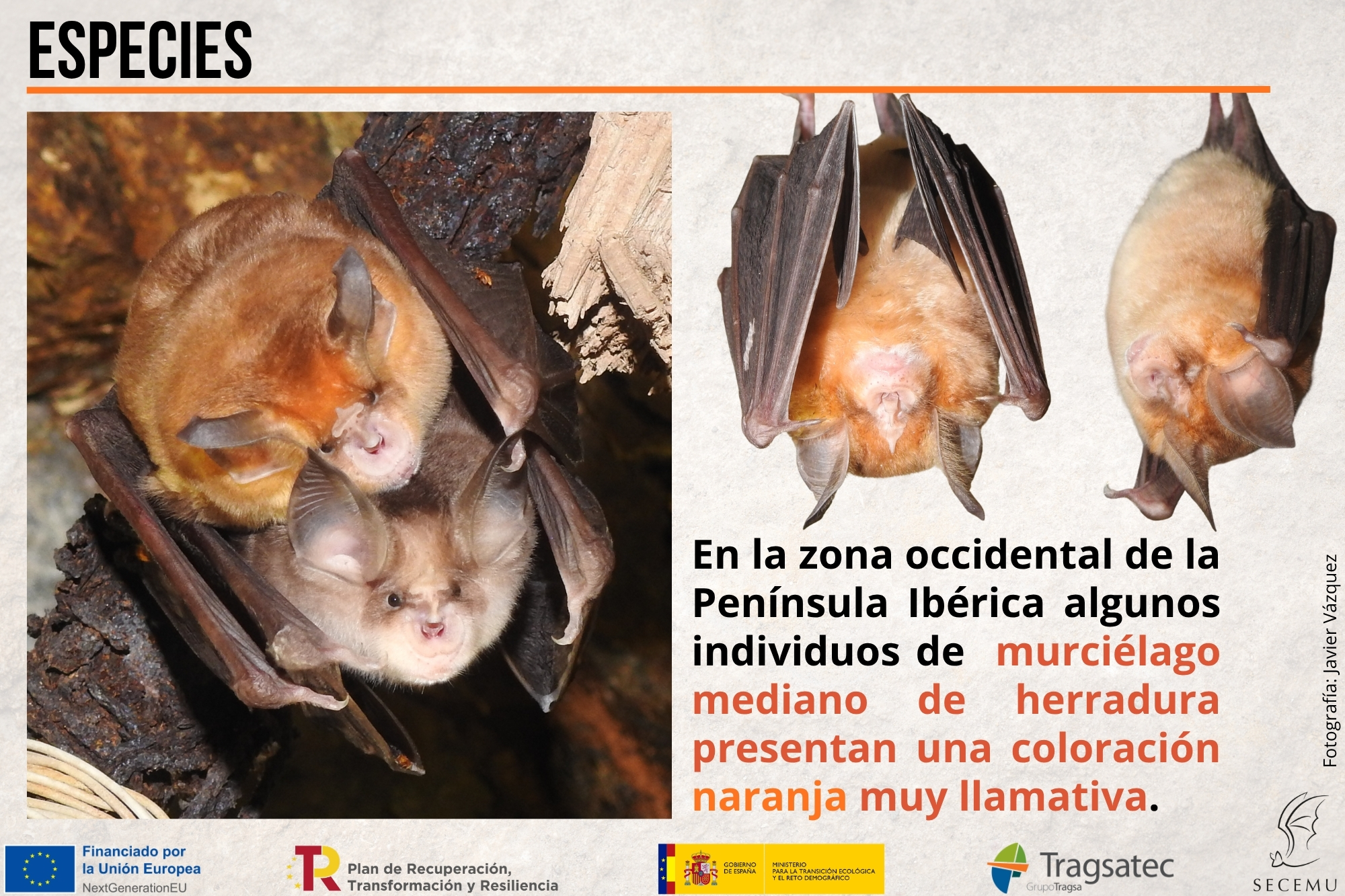
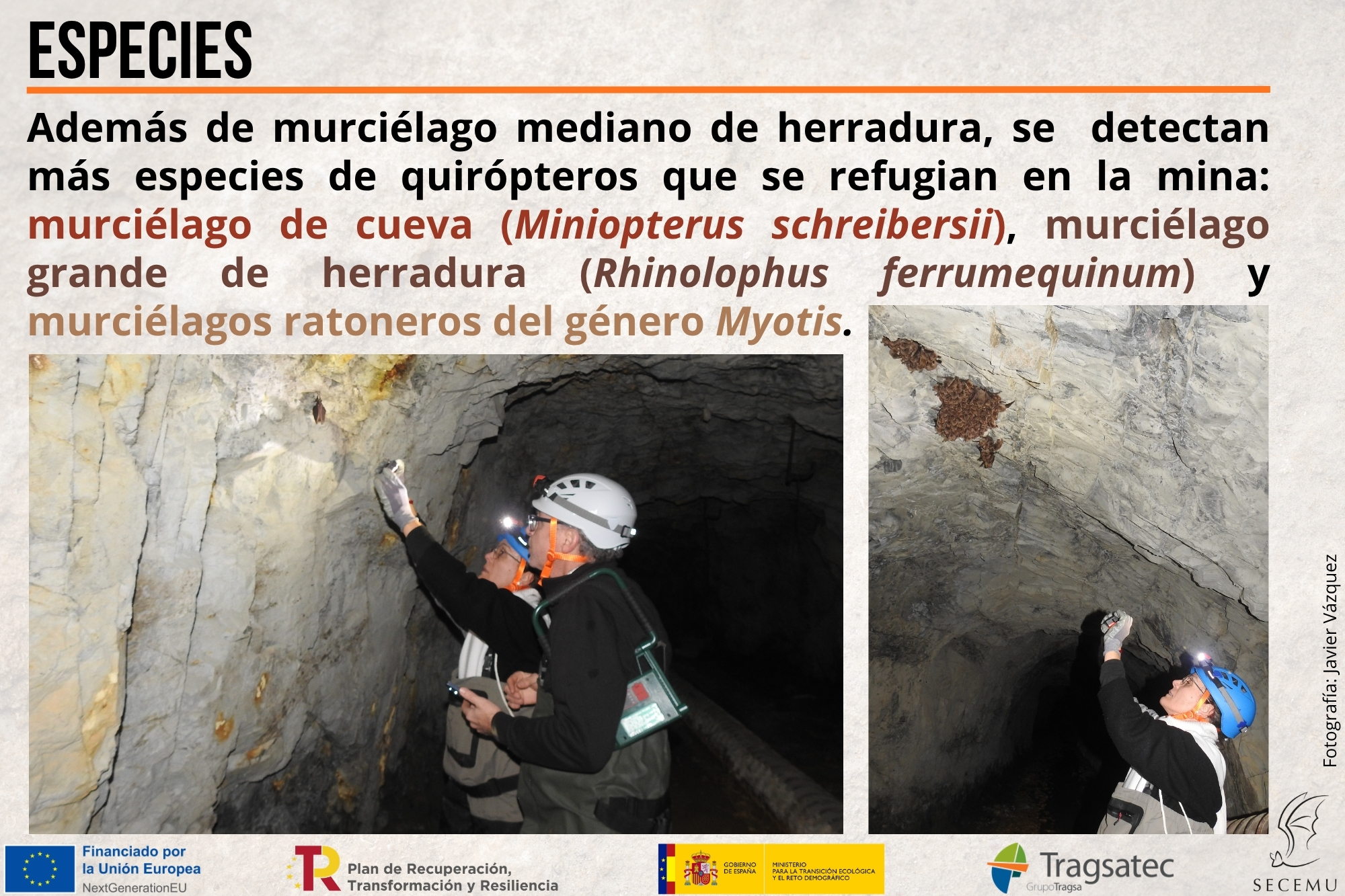
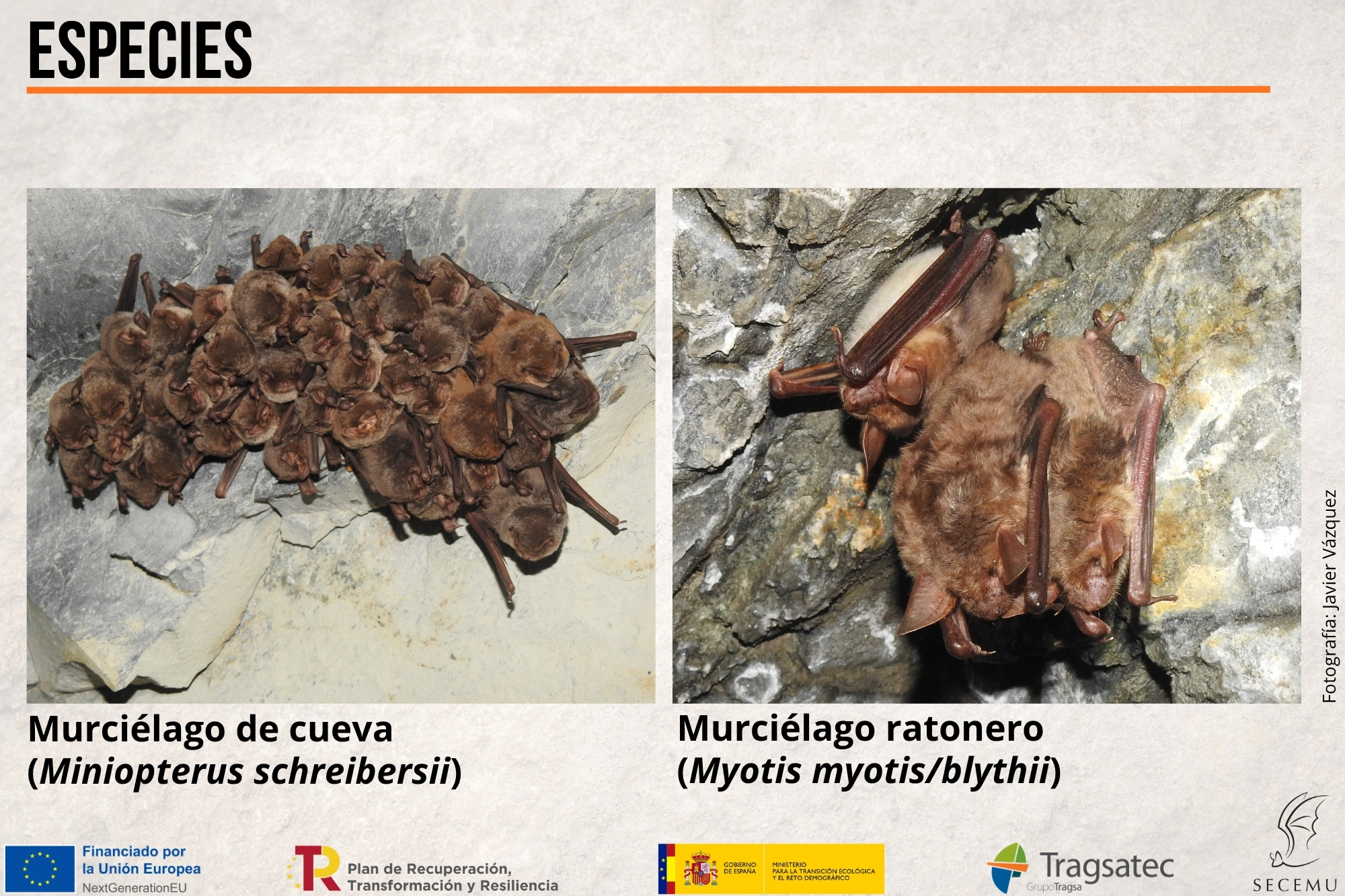
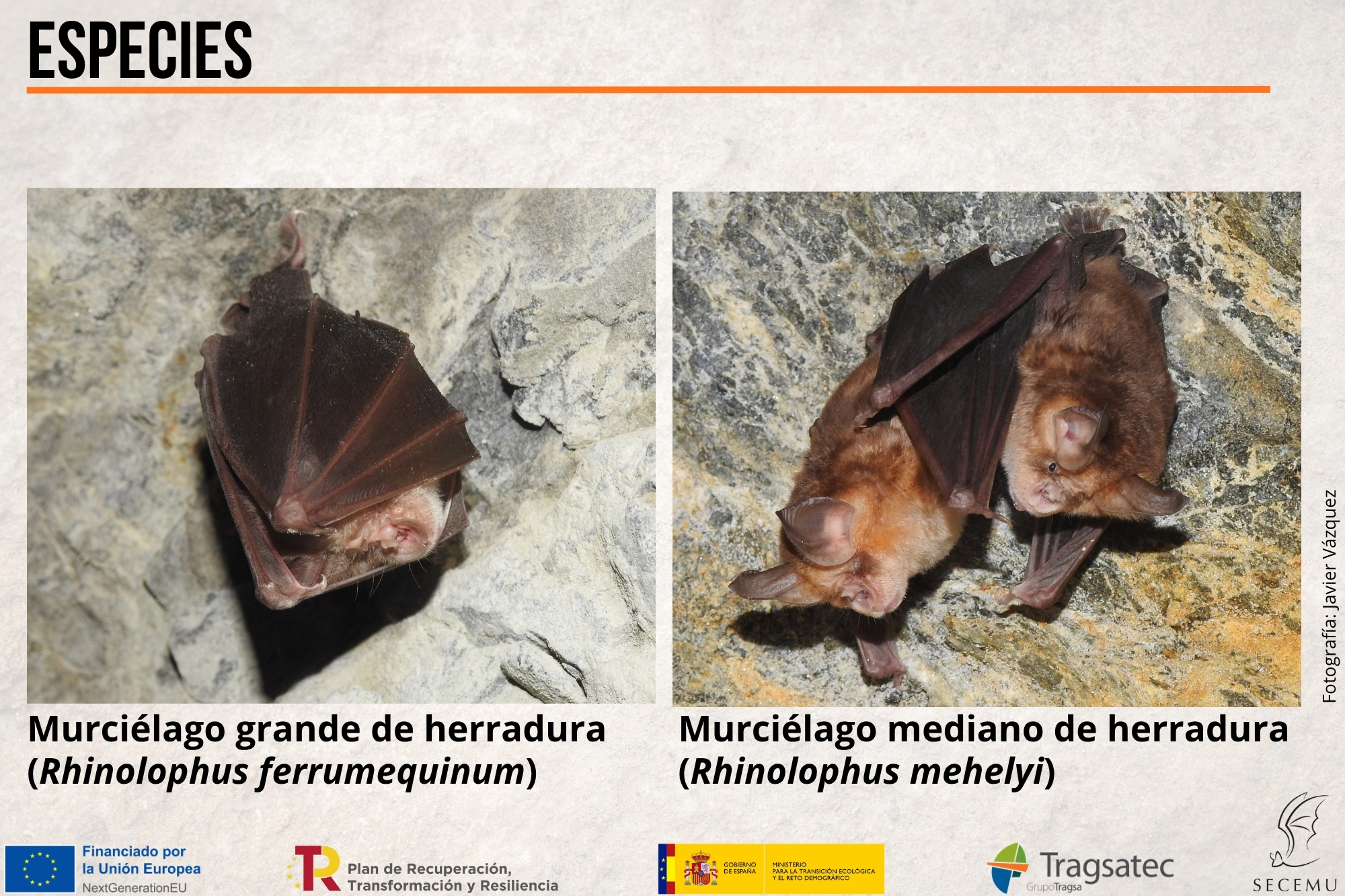
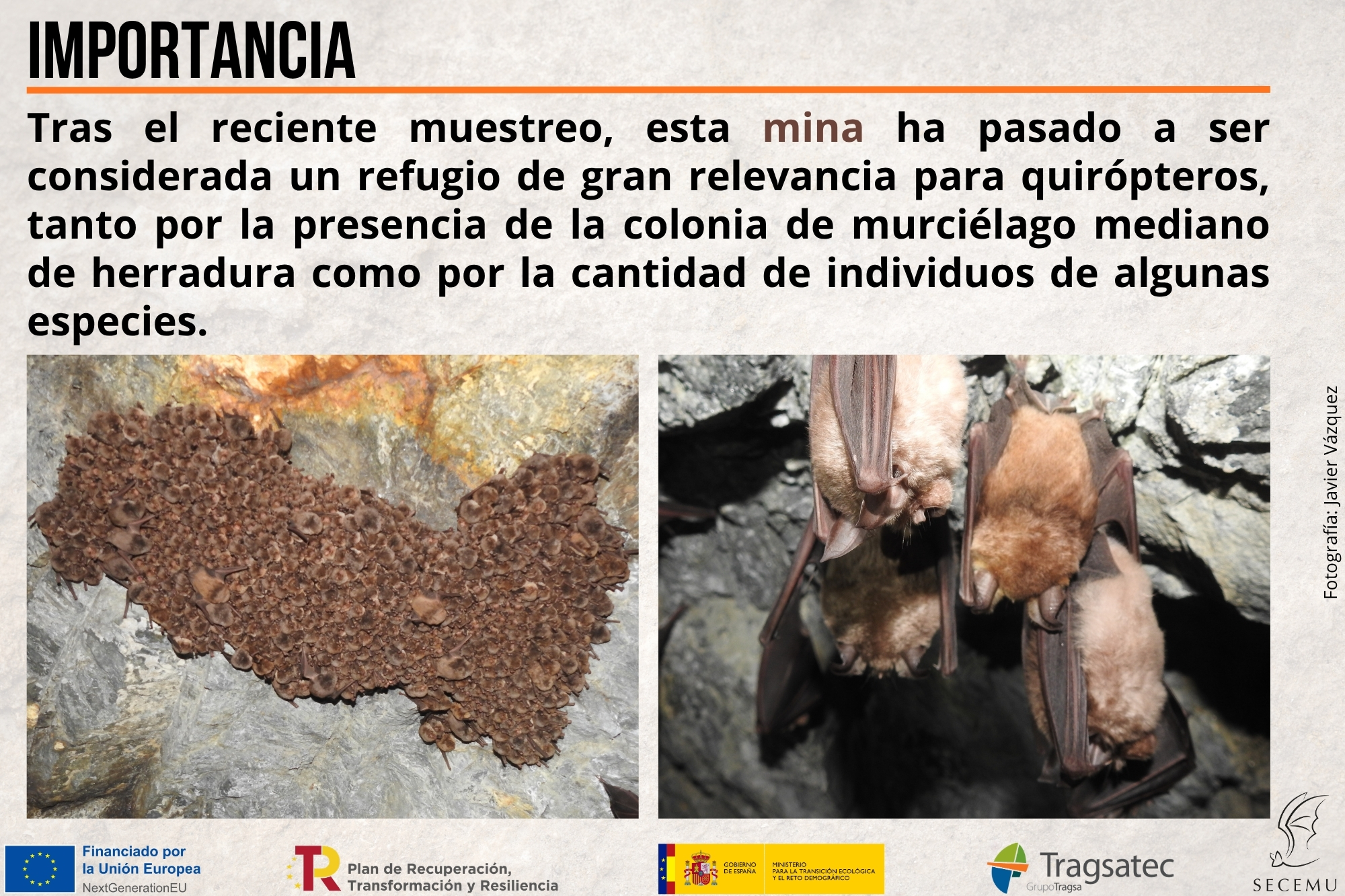
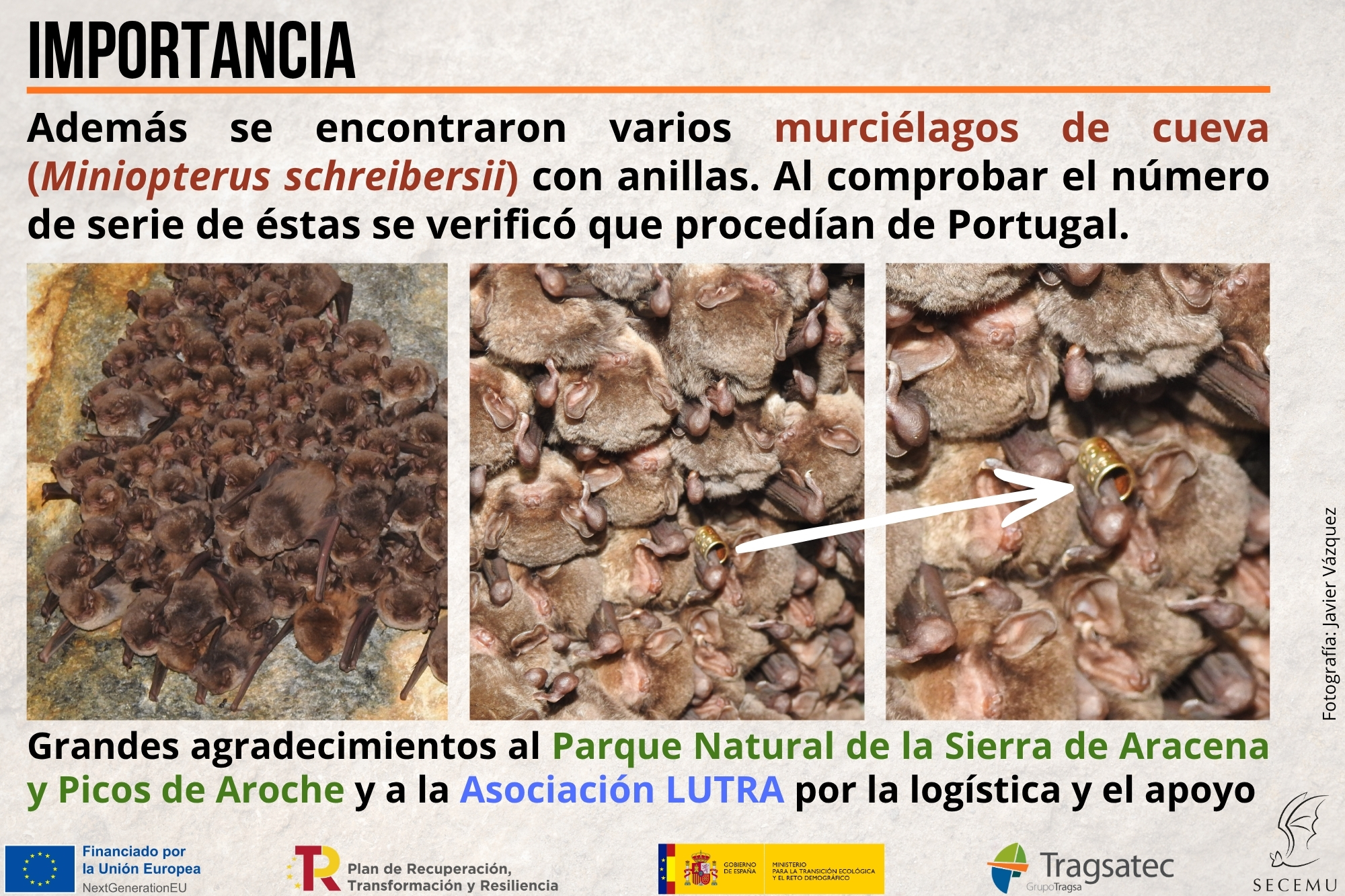
In the Sierra de Aracena y Picos de Aroche, a colony of Rhinolophus mehelyi was detected, a species currently considered to be declining nationally, along with colonies of other bat species, so this mine is now considered a highly important roost.
4. Project team
Editorial committee
Elena Tena
Silvia María Cabezas León
Óscar de Paz
Coordination committee:
Elena Tena
Silvia María Cabezas León
Óscar de Paz
Xavier Puig-Monserrat
Juan Tomás Alcalde
Scientific committee:
Carlos Ibáñez
Xavier Puig-Monserrat
Roberto X. Hermida
Juan Tomás Alcalde
Óscar de Paz
Elena Tena
Technical management:
Elena Tena
Silvia María Cabezas León
Outreach:
Raúl Léon Vigara
TRAGSATEC team
Adrià Ortega
Esther Amores
Estel Blanch Ojea
Elena Tena
Raúl León Vigara
Raúl Molleda
Sergi Cano
Silvia María Cabezas León
Xosé Pardavila
Database management:
Esther Amores
Silvia María Cabezas León
Xosé Pardavila
Elena Tena
Maps:
Silvia María Cabezas León
Genetic analyses:
Javier Juste
Juan Luis García-Mudarra
Modelling:
Guillermo Fandos
Authors of the bat species accounts:
Adrià López-Baucells
Alba Coronado Gomis
Alfonso Balmori Martínez
Ángel Guardiola Gómez
Carles Flaquer Sánchez
Carlos Ibáñez Ulargui
Carme Tuneu-Corral
Daniel Fernández Alonso
David Guixé Coromines
David López-Bosch
Domingo Trujillo
Elena Tena
Estel Blanch-Ojea
Félix González Álvarez
Francisco Carro
Francisco Javier Martínez-Medina
Fulgencio Lisón Gil
Inazio Garin Atorrasagasti
Javier Juste Ballesta
Jesús de Lucas
Jesús Nogueras Montiel
Jordi Camprodon Subirachs
Jorge Manuel Sánchez Balibrea
Jorge Sereno-Cadierno
José Antonio Garrido García
Juan Quetglas Santos
Juan Ramón Boyero Gallardo
Juan Tomás Alcalde Díaz de Cerio
Luis Lorente Villanueva
Manuel Arzúa Piñeiro
Maria Mas Navarro
María Napal
Miguel Ángel Monsalve Dolz
Óscar de Paz
Paulo Barros
Pedro Alonso-Alonso
Ramón Jato Losfablos
Raúl Molleda García
Roberto de la Peña Leiva
Roberto X. Hermida
Rubén Barone
Sandra Córdoba Lloria
Silvia Mª Cabezas León
Sonia Sánchez-Navarro
Urtzi Goiti Ugarte
Xavier Puig Montserrat
Xosé Pardavila Rodríguez
Zeltia López Gallego
Field team:
Adrià López Baucells
Adrià Ortega Castaño
Aina Arbona
Ainoa Sendi Marín
Albert Burgas Riera
Albert Peris
Alberto Fijo León
Alberto Gil Carrera
Alejandra Fariña Cabezas
Alejandro Aparicio Valenciano
Alejandro Onrubia Baticón
Alicia Castillo
Álvaro Moraña Fontan
Ana Belén Casais Montes
Ana Isabel Cordero González
Andrea García Teruel
Ángel Arredondo Acero
Ángel Guardiola Gómez
Ángel Trejo
Antonio Alcocer Cordellat
Antonio José Fernández
Antonio Miguel Moret Gómez
Auxiliadora Villegas
Beatriz Gasienick
Blanca Martí de Ahumada
Borja Heredia
Carles Quer Feo
Carlos Ibáñez Ulargui
Carlos Izquierdo
Carlos Rojo
Carlos Rustariazo
Carme Tuneu-Corral
Carol Sierra
Cinta Golorons
Clara Comas
Claudia Povedano González
Cristian Luque Huertas
Cristina Ametller
Cristina Gutiérrez del Álamo-Tena
Cristina Perez Segú
Daniel Fernández Alonso
Daniel Fuentes
Daniel Menéndez Pérez
David Carcía-Cáceres
David Fernández
David Gálvez Ruiz
David García Jiménez
David García-Cáceres
David Guixé Coromines
David John Barritt
David López-Bosch
David Molina
David Palomino
David Tarragona Masip
Diana Ortiz
Diego Fuentes
Domingo Trujillo González
Elena Migens Maqueda
Elena Tena López
Elisa Cristo
Elisenda Montserrat
Elvira Del Viejo
Enric Morera
Eric Marín González
Estel Blanch Ojea
Esther Amores Gago
Esther Murciano
Eugenio Montelío Barrio
Federico Sancho Puertas
Félix González Álvarez
Francesc Comes Angelet
Francisco Antonio Conde González
Francisco Carro Mariño
Francisco Díaz Rodríguez
Francisco Javier Almansa Paredes
Francisco Javier Martínez Medina
Francisco José Medina
Francisco Panadero
Franck Curk
Gemma Carrasco Escrig
Gerardo Pizarro García
Godefridus Cornelis Schreur
Gonzalo Varela García
Guillermo Triay
Gustavo Abascal Escuza
Ignacio García
Iñaki Martínez Pérez
Isabel Bischoping
Isabel Caminal Fathke
Isabel Gallardo
Isabel Gallardo
Isabel Tortajada
Isidoro Carbonell
Jaume Soler Zurita
Javier Díaz Aranguren
Javier G Raya
Javier Gómez
Javier Juste Ballesta
Javier Llorente Villoslada
Javier Vázquez Rodríguez
Jesús Alfonso i Prieto
Jesús Carretero
Jesús de Lucas
Jesús Fernández
Jesús Nogueras Montiel
Joaquín Fernández
Jordi Castilló Carretero
Jordi Sanjuan Rubio
Jorge Fariña Cabezas
Jorge Fariña Garralda
Jorge Juan Rueda
Jorge López
Jorge M. Sánchez Balibrea
Jorge Sánchez Mediano
Jorge Sánchez Videgain
Jorge Sereno Cadierno
José Antonio Garrido García
José I. Izquierdo
José Luis Izquierdo
José Luis Roldán
José Manuel Sánchez Sanz
José María Guzmán
Josep Vidal Oliveras
Joshua Díaz Caballero
Joxe Belaskoain
Juan Antonio Pujol
Juan Luis García Mudarra
Juan Quetglas Santos
Juan Ramón Boyero Gallardo
Juan Tomás Alcalde Díaz de Cerio
Julián Cendrero Ramos
Julia Guerra
Julián Picazo López
Julián Terrón
Laura Aznar Morell
Laura Torrent Alsina
Lidia Mayordomo Herranz
Llorenç Capellà Ripoll
Lucía de la Huerta
Luis Gorriz Huarte
Luis Javier Bernárdez
Luis Lorente Villanueva
Luis Mendoza
Luis Miguel Roldán
Manuel Arzúa Piñeiro
Manuel Muñoz
Marc Conesa
Marc Rota
Marc Vilella
Marcos de la Peña
María Gámez
María Isabel García
María Jesús Celaya Vicente
María Jesús de Lope
María Jesús Sanchís
Maria Mas Navarro
María Salima Pérez Moreno
María Sánchez Medina
Maria Serra
Marisa Molina
Máximo Sánchez Cobo
Miguel Robles Flores
Milenka Djukanovich Iturbe
Mizal Torrijo
Mónica Martínez Haro
Natalia Rojas
Nicolás Schreur Cordero
Noel Caparroz Soto
Núria Valls Granero
Olvido Tejedor Huerta
Óscar de Paz García-Guerrero
Pablo Espinosa Parra
Pablo Magallón
Pablo Sanz Trillo
Paco Díaz Ruiz
Patricia Gámez
Patricia Nieto
Pau Federico Arché
Paulo Rodrigues de Barros
Pedro Schreur Cordero
Pere Martorell
Rafa Castro Rodríguez
Raúl Méndez
Raúl Molleda García
Ricardo Gómez Calmaestra
Ricardo Pérez Rodríguez
Ricardo Sánchez
Robert Manzano Rubio
Roberto Carbonell
Roberto de la Peña Leiva
Roberto Jesús Hermida Lorenzo
Rocío Gómez
Rocío Ríos
Rodrigo del Amo
Roger Valls
Rolando Rodríguez Muñoz
Rubén Barone
Rubén García
Rui Seabra
Sabela Cordeiro Vidal
Sandra Cabezas León
Sandra Esperanza Castro Cabezas
Sandra Morujo
Sandra Pineda Fleitas
Sandra Roselló
Santi Hidalgo
Santiago Martín Barajas
Sergi Cano
Sheila Sánchez Martín
Silvia María Cabezas León
Silvia Peña
Sofía Salas
Sonia Sánchez Navarro
Sonia Wandosell
Susana Cárcamo
Susana Iriondo
Uge Fuertes
Unai Ormazabal
Urtzi Goiti Ugarte
Vega García González
Vicente Sancho Alcayde
Víctor Menéndez Carmona
Virgínia Andreia Ferreira Murça Duro
Virginia García
Xavier Puig Montserrat
Xosé Pardavila Rodríguez
Zeltia López Gallego
Collaborators:
Adrià López-Baucells
Adrià Ortega Castaño
Adrián González
Adrián Lamosa Torres
Aitor Arrizabalaga Escudero
Alba García Pose
Alberto Gil Carrera
Alejandra Fariña Cabezas
Alejandro Carreras
Alejandro Onrubia
Alfonso Balmori
Alicia Castillo
Álvaro Gajón Bazán
Álvaro Mateos Tores
Álvaro Moraña Fontán
Amparo Herrera Dueñas
Amparo Tena Martín
Ana Belén Garrido
Ana Isabel Cordero González
Ana Pino
Ana Pinto Ferreira
Ana Ruiz de Ozaeta
Ángel Guardiola Gómez
Antonio Alcocer Cordellat
Antonio Moret
Brexo Pardavila
Candela González Campos
Carla Crespí del Valldaura
Carlos Ibáñez Ulargui
Carlos Ponce
Carmen López Moreno
Claudia Santamaría
Clemorisa Tena Martín
Concha López Llamas
Cristina Gutiérrez del Álamo Tena
Cristina San José
Daniel Calero Gil
Daniel Fernández Alonso
David Almenar Gil
David Cañizares
David Fernández
David García Jiménez
David Guixé Coromines
David López-Bosch
David Palomino
Domingo Trujillo
Eduardo José Rodríguez Rodríguez
Eduardo Tena Martín
Elena Baonza Díaz
Elena Fernández Vizcaíno
Elena Migens
Elena Tena López
Estel Blanch Ojea
Esther Amores Gago
Eugenio de la Heras Martín
Félix González Álvarez
Fernando Pomeda Gutiérrez
Finx Pardavila
Francisco Carro Mariño
Francisco Eduardo del Blanco Jorge
Francisco J. Silvera
Francisco Javier Juste
Francisco Javier Martínez Medina
Francisco Manuel Camacho Martín
Gibet Marqués
Godefridus Cornelis Schreur
Gonzalo Alarcos Izquierdo
Gonzalo Cidoncha
Guillermo Fandos
Gustavo Abascal
Héctor Ruiz
Ignacio Zamorano Sánchez
Iñaki Mendivi Armendáriz
Isabel Bischoping
Isabel Tortajada Muñoz
Isabella Uzategui
Isidoro Carbonell
Ismael Ferreira
Jaime Castañer
Jaume Soler Zurita
Javier Marchamalo
Javier Miranda
Javier Pineda
Javier Puente
Javier Vázquez Rodríguez
Jean-Marc Lustrat
Jesús Benzal
Jesús Laín
Jesús Nogueras Montiel
Jorge Fariña Cabezas
Jorge Fariña Garralda
Jorge González-Esteban
Jorge M. Sánchez Balibrea
Jorge Mateos
Jorge Sánchez Videgain
Jorge Sereno Cadierno
José Carlos Pérez Edrosa
José Luis Gámez
José Luis Tellería Jorge
José Manuel Sánchez Sanz
José Manuel Zamora
José María Rey Benayas
Joshua Díaz Caballero
Juan Carlos Albero
Juan Carlos Hidalgo García
Juan Carlos Pallás
Juan Luis García-Mudarra
Juan Quetglas Santos
Juan Ramón Boyero Gallardo
Juan Rebuelta
Juan Tomás Alcalde Díaz de Cerio
Julián Cendrero Ramos
Julián Picazo López
Julián Terrón
Julio Merayo
Jus Pérez
Kees Wourtersen
Laura Barroso
Laura Harguindey
Laura Tejedor
Ledicia Santos
Lidia Mayordomo Herranz
Llorenç Capellá
Luis Gómez Ortega
Luis Lorente Villanueva
Luis Mendoza
Manuel Arzúa Piñeiro
Manuel Cayuela
Manuel Fabio Flechoso del Cueto
Manuel García
Manuel Muñoz
Marcos de la Peña
María Jesús Celaya
María Jesús de Lope
María Jesús García Baquero
María Jesús Palacios
María Pilar Fernández
Marina Klaas Fábregas
Mario Fernández Tizón
Mario Pérez Salas
Marisol Redondo Rodríguez
Martín Pérez Rendo
Miguel Ángel Monsalve
Miguel Ángel Palma Sánchez
Miguel Pascual
Miriam Pajares
Mizar Torrijo
Mónica Martínez Haro
Natalia Rojas
Nicolás Schreur
Octavio Jiménez Robles
Olvido Tejedor Huerta
Óscar de Paz García-Guerrero
Pablo González
Pablo Tomás Agirre-Mendi
Paco Torres
Patricia Pérez
Paulo Barros
Pedro Alonso
Pedro García
Pedro Schreur
Pilar García Menacho
Quinti Ortiz
Rafael Sanabria
Ramón Jato
Ramón Martínez Torres
Raúl León Vigara
Raúl Molleda García
Ricardo Gómez Calmaestra
Roberto Carbonell
Roberto de la Peña Leiva
Roberto Jesús Hermida Lorenzo
Rocío Gómez Pérez
Rogelio Ferrer Martín
Rosa María Corral Morrejón
Rubén Barone
Sandra Cabezas León
Sandra Córdoba Lloria
Sandra Esperanza Castro Cabezas
Sandra Pineda Fleitas
Santiago Martín Barajas
Santiago Perea
Santiago Valverde
Sara de la Peña
Sergi Cano
Sergio Carabias
Silvia María Cabezas León
Sol Rebuelta
Sonia Sánchez Navarro
Susana Iriondo
Vera Santos
Víctor Menéndez Carmona
Virgínia Duro
William Carvalho
Xavier Puig-Montserrat
Xosé Pardavila Rodríguez
Youseff Dbiba
Zeltia López Gallego
Partner organisations:
ADEFFA. Associació de Defensa i Estudi de la Fauna i Flora Autòctona
ADENEX. Asociación para la Defensa de la Naturaleza y los Recursos de Extremadura
Asociación de Naturalistas del Sureste (ANSE)
Asociación Fondo Natural
Asociación Lutra
Asociación Meles – Estudio y Conservación de la Naturaleza
Biodiversity Node
CÀDEC Taller de Gestió Ambiental, S. L.
Centre de Ciència i Tecnologia forestal de Catalunya (CTFC)
Comisión para la Supervivencia de las Especies de la UICN
Comunidad de Madrid. Consejería de Medio Ambiente, Agricultura e Interior
Consejo Superior de Investigaciones Científicas (CSIC)
CREAF. Centro de Investigación Ecológica y Aplicaciones Forestales
Datum Ambiental, S. L.
Estación Biológica de Doñana (EBD-CSIC)
Fundación Internacional para la Restauración de Ecosistemas (FIRE)
Generalitat Valenciana. Servicio de Vida Silvestre
Gobierno de Aragón. Departamento de Medio Ambiente y Turismo
Gobierno de La Rioja. Consejería de Agricultura, Ganadería, Mundo Rural y Medio Ambiente
Gobierno de Navarra. Departamento de Desarrollo Rural y Medio Ambiente
Grupo de Estudo dos Animais Salvaxes, G.E.A.S.
Infraestructura científico-tecnológico singular de la Reserva Biológica de Doñana (ICTS-RBD)
Iniciativa de Recerca de la Biodivesitat de les Illes (IRBI)
Instituto de Investigación en Recursos Cinegéticos (IREC)
Junta de Andalucía. Consejería de Sostenibilidad, Medio Ambiente y Economía Azul
Junta de Castilla y León. Consejería de Medio Ambiente, Vivienda y Ordenación del Territorio
Junta de Extremadura. Consejería de Agricultura, Ganadería y Desarrollo Sostenible
Morcegos de Galicia
MUR Asociación Naturalista
Museu de Ciències Naturals de Granollers
Naturtzaindia Elkartea
Organismo Autónomo Parques Nacionales. Parque Nacional Sierra de Guadarrama
Parque Natural Sierra de Aracena y Picos de Aroche
Principado de Asturias. Consejería de Medio Rural y Política Agraria
Real Jardín Botánico de Madrid (CSIC)
redSEMUR
Región de Murcia. Consejería de Medio Ambiente, Universidades, Investigación y Mar Menor
Saloro, S.L.
SARGA. Sociedad Aragonesa de Gestión Agroambiental
SEO/Birdlife. Sociedad Española de Ornitología
Sociedad Ibérica para la Conservación y Estudio de los Mamíferos (SECEM)
Sociedad Extremeña de Zoología (SEZ)
Sorex, Ecoloxía e Medio Ambiente, S. L.
Unión Internacional para la Conservación de la Naturaleza (UICN)
Universidad Autónoma de Madrid
Universidad de Córdoba
Universidad de Extremadura
5. Contact
For any questions about the project, write to [email protected].
6. Outreach
Some outreach materials about BATlas (Bat Monitoring and Atlas Project of Spain):
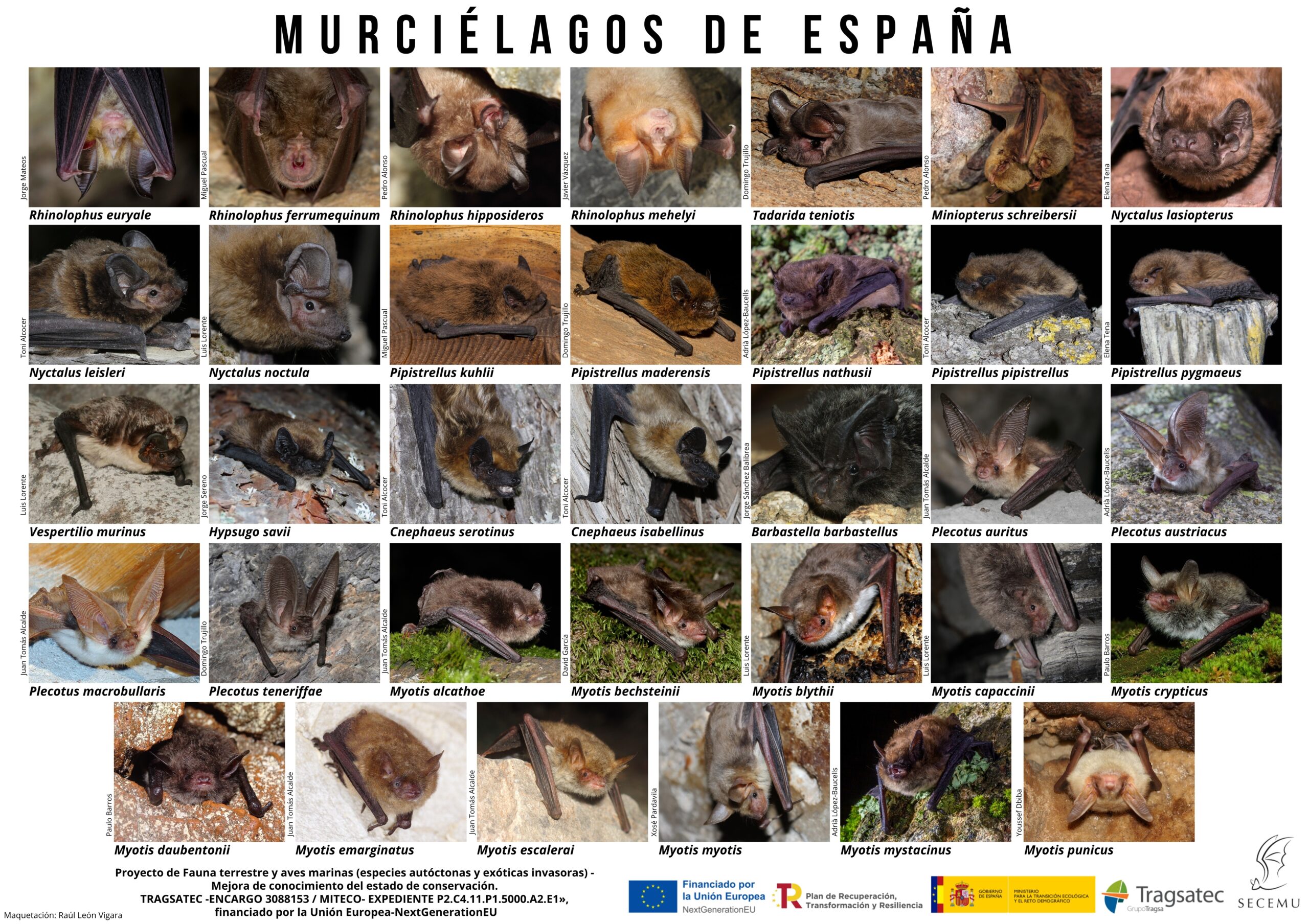
“Bats of Spain” poster
SECEMU’s BATlas project , whose main aim is to produce the Atlas and Red Book of the Bats of Spain, is pleased to share one of the project’s outreach outputs: the Bats of Spain poster.
We would like to thank everyone who has taken part in the project, especially those who provided photos.
At the following link, you can access the poster in digital format as an image (jpg): https://drive.google.com/file/
And at this one, you can access the poster as a digital pdffile, in case you want to print it at the highest possible resolution: https://drive.google.com/file/
Please feel free to share it as widely as possible. We hope it is well received and helps people discover the wonderful diversity of bats we have in Spain.
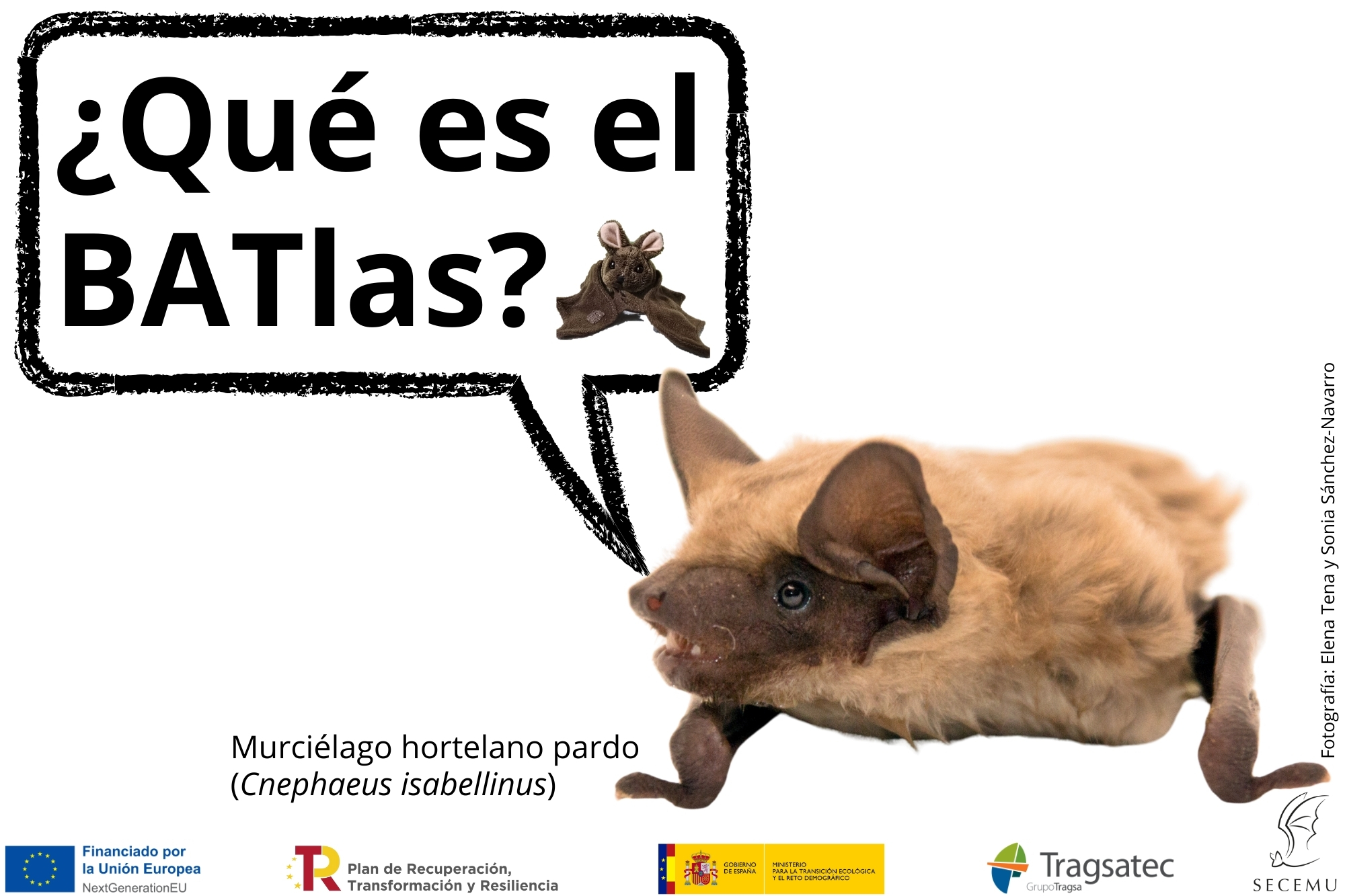
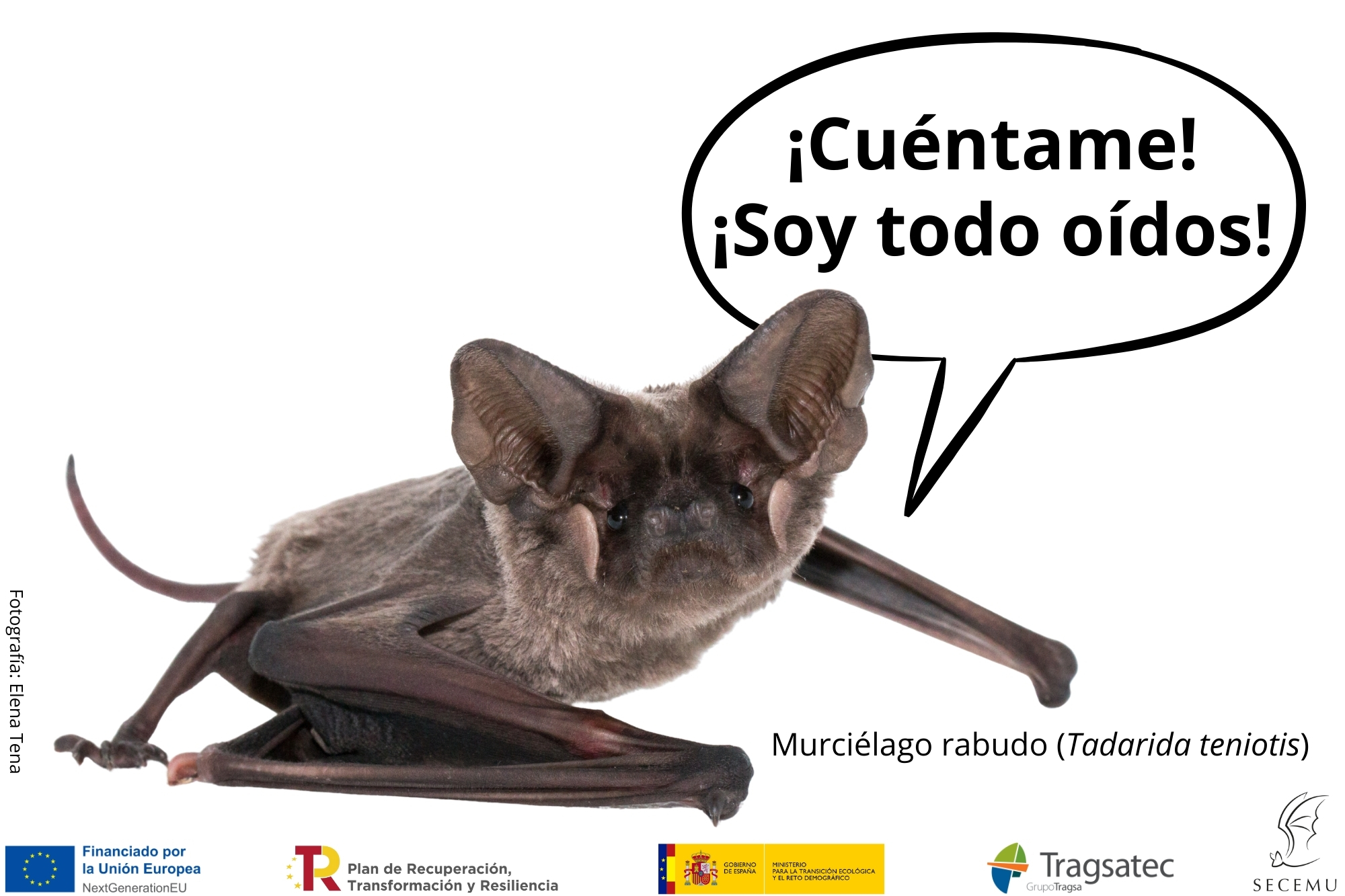
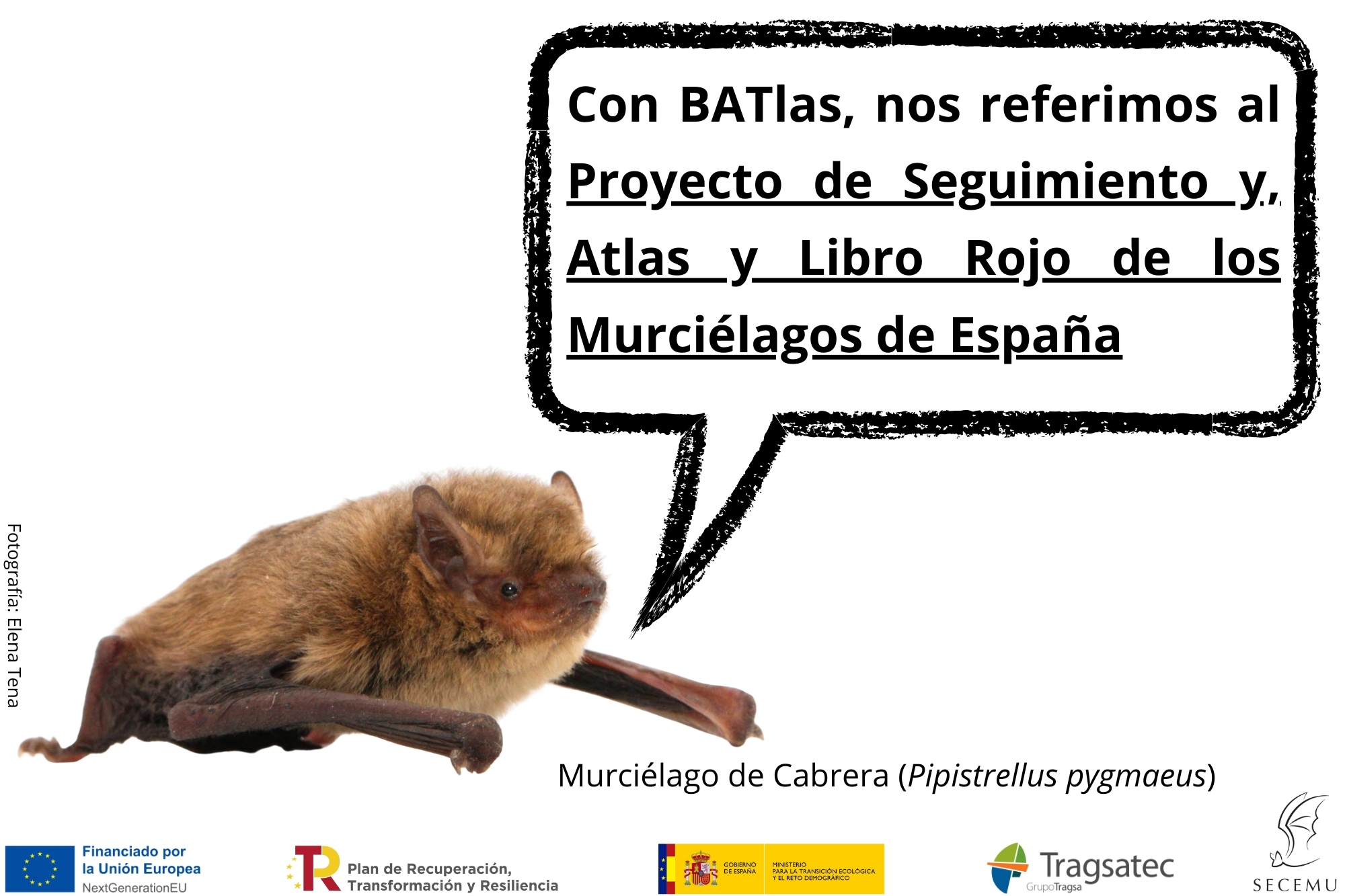
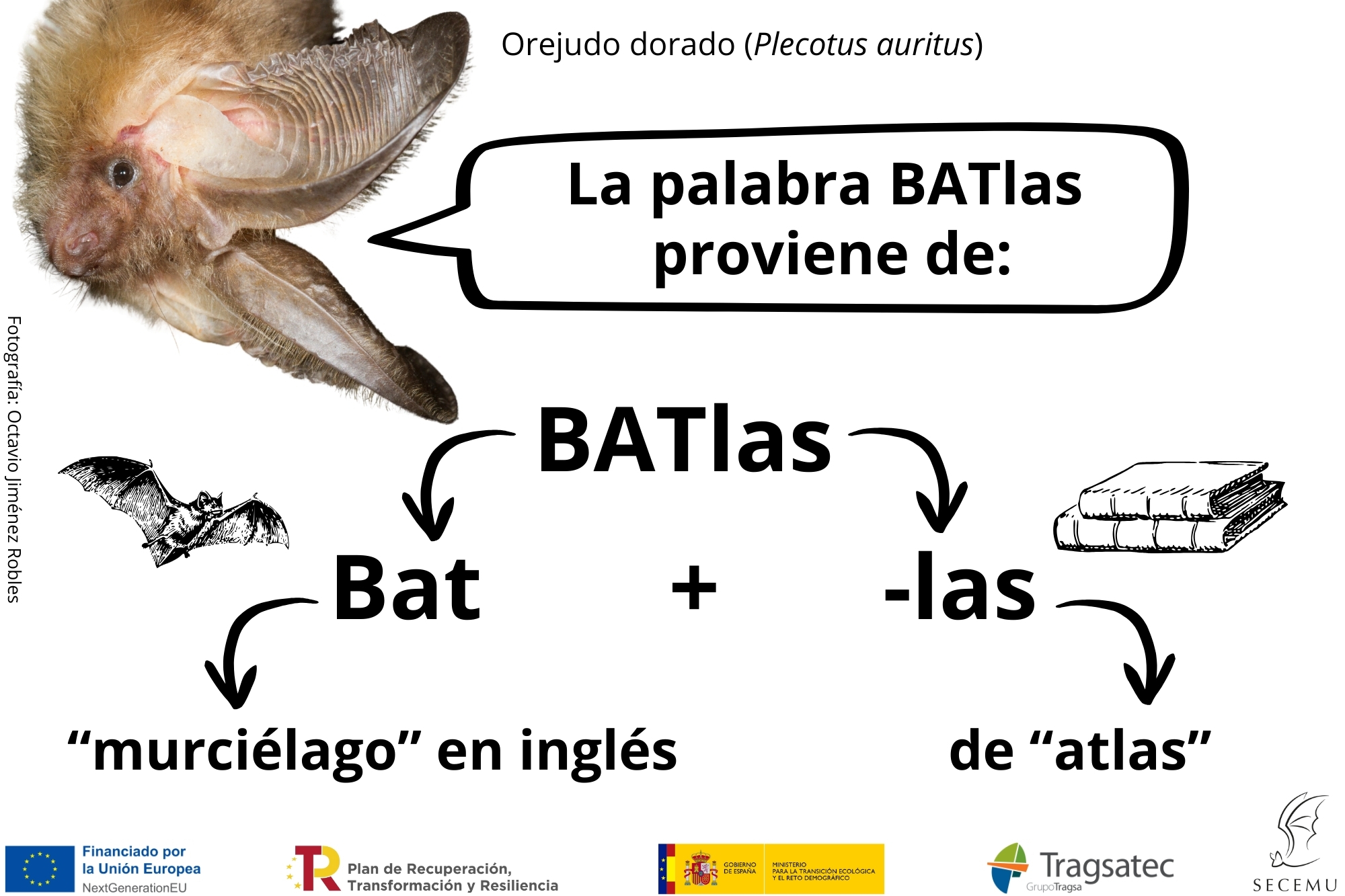
What is BATlas?
BATlas objectives
BATlas protocols
Breeding roost protocols
Hibernation roost protocols
Capture station protocols
Genetic sampling protocols
Automatic ultrasound recorder protocols
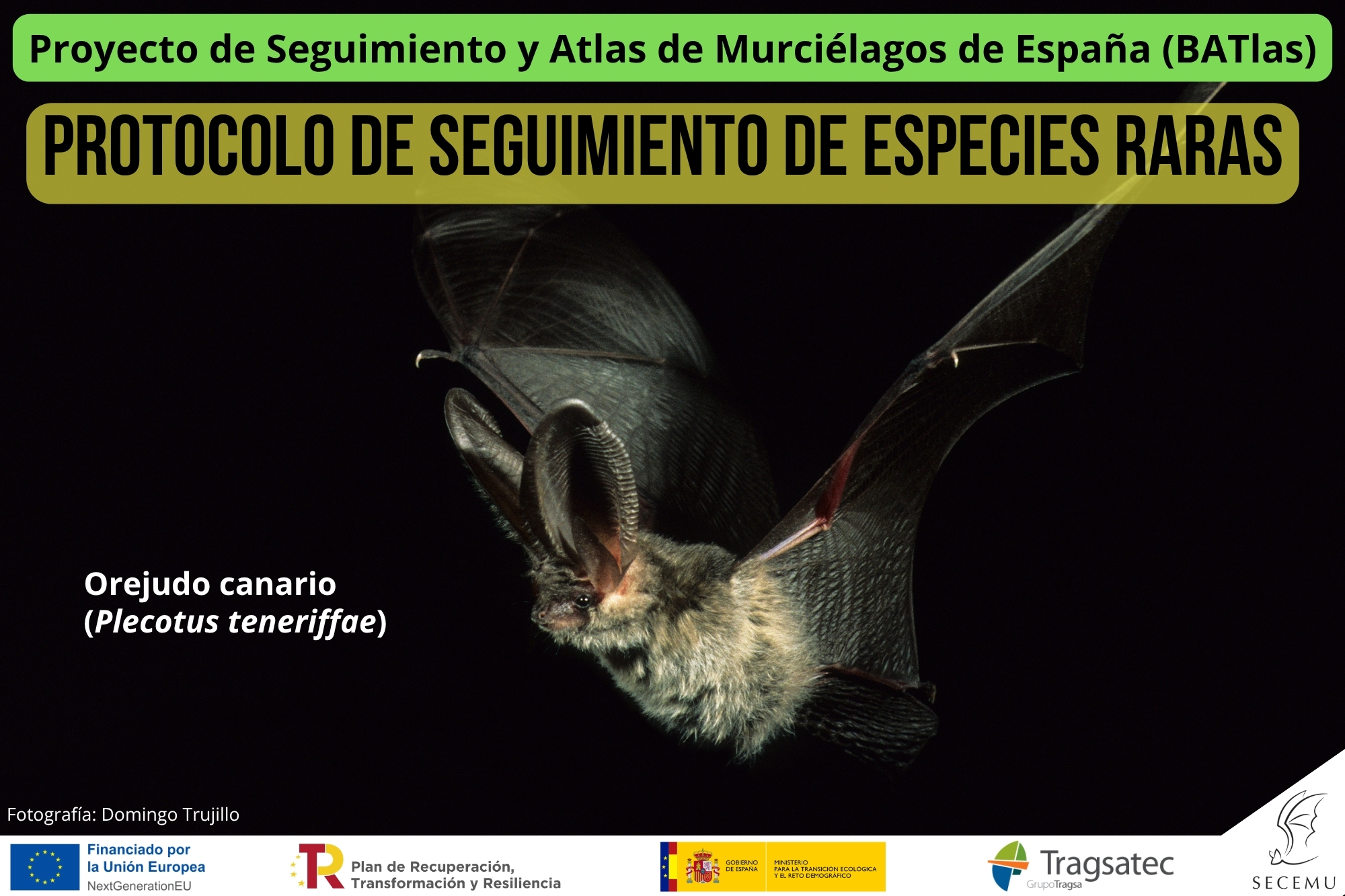
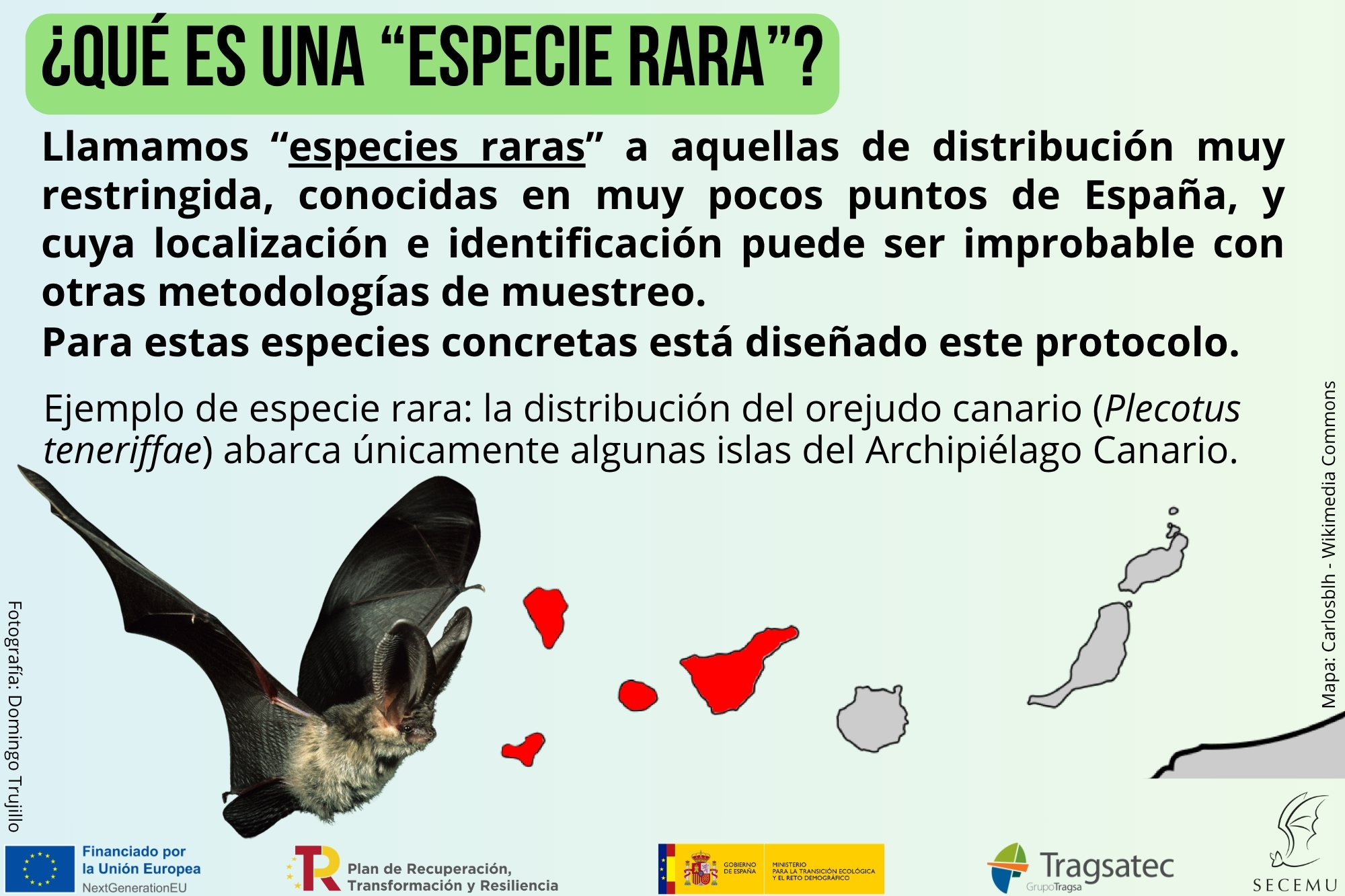
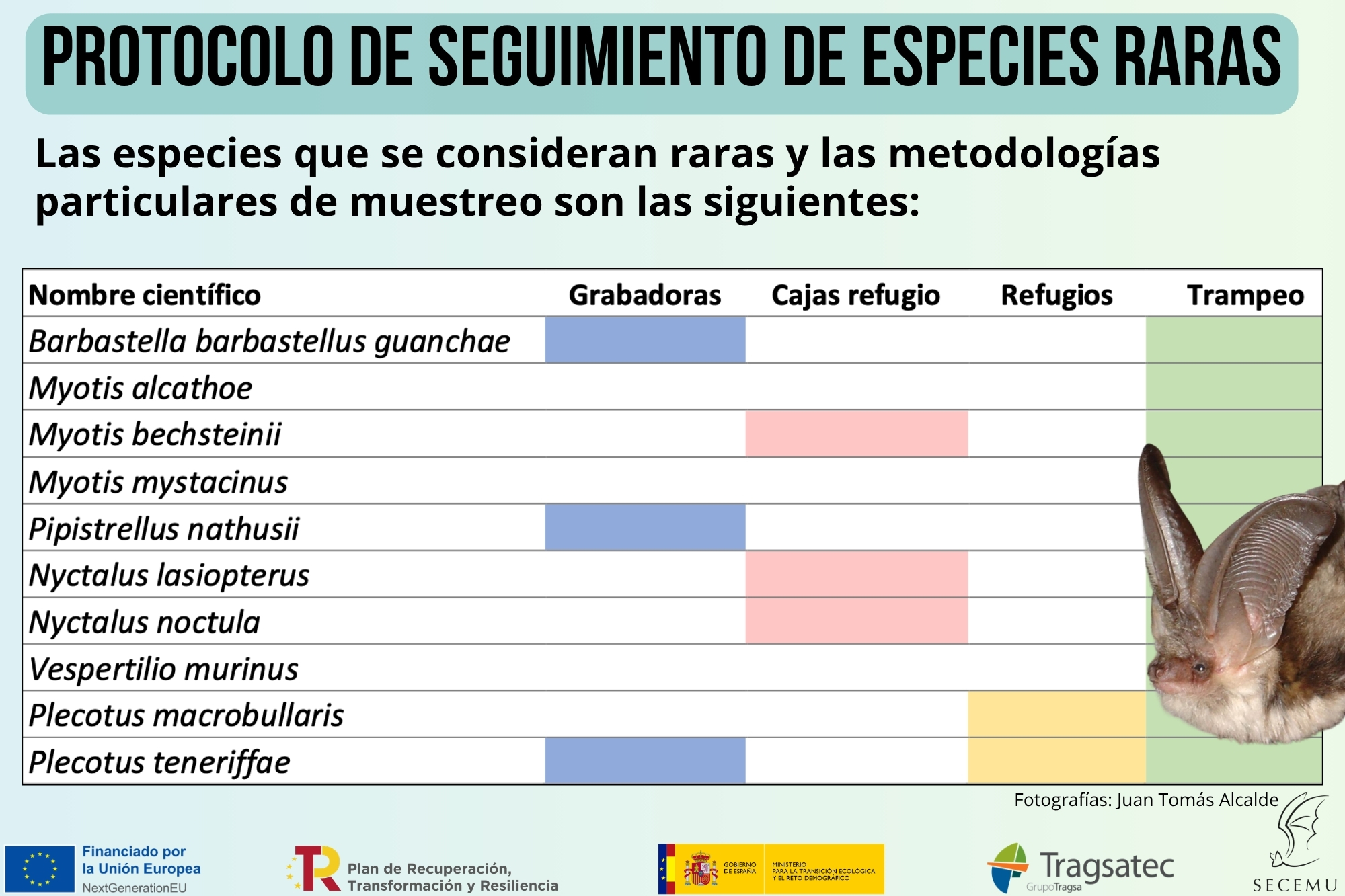
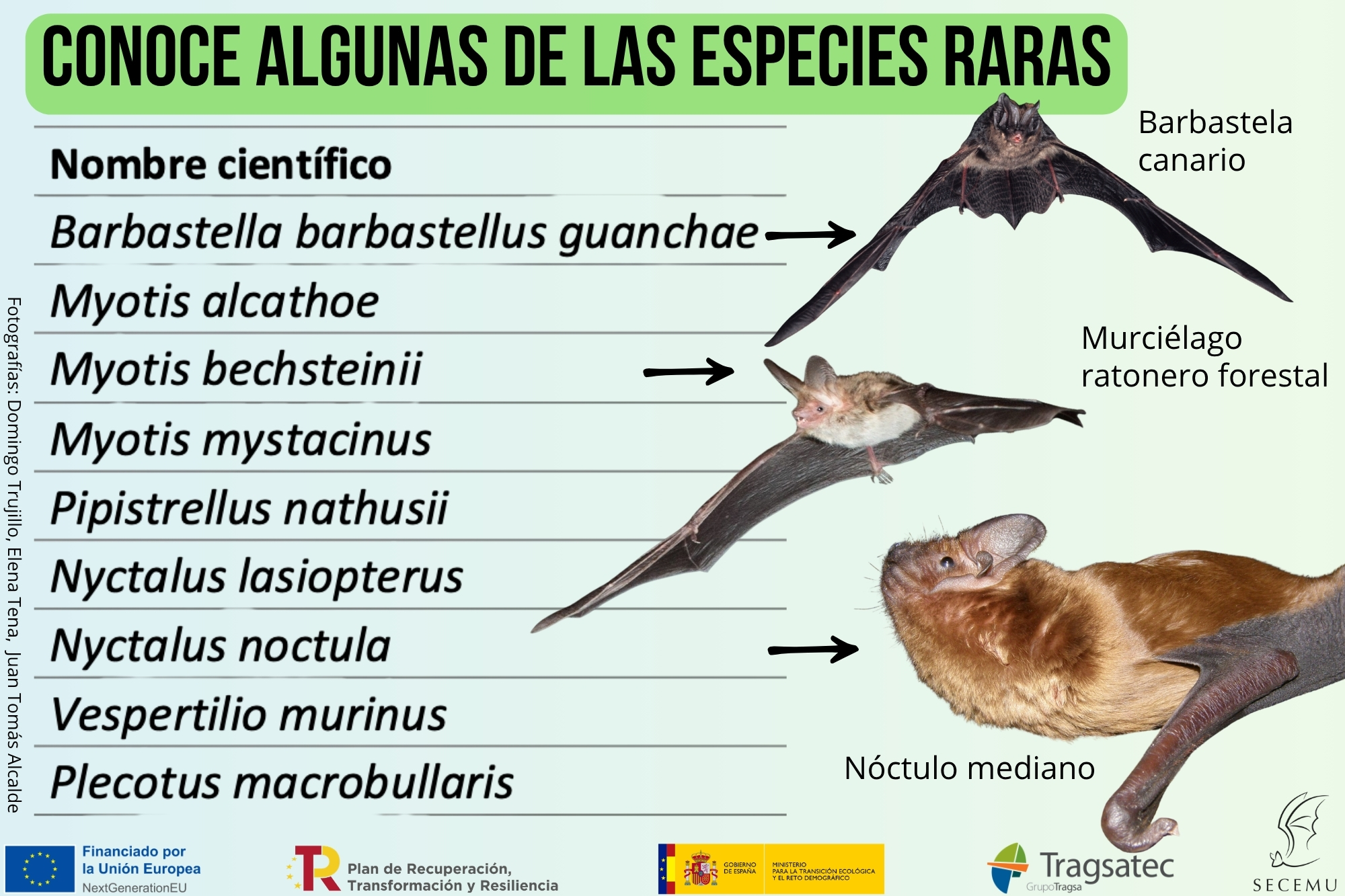
Rare species monitoring protocols
Standard list update: inclusion of Vespertilio murinus
Standard list update: change of genus Cnephaeus
Standard list update: taxonomic update of Myotis crypticus and Myotis escalerai
Standard list update: removal of Rousettus aegyptiacus
News: two new colonies of Nyctalus noctula
News: new colony of Rhinolophus mehelyi
News: new record of Myotis alcathoe
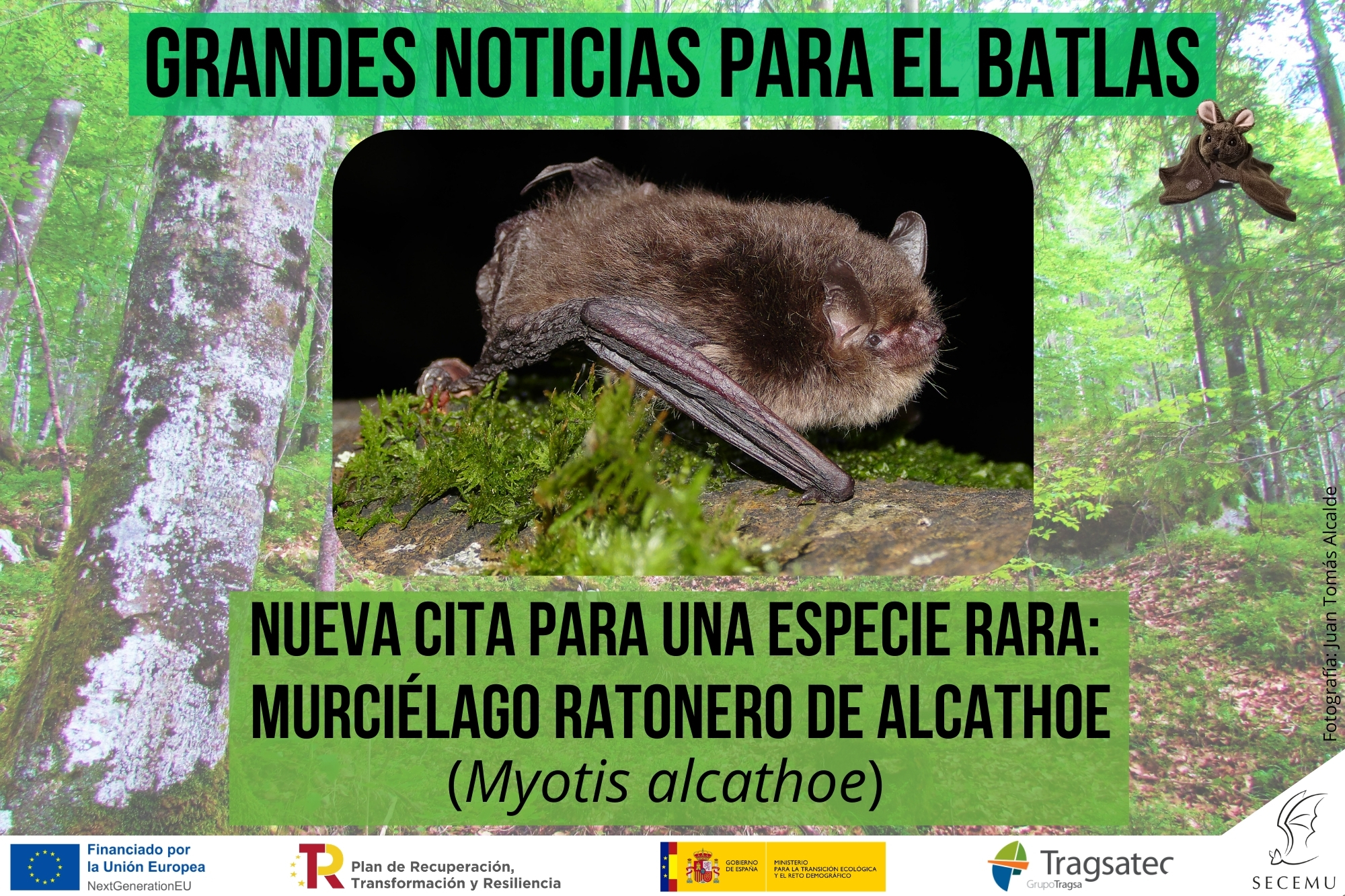
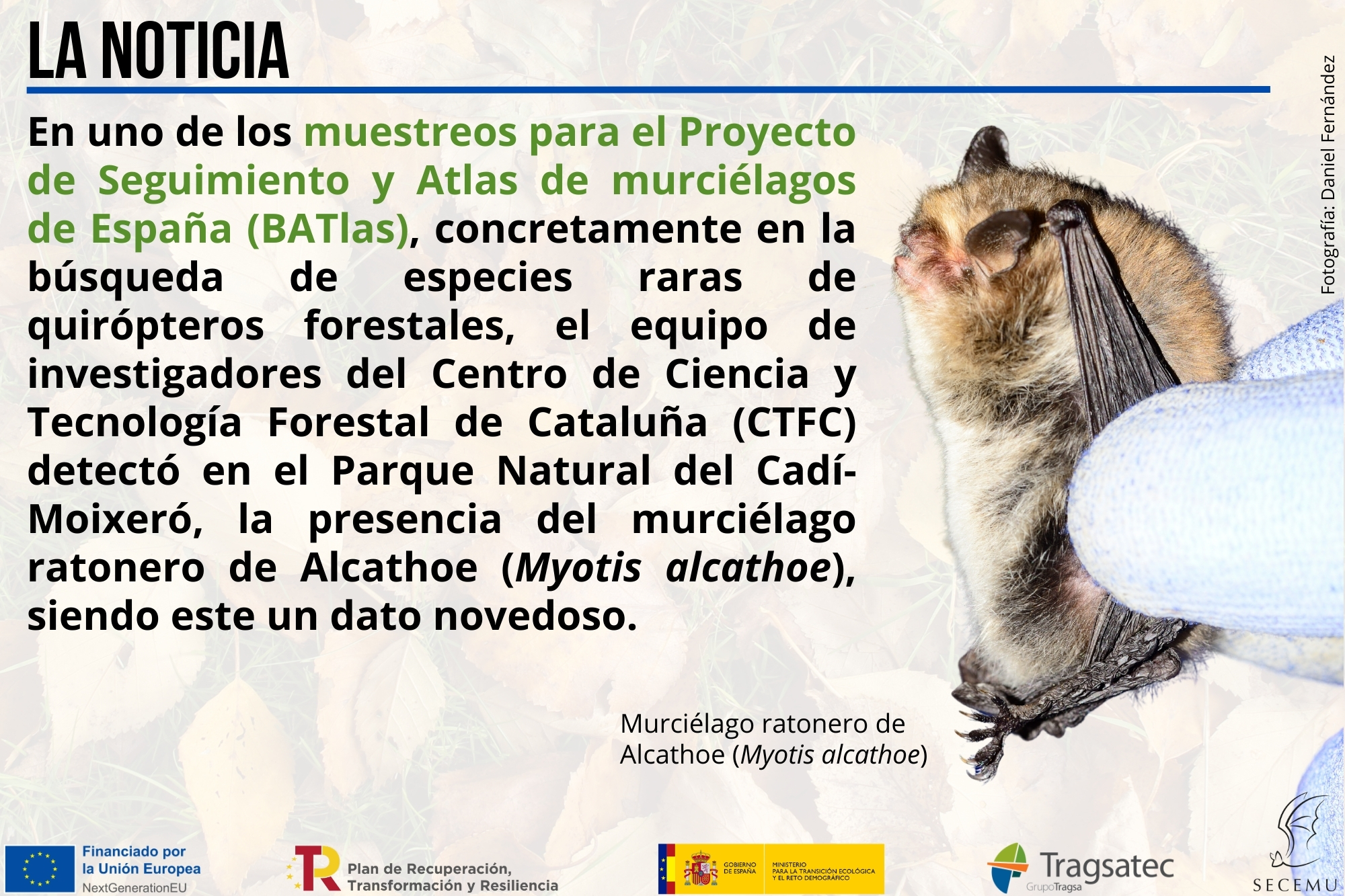
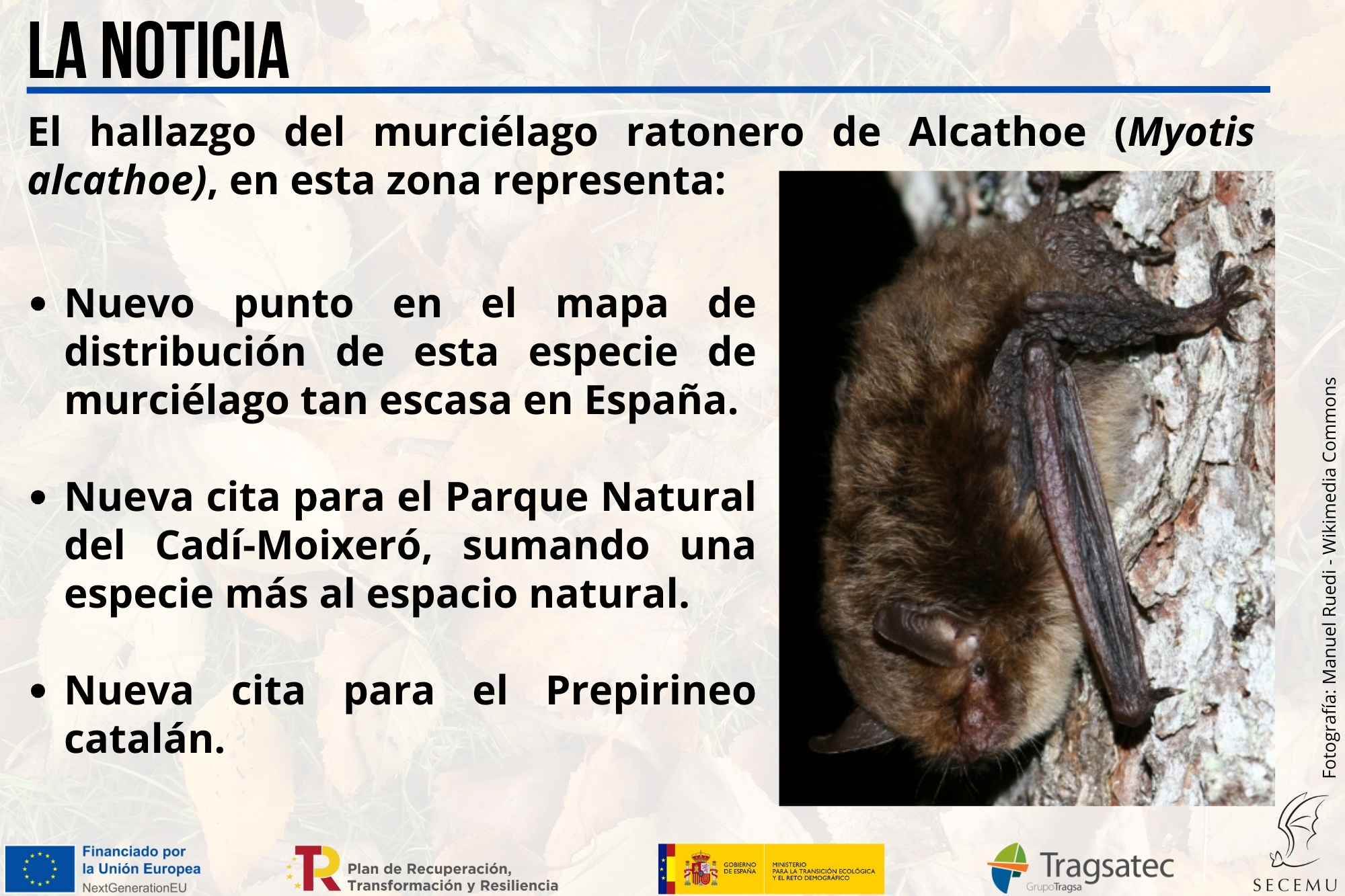
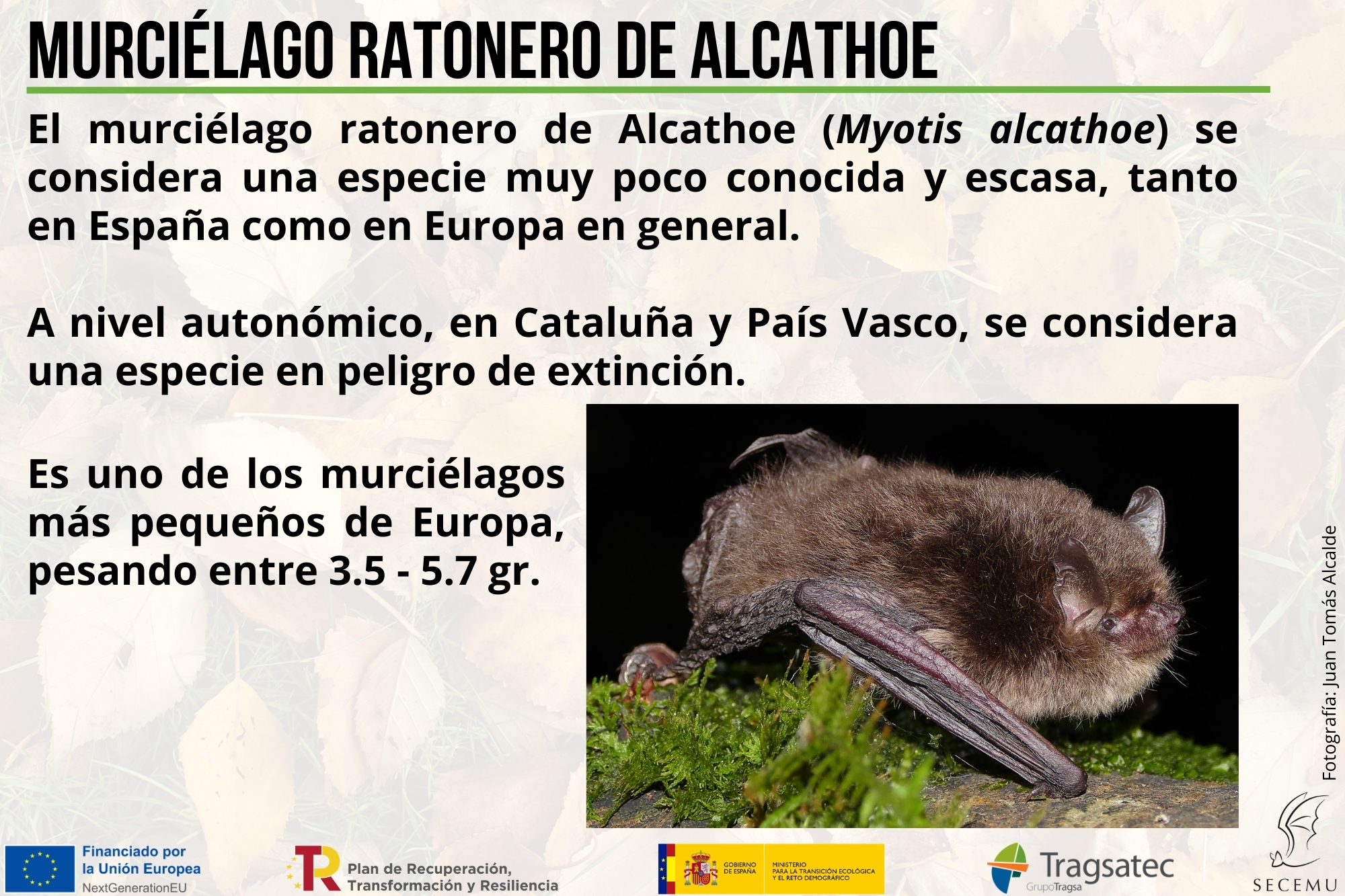
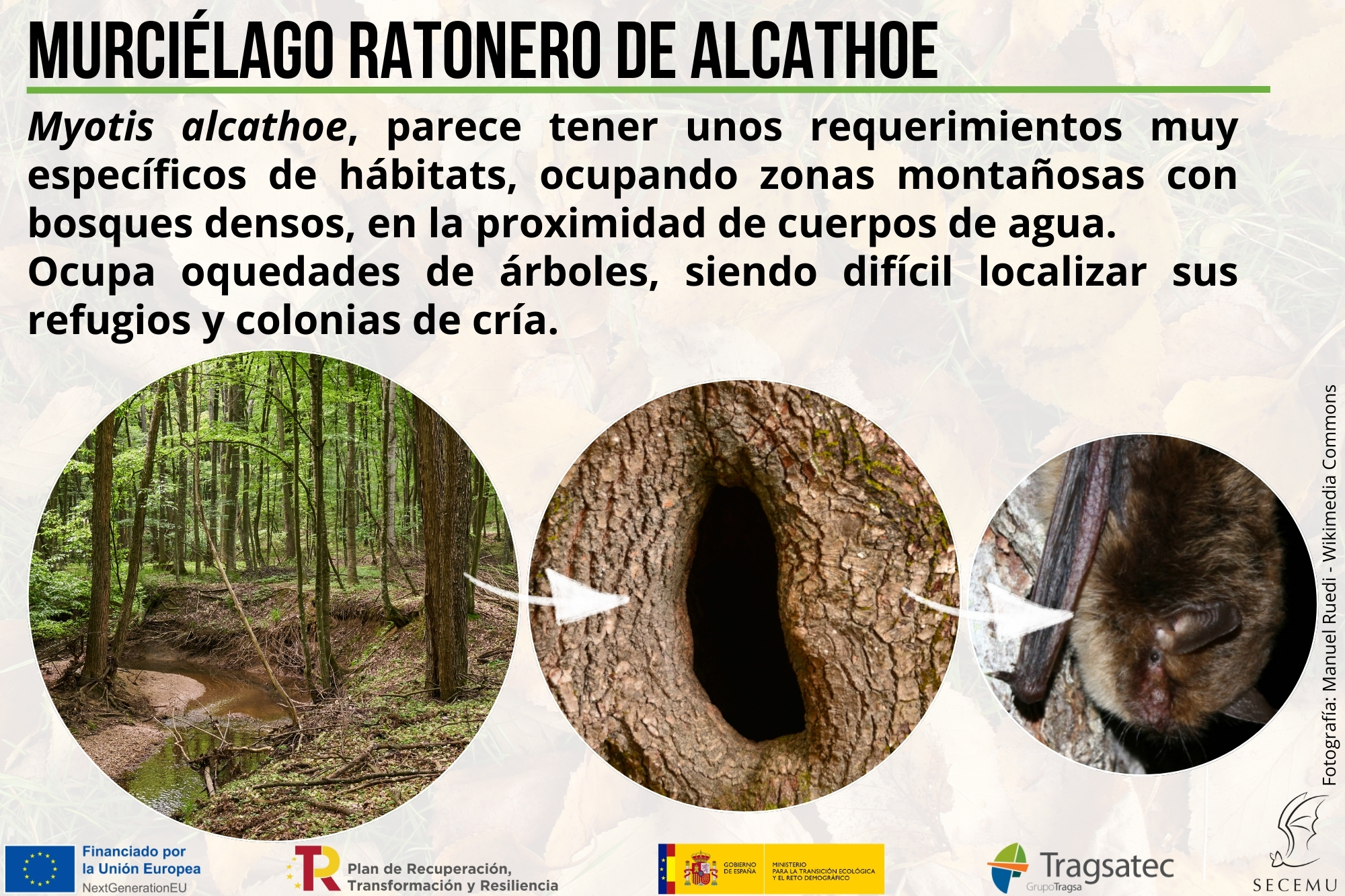
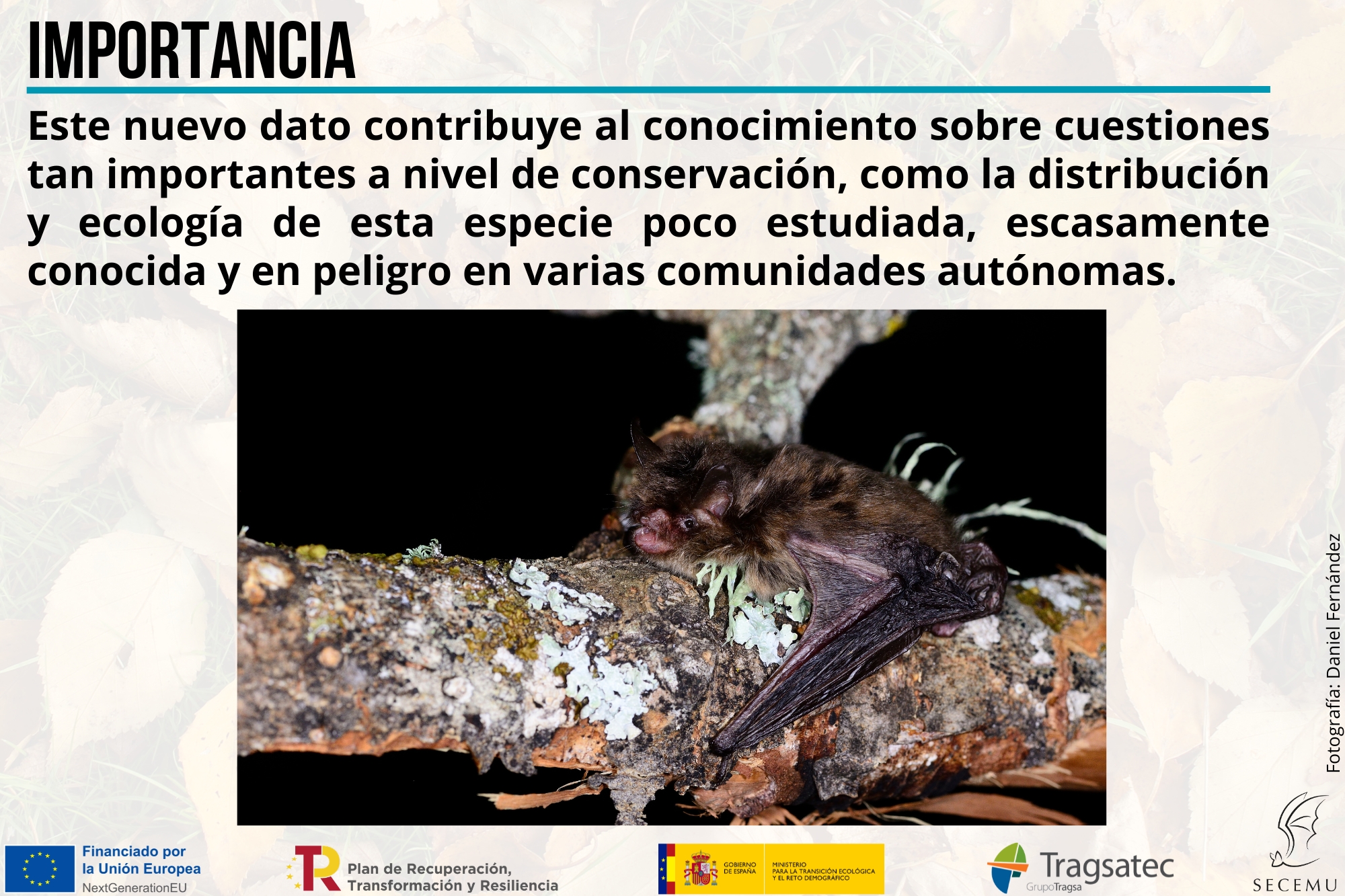
Image gallery from the BATlas fieldwork